English
  Deutsch


Why Does 5183 Aluminium MIG Wire Porosity Happen Now?
Article Directory
- 1 Why Aluminum Welds Are Susceptible to Porosity
- 2 Where Does the Hydrogen Come From?
- 3 How to Address Each Contamination Source
- 4 Process Parameters That Affect Porosity Rate
- 5 Porosity Sources and Corrective Actions at a Glance
- 6 Does Wire Quality Affect Porosity Independently of Storage?
- 7 When Should the Filler Alloy Be Reconsidered?
- 8 Systematic Troubleshooting When Porosity Persists
Porosity in aluminum MIG welds has a way of appearing just when the production schedule is tightest — scattered pinholes on a radiograph, surface pitting that looks minor until the weld fails inspection, or subsurface voids that only show up during destructive testing. If you are welding with 5183 Aluminium MIG Wire and porosity is a recurring problem, the cause is almost never one thing. Aluminum alloys in the 5xxx series are particularly sensitive to hydrogen contamination, and the high magnesium content in ER5183 makes that sensitivity more pronounced. The path to consistent, porosity-free welds runs through identifying which hydrogen sources are active in your process — and eliminating them systematically rather than adjusting parameters in the hope that the problem resolves itself.
Why Aluminum Welds Are Susceptible to Porosity
Porosity in aluminum welds is almost always a hydrogen problem. Aluminum has a high affinity for hydrogen when molten — it absorbs hydrogen readily from the atmosphere and from surface contamination. As the weld pool solidifies, the solubility of hydrogen drops sharply, and the excess hydrogen tries to escape. If the weld cools quickly enough to trap hydrogen before it can leave, the result is porosity.
This mechanism is not unique to ER5183, but the high magnesium content of this filler increases the sensitivity slightly. Magnesium is an active element that reacts readily with moisture and oxygen — any contamination pathway that would produce marginal porosity in a lower-alloy filler tends to produce more obvious porosity with a high-Mg wire like ER5183.
Where Does the Hydrogen Come From?
Identifying the hydrogen source is the diagnostic step that makes everything else possible. The sources fall into a few categories, and more than one can be active at the same time.
Moisture on the Wire Surface
Aluminum MIG wire picks up moisture from the environment — particularly in humid workshops or when wire has been left exposed overnight. The oxide layer that forms naturally on aluminum wire can trap moisture beneath it, and that moisture releases hydrogen directly into the arc zone during welding.
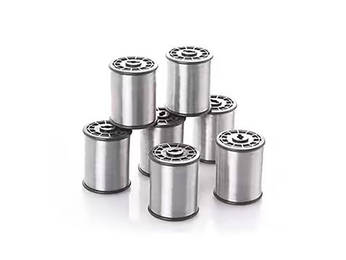
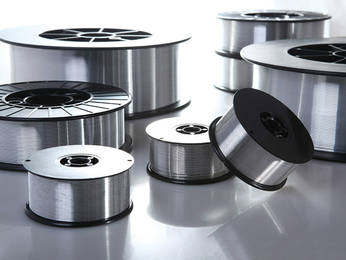
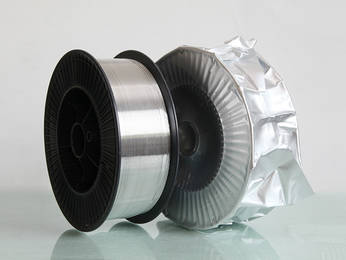
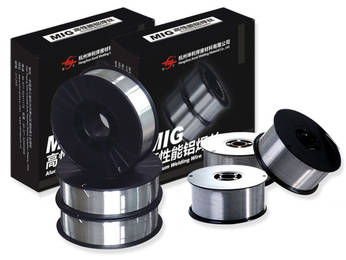
5183 Aluminium MIG Wire that has been stored correctly in sealed packaging, kept away from temperature cycling, and used within a reasonable period after opening will have far lower hydrogen contribution from the wire itself than wire that has been sitting exposed on a spool for days in a coastal or humid facility.
Surface Contamination on the Base Metal
Oil, cutting fluid, moisture from condensation, and the natural oxide layer on aluminum all contribute hydrogen to the weld pool if they are not removed before welding. The oxide layer itself does not contribute hydrogen directly, but it traps moisture and other contaminants beneath it — and if that layer is not removed, those contaminants enter the weld pool with the base metal as it melts.
Shielding Gas Quality and Coverage
Atmospheric contamination through gaps in the shielding gas coverage introduces oxygen and moisture directly into the arc zone. This can happen because the gas flow rate is insufficient, because drafts are disrupting the gas envelope, or because the gas itself contains moisture or impurities.
For ER5183 applications — particularly marine, pressure vessel, and cryogenic work where weld integrity is a defined requirement — the shielding gas purity matters. Lower-purity argon contains moisture and trace gases that contribute to porosity even when every other variable is controlled.
How to Address Each Contamination Source
Wire Storage and Handling
Correct storage is the foundation of porosity control with any aluminum MIG wire. For ER5183 specifically:
- Store sealed spools in a dry, climate-controlled area — avoid locations near loading bays, doors, or anywhere with significant temperature swings
- Once a spool is opened, protect it from the workshop environment between shifts — a sealed bag or covered spool holder reduces moisture pickup significantly
- If a spool has been exposed to high humidity for an extended period, it should be assessed before use — visible surface oxidation or discoloration is a sign that moisture has affected the wire surface
- Do not leave wire loaded in the feeder gun overnight in humid conditions without protection
Base Metal Preparation
Aluminum base metal preparation for porosity control has two distinct stages: degreasing and oxide removal. Both are required, and the order matters.
- Degrease first. Use a clean solvent wipe to remove all oil, grease, and cutting fluid from the weld area and the surrounding zone. If the degreasing step is skipped and a wire brush or abrasive is used on an oily surface, the contamination spreads rather than being removed.
- Remove the oxide layer second. Use a stainless steel wire brush dedicated to aluminum — a brush that has been used on other metals carries contamination. Brush in one direction along the weld line to lift the oxide without working it back into the surface.
- Weld promptly after preparation. The oxide layer reforms within minutes. Prepared aluminum that sits for an extended period before welding will have a new oxide layer that should be re-brushed before the arc is struck.
Shielding Gas Setup
Gas coverage problems are among the more straightforward porosity causes to address once identified. A few checks that matter:
- Confirm the gas flow rate at the torch — not just at the regulator. Flow restrictions from kinked hoses, worn O-rings, or partially blocked nozzles reduce the actual gas at the arc zone below the set point.
- Use high-purity argon for ER5183 welding. The purity of the shielding gas has a direct relationship with hydrogen contamination from the gas stream itself.
- Eliminate drafts. Even mild air movement across the weld zone disrupts the argon envelope and admits atmospheric moisture. Portable screens or repositioning work in a shielded area addresses this in open shop environments.
- Check the nozzle condition. Spatter buildup inside the nozzle restricts gas flow and creates turbulence that disrupts coverage at the arc. Clean or replace nozzles regularly.
Process Parameters That Affect Porosity Rate
Once contamination sources are controlled, process parameters play a supporting role. They do not compensate for contamination — but they do affect how well the weld pool handles the hydrogen that gets through.
Arc Length
A shorter arc reduces the time the molten pool is exposed to the atmosphere and concentrates heat more tightly at the joint. A long, wandering arc is more susceptible to atmospheric pick-up and produces a wider, slower-cooling weld pool that retains hydrogen more readily. In MIG welding with ER5183, keeping the arc length as short as is practical for the joint geometry reduces porosity exposure time.
Travel Speed and Heat Input
Slower travel speed increases heat input, which gives the weld pool more time to outgas before solidification. This can reduce porosity in situations where the hydrogen content is moderate — the pool stays fluid long enough for hydrogen bubbles to escape. However, excessive heat input in high-Mg alloys can promote hot cracking, so travel speed adjustments should be incremental rather than dramatic.
Torch Angle and Technique
A slight push angle — pointing the torch in the direction of travel — tends to produce better shielding gas coverage over the weld pool compared to a drag or pull technique. For ER5183 welding, this is a relatively simple technique adjustment that often makes a measurable difference in porosity rate, particularly on flat and horizontal joints.
Porosity Sources and Corrective Actions at a Glance
| Porosity Source | Signs in the Weld | Corrective Action |
|---|---|---|
| Wire moisture pickup | Scattered fine pores, consistent across the run | Review wire storage; replace exposed spool |
| Base metal oil or cutting fluid | Clustered pores, especially at weld start | Degrease before brushing; use clean solvent |
| Oxide layer not removed | Pores beneath the surface, visible on cross-section | Brush with dedicated stainless brush after degreasing |
| Insufficient gas coverage | Surface pitting, black oxidation around pores | Check flow rate at torch; eliminate drafts; clean nozzle |
| Low-purity shielding gas | Persistent porosity even with clean setup | Switch to higher-purity argon supply |
| Long arc length | Irregular pore distribution, variable density | Shorten arc; review gun standoff distance |
| Draft or air movement in shop | Porosity worsens in open bays or with doors open | Use shielding screens; reposition work area |
Does Wire Quality Affect Porosity Independently of Storage?
Yes — and this is a point that does not always get sufficient attention. Wire that has been stored correctly can still produce porosity if the wire itself was manufactured with inconsistent chemistry, surface contamination from the drawing process, or residual lubricants that were not fully cleaned before spooling.
For applications where porosity control is a formal quality requirement — marine structural welding, pressure vessel fabrication, cryogenic containment — the wire's manufacturing quality and surface cleanliness become part of the procurement specification, not just the storage protocol. A wire batch from a supplier with consistent quality control reduces the variables in the process that cannot easily be monitored in the field.
When porosity appears on work that has passed consistently before with no process changes, a new wire batch is worth investigating as a potential variable — particularly if the new spool has any visible surface difference or if the arc behavior changed when the new wire was introduced.
When Should the Filler Alloy Be Reconsidered?
ER5183 is selected for applications that require higher joint strength and corrosion resistance in salt water or chemically aggressive environments — marine frames, vessel hulls, offshore equipment, and similar structures. If porosity is occurring in these applications, the answer is almost never to change the filler. The answer is to control the conditions that allow hydrogen into the weld pool.
Switching to a lower-Mg filler to reduce porosity sensitivity while sacrificing the corrosion and strength properties that ER5183 provides is not a practical trade-off for the applications it is typically specified for. The process controls described above are sufficient to achieve acceptable porosity rates in production conditions when applied consistently.
The question of filler alloy becomes relevant if the base material has changed — if the application was originally designed for one alloy series and has been adapted to another, or if the joint design has changed in a way that alters the cooling rate or the dilution ratio at the weld zone. In those cases, a review of the filler specification may be warranted as part of the overall process review.
Systematic Troubleshooting When Porosity Persists
When porosity does not respond to the obvious fixes, a structured approach narrows down what is still active. Work through these checks in order:
- Isolate the wire variable. Try a freshly opened spool from a sealed package and compare the porosity rate on an identical test piece. If porosity drops, the existing wire was contaminated.
- Isolate the base metal variable. Prepare a test piece with a fresh chemical clean and wire brush, then weld immediately. If porosity drops, the preparation procedure in the production setup is insufficient.
- Isolate the gas variable. Check the gas cylinder — if it has been in use for a long time, moisture can accumulate in the lower portion of a partially empty cylinder. Try a new cylinder and compare.
- Isolate the environment variable. Weld in a shielded area with no air movement and compare to the production location. If porosity drops, the production environment has a draft or airflow problem that needs to be managed.
- Review the parameter set. If all contamination sources have been addressed and porosity persists, review arc length, travel speed, and torch angle against the wire manufacturer's recommendations for the joint configuration being welded.
Porosity control with 5183 Aluminium MIG Wire is a process discipline issue more than a material issue. The wire is specified for applications where performance under demanding conditions is a requirement — and achieving that performance consistently depends on controlling the hydrogen sources that are almost always present in a production welding environment. When contamination sources are addressed and process parameters are matched to the joint and position, ER5183 produces clean, reliable welds in the applications it is designed for. Hangzhou Kunli Welding Materials Co. , Ltd. manufactures aluminum MIG welding wire including ER5183 for marine, structural, and industrial applications, and provides technical guidance on wire selection, process setup, and porosity troubleshooting. If you are dealing with persistent porosity on ER5183 work or need to review your current wire specification and storage protocols, reaching out to their technical team is a practical starting point for identifying what is driving the issue and what process or material change will resolve it.
NEXT:When ER4043 Is a Practical Substitute for Aluminum Welding