English
  Deutsch


Is 5183 Aluminium MIG Wire suitable for pressure vessels?
Article Directory
- 1 What Makes Pressure Vessel Welding Different from General Fabrication
- 2 What General Aluminum Wire Delivers and Where It Falls Short
- 3 Why ER5183 Addresses These Gaps
- 4 Application Contexts That Specifically Call for ER5183
- 5 Comparing ER5183 to Other Common Aluminum Fillers for Pressure Vessel Work
- 6 Practical Welding Considerations When Using ER5183
- 7 When to Consult the Specification Before Selecting the Wire
- 8 Sourcing ER5183 for Certified Pressure Vessel Work
A pressure vessel weld is not the place to find out your filler metal was underspecified. Stress corrosion cracking, weld fatigue, and joint failure in cryogenic service are not hypothetical concerns — they are the documented failure modes that drive material specifications. Choosing the wrong aluminum filler is not always immediately obvious in production, but the consequences show up in service under conditions the joint was never designed to handle. 5183 Aluminium MIG Wire sits in a specific position in the filler metal selection hierarchy: it is chosen when the service environment, the base alloy, or the structural demand goes beyond what general-purpose aluminum wire can reliably deliver.
What Makes Pressure Vessel Welding Different from General Fabrication
The Weld Joint Carries Cyclic and Sustained Load
In general aluminum fabrication — enclosures, brackets, structural frames — the weld joint typically carries static load in a relatively stable environment. The performance requirement is dimensional integrity and basic structural connection.
A pressure vessel weld joint is a different situation. It operates under internal pressure, often with cyclic loading as the vessel pressurizes and depressurizes repeatedly over its service life. That cyclic loading creates fatigue stress that accumulates at the weld toe and in the heat-affected zone. A joint that holds under static load may crack progressively under fatigue.
Corrosion at the Weld Zone Is a Structural Risk
Weld metal and the surrounding heat-affected zone are often electrochemically different from the base material. In aluminum, this difference can drive preferential corrosion at the weld zone when the assembly is exposed to chlorides, moisture, or other corrosive media.
In a pressure vessel, corrosion at the weld is not just a surface condition — it reduces wall thickness and creates initiation sites for stress corrosion cracking. The filler metal composition directly affects the corrosion resistance of the weld zone relative to the surrounding base material.
What General Aluminum Wire Delivers and Where It Falls Short
General Filler Works Well for Low-Demand Applications
General-purpose aluminum filler wires — including silicon-containing types used for heat-treatable alloys — are appropriate for a wide range of fabrication tasks. They are selected for ease of welding, flow characteristics, crack resistance on smaller weld runs, and compatibility with common base alloys.
For non-critical applications: welded frames, general enclosures, cosmetic welds, and light structural work, general filler performs adequately without the cost or specification complexity of a more highly alloyed wire.
The Gaps That Appear Under Demanding Conditions
General aluminum wire does not cover all applications with equal performance. Where it tends to fall short:
- Joints in high-magnesium base alloys (such as the 5083 and 5456 series) where the filler chemistry needs to match the base alloy's corrosion behavior
- Low-temperature service, where some filler alloys lose toughness as temperature drops
- Fatigue-critical joints where higher weld metal tensile strength reduces the rate of fatigue crack growth
- Marine and offshore environments where sustained chloride exposure demands a filler whose corrosion potential is compatible with the base alloy
Why ER5183 Addresses These Gaps
The Magnesium Content Is the Functional Difference
ER5183 contains a higher magnesium level than many general-purpose aluminum fillers. Magnesium in solid solution strengthens the weld metal and improves its resistance to stress corrosion cracking in chloride environments. The strength contribution from magnesium is retained after welding without requiring post-weld heat treatment.
This is not a secondary benefit — it is the primary engineering reason ER5183 is specified for pressure vessels welded from 5000-series base alloys. The weld metal needs to be chemically and mechanically compatible with the base alloy over the full service life of the vessel.
Does Higher Weld Metal Strength Matter in Pressure Vessel Design?
Yes, and it matters in a specific way. Pressure vessel design codes set allowable stress values for weld joints, and those values are tied to the actual mechanical properties of the weld metal. A filler wire with lower yield strength or lower tensile strength forces the designer to either increase wall thickness or reduce the allowable operating pressure.
ER5183 produces weld metal with higher as-welded strength than lower-magnesium alternatives, which gives the vessel designer more room to work within the code-required safety factors without over-engineering the wall thickness.
Low-Temperature Toughness Is a Critical Requirement for Cryogenic Vessels
LNG storage tanks, cryogenic process vessels, and liquid gas handling equipment operate at temperatures far below ambient. Aluminum alloys generally retain toughness at low temperatures better than carbon steel, which is part of why aluminum is used in this application. But filler wire selection still matters.
ER5183 is recognized for retaining adequate toughness at cryogenic temperatures, which is why it appears repeatedly in specifications for LNG and cryogenic vessels. A filler that becomes brittle at service temperature is a structural liability regardless of its room-temperature performance.
Application Contexts That Specifically Call for ER5183
Marine Pressure Vessels and Offshore Equipment
Marine environments combine sustained salt spray exposure with mechanical loading and, in offshore applications, wave-induced fatigue cycling. Pressure vessels in this environment — hydraulic accumulators, gas bottles, process vessels on platforms — need weld joints that resist both corrosion and fatigue simultaneously.
5183 Aluminium MIG Wire provides the combination of magnesium-based corrosion resistance and adequate weld strength that these applications demand. Specifying a general-purpose filler in a marine pressure vessel application introduces a mismatch between the service environment and the weld metal capability.
Chemical Process Vessels Handling Corrosive Media
In chemical processing, vessels handling acids, caustic solutions, or halide-containing process streams need weld joints whose corrosion behavior is predictable over the vessel's operating life. A weld zone that corrodes faster than the base material is a failure point that is difficult to detect visually until significant wall loss has occurred.
For 5083-based chemical vessels, ER5183 maintains galvanic compatibility between the weld metal and the base alloy, reducing the electrochemical driving force for preferential weld corrosion.
Unfired Pressure Vessels Under Pressure Codes
Pressure vessel fabrication standards in various jurisdictions specify acceptable filler metals for different base alloy and service combinations. For 5000-series base alloys in unfired pressure vessel service, ER5183 is consistently listed as an acceptable filler. Using a non-approved filler introduces compliance problems that go beyond performance — it may invalidate the vessel certification.
Fabricators working under pressure codes need to verify filler metal approval for the specific base alloy and service class before welding, not after.
Comparing ER5183 to Other Common Aluminum Fillers for Pressure Vessel Work
| Filler Wire | Alloy Base | Weld Strength | Corrosion Resistance | Low-Temp Toughness | Typical Pressure Vessel Use |
|---|---|---|---|---|---|
| ER5183 | Al-Mg (higher Mg) | Good | Strong | Good | 5083, 5456 base alloys, cryogenic, marine |
| ER5356 | Al-Mg (lower Mg) | Moderate | Moderate | Limited — not for cryogenic | General structural, non-critical welds |
| ER4043 | Al-Si | Lower | Limited | Not suitable for low temp | Heat-treatable alloys, general repair |
| ER4047 | Al-Si (higher Si) | Lower | Limited | Not suitable for low temp | Automotive, brazing, non-structural |
| ER5556 | Al-Mg (high Mg) | High | Strong | Good | Heavy marine, offshore structural |
ER5356 is sometimes considered as an alternative to ER5183, and for non-critical structural welds on 5000-series alloys, it is often adequate. The key limitation is cryogenic service — ER5356 is not suitable for service temperatures below approximately minus 65 degrees Celsius, which rules it out for LNG and low-temperature process equipment. ER5183 does not carry that restriction.
Practical Welding Considerations When Using ER5183
Wire Feeding and Drive Roll Setup
ER5183 has similar mechanical properties to other 5000-series aluminum fillers from a wire feeding standpoint. It is softer than steel wire and more susceptible to deformation in the drive rolls if contact pressure is set too high. Use V-groove or U-groove rolls with low contact force, and use a Teflon or nylon liner in the gun cable to reduce friction.
Aluminum wire of all types needs clean, dry storage. Moisture contamination on the wire surface can contribute to porosity in the weld, which is a particularly serious defect in pressure vessel work where porosity is a rejection criterion in applicable codes.
Shielding Gas Selection for ER5183
Pure argon is the standard shielding gas for aluminum MIG welding, including 5183 Aluminium MIG Wire. Argon provides stable arc characteristics and supports the spray transfer mode that produces the deep penetration and clean bead profile suited to pressure vessel work.
Argon-helium mixtures increase arc energy and can improve fusion on thicker sections, but they also increase the risk of porosity if the shielding coverage is not fully maintained. For pressure vessel applications where porosity is tightly controlled by code, pure argon is the lower-risk choice unless the section thickness specifically requires higher heat input.
Preheating and Interpass Temperature Control
Aluminum does not require preheating in the same way steel does, but controlling interpass temperature matters for multi-pass welds. Allowing the joint to cool too quickly between passes can introduce residual stress. Excessive interpass temperature can affect the heat-affected zone properties.
For pressure vessel work, the interpass temperature should be within the range recommended by the applicable fabrication standard. Track temperature with contact thermometers rather than estimating by touch or observation.
When to Consult the Specification Before Selecting the Wire
If the project involves any of the following, the filler metal selection needs to be verified against the applicable standard before welding begins:
- Vessels subject to pressure testing or third-party inspection
- Service temperatures below ambient, particularly below minus 65 degrees Celsius
- Base alloys from the 5083, 5086, or 5456 series
- Marine, offshore, or chemical process service
- Projects where weld procedure qualification is required
- Changing filler metal after qualification means re-qualifying the procedure, which has schedule and cost implications. Getting the filler selection right at the design stage avoids that problem.
Sourcing ER5183 for Certified Pressure Vessel Work
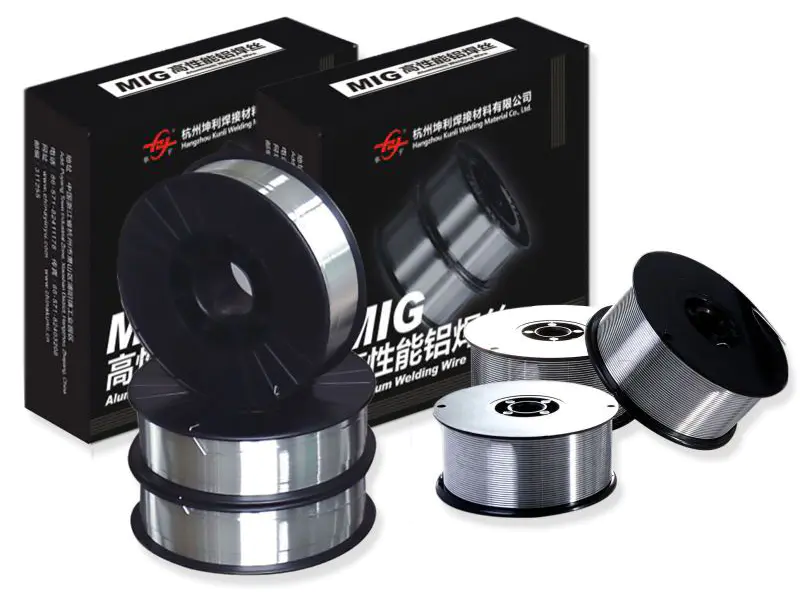
Pressure vessel fabrication requires filler metals that can be traced to their material certification, with chemical composition verification by production lot. A filler wire that performs correctly in testing but cannot be traced to a documented chemistry analysis creates compliance issues that are difficult to resolve after the vessel is complete. Hangzhou Kunli Welding Materials Co., Ltd. supplies 5183 Aluminium MIG Wire for pressure vessel, cryogenic, marine, and offshore welding applications. Their products include certification documentation to support procedure qualification and third-party inspection requirements. If you are specifying or sourcing ER5183 for a pressure vessel project, reaching out with your base alloy, service conditions, and applicable fabrication standard gives their team the context to confirm product suitability and supply terms.
NEXT:Why Does 5183 Aluminium MIG Wire Porosity Happen Now?