English
  Deutsch


5356 Alloy Aluminum Wire for Marine and Shipbuilding Welding
Article Directory
- 1 Challenges in Shipbuilding Welding
- 2 Aluminum Welding Wire Options Worth Understanding
- 3 A Side-by-Side Look at How the Two Main Alloys Compare
- 4 How to Improve Weld Quality in Marine Structures
- 5 Base Metal Compatibility: Matching Wire to What Is Already in the Structure
- 6 Procurement Considerations for Marine Welding Wire
A hull weld held through sea trials but showed corrosion stress within the early operating season. A structural joint on a deck component that passed visual inspection but failed under fatigue loading because the filler alloy did not match what the base metal needed. A procurement team fielding conflicting recommendations from welding engineers who each have a different alloy number written down. Such situations arise with enough frequency in shipbuilding that experienced fabricators often have a story or two, and in many instances the connecting thread goes back to 5356 Alloy Aluminum Wire - or more precisely, to whether it was the appropriate choice for that joint, that base metal, and that service environment. Aluminum welding in the marine industry is not a single discipline. A shipyard building recreational aluminum vessels faces different material combinations and structural demands than one fabricating offshore platform components or commercial fishing boats designed for decades of hard use. Wire selection that works well in one context can underperform quietly in another, which is why understanding what the alloy options actually offer, and where each one is genuinely suited, matters more in this industry than in almost any other fabrication environment.
Challenges in Shipbuilding Welding
Corrosion and Structural Strength Requirements
Salt water is patient. It works at joints, along weld toes, and into any small crevice where the protective oxide layer has been disrupted by heat or mechanical stress. A weld that looks structurally sound and cosmetically acceptable straight off the bench can develop corrosion at the heat-affected zone over time if the filler alloy was not chosen with sustained saltwater exposure in mind.
The structural side adds another layer of complexity. Ship hulls flex under wave loading, absorb vibration from propulsion systems, and accumulate the fatigue of countless loading cycles over a vessel's working life. Welds in primary structural locations need to deliver reliable tensile strength and fatigue resistance, not just adequate fusion. Getting both corrosion resistance and structural performance from a single filler alloy requires understanding what each alloy was actually designed to do, rather than defaulting to whatever happens to be in stock.
Why Aluminum Welding Presents Specific Difficulties in a Marine Environment
Aluminum oxidizes almost instantly when exposed to air, forming a surface oxide layer that melts at a far higher temperature than the underlying metal. That oxide layer needs to be disrupted during welding for proper fusion to occur, and if it is not managed correctly, it can cause porosity or incomplete fusion that weakens the joint in ways not always visible from the surface.
Beyond that challenge, aluminum's thermal conductivity means heat dissipates rapidly during welding, demanding faster travel speeds and more precise heat input control than welding comparable thicknesses of steel. In a marine fabrication environment where joints are often made in position on large structures, maintaining that control consistently is a real practical challenge. Getting it right depends partly on the wire, and partly on the preparation and technique surrounding it.
Aluminum Welding Wire Options Worth Understanding
5356 Alloy Aluminum Wire in Shipbuilding Contexts
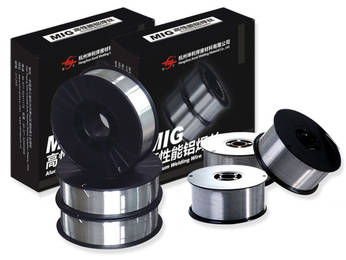
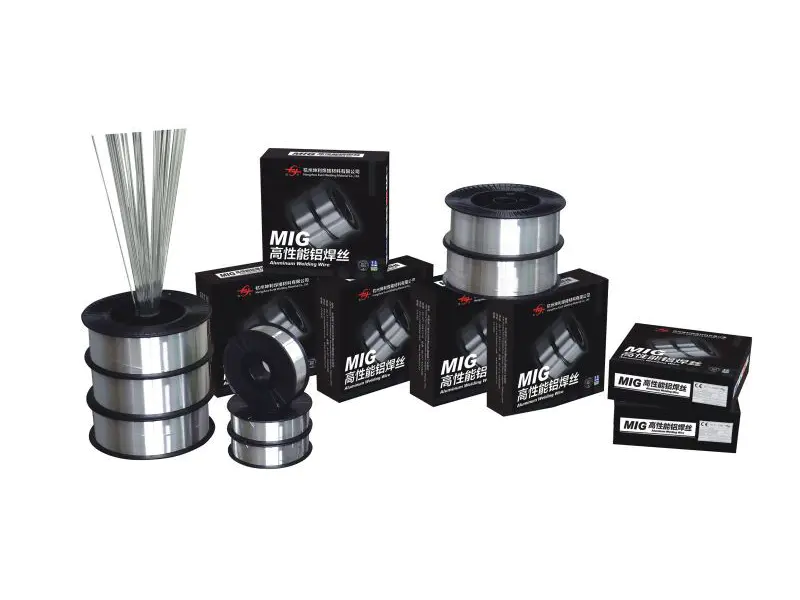
The 5356 Alloy Aluminum Wire has built its reputation in marine and structural fabrication through consistent performance across a wide range of applications. Its magnesium content supports solid tensile strength and reasonable corrosion resistance, which is why it shows up as the default choice in many shipyard welding procedures. It feeds well through MIG equipment, produces a stable arc, and handles the typical 5000-series aluminum base metals used in hull construction without compatibility issues.
That said, its suitability is not universal. There is a temperature sensitivity worth noting: sustained elevated temperatures during service can affect this alloy's corrosion behavior over time, a consideration that matters for certain heated tank or engine room applications but rarely affects typical hull and deck structural work. For the large majority of marine structural welding done at ambient service temperatures, it performs reliably and predictably.
Where it tends to show up consistently:
- General hull plating welded to common 5000-series base metal grades
- Deck structures, superstructure framing, and bulkhead panels
- Aluminum extrusion assemblies in recreational and commercial vessel construction
- Repair welding on existing aluminum marine structures where matching filler chemistry to base metal is straightforward
5183 Aluminium MIG Wire for High-Demand Marine Structures
If the 5356 alloy covers general marine fabrication needs reliably, the 5183 wire is the one that gets specified when the application pushes further into demanding territory. Higher magnesium content translates into stronger corrosion resistance under continuous saltwater contact, which matters considerably for joints that will spend their entire service life wet, submerged, or in tidal zones where the exposure is relentless rather than occasional.
It is commonly called out in welding procedures for pressure vessels used in marine environments, for offshore structural components where inspection and maintenance access is limited after installation, and for hull sections on commercial or workboat vessels where replacement or repair carries significant logistical complexity. The weld properties it delivers are not dramatically different from 5356 in terms of visual appearance or day-to-day handling, but the margin of corrosion resistance it provides in genuinely aggressive exposure conditions is meaningful across a long service period.
Applications where this alloy tends to get specified:
- Ocean-going commercial vessel hulls where sustained corrosion resistance over an extended service life is a design requirement
- Offshore platform structural aluminum where access for inspection is limited after installation
- Marine tanks and pressure vessels holding seawater or chemically aggressive contents
- Hull sections operating in high-salinity environments or enclosed coastal waters with limited tidal flushing
A Side-by-Side Look at How the Two Main Alloys Compare
| Property | 5356 Alloy Aluminum Wire | 5183 Aluminium MIG Wire |
|---|---|---|
| Magnesium content | Moderate | Higher |
| Tensile strength | Good | Higher |
| Corrosion resistance in saltwater | Good for general marine use | Stronger under sustained exposure |
| Temperature sensitivity | Present at elevated service temps | Lower sensitivity |
| Typical base metal compatibility | 5083, 5086, 5052, 5454 | 5083, 5086, 5456, 5454 |
| Common marine applications | Hull, deck, superstructure, repair | Offshore structures, commercial hulls, pressure vessels |
| Availability | Widely available | Available, may require deliberate sourcing |
How to Improve Weld Quality in Marine Structures
Proper Wire Selection Tips That Actually Make a Difference in Practice
A mistake in marine aluminum wire selection is treating every joint on a vessel the same way. A deck handrail and a primary structural frame member in the hull are both aluminum, but their exposure environments, load requirements, and consequences of failure are completely different. Matching wire selection to joint criticality rather than applying a single procedure across the whole vessel tends to produce better outcomes, and it forces fabricators to think clearly about what each joint actually needs rather than relying on habit.
A few practical principles worth applying before specifying wire for any marine job:
- Confirm base metal alloy before selecting filler, since compatibility between filler and base metal affects both strength and corrosion behavior at the joint interface
- For joints in continuously wetted areas or tidal zones, evaluate whether the additional corrosion resistance of the 5183 alloy justifies the slightly more deliberate sourcing it may require
- Consider the service temperature of the surrounding area, since machinery spaces and heated tank sections can affect long-term corrosion behavior of certain alloy choices
- In repair welding situations, identify the original base metal and existing filler alloy before selecting replacement material, since mixing incompatible alloy families can create galvanic issues at the joint over time
Does Pre-Weld Cleaning Make as Much Difference as Wire Selection?
In many situations, yes. Oxide contamination on the base metal surface introduces porosity and fusion defects that no amount of correct wire selection can prevent. Mechanical cleaning with a stainless steel brush reserved only for aluminum, followed by solvent degreasing immediately before welding, is not an optional step on marine structural work. Heat-affected zones from prior passes should also be cleaned between passes on multi-pass welds, since oxide reformation is rapid and thorough cleaning between passes directly affects fusion quality in the completed joint.
Post-Weld Handling Affects Long-Term Corrosion Behavior
Weld spatter left on the base metal surface, arc strikes outside the weld zone, and residual grinding marks from weld finishing all create stress concentration points and areas where the oxide layer has been disrupted without the benefit of proper fusion. These surface irregularities tend to become corrosion initiation sites in a marine environment over time. Consistent attention to weld finishing quality, not just weld integrity, pays off for vessels and structures that will spend years exposed to salt water.
Base Metal Compatibility: Matching Wire to What Is Already in the Structure
Why Alloy Family Matching Matters Beyond Just Strength
Aluminum alloys are not all chemically compatible with one another as filler-to-base-metal combinations. Choosing a filler from the wrong alloy family can produce a weld that appears sound but carries reduced corrosion resistance at the fusion boundary, the result of dissimilar alloy chemistries interacting in the heat-affected zone in ways that are not always predictable.
Marine structures are predominantly built from 5000-series aluminum alloys because of their inherent saltwater corrosion resistance. Both the 5356 and 5183 filler wires belong to the same alloy family, making them broadly compatible with common shipbuilding base metals. Where fabricators occasionally encounter complications is when repairs are made to older structures whose base metal alloy is uncertain, or when mixed alloy assemblies require a filler that bridges two different base metal chemistries. In those situations, consulting published filler compatibility charts and, where possible, confirming base metal chemistry before proceeding tends to prevent the kind of long-term joint failures that are expensive to trace and even more expensive to repair.
Procurement Considerations for Marine Welding Wire
What Should Sourcing Teams Confirm Before Placing a Volume Order?
Marine structural welding carries quality assurance requirements that general fabrication work may not, particularly on classified vessels or offshore structures where third-party inspection is involved. Before committing to a wire supply arrangement, a few confirmations are worth making:
- Whether the supplier can provide batch-level certification with chemical composition verification, not just a generic product data sheet
- How consistently the wire's actual composition falls within the alloy specification range across different production batches
- What the supplier's track record looks like with marine and offshore customers specifically, since these applications carry quality expectations that not all wire manufacturers consistently meet
- Whether standard packaging formats, spool sizes, and storage recommendations align with the shipyard's storage conditions and welding equipment setup
Is Stock Continuity a Practical Issue Worth Planning Around?
For shipyards running large projects over extended timelines, wire supply continuity matters more than it does for shorter production runs. Switching wire suppliers mid-project introduces the risk of batch-to-batch variation in composition or surface condition that can create subtle changes in arc behavior or weld appearance, which in turn creates complications for welding procedure documentation. Locking in a supply arrangement with a reliable source at the project outset is a small logistical step that prevents a disproportionate amount of potential disruption later.
Aluminum welding wire selection in shipbuilding ultimately comes down to understanding what each joint in a marine structure actually needs, and working back from that requirement to the alloy chemistry that supports it over the full service life of the vessel or structure. The 5356 Alloy Aluminum Wire handles the wide majority of marine structural work reliably, and its availability and handling characteristics make it the practical choice for general hull and deck fabrication. Where sustained exposure to saltwater, limited inspection access, or long service life in aggressive conditions push requirements beyond what the general-purpose alloy addresses comfortably, the 5183 wire offers the additional corrosion resistance margin that those applications warrant. Pre-weld preparation, post-weld finishing, and base metal compatibility all shape final weld quality alongside wire selection itself, and experienced fabricators tend to treat all of these as interconnected rather than addressing wire choice in isolation from the broader welding process. Hangzhou Kunli Welding Materials Co., Ltd. supports shipbuilding fabricators, marine engineers, and structural welding procurement teams with aluminum welding wire options suited to the specific demands of marine and offshore applications. Reaching out to discuss project-specific alloy requirements, available certifications, or supply arrangements is a practical next step for any team ready to move from specification research into a confident sourcing decision.
NEXT:ER5554 Aluminum Welding Wire: Selection Guide