English
  Deutsch


Why Is ER4943 the Right Filler for Aluminum Welds?
Article Directory
- 1 Who Should Use ER4943, and When?
- 2 What ER4943 Actually Is — and Why the Metallurgy Matters
- 3 Manganese-Bearing Wrought Alloys — 3xxx Series
- 4 Silicon-Bearing Wrought Alloys — 4xxx Series
- 5 Comparing Filler Options: Where Does ER4943 Stand?
- 6 Welding Processes and Shop Parameters: What Engineers and Technicians Need to Know
- 7 Failure Modes and Troubleshooting: What Goes Wrong and How to Fix It
- 8 Decision Flow: How to Choose ER4943 for a Given Job
- 9 Three Shop Scenarios Where ER4943 Made Practical Sense
- 10 Practical Takeaways for Engineers, Welders, and Purchasing Teams
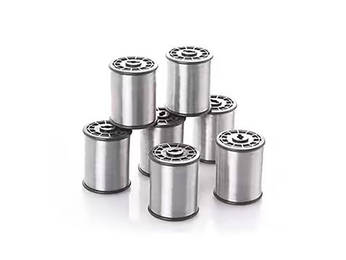
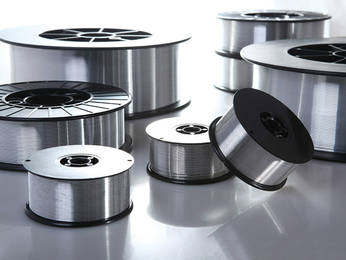
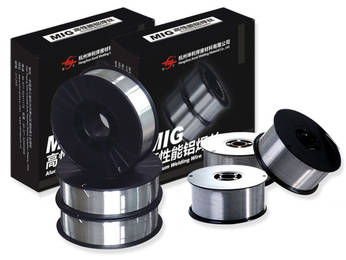
Choosing the wrong filler wire is one of those mistakes that announces itself only after the arc has stopped — in a crack, a failing weld toe, or a surface that refuses to anodize evenly. For fabricators and engineers working with aluminum, the selection decision is rarely trivial, and that is precisely where Aluminum Welding Wire ER4943 enters the conversation. Formulated with a silicon-magnesium chemistry that distinguishes it from both older silicon-only fillers and magnesium-dominant alternatives, this wire occupies a practical middle ground that suits a wide range of aluminum grades.
Who Should Use ER4943, and When?
Before diving into alloy-level detail, here is the short version for engineers who need an answer now.
This filler is a sound fit for commercially pure aluminum, manganese-bearing wrought alloys, silicon-bearing base alloys, the majority of 6xxx heat-treatable structural grades, and a broad range of cast aluminum components. It is not the right call for high-magnesium 5xxx alloys in corrosion-demanding service, high-strength aerospace precipitation-hardenable grades, or applications where anodizing color uniformity across the weld zone is a firm requirement.
A practical decision rule:
- Base alloy is 1xxx, 3xxx, 4xxx, or a compatible cast grade? Likely a workable fit — proceed to process selection.
- Base alloy is a 6xxx part destined for post-weld aging? Carefully evaluate temper response — the filler can be suitable, and in many cases it is preferable to ER4043 for this purpose.
- Base alloy is a high-magnesium 5xxx, a 2xxx, or a 7xxx grade? Stop here and select an alternative filler.
Alloy families where this wire sees regular use:
- Commercially pure and general wrought series (1xxx, 3xxx)
- Silicon-bearing wrought and cast alloys (4xxx family, Al-Si cast grades)
- Select low-magnesium 5xxx applications
- Many 6xxx structural, automotive, and architectural alloys
- Sand-cast and pressure-die-cast aluminum components
Next step — by who you are:
- Welder or technician: Run a test coupon on representative base material, inspect bead profile and toe geometry, then proceed.
- Welding engineer: Confirm alloy family, review how dilution affects weld zone microstructure, and verify post-weld heat treatment requirements before writing the WPS.
- Procurement or shop manager: Confirm alloy family from engineering before ordering. Do not stock this filler as a universal aluminum substitute — alloy compatibility is not automatic.
What ER4943 Actually Is — and Why the Metallurgy Matters
Strip away the classification numbers and what you have is an aluminum-silicon filler with a controlled magnesium addition. That combination is not merely superficial. It alters the movement and solidification of the weld pool, the behavior of the wire during MIG feeding or under TIG torch heat, and — crucially — how the deposited metal interacts with the differing chemistries of base alloys once dilution has occurred.
Silicon reduces the melting point of the filler relative to many base alloys, which improves fluidity and wetting in the weld pool. The practical result is a forgiving weld bead that bridges gaps well and is significantly less prone to hot cracking than filler chemistries that more closely resemble the base material itself. The magnesium addition — absent in ER4043 — brings an incremental strengthening capability, particularly relevant in 6xxx alloys that will see post-weld aging. That is the key differentiation between ER4043 and this wire: similar handling, meaningfully better as-welded and aged strength in the right alloy families.
Dilution and what it means in practice. When the filler melts and mixes with the base alloy during welding, the resulting weld metal is a blend of both. In alloys with moderate magnesium, that blending can activate a degree of Mg-Si precipitation hardening in the weld zone — a feature the older ER4043 cannot reliably deliver. In high-magnesium alloys, however, this same interaction shifts the solidification behavior in ways that increase hot-cracking risk and can reduce corrosion resistance in the weld zone. That is not a marginal concern. It is the primary reason high-Mg base alloys require a different filler entirely.
Weld appearance deserves a note, too. Deposits from this filler tend to show a brighter, cleaner bead face compared with ER5356. That is an advantage in some architectural and general fabrication contexts. But silicon-bearing deposits anodize darker than the surrounding base material — a characteristic that cannot be eliminated by surface treatment, only managed. If cosmetic consistency after anodizing is a firm requirement, the filler selection conversation needs to happen before fabrication begins, not after.
Alloy-by-Alloy Guidance: Which Families Pair Well?
Commercially Pure Aluminum — 1xxx Series
The 1xxx series keeps things simple. With minimal alloying beyond the aluminum itself, these grades present few metallurgical complications for filler selection. This filler bonds well, the melting behavior is compatible, and the lower-strength weld deposit is not a limiting factor since the base material is not itself a structural grade. For sheet, foil, and thin-section fabrication in commercially pure aluminum, the main practical requirement is surface preparation — thorough oxide removal and degreasing. The filler does its job reliably once the joint is clean.
Manganese-Bearing Wrought Alloys — 3xxx Series
Heat exchangers, cooking equipment, general sheet metalwork — the 3xxx family shows up across a wide range of applications. These non-heat-treatable alloys respond well to silicon-bearing fillers because there are no adverse alloying interactions with the manganese content. Weld pool behavior is smooth, bead geometry is consistent, and the aesthetic finish achievable with this filler is generally acceptable for exposed joints. For tubing and thin-sheet applications, the filler's fluidity is an asset that simplifies production. Joint properties in 3xxx base material typically meet service requirements without any post-weld treatment.
Silicon-Bearing Wrought Alloys — 4xxx Series
Welding 4xxx base alloys is a more specialized scenario — piston repairs, brazing fixtures, Al-Si components — but when it occurs, a silicon-bearing filler is the natural match. The compositional similarity between filler and base material limits the dilution-related microstructural surprises that can complicate welding of dissimilar chemistries. Bead appearance is consistent, cracking concerns are reduced, and the weld pool behavior is predictable.
Is ER4943 Suitable for Magnesium-Bearing Alloys? The 5xxx Series
Working with this alloy group calls for deliberate consideration. It is useful to pause and reflect at this stage.
Low-magnesium 5xxx alloys sit within acceptable range for this filler in non-structural or light-duty joints. The dilution effect keeps the weld metal chemistry away from crack-prone compositions, and corrosion performance stays within practical bounds for many service environments.
High-magnesium 5xxx alloys are a different matter entirely. Two specific concerns apply. First, the combination of silicon from the filler and elevated magnesium from the base creates a grain boundary condition that can reduce ductility and, in sustained-load or chemically aggressive environments, increase stress-corrosion sensitivity. Second, these alloys are typically specified precisely for their corrosion resistance — and introducing a silicon-rich filler into the weld zone can compromise that performance in the joint itself. For marine components, pressure vessels, or anything where corrosion resistance is the primary design driver, ER5356 or ER5183 is the appropriate selection, not this wire.
A practical checkpoint: if the application involves a 5xxx alloy and the service environment includes seawater, chemicals, or sustained mechanical load, default to a magnesium-bearing filler. Reserve this filler for non-corrosion-critical repair work on these grades.
Heat-Treatable Alloys — 6xxx Series and Post-Weld Heat Treatment
The 6xxx series — structural extrusions, automotive frames, architectural systems — is one of the natural homes for this filler. The silicon-magnesium chemistry interacts with the base alloy's precipitation-hardening elements in ways that support a strengthening response, particularly after post-weld artificial aging. That is the key advantage over ER4043 in this alloy family.
Some practical points for engineering:
- Joints that will not receive post-weld heat treatment will be softer than the parent material in the heat-affected zone. This is expected behavior, not a defect — but the joint design must account for it, placing the weld zone away from peak load paths where possible.
- For joints that will undergo artificial aging after welding, this filler's magnesium addition positions it meaningfully better than ER4043 alone for capturing a strengthening response.
- Where full recovery of parent-metal temper properties is needed — requiring complete solution heat treatment followed by aging — confirm that this is geometrically feasible for the fabricated part before committing the WPS.
Cast Aluminum Alloys — Repair, Fabrication, and Cast-to-Wrought Joining
Cast aluminum alloys — sand-cast, permanent-mold, pressure die-cast — frequently contain significant silicon themselves. That makes this filler a natural chemical companion. Fluidity is an asset in the tight joint geometries typical of castings, and wetting behavior reduces incomplete fusion risk along casting surfaces that may carry micro-porosity from the casting process itself.
Repair welding of cast components is a common scenario, and this filler handles the variable surface conditions of castings reasonably well. Pre-weld preparation still matters — castings trap hydrogen and oils in ways that wrought alloys do not — but the filler's compositional affinity with Al-Si base alloys reduces one of the major risk factors.
Can ER4943 be used for cast-to-wrought joints? Yes, for compatible alloy families. The combination of silicon from both the filler and the cast base tends to produce a weld pool that fuses well to both sides without hot cracking, provided heat input is managed carefully and a representative test coupon is qualified before production.
When Should You Avoid ER4943 Entirely?
There are cases where this filler should be set aside:
- High-strength 2xxx and 7xxx alloys: These precipitation-hardenable grades require carefully matched fillers — or are approached through solid-state rather than fusion processes. Silicon-bearing fillers create adverse microstructural interactions in these systems.
- High-magnesium 5xxx in corrosion or marine service: As detailed above, the silicon-magnesium interaction degrades the corrosion advantage of the base alloy.
- Joints with strict anodizing color requirements: Silicon-rich weld deposits anodize darker than the base alloy. For architectural or consumer product applications where the weld bead must match the surrounding surface after anodizing, this is a functional as much as a cosmetic concern.
Comparing Filler Options: Where Does ER4943 Stand?
| Filler | Cracking Resistance | As-Welded Strength | Corrosion Behavior | Post-Weld Heat Treatment Response | Typical Use Case |
|---|---|---|---|---|---|
| ER4943 | Good | Moderate-Good | Moderate | Better than ER4043 for aging response | 1xxx, 3xxx, 6xxx, many cast alloys |
| ER4043 | Good | Moderate | Moderate | Limited aging response | General purpose, 6xxx structural |
| ER5356 | Moderate | Good | Good for marine service | Not recommended | High-Mg 5xxx, strength-critical joints |
| ER5183 | Moderate | Good | Very Good | Not recommended | Marine and pressure vessel 5xxx |
| ER1100 | Good | Low | Good | None | Thin sheet, pure aluminum, heat exchangers |
ER4943 vs. ER4043 — a comparison frequently raised. Both are silicon-based and both offer manageable weld pool behavior and reduced hot-cracking sensitivity. The functional difference sits in the magnesium addition: this filler can deliver a measurable improvement in as-welded and post-weld-aged strength in 6xxx base alloys, while ER4043 does not. For simple gap-filling on a non-structural casting repair, ER4043 remains a practical and cost-effective choice. Where post-weld strength matters and aging is planned, the engineering case for this filler is clear.
ER4943 vs. ER5356 — a different kind of trade-off. ER5356 offers stronger as-welded mechanical properties and better corrosion resistance in magnesium-bearing base alloys. The cost is higher sensitivity to hot cracking in certain alloy families and a limitation on elevated-temperature service. When the base material is a high-Mg 5xxx alloy, ER5356 is the right call. For 6xxx structural alloys and many cast grades, silicon-based fillers are typically noted for their weldability, surface appearance, and handling predictability.
Real-world switching cues:
- Repeated weld toe cracking on 5xxx base material → switch to ER5356 or ER5183
- Post-weld aging response is insufficient on 6xxx joints → check whether ER4043 was specified; switching to this filler may help
- Weld bead is unacceptably dark after anodizing → consider ER5356 or ER1100 depending on alloy family and strength requirements
Welding Processes and Shop Parameters: What Engineers and Technicians Need to Know
Which Processes Use ER4943?
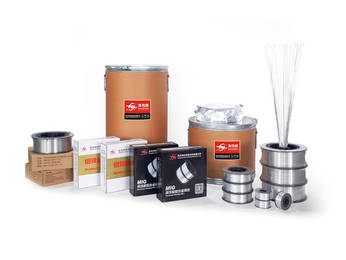
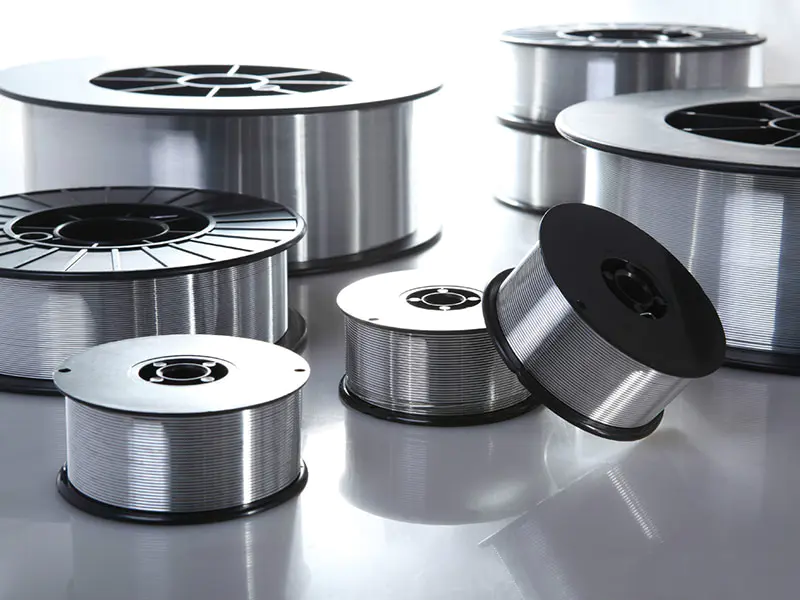
This filler is available in both TIG rod and MIG wire form, making it adaptable across common shop setups without requiring equipment changes.
TIG/GTAW is the process of choice for thin sections, root passes, precision repair work on castings, and any joint where close control of heat input is critical. The welder's manual control over filler addition rate allows tight management of dilution and bead geometry — particularly valuable when working near the edge of alloy compatibility.
MIG/GMAW supports production-rate applications: medium and heavy section fabrication, structural assemblies, high-volume casting repair. Wire feed consistency produces reliable fusion across longer joints without the fatigue that comes with manual rod feeding.
Joint Design and Heat Input
Tight fit-up matters more than many fabricators expect. Excessive gaps increase dilution variability and can cause the filler's silicon-bearing chemistry to produce wide, flat beads that trap contamination at the toes. In 6xxx alloys specifically, managing heat input to minimize the heat-affected zone width directly affects effective joint strength — the softened zone alongside the weld expands with higher heat input even when the weld metal itself is sound.
For casting repairs, a mild preheat — described informally as "warm to the touch, not hot" — helps drive off surface moisture and reduces porosity risk. Do not skip this step on castings with visible oil contamination or long storage history.
Pre-Weld Preparation
Aluminum welding does not forgive surface contamination. This filler is no different:
- Remove the oxide layer from joint faces mechanically (using a dedicated stainless steel brush — never one shared with steel) or chemically, immediately before welding. Oxide that reforms after cleaning will cause fusion problems.
- Degrease all surfaces with a fresh solvent wipe. Cutting fluid residue from machining is a direct path to porosity, and it does not always announce itself visually.
- Store filler wire in sealed packaging until use. Moisture pickup on wire surfaces introduces hydrogen into the weld pool, and hydrogen means porosity.
- Minimize fit-up gaps. Excessive gaps do not only introduce variability in dilution — they can result in incomplete fusion at the root, which may appear acceptable visually, yet become evident under loading or radiographic review.
Feedability, Wire Condition, and MIG Setup
Aluminum wire presents feed path challenges that ferrous wire does not. A few practical controls make the difference between smooth production and repeated stoppages.
Incoming wire should be free of drawing agents and surface contamination. A simple wipe test at spool change time takes seconds and catches contamination before it disrupts arc stability or drives porosity into the weld. Even winding on the spool, consistent cast and helix geometry, and a liner diameter matched to the wire all contribute to steady feed rates.
Drive roll type matters: select a profile that suits the wire surface — mismatched rolls deform the wire, increasing friction and causing erratic feed. Check liner condition, guide geometry, and contact tip orifice size before high-rate runs. Tension and spool braking should be adjusted to maintain controlled pay-off that prevents sudden spool acceleration during arc starts.
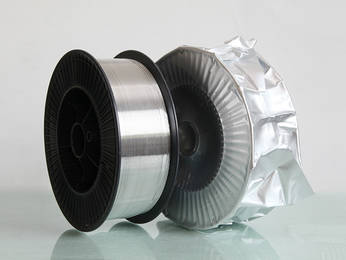
Store spools in a sealed and dry condition. If a spool remains open overnight in a humid environment, it may absorb sufficient moisture to create porosity in the initial welds made the following day.
Shielding Gas and Post-Weld Practices
Argon is the standard shielding gas for both TIG and MIG on aluminum. Argon-helium blends are used where additional heat input and penetration are needed on heavier sections. Whatever the gas choice, coverage at the weld zone must be adequate — drafty shop environments require screens or baffles to maintain shielding integrity.
For TIG welding, maintain a consistent arc length. A wandering arc allows atmospheric contamination and produces an uneven bead that compromises both appearance and mechanical quality.
Post-weld, allow welds in 6xxx alloys to cool naturally unless a deliberate heat treatment cycle is planned. Where post-weld artificial aging is specified, follow the temper schedule appropriate to the base alloy — this filler's magnesium addition is specifically formulated to participate in that response.
Failure Modes and Troubleshooting: What Goes Wrong and How to Fix It
Common Defects When ER4943 Is Misapplied
Hot cracking near the weld toe or in the weld bead centerline. This is the alarm signal for a silicon-bearing filler misapplied to a high-magnesium base alloy. The crack may appear as a fine line in the bead center or as a toe crack on the base metal side. Causes include unfavorable weld metal chemistry from excessive dilution into a high-Mg base, high joint restraint, or excessive heat input. The corrective action is straightforward: if the base alloy is a high-Mg 5xxx, the filler selection is wrong — switch to ER5356 and review joint restraint conditions.
Distributed porosity. Small, round voids visible in cross-section or on the bead surface point to hydrogen contamination — from the base surface, the filler wire itself, or the shielding gas supply. Linear or cluster porosity near the fusion line suggests inadequate cleaning or a fit-up gap trapping contamination. Resolve the contamination source before rewelding; repeating the same process will produce the same result.
Lack of fusion. Cold lap or incomplete fusion at the toes occurs when travel speed is too high, heat input is too low, or oxide was not adequately removed from the joint faces. It may not be visible on the bead surface — radiographic or bend testing is often needed to confirm its presence. The fix involves both process parameters and surface preparation.
Dark or discolored weld after anodizing. This is not a structural defect, but it is a rejection point for cosmetically finished components. Silicon-bearing fillers produce a weld zone that anodizes distinctly darker than the surrounding base metal. If this characteristic is a problem, flag it before filler selection is finalized — not during inspection of finished parts.
Diagnostic Checklist
| Symptom | Likely Cause | Corrective Action |
|---|---|---|
| Centerline cracking in bead | High-Mg base alloy with silicon filler | Switch to ER5356; reduce joint restraint |
| Toe cracking | High dilution, high restraint | Reduce heat input; review joint design |
| Distributed porosity | Surface contamination or moisture on wire | Improve pre-weld cleaning; replace wire spool |
| Lack of fusion | Insufficient heat input or oxide on joint faces | Increase heat input; re-clean joint |
| Dark weld zone after anodizing | Normal behavior for silicon fillers | Specify ER5356 or ER1100 if appearance is critical |
| Soft joint in 6xxx (no strength recovery) | No post-weld aging step | Add artificial aging to the fabrication sequence |
| Irregular feed / wire jamming (MIG) | Liner wear, drive roll mismatch, spool moisture | Inspect liner and drive rolls; check wire storage conditions |
Preventive Practices Worth Following
Store filler wire in sealed, dry conditions and use within a reasonable period after opening. A spool sitting uncovered in a humid shop for a week is no longer the same wire it was when it arrived.
Dedicate brushes and grinding wheels to aluminum only. Cross-contamination from steel introduces iron and other contaminants that reduce weld quality in ways that are difficult to trace back to the actual cause.
Review the base alloy designation on the material certification for every new job. Assumptions based on appearance or prior practice are how mismatched filler selections happen. Aluminum alloys in the same general shape and color can have significantly different chemistry.
On any unfamiliar alloy-filler combination, weld a coupon first. Inspect it before committing to production. The coupon weld takes minutes; a rework on a finished structural component takes much longer.
Decision Flow: How to Choose ER4943 for a Given Job
Follow these steps before finalizing filler selection:
- Identify the base alloy family from the material certification or engineering drawing. Do not estimate based on appearance or part description.
- Check the magnesium direction for 5xxx alloys. If the specific grade falls at the high end of the magnesium range, move to an alternative filler.
- Assess the service environment. Marine, chemical, or corrosion-demanding service conditions with 5xxx base alloys require a magnesium-bearing filler. For other alloy families and general service environments, proceed.
- Determine post-weld heat treatment intent. Is aging or full solution treatment planned? If yes, confirm this filler aligns with the intended temper. If no treatment is planned, account for as-welded softening in the structural design.
- Evaluate anodizing and appearance requirements. If the part will be anodized and color uniformity across the weld matters to the customer or specification, flag this before filler selection is locked in.
- Weld a representative test coupon. Use the same alloy, same thickness, same joint geometry as the production part. Inspect visually, by bend test if available, and by dye penetrant or radiograph if the application warrants it.
- Document the selection in the welding procedure specification. Once the coupon confirms acceptable results, record the filler selection in the WPS so it is reproducible across operators and production runs.
Validation sequence: Visual inspection for cracking and porosity → bend test on coupon → penetrant examination or radiograph if required → review bead appearance for cosmetic requirements → sign off for production.
Three Shop Scenarios Where ER4943 Made Practical Sense
Repair of a sand-cast pump housing. A maintenance team received a sand-cast aluminum pump housing — an Al-Si-Mg cast grade — with a crack adjacent to a bolt boss. The compositional match between this silicon-bearing filler and the Al-Si casting base made the filler selection logical. After light grinding of the crack, chemical degreasing, and a moderate preheat to manage hydrogen from the casting surface, TIG welding was used for heat input control on the relatively thin casting wall. Dye penetrant inspection confirmed full fusion with no porosity. The housing returned to service. The lesson: for Al-Si cast alloys, the filler's compositional affinity simplifies repair work significantly — as long as surface preparation is not shortcut.
Fabrication of a 6xxx extrusion frame. A fabrication shop building corner joints for a loaded curtain wall system selected this filler after confirming the 6xxx base alloy was a workable match. No post-weld heat treatment was planned, so the engineer wrote a WPS with joint geometry that placed the weld zone away from peak load paths — accounting directly for as-welded softening in the design, not as an afterthought. MIG welding was used for production rate. Visual and dimensional inspection confirmed acceptable results. The lesson: the filler choice is sound for 6xxx structural applications, but as-welded mechanical properties must be factored into the joint design when aging is not performed.
Joining a die-cast bracket to a 6xxx mounting plate. A supplier needed to join a pressure-die-cast Al-Si-Cu bracket to a 6xxx wrought plate. The dissimilar combination raised dilution questions: would the weld chemistry remain workable given two different base compositions? A trial with this filler showed that the silicon from both the filler and the cast side produced a weld pool that fused well to both surfaces without hot cracking. TIG welding with careful arc positioning managed heat input to the thinner wrought plate. No cracking or porosity was found on inspection. The lesson: cast-to-wrought joins on compatible alloy families are achievable with this wire, but a test coupon is not optional when two different base chemistries are involved.
Practical Takeaways for Engineers, Welders, and Purchasing Teams
Do:
- Confirm alloy family from the material certification before finalizing filler selection.
- Run a test coupon on representative base material before production.
- Account for as-welded softening in 6xxx joint design when post-weld heat treatment is not planned.
- Store wire sealed and dry; dedicate cleaning tools to aluminum only.
- Inspect completed welds before any downstream processing.
- Document filler selection and rationale in the welding procedure specification.
Do not:
- Use on high-magnesium 5xxx alloys in corrosion or marine service.
- Specify as a universal aluminum filler without verifying alloy family compatibility.
- Skipping pre-weld oxide removal and degreasing — contamination becomes a recognized source of porosity.
- Ignore cosmetic anodizing requirements; silicon-bearing fillers create visibly darker weld zones.
- Carry a passing coupon result from one alloy family to a different alloy without re-verification.
By role:
- Welder or technician: Confirm the alloy is on the compatible list, prepare the surface thoroughly, and run a coupon before committing to the joint.
- Welding engineer: Write the WPS with explicit alloy-filler rationale, account for as-welded mechanical properties in the structural design, and plan post-weld heat treatment if strength recovery is a requirement.
- Procurement or shop manager: Do not purchase this wire as a single stock replacement for all aluminum grades — confirm with engineering that the alloys being welded are compatible before ordering.
Selecting the right filler wire is one of those decisions that is easy when the alloy family is known and service conditions are defined — and costly when it is made by assumption rather than verification. Aluminum Welding Wire ER4943 offers a combination of silicon-based weldability and magnesium-enhanced strength response, which makes it suitable for use with commercially pure, 3xxx, 4xxx, 6xxx, and many cast aluminum grades. Its limitations are equally clear: high-magnesium 5xxx alloys, strength-critical aerospace grades, and cosmetically demanding anodized applications sit outside its range. Using the detailed alloy specifications, a structured troubleshooting list, and a clear decision process, welders and engineers gain a consistent method for selecting materials. This approach supports informed choices, allows for proper documentation, and helps produce welds that maintain integrity under service conditions.
NEXT:What AWS A5.10 Standards Must Your ER4047 Welding Wire Meet for Aerospace and Structural Applications?