English
  Deutsch


What AWS A5.10 Standards Must Your ER4047 Welding Wire Meet for Aerospace and Structural Applications?
Article Directory
- 1 1. Chemical Composition and the Silicon Factor
- 2 2. Surface Quality and Feedability Standards
- 3 3. Application in High-Stress Structural Components
- 4 Conclusion: The Benchmark of Quality
- 4.1 Frequently Asked Questions (FAQ)
- 4.1.1 1. What is the primary difference when comparing ER4047 vs ER4043 silicon content?
- 4.1.2 2. Is ER4047 aluminum TIG rods suitable for all aluminum alloys?
- 4.1.3 3. How does Kunli ensure ER4047 MIG wire feedability?
- 4.1.4 4. What are the uses of ER4047 in structural aluminum welding?
- 4.1.5 5. Why should I consider buying ER4047 welding wire in bulk from Kunli?
- 4.2 Industry References
- 4.1 Frequently Asked Questions (FAQ)
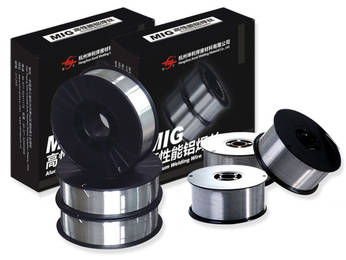
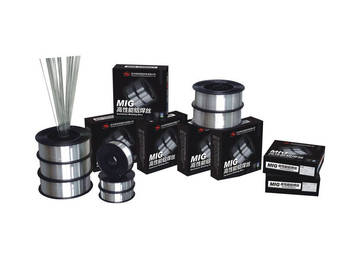
In the precision-driven industries of aerospace and heavy structural engineering, the integrity of a weld is determined by the strict adherence to international metallurgical standards. The ER4047 welding wire, a silicon-rich aluminum alloy, is frequently the primary choice for applications requiring high fluidity and reduced shrinkage. However, for a product to be flight-worthy or structurally sound, it must rigorously comply with the AWS A5.10/A5.10M specification. Hangzhou Kunli Welding Materials Co., Ltd., with over 20 years of expertise, specializes in manufacturing ER4047 welding wire that bridges the gap between domestic production and imported high-performance materials. Our facility in Hangzhou utilizes advanced manufacturing technology to meet international certifications such as ABS, CE, and DNV, ensuring our products meet the exact requirements of aerospace-grade hardware.
1. Chemical Composition and the Silicon Factor
The defining characteristic of ER4047 welding wire under AWS A5.10 is its high silicon content, typically ranging between 11.0% and 13.0%. This specific concentration is designed to lower the melting point and increase the fluid range, making it an excellent aluminum brazing wire for heat exchangers. While ER4043 vs ER4047 for aluminum welding is a common debate among engineers, ER4047 offers superior resistance to solidification cracking due to its eutectic-near composition. When comparing ER4047 vs ER4043 silicon content, the higher Si levels in 4047 provide a significantly narrower freezing range, which is critical for the intricate joints found in aerospace fuel systems. At Kunli, we ensure that every batch of ER4047 aluminum TIG rods and MIG wires maintains the ER4047 welding wire chemical composition limits to prevent hot cracking in high-stress structural joints.
Metallurgical Comparison: ER4043 vs. ER4047
- Silicon Distribution: ER4047 features nearly double the silicon of ER4043, resulting in higher fluidity.
- Melting Range: The eutectic nature of ER4047 provides a sharper solidification point, reducing the duration of the "mushy zone."
| Element / Property | ER4043 (Standard) | ER4047 welding wire (High Si) |
| Silicon (Si) % | 4.5 - 6.0 | 11.0 - 13.0 |
| Melting Point (Approx) | 1065°F - 1170°F | 1065°F - 1080°F |
| Fluidity Rating | Good | Excellent (Superior) |
2. Surface Quality and Feedability Standards
AWS A5.10 does not only regulate chemistry; it strictly governs the surface finish and cleanliness of the wire. In aerospace manufacturing, ER4047 MIG wire feedability is paramount to avoid arc instability and porosity. Contaminants such as hydrocarbons or excessive oxides on the wire surface can lead to catastrophic weld failures. Therefore, ER4047 welding wire for aerospace applications undergoes rigorous surface treatment to ensure a "mirror-like" finish. Furthermore, the ER4047 aluminum welding wire tensile strength must be verified through standardized testing to ensure structural loads are met. As a qualified supplier to CRRC and Maersk, Hangzhou Kunli implements a stable production process for aluminum wire that successfully replaces imported high-end products by focusing on consistent diameter tolerances and low-residue surfaces.
Critical Quality Sequence
- Wire Drawing: Controlled reduction to ensure high ER4047 MIG wire feedability and diameter precision.
- Chemical Cleaning: Specialized baths to remove all drawing lubricants and oxides.
- Spooling: Precision layer winding to prevent tangling during high-speed robotic welding.
- Certification: Batch testing to confirm ER4047 aluminum welding wire tensile strength and AWS A5.10 compliance.
| Quality Parameter | Standard Industrial Grade | Aerospace-Grade ER4047 welding wire |
| Surface Condition | Basic Cleanliness | Ultra-Clean / Shaved (Low Oxide) |
| Diameter Tolerance | +/- 0.03mm | +/- 0.01mm (Precision) |
| Hydrogen Content | Not Specified | Extremely Low (Vacuum Baked) |
3. Application in High-Stress Structural Components
The uses of ER4047 in structural aluminum welding extend beyond simple joining. It is frequently used for surfacing and the repair of castings where thin-walled sections require minimal heat input. Understanding how to weld aluminum with ER4047 wire requires knowledge of the base alloy compatibility; it is ideal for 6xxx series alloys and many 3xxx and 1xxx series. For engineers looking to optimize their workflow, buying ER4047 welding wire in bulk from a manufacturer with 200MT monthly capacity like Kunli ensures supply chain stability. We provide best practices for ER4047 aluminum brazing to help our global partners achieve the high-integrity seals required in the automotive and aerospace cooling sectors.
Conclusion: The Benchmark of Quality
Adhering to AWS A5.10 is not merely a formality—it is the foundation of safety in aerospace and structural applications. ER4047 welding wire must provide consistent chemistry, superior surface cleanliness, and reliable mechanical properties to replace imported alternatives. At Hangzhou Kunli Welding Materials Co., Ltd., we combine 20 years of experience with international equipment to deliver high-performance aluminum alloys that exceed global standards. Our commitment to innovation and quality control ensures that every weld made with our wire is a testament to engineering excellence.
Frequently Asked Questions (FAQ)
1. What is the primary difference when comparing ER4047 vs ER4043 silicon content?
ER4047 contains approximately 12% silicon, whereas ER4043 contains 5%. This higher silicon content makes ER4047 more fluid, lowers the melting point, and makes it specifically suitable for brazing and thin-section welding.
2. Is ER4047 aluminum TIG rods suitable for all aluminum alloys?
While versatile, it is primarily used for 6xxx series aluminum and for joining cast alloys to wrought alloys. It is not recommended for alloys with high magnesium content (like the 5xxx series) due to the risk of forming brittle Mg2Si intermetallic compounds.
3. How does Kunli ensure ER4047 MIG wire feedability?
We utilize international advanced manufacturing equipment and a strict stable production process for aluminum wire that includes precision shaving and ultra-sonic cleaning to ensure the wire is smooth and free of contaminants.
4. What are the uses of ER4047 in structural aluminum welding?
It is used extensively in automotive frames, aerospace heat exchangers, and the repair of aluminum castings where high fluidity is needed to fill intricate gaps or minimize distortion.
5. Why should I consider buying ER4047 welding wire in bulk from Kunli?
With a monthly capacity of 200MT and 20 years of experience, Kunli offers stable pricing, international certifications (ABS, CE, DB), and products that have successfully replaced high-cost imports in industries like rail transit and maritime shipping.
Industry References
- AWS A5.10/A5.10M: Specification for Bare Aluminum and Aluminum-Alloy Welding Electrodes and Rods.
- ASME Section II, Part C: Specifications for Welding Rods, Electrodes, and Filler Metals.
- DB (Deutsche Bahn) & CE Certification standards for rail and construction materials.
- Beijing Nonferrous Metals Research Institute: "Silicon Distribution in High-Performance Aluminum Joints."
NEXT:How to Clean Aluminum Welds: A Complete Engineer-Level Guide