English
  Deutsch


Why ER4943 Helps Improve As-Welded Strength in Aluminum Welding
Article Directory
- 1 What Makes ER4943 Different From Standard Aluminum Filler Wire
- 2 Why As-Welded Strength Matters in Real Applications
- 3 What Problems ER4943 Solves for Welders and Buyers
- 4 How Does ER4943 Compare to ER4043?
- 5 ER4943 vs ER5356: Understanding the Trade-offs
- 6 Which Base Metals and Applications Suit This Filler Wire
- 7 What Buyers Should Evaluate Before Choosing This Filler
- 8 How to Avoid Common Wire Selection Mistakes
- 9 Is This Wire the Right Fit for Your Project?
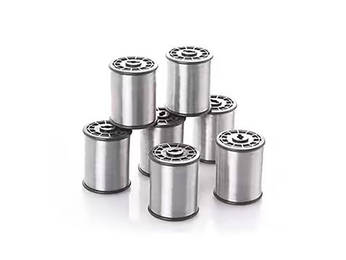
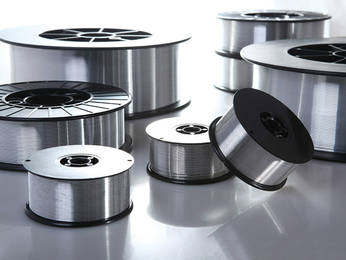
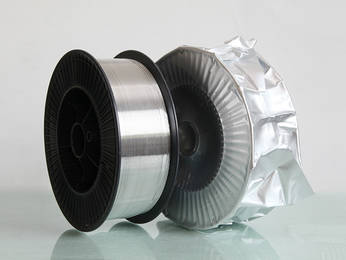
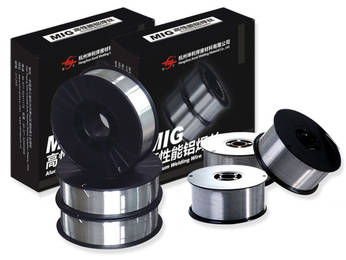
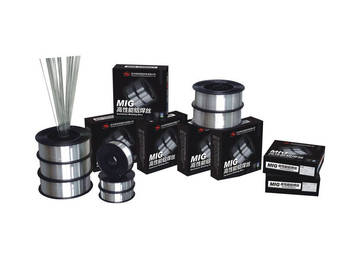
Choosing a filler wire for aluminum work often comes down to a familiar frustration: the wires that are easiest to run do not always produce the strength you need, and the ones that offer better mechanical performance sometimes fight you in the process. If you have been relying on a standard aluminum filler and finding that the weld joint falls short under load, or you are starting a structural project and wondering whether your current wire is actually up to the job, that tension is exactly what 4943 Aluminum Welding Wire was developed to address. It sits in a specific space in the aluminum filler family — designed to deliver stronger as-welded results than conventional silicon-based wires while preserving the handling characteristics that make those wires practical to use.
What Makes ER4943 Different From Standard Aluminum Filler Wire
ER4943 belongs to the aluminum-silicon filler family, which means it shares some characteristics with the widely used 4043-type wires: good flow in the puddle, low sensitivity to hot cracking, and relatively smooth arc behavior. What sets it apart is the addition of a higher silicon content combined with a small amount of copper, which together raise the strength of the deposited weld metal in its as-welded condition — meaning right after welding, without any subsequent heat treatment.
Users encounter 4043-type wires when welding 6xxx series aluminum because those wires are forgiving and widely available. The limitation shows up when the application requires a joint that needs to carry real structural load. That is the gap ER4943 fills — not by making the welding process harder, but by changing what the weld deposit is capable of once the arc stops.
Why As-Welded Strength Matters in Real Applications
The term "as-welded strength" refers to the mechanical performance of the joint in the condition it is in immediately after welding — before any post-weld heat treatment, machining, or aging. For many applications, that is the only condition that ever exists. The part gets welded, inspected, and put into service. There is no subsequent process to compensate for a weaker weld deposit.
This is where the choice of filler wire has direct consequences:
- Joints that carry dynamic or static loads need a weld deposit that can handle stress without depending on the base metal alone to carry the work.
- In structural aluminum fabrication, weld zone strength is often the limiting factor in overall assembly performance.
- When repair work or field welding is involved, there is rarely an option to apply post-weld treatment to restore properties.
Choosing a filler that delivers stronger as-welded properties is not about chasing numbers on a spec sheet. It is about making sure the joint performs from the moment the part goes into service.
What Problems ER4943 Solves for Welders and Buyers
The frustration that pushes welders and buyers toward ER4943 usually starts with one of a few recurring situations:
- A fabrication spec calls for a weld that needs to meet certain strength requirements, and the standard filler wire used on the shop floor falls short.
- A buyer switches from 4043 because of complaints about joint performance under load, but does not want to move to a wire that introduces handling difficulties or cracking risk.
- An application involves 6xxx series aluminum — a family where dilution with 4043 can limit weld deposit strength — and the team needs better results without redesigning the joint.
- The project involves welding 5xxx series base metal to 6xxx series, which adds complexity around filler compatibility and weld zone behavior.
ER4943 addresses these situations by shifting the baseline. The weld deposit it produces is inherently stronger, which means fabricators get a better starting point without needing to change their process significantly.
How Does ER4943 Compare to ER4043?
That comparison comes up often, because many aluminum welders have direct experience with 4043 and want to understand what they gain — or give up — by switching.
| Property | ER4043 | ER4943 |
|---|---|---|
| Silicon content | Standard range | Higher than ER4043 |
| Copper addition | None | Present (raises strength) |
| As-welded tensile strength | Lower baseline | Noticeably higher |
| As-welded yield strength | Lower baseline | Considerably higher |
| Hot crack resistance | Good | Good |
| Puddle flow and arc behavior | Smooth, forgiving | Similar to ER4043 |
| Compatibility with 6xxx base metals | Widely used | Well suited |
| Anodizing response | Can show color variation | Better color consistency |
The practical takeaway is that ER4943 does not require a welder to learn a new process or accept worse handling. The upgrade is primarily in what the deposit delivers mechanically. For buyers who have been accepting joints that just barely meet requirements with 4043, moving to ER4943 creates meaningful headroom.
ER4943 vs ER5356: Understanding the Trade-offs
ER5356 is the other common point of comparison, and it draws from a different part of the aluminum filler family — the aluminum-magnesium group rather than the aluminum-silicon group. The comparison involves more trade-offs than the ER4043 versus ER4943 discussion.
Where ER5356 tends to work well:
- Welding 5xxx series base metals where a matching chemistry is preferred
- Applications where a bright weld appearance after anodizing matters
- Situations where the weld pool behavior of magnesium-based filler suits the operator's preference
Where ER4943 tends to be the stronger call:
- Welding 6xxx series base metals, where 5356 can create cracking risk in certain conditions
- Applications where the as-welded deposit needs to carry structural load without relying on a post-weld process
- Mixed-alloy joints involving both 5xxx and 6xxx base metals, where filler compatibility becomes more complicated
Neither wire is universally better. The decision depends on the base alloy, the joint type, and what the application demands from the finished weld.
Which Base Metals and Applications Suit This Filler Wire
ER4943 is well matched to work involving:
- 6xxx series aluminum alloys (including 6061, 6063, and similar wrought alloys commonly used in structural fabrication)
- Applications where the parent material is heat-treatable aluminum and the weld zone needs to contribute to overall assembly strength
- Structural joints in transportation, automotive, and light industrial equipment where as-welded performance matters
- Repair welding on 6xxx components where the option to apply post-weld treatment is limited
- Fabrication involving dissimilar aluminum alloys where a silicon-based filler is the appropriate choice for crack resistance
It is less suited to base metals that respond specifically to magnesium-matched filler, or applications where the downstream process specifically calls for 5xxx-type filler chemistry.
Which Welding Processes Work With This Wire
ER4943 runs in both MIG and TIG processes, which means it fits into existing setups without requiring a process change.
In MIG applications:
- Wire feeding behavior is comparable to other aluminum-silicon fillers of the same gauge
- The puddle is fluid and manageable, which reduces the chance of lack-of-fusion at the weld toe
- Spatter is low, which helps with weld appearance and cleanup time
In TIG applications:
- The wire handles well and feeds consistently in the hand
- The weld puddle responds predictably to heat input adjustments
- The finished bead tends to have a clean, consistent profile
For operators already comfortable with 4043, the transition to ER4943 in either process is straightforward. The wire does not introduce unexpected behavior that requires relearning technique.
What Buyers Should Evaluate Before Choosing This Filler
Before settling on ER4943, a few factors are worth working through:
- Base alloy family: Is the application primarily 6xxx series, or does it involve a mix that includes 5xxx? This shapes filler selection significantly.
- Joint strength requirements: Does the application need the weld to carry meaningful load in the as-welded condition, or is the joint largely cosmetic or low-stress?
- Post-weld processing: Will the assembly go through heat treatment after welding? If so, the filler selection logic may shift.
- Anodizing requirements: If the finished part will be anodized, the filler choice affects how the weld zone looks after treatment.
- Operator and process setup: Is the shop running MIG or TIG? Are there existing parameters that need to be adjusted for a new filler wire diameter or alloy?
- Cracking history: Has the application had problems with hot cracking using other fillers? ER4943 maintains good crack resistance, which is relevant if cracking has been a recurring issue.
Working through these points before purchasing avoids the more common mistake of selecting a filler wire based on habit or availability rather than what the application actually requires.
How to Avoid Common Wire Selection Mistakes
A few patterns come up repeatedly when buyers end up with the wrong aluminum filler wire:
- Defaulting to a familiar wire: 4043 is everywhere, which means many shops use it for applications where a stronger filler would serve better. Familiarity is not the same as fitness for purpose.
- Ignoring the base alloy family: Filler wire selection starts with the base metal. Choosing a wire that is generally "good for aluminum" without considering whether it is matched to the specific alloy is a common source of joint performance problems.
- Assuming post-weld treatment will compensate: Some buyers choose a weaker filler assuming the part will be heat treated afterward. When that step gets skipped or delayed, the joint is weaker than planned.
- Prioritizing price over performance on structural joints: On cosmetic or low-stress applications, wire cost matters more. On load-bearing joints, the cost of a failed weld or a rework cycle outweighs any filler wire savings.
ER4943 is not the answer to every aluminum welding application, but it is the right answer for a specific and common set of situations where as-welded strength is the priority and handling cannot be sacrificed.
Is This Wire the Right Fit for Your Project?
A practical way to work through the decision:
Choose ER4943 when:
- The base metal is 6xxx series aluminum
- The joint needs to carry structural load in the as-welded condition
- You are currently using 4043 and finding the joint strength falls short
- The application involves mixed 5xxx and 6xxx alloys where silicon-based filler is preferred
- Anodizing appearance consistency matters
Consider a different filler when:
- The base metal is primarily 5xxx series and alloy matching is specified
- Post-weld heat treatment will be applied and the filler selection logic accounts for that
- The application is low-stress and familiarity with a current wire outweighs any strength benefit
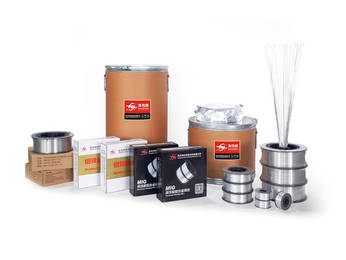
If the applications you are working on involve 6xxx series aluminum joints that need to perform under load from the moment they leave the shop, the gap between what a standard filler delivers and what ER4943 deposits is worth taking seriously. The decision does not require changing your process or retraining your team — it requires matching the filler to what the job actually demands. Hangzhou Kunli Welding Materials Co., Ltd. supplies this wire and works with engineering and procurement teams to confirm that the specification, diameter, and packaging format suit the production environment. Reaching out with the details of your base material, application, and current filler wire gives their team the context needed to confirm whether this is the right switch for your work.
NEXT:ER4043 Wire Guide: Technical Specifications, Usage & Comparisons