English
  Deutsch


When Aluminum Welding Wire ER4943 Meets Anodizing Needs
Article Directory
- 0.1 What ER4943 Is and Why It Enters the Anodizing Conversation
- 0.2 Positioning Among Aluminum Filler Wires
- 0.3 Why Filler Chemistry Affects Post-Weld Anodizing
- 1 What to Expect from ER4943 After Post-Weld Anodizing
- 2 How Does ER4943 Compare to ER4043 and ER5356 After Anodizing?
- 3 The Real Tradeoff: Appearance, Strength, and Weldability
- 4 Common Mistakes When Selecting a Filler for Anodized Aluminum Work
- 5 Welding Practice That Influences the Final Anodized Surface
- 6 Surface Preparation Before Welding
- 7 How to Approach the Filler Selection Decision
When a weld joint passes inspection but fails the anodizing line, the filler metal choice is often the place to start looking. Engineers and fabricators working with aluminum alloys that require post-weld anodizing face a selection decision that goes beyond weldability alone — the chemical composition of the filler directly influences how the finished weld zone responds to the anodizing process, and that response can range from nearly invisible to a pronounced color shift that flags every joint on the part. Aluminum Welding Wire ER4943 sits at a specific point in this tradeoff: it was developed to offer stronger weld deposits than conventional silicon-based fillers, while retaining much of the process stability that makes those fillers practical to work with. Understanding where it lands on the anodizing spectrum — and how it compares to ER4043 and ER5356 — is the decision welding engineers commonly need to make before committing to a filler for appearance-critical aluminum work.
What ER4943 Is and Why It Enters the Anodizing Conversation
Positioning Among Aluminum Filler Wires
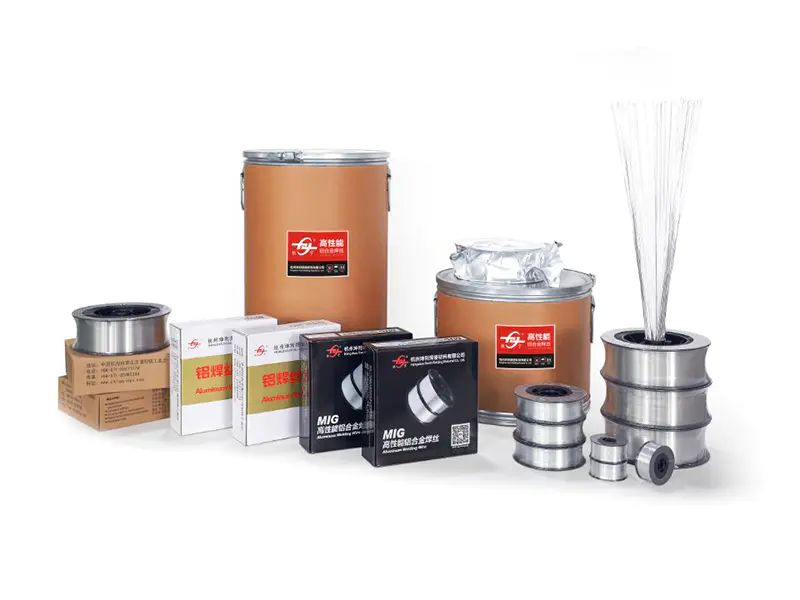
ER4943 is a silicon-bearing aluminum filler wire that builds on the foundation of ER4043 with a modified alloy chemistry designed to improve as-welded mechanical properties. It belongs to the same broad family of silicon-content fillers, which means it shares certain handling characteristics — good fluidity during welding, lower sensitivity to hot cracking compared to magnesium-based fillers, and compatibility with a wide range of aluminum base alloys — while delivering notably higher tensile strength in the deposited weld metal.
It frequently appears in discussions alongside ER4043 and ER5356 because it occupies a middle ground that neither of those two fully covers: stronger than conventional ER4043, and more weldable on certain alloys than ER5356.
Why Filler Chemistry Affects Post-Weld Anodizing
Anodizing does not treat the weld zone and the parent material as a single surface. The process responds to the alloy composition of whatever metal is present at the surface, and weld deposits have a different chemistry than the surrounding base metal. This means the oxide layer that forms during anodizing will have a different thickness, density, and light-interaction characteristic over the weld zone than over the adjacent parent material.
With silicon-bearing fillers, the silicon particles in the weld deposit tend to produce a darker appearance after anodizing — sometimes described as a gray or dark gray tone — rather than the clear or silver tone that anodizing typically produces on aluminum alloys. The extent of this darkening depends on the silicon content of the filler, the anodizing process parameters, and the alloy of the base metal.
What to Expect from ER4943 After Post-Weld Anodizing
How Anodizing Reveals the Weld Zone
The weld zone in any aluminum joint becomes more visually distinct after anodizing, not less. The oxide layer amplifies compositional differences rather than concealing them. For welders and engineers who encounter this on a finished component, it can come as a surprise — a weld that appeared clean and flush before anodizing becomes clearly visible as a darker stripe or patch after the process.
This is not a defect in the weld or the anodizing. It is the predictable result of anodizing over a dissimilar alloy composition. Understanding this outcome in advance is what allows the right filler selection decision to be made before fabrication begins.
Where ER4943 Sits on the Anodizing Spectrum
Because ER4943 contains silicon as a primary alloying element, it produces a weld deposit that will darken after anodizing. The resulting appearance is generally consistent with what silicon-based fillers produce: a darker weld zone that contrasts with the surrounding anodized parent material. It is not as neutral in appearance as ER5356 weld deposits, which typically produce a closer match to the base metal color after anodizing on many aluminum alloys.
For projects where the weld zone will be visible and color uniformity matters, this is the key characteristic to weigh. For projects where the weld zone will be hidden, painted over, or where appearance consistency is secondary to structural reliability, the darkening is not a practical concern.
Where It Works Well Despite the Color Response
ER4943 is a practical and reliable choice in many aluminum welding scenarios that involve post-weld anodizing, provided the appearance expectations are aligned with what silicon-based fillers actually deliver.
It performs well in:
- Structural and load-bearing aluminum components where weld strength is a governing requirement
- Industrial and manufacturing applications where a uniform surface appearance is not the primary deliverable
- Repair welding on alloys that are difficult to weld with magnesium-bearing fillers due to cracking sensitivity
- Applications where the anodized surface will be clear-coated, painted, or otherwise covered after processing
How Does ER4943 Compare to ER4043 and ER5356 After Anodizing?
ER4943 vs ER4043
ER4043 is the conventional silicon-bearing filler against which ER4943 is commonly measured. Both produce a darker weld zone after anodizing due to their silicon content, so the anodizing appearance response is broadly similar. The more meaningful difference between the two lies in weld deposit strength: ER4943 consistently delivers higher tensile strength in the as-welded condition, which makes it preferable in applications where mechanical performance requirements exceed what ER4043 can meet.
For appearance purposes alone, neither wire offers a significant advantage over the other. Both will darken after anodizing in a similar manner. The choice between them, when anodizing is involved, is primarily made on the basis of mechanical requirements rather than visual outcome.
ER4943 vs ER5356
ER5356 is a magnesium-bearing filler wire that behaves very differently during and after anodizing. Its weld deposits tend to produce a much closer color match to the anodized base metal on many aluminum alloys, particularly the common general-purpose alloys used in fabricated structures and architectural work. For projects where color consistency across the welded surface is the primary concern, ER5356 is the wire that welding engineers and fabricators typically consider.
The tradeoff is on the process and application side:
- ER5356 is not suitable for use with certain base alloys, particularly those with higher silicon content, due to cracking risk
- It can produce more porosity-related issues in some welding configurations
- Its weld deposits are generally softer than those produced by ER4943
The comparison between ER4943 and ER5356 is therefore not about which performs better in some absolute sense — it is about which tradeoff better matches the project requirements.
Comparison Summary
| Property | ER4043 | ER4943 | ER5356 |
|---|---|---|---|
| Silicon content | Moderate to high | Moderate to high | Low |
| Magnesium content | Low | Low | Moderate |
| Post-weld anodizing color | Darker than base metal | Darker than base metal | Closer match to base metal |
| As-welded tensile strength | Moderate | Higher than ER4043 | Moderate to high |
| Hot cracking resistance | Good | Good | Lower on some alloys |
| Weld fluidity | Good | Good | Moderate |
| Broad alloy compatibility | Wide | Wide | Narrower on high-Si alloys |
General comparative behavior is reflected. Specific results depend on base alloy, anodizing process parameters, and welding procedure.
The Real Tradeoff: Appearance, Strength, and Weldability
When Anodized Appearance Takes Priority
Projects where the appearance tradeoff matters include architectural aluminum components, consumer products where the surface finish is a feature, and any application where the welded surface will be visible without additional coating. In these situations, the color response of the filler wire after anodizing is a primary selection criterion, and ER5356 typically offers better color uniformity than silicon-based alternatives.
If the project falls into this category and ER5356 is chemically compatible with the base alloy, the anodizing outcome will generally be more satisfactory with the magnesium-bearing wire.
When Weldability and Process Stability Matter More
Many aluminum welding scenarios place greater weight on reliable weld execution than on precise color matching after anodizing. Structural fabrication, equipment manufacturing, and repair welding often fall into this category. In these contexts, the predictable flow, cracking resistance, and process consistency of silicon-bearing fillers like ER4943 represent practical advantages that outweigh the anodizing color consideration.
When the base alloy is also in the silicon-containing family — such as many casting alloys — ER4943 and similar fillers are frequently the only compatible choice, regardless of anodizing expectations.
When Strength Is the Deciding Factor
When mechanical performance of the weld joint is the primary requirement, ER4943 offers a meaningful advantage over conventional ER4043 without the alloy compatibility limitations of ER5356 on certain base metals. For load-bearing joints that will also undergo anodizing, the decision often comes down to accepting the darker weld zone appearance in exchange for the stronger joint.
Common Mistakes When Selecting a Filler for Anodized Aluminum Work
Selecting filler wire for aluminum work that will be anodized involves a set of mistakes that recur across fabrication environments. Recognizing them in advance reduces both rework and visual inconsistency in the finished product.
- Assuming all aluminum fillers produce similar anodizing results: The difference between silicon-bearing and magnesium-bearing fillers after anodizing is substantial and predictable. Treating filler selection as a purely mechanical decision results in appearance outcomes that were not anticipated during planning.
- Selecting filler only for weldability without considering the anodizing step: A filler that welds cleanly can still produce a color shift that conflicts with the project's appearance requirements. The post-process plan needs to be part of the filler selection conversation.
- Selecting filler only for appearance without confirming alloy compatibility: Choosing ER5356 for its anodizing response on a base alloy that is susceptible to cracking with magnesium-bearing fillers is a sequencing error that creates a structural problem in pursuit of a cosmetic goal.
- Ignoring base metal alloy when evaluating anodizing response: The same filler wire can produce different anodizing outcomes on different base alloys. Evaluations should account for the specific alloy combination being welded.
- Not testing on representative samples before committing to full production: Anodizing response can vary with bath chemistry, temperature, and time. Running a small representative test weld through the actual anodizing process used in production is the only way to confirm the outcome before scaling up.
Welding Practice That Influences the Final Anodized Surface
Surface Preparation Before Welding
The anodizing process reveals surface contamination and preparation quality that was present before welding, not just the weld deposit itself. Oil, oxide film, and contamination from handling all influence the final anodized appearance in the area surrounding the weld. Thorough cleaning and proper oxide removal before welding are basic requirements for achieving a consistent post-anodizing surface, regardless of which filler wire is used.
Technique Consistency During Welding
Irregular weld beads, inconsistent travel speed, and excessive heat input all produce weld zones with more compositional variation, which translates to a less uniform anodizing response. Consistent technique produces a more uniform weld deposit, which in turn produces a more predictable anodizing result. This applies to any filler wire, but the effect is more visible in anodized parts than in coated or painted parts where surface variation is obscured.
Planning the Post-Weld Process
The anodizing parameters — bath composition, time, and temperature — interact with the weld chemistry and affect the final appearance. Awareness of what those parameters are, and whether they have been validated for the specific alloy and filler combination in use, is part of achieving a predictable outcome. A weld that performs correctly and looks acceptable under one anodizing process may look different under another.
How to Approach the Filler Selection Decision
Working through the selection decision in a structured sequence reduces the likelihood of making a choice that conflicts with the project's requirements.
- Step One: Confirm whether the finished part will be anodized and whether the weld zone will be visible in the final application.
- Step Two: Identify the base alloy and confirm which filler wires are chemically compatible without elevated cracking risk.
- Step Three: Determine whether color consistency after anodizing or weld deposit strength is the higher-priority requirement for this specific application.
- Step Four: If color consistency is the priority and the base alloy is compatible, evaluate ER5356 as a candidate and confirm with a test weld through the actual anodizing process.
- Step Five: If mechanical performance or process stability is the priority, or if the base alloy is not well-suited to magnesium-bearing fillers, evaluate ER4943 and align the appearance expectations with what silicon-based fillers deliver after anodizing.
- Step Six: Where uncertainty remains — particularly on new alloy combinations, new anodizing lines, or appearance-critical production parts — run a representative test before committing to full production volumes.
Selecting the right aluminum filler wire for work that will be anodized is a decision that touches weld quality, appearance, alloy compatibility, and production reliability simultaneously. Aluminum Welding Wire ER4943 occupies a practical position in that decision: it delivers higher as-welded strength than conventional silicon-based alternatives, retains good process stability across a wide range of base alloys, and produces a predictable anodizing response that is consistent with other silicon-bearing fillers. For projects where color uniformity after anodizing is a primary deliverable, it is worth evaluating alongside ER5356 with an understanding of the alloy compatibility constraints each wire carries. For projects where mechanical performance and process reliability take precedence, it is a wire that merits serious consideration. If you are working through a filler selection decision for an aluminum project that involves post-weld anodizing and need technical input on alloy compatibility, wire specification, or product availability, Hangzhou Kunli Welding Materials Co., Ltd. provides application support and product information across a full range of aluminum filler wire specifications. Reaching out with your base alloy, joint type, and post-process requirements gives their team the context needed to offer a useful and specific recommendation.
NEXT:Why ER4943 Helps Improve As-Welded Strength in Aluminum Welding