English
  Deutsch


When to Use ER4943 for Automotive Aluminum Component Welding
Article Directory
- 1 What ER4943 Is and Why It Matters for Automotive Work
- 2 When Does ER4943 Become the Appropriate Choice?
- 3 Which Automotive Components Are Well Suited to ER4943?
- 4 Base Metal Compatibility: What to Confirm Before Specifying
- 5 ER4943 vs. ER4043: Which One Is More Appropriate?
- 6 ER4943 vs. ER5356: Understanding the Difference
- 7 MIG or TIG: How Process Selection Interacts with Filler Choice
- 8 What to Evaluate When Assessing Wire Quality
- 9 Common Selection Mistakes to Avoid
- 10 How to Structure the Final Selection Decision
Selecting a filler wire for automotive aluminum work is rarely straightforward. You are balancing crack sensitivity, post-weld strength, bead behavior, and base metal compatibility — all at the same time, often under production pressure. When a part comes back with porosity or weld cracking, filler wire selection is something that gets questioned. Aluminum Welding Wire ER4943 occupies a specific position in the silicon-based filler family: it offers stronger as-welded performance than standard silicon fillers while retaining the flow and feeding behavior that production welding requires. Understanding when that combination is the right fit — and when it is not — is what this selection decision actually comes down to.
What ER4943 Is and Why It Matters for Automotive Work
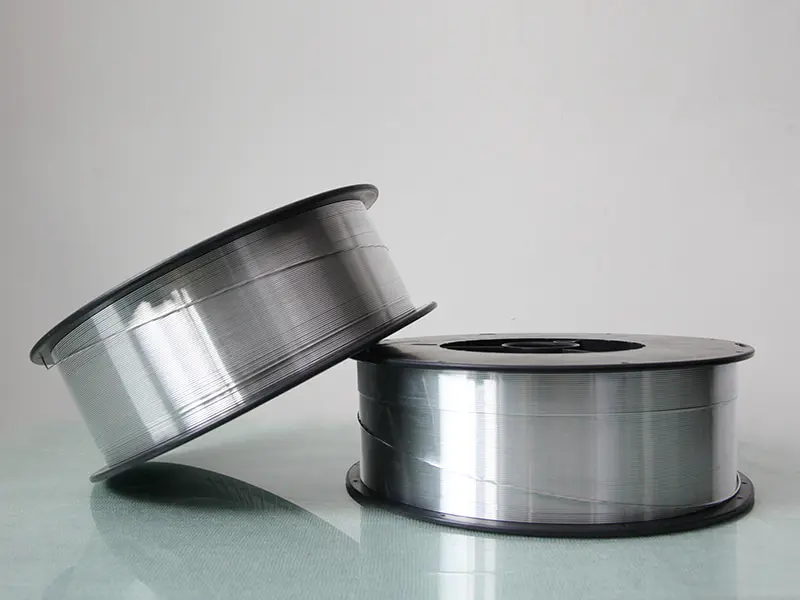
ER4943 is a silicon-aluminum filler wire with a higher silicon content than conventional alternatives in its class. The elevated silicon content produces a more fluid weld pool, which improves fusion on thin sections and reduces the tendency for incomplete penetration at joint edges.
What makes it relevant for automotive applications specifically is the combination it offers:
- Higher as-welded tensile strength compared to standard silicon fillers
- Improved crack resistance under mechanical stress — relevant for parts that carry dynamic loads
- Smooth feeding behavior in MIG setups, which matters in automated and semi-automated production environments
- Good compatibility with the aluminum alloy families commonly used in automotive structural parts
It is not a universal upgrade over every other filler, but for the right application, it addresses failure modes that cause real problems in service.
When Does ER4943 Become the Appropriate Choice?
The clearest case for selecting this wire is when two conditions are present simultaneously: the joint needs to withstand meaningful mechanical stress, and crack resistance is a genuine concern rather than a theoretical one.
More specifically, it becomes a strong candidate when:
- The part is load-bearing or subject to vibration in service
- The base alloy is sensitive to hot cracking and a lower-silicon filler has caused weld cracking on similar parts
- Post-weld strength requirements exceed what a conventional silicon filler can reliably deliver
- The production process uses MIG and feeding consistency across a full spool run is a quality requirement
- The application is structural rather than cosmetic, where weld appearance is secondary to joint integrity
If the part is primarily aesthetic — a trim piece, an interior bracket with no structural load — the case for ER4943 over a simpler filler is weaker.
Which Automotive Components Are Well Suited to ER4943?
Not every aluminum automotive component calls for this filler. The applications where it adds value are those where joint integrity under load is the defining requirement.
Well-suited applications include:
- Structural frame members and cross-members in lightweight vehicle platforms
- Suspension components and subframe brackets
- Engine bay supports and mounting brackets subject to thermal and mechanical cycling
- Load-bearing reinforcement parts in door structures or pillar assemblies
- Heat-treated aluminum assemblies where maintaining as-welded strength close to base material strength matters
Applications where other fillers may be more appropriate include purely decorative trim, low-stress enclosures, and parts where post-weld anodizing quality is the priority and strength is not a concern.
Base Metal Compatibility: What to Confirm Before Specifying
Filler wire selection cannot be separated from base metal selection. ER4943 is compatible with several aluminum alloy families that appear regularly in automotive work, but compatibility varies by application and joint configuration.
Alloys Where ER4943 Works Reliably
- 6xxx series alloys — commonly used in extrusions, profiles, and structural members — are a natural fit. The silicon in ER4943 dilutes the magnesium-silicon ratio at the weld zone in a way that reduces hot cracking tendency.
- 4xxx series base materials are generally compatible, and the filler chemistry is closely related to the base alloy family.
- Some 5xxx series alloys can be welded with ER4943, though the suitability depends on the specific alloy and service conditions.
What to Check Before Ordering
- Confirm the specific alloy designation of the base metal, not just the series
- Identify whether the part will be heat-treated after welding — post-weld heat treatment changes the strength picture significantly
- Clarify the service environment: corrosion exposure, temperature cycling, and load type all affect which filler is appropriate
- Review whether the joint design allows adequate penetration with a fluid weld pool, or whether a stiffer pool would give better control
ER4943 vs. ER4043: Which One Is More Appropriate?
That comparison comes up often in automotive aluminum welding. Both are silicon-based fillers, and they share similar flow characteristics — but they are not interchangeable for all applications.
| Factor | ER4043 | ER4943 |
|---|---|---|
| Silicon content | Standard range | Higher |
| As-welded strength | Moderate | Higher |
| Crack resistance | Good | Better on stress-bearing joints |
| Weld pool fluidity | Good | Slightly more fluid |
| Post-weld anodizing | Better color match | May show slight color variation |
| Feeding behavior | Good | Good |
| Suitable for structural loads | With limitations | More reliably |
ER4043 remains a practical choice for lower-stress applications, cosmetic welds, and situations where post-weld appearance is a priority. ER4943 is the more appropriate selection when the part needs to hold up under sustained or dynamic loads and crack resistance is a defined requirement.
ER4943 vs. ER5356: Understanding the Difference
ER5356 is a magnesium-based filler rather than silicon-based, which changes its behavior and its appropriate applications significantly.
Key differences relevant to automotive work:
- ER5356 offers higher tensile strength in some joint configurations, but it is more sensitive to hot cracking on certain alloys — particularly 6xxx series base materials
- ER5356 is not recommended for applications where the part will be exposed to sustained elevated temperatures, as magnesium-based welds can become susceptible to stress corrosion in those conditions
- ER4943 is generally the safer choice on 6xxx series automotive components, particularly in thermal environments like engine bays
- ER5356 may be preferable on 5xxx series structural parts where the higher magnesium content aligns with the base material chemistry and temperature exposure is not a factor
The selection should be driven by base alloy, service temperature, and stress profile — not by which wire is more familiar or easier to source.
MIG or TIG: How Process Selection Interacts with Filler Choice
Both MIG and TIG welding are used on automotive aluminum components, and the process affects how the filler wire performs.
MIG Applications
In MIG welding, feeding consistency matters across the full production run. ER4943 in spool form needs to feed smoothly through the liner and contact tip without birdnesting or irregular arc behavior. For automated welding cells producing structural components at volume, consistent spool winding and surface cleanliness are as important as the filler chemistry itself.
MIG is the more common process for high-volume structural automotive parts, and ER4943 behaves reliably in this context when the wire quality is consistent.
TIG Applications
TIG welding provides more control over heat input and weld pool behavior, which is useful on thinner sections or joints with complex geometry. ER4943 in cut-length rod form is used in TIG applications where precision and reduced distortion are priorities — repair work, prototype fabrication, and low-volume production of complex parts.
What to Evaluate When Assessing Wire Quality
The filler wire chemistry matters, but so does the physical quality of the wire itself. For production welding, inconsistencies in the wire cause process problems that cannot be corrected by adjusting parameters.
Check for:
- Surface cleanliness — contamination on the wire surface introduces hydrogen into the weld pool and causes porosity
- Diameter consistency along the wire length — variation causes arc instability in MIG and uneven deposition in TIG
- Spool winding quality — overlapping or tangled layers cause feeding interruptions
- Packaging integrity — moisture exposure during storage degrades wire surface quality and affects weld cleanliness
- Traceability documentation — lot-level chemistry records matter when a weld quality issue needs to be investigated
Common Selection Mistakes to Avoid
Several recurring errors result in filler wire selection problems in automotive aluminum work:
- Selecting by alloy name alone without confirming service conditions and joint design — the alloy is only one input into the filler selection
- Defaulting to a familiar filler on new part designs without reviewing whether the application requirements have changed
- Overlooking post-weld treatment — if the part will be heat-treated, the as-welded strength advantage of ER4943 changes and the comparison with other fillers shifts
- Ignoring process setup — even a correctly specified filler will underperform if the welding parameters are not matched to the wire characteristics
- Treating the comparison as binary — ER4043 vs. ER4943 is a useful starting point, but the full decision includes base metal, service environment, and process requirements
How to Structure the Final Selection Decision
A practical sequence for confirming the right filler:
- Identify the base alloy designation and temper condition of the part
- Define the service conditions: load type, temperature range, corrosion exposure
- Confirm the post-weld treatment plan: as-welded, heat-treated, or anodized
- Review the joint design for crack sensitivity and accessibility
- Determine the welding process and production volume
- Compare ER4943 against the shortlisted alternatives on the criteria that matter for this specific part
- Confirm wire availability and quality documentation from the supplier before committing to a production run
Getting the filler wire selection right on automotive aluminum parts reduces rework, improves weld consistency, and supports the structural performance the part is designed to deliver. Aluminum Welding Wire ER4943 is a well-defined choice for load-bearing and crack-sensitive applications in the 4xxx and 6xxx alloy families — but it works as intended only when the selection is based on the actual part requirements rather than general preference. Hangzhou Kunli Welding Materials Co., Ltd. manufactures aluminum welding wire including ER4943 for automotive and industrial applications, and provides technical support on filler selection, base metal compatibility, and process setup. If you are evaluating wire options for a current project or need specifications and samples to support a qualification process, reaching out to their team is a practical starting point for making a selection that is matched to your application.
NEXT:When Aluminum Welding Wire ER4943 Meets Anodizing Needs