English
  Deutsch


How to Clean Aluminum Welds: A Complete Engineer-Level Guide
Article Directory
- 1 Why Aluminum Weld Cleaning Is More Demanding Than Steel
- 2 Pre-Weld Aluminum Cleaning: Step-by-Step Engineering Protocol
- 3 Cleaning Aluminum Welds After Welding: Post-Weld Treatment
- 4 Inter-Pass Cleaning for Multi-Pass Aluminum Welds
- 5 TIG vs MIG Aluminum Welding: Cleaning Requirements Compared
- 6 Best Practices for Cleaning Aluminum Welds in Specific Alloy Systems
- 7 Aluminum Weld Cleaning Tools and Equipment
- 8 How Filler Wire Quality Directly Impacts Weld Cleanliness
- 9 Troubleshooting Common Aluminum Weld Cleaning Problems
- 10 FAQ: How to Clean Aluminum Welds
- 10.1 1. What is the most important step in cleaning aluminum welds before welding?
- 10.2 2. Can I use a regular carbon steel wire brush on aluminum?
- 10.3 3. How long after cleaning aluminum can I still weld it?
- 10.4 4. What is the best way to clean aluminum welds after welding for inspection?
- 10.5 5. How does filler wire quality affect the need for cleaning?
- 11 References
How to clean aluminum welds is one of the most technically consequential steps in any aluminum fabrication workflow. Unlike steel, aluminum forms a tenacious oxide layer (Al₂O₃) almost instantaneously upon exposure to air — with a melting point of approximately 2,050 °C, far exceeding that of the base aluminum metal (~660 °C). If this oxide layer is not properly removed before, during, and after welding, it becomes trapped in the weld pool, causing porosity, lack of fusion, and catastrophic mechanical failure under load.
This guide is engineered for welders, metallurgists, and quality engineers who need actionable, technically grounded procedures for cleaning aluminum welds across all major welding processes — MIG (GMAW), TIG (GTAW), and laser. We will cover pre-weld surface preparation, inter-pass cleaning, post-weld treatment, chemical and mechanical methods, and how wire quality directly influences weld cleanliness. All information is presented at an engineering depth appropriate for production environments, aerospace, marine, rail, and pressure vessel applications.
Why Aluminum Weld Cleaning Is More Demanding Than Steel
The Oxide Layer Problem
Aluminum reacts with atmospheric oxygen within milliseconds. The resulting aluminum oxide film is chemically stable, electrically non-conductive, and mechanically hard. Because the oxide's density (3.99 g/cm³) differs significantly from that of molten aluminum (2.37 g/cm³ at 700 °C), oxide inclusions do not float out of the weld pool — they remain suspended and solidify as defects. This is the fundamental reason why how to clean aluminum welds demands a structured, multi-stage protocol rather than a simple wipe-down.
Additionally, aluminum's high thermal conductivity (205 W/m·K) means heat dissipates rapidly, shortening the window during which the oxide can be displaced by arc action. In AC TIG welding, the electrode-positive (EP) half-cycle provides cathodic cleaning that disrupts the oxide, but this effect has a limited reach — typically 1–3 mm from the weld centerline — making mechanical pre-cleaning indispensable.
Moisture and Hydrogen Porosity
The oxide layer is hygroscopic. Adsorbed moisture on the oxide surface is the primary source of hydrogen in aluminum welds. At welding temperatures, water molecules dissociate; atomic hydrogen dissolves readily in molten aluminum (solubility drops from ~0.69 ml/100g at the liquidus to ~0.036 ml/100g at solidification). The resulting supersaturation drives hydrogen gas precipitation as spherical pores. Porosity levels above 1.5% by volume (per AWS D1.2 acceptance criteria) significantly reduce fatigue life and tensile strength.
Pre-Weld Aluminum Cleaning: Step-by-Step Engineering Protocol
Stage 1 — Degreasing
Oil, cutting fluid, forming lubricant, and fingerprint contamination must be removed before any mechanical operation. Mechanical abrasion over an oily surface embeds hydrocarbon residue into the substrate, making subsequent cleaning counterproductive. The correct sequence is always: degrease first, then abrade.
- Solvent degreasing: Acetone or isopropyl alcohol (IPA ≥ 99.5% purity) applied with clean, lint-free cloths or paper wipes. Wipe in one direction to avoid redeposition. Allow full solvent evaporation before proceeding (minimum 2–3 minutes at ambient temperature).
- Alkaline cleaning: For production-scale operations, dilute alkaline cleaners (pH 9–11) offer consistent degreasing. Rinse thoroughly with deionized water and dry completely, as residual moisture directly causes porosity.
- Ultrasonic cleaning: For small components or complex geometries, ultrasonic tanks with appropriate solvent solutions remove embedded contamination that surface wiping cannot reach.
Stage 2 — Oxide Removal
Degreasing removes hydrocarbons but does not remove the oxide layer. A separate mechanical or chemical oxide removal step is mandatory for critical welds.
Mechanical Oxide Removal
- Stainless steel wire brushing: Use brushes dedicated exclusively to aluminum. Cross-contamination from carbon steel bristles embeds iron particles, which act as galvanic corrosion sites and weld defect nucleation points. Brush in the direction of the joint, applying moderate pressure. This is the most common aluminum weld cleaning method in workshop environments.
- Abrasive pads and flap discs: 80–120 grit aluminum oxide or zirconia abrasive wheels remove heavier oxide scale and mill finish. Do not use grinding wheels shared with steel.
- Filing: A fine-cut aluminum file can prepare groove faces and t-joint roots where wire brushes lack access.
Chemical Oxide Removal
Chemical etching provides more uniform oxide removal than mechanical methods and is preferred in aerospace and precision fabrication:
- Alkaline etch: 5–10% NaOH solution at 50–60 °C for 30–60 seconds. This dissolves the oxide layer uniformly. Rinse immediately in deionized water to arrest etching.
- Acid de-smut: After alkaline etch, a nitric acid dip (15–25% HNO₃) removes smut (alloying element residue) left on the surface.
- Chromate conversion coating: In some aerospace applications, a thin chromate or trivalent chrome conversion coating is applied to stabilize the cleaned surface and retard re-oxidation prior to welding.
The table below compares the two primary oxide removal approaches at an engineering level:
| Parameter | Mechanical (Wire Brush / Abrasive) | Chemical (Alkaline Etch + Acid De-smut) |
|---|---|---|
| Oxide removal uniformity | Moderate — operator-dependent | High — process-controlled |
| Surface roughness introduced | Ra 1.5–4.0 µm (depending on grit) | Ra 0.4–1.2 µm (smoother) |
| Risk of cross-contamination | High if tools not dedicated | Low (chemical process) |
| Time to complete (per joint) | 1–5 minutes | 10–30 minutes (including rinse/dry) |
| Applicability to complex geometry | Limited (access constraints) | Excellent (immersion-capable) |
| Typical use case | Shop floor, structural, general MIG/TIG | Aerospace, marine, precision assemblies |
| Re-oxidation window after cleaning | Weld within 2–4 hours | Weld within 4–8 hours (longer if conversion coated) |
Stage 3 — Filler Wire Preparation
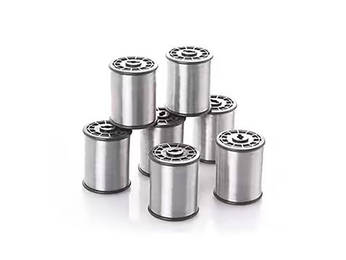
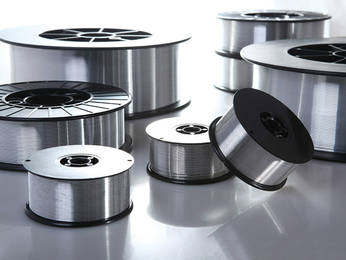
The filler wire is as critical as the base metal. Aluminum filler wire cleaning before welding is frequently neglected but is a leading cause of hydrogen porosity, particularly in MIG welding where feed rates are high and wire surface area introduced into the weld pool is substantial.
- Inspect wire spools for surface oxidation, moisture, or drawing lubricant contamination.
- For TIG welding, cut and discard the last 50–75 mm of wire from a spool before use, as this section accumulates oxidation from repeated handling.
- Wipe TIG filler rods with a clean acetone cloth before use. Do not touch the rod within 100 mm of the weld zone.
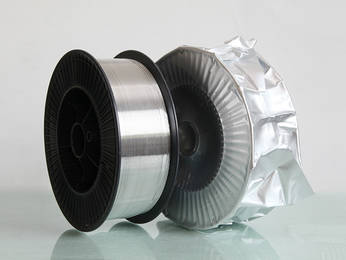
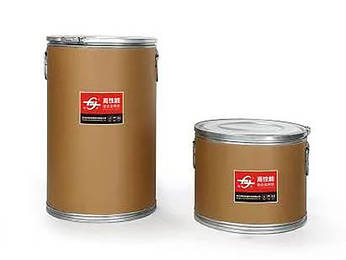
- Store wire in sealed, low-humidity environments. Relative humidity above 50% accelerates moisture adsorption on the oxide layer.
- For MIG welding, use a wire conduit liner specifically designed for aluminum (nylon or PTFE-lined) to prevent surface abrasion and debris generation during feeding.
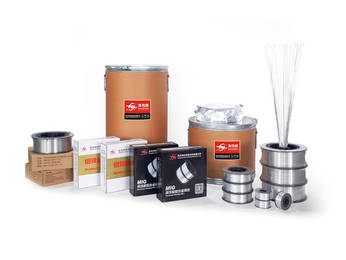
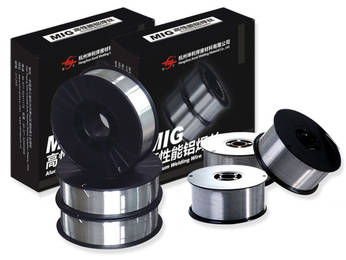
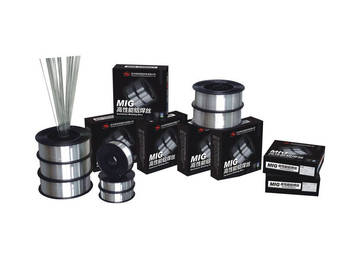
At Hangzhou Kunli Welding Materials Co., Ltd., all aluminum alloy welding wire is manufactured under strict process controls aligned with international certifications including DB, CE, ABS, DNV, and CCS. With over 20 years of specialized production experience and monthly output exceeding 200 MT, our wire is engineered to minimize surface oxide thickness and moisture content at the point of use — directly reducing the burden of pre-weld cleaning and improving weld pool cleanliness in demanding applications. Our products are trusted by qualification-sensitive customers including CRRC and Maersk, and are exported to over 30 countries.
Cleaning Aluminum Welds After Welding: Post-Weld Treatment
Why Post-Weld Cleaning Matters
After welding, the heat-affected zone (HAZ) and weld bead surface carry a layer of oxidized aluminum, flux residue (in flux-cored processes), tungsten inclusions (from TIG contamination events), and solidified spatter. Cleaning aluminum welds after welding serves three engineering purposes:
- Corrosion prevention: Flux residue from some processes is hygroscopic and acidic; if left in place, it initiates crevice corrosion within hours in humid environments.
- Inspection readiness: Post-weld oxide and discoloration must be removed before visual inspection (VT), dye penetrant inspection (PT), or radiographic/ultrasonic testing (RT/UT).
- Surface preparation for coating or anodizing: Any subsequent finishing operation requires a clean, oxide-free surface.
Mechanical Post-Weld Cleaning Methods
- Dedicated stainless steel wire brush: For removing the thin oxide skin on the weld bead surface. Use a rotary brush at moderate RPM to avoid work-hardening the surface or embedding abrasive particles.
- Abrasive blasting: Glass bead blasting (100–150 µm beads) or aluminum oxide blasting produces a uniform matte finish, removes oxide discoloration, and improves coating adhesion. Steel shot blasting is not acceptable — it embeds iron particles.
- Flap disc grinding: For smoothing weld profiles and removing reinforcement in flush-ground joints per AWS D1.2 or EN ISO 10042 requirements.
Chemical Post-Weld Cleaning Methods
Chemical methods for how to remove oxidation from aluminum welds provide superior uniformity, particularly on complex geometries and inside corners:
- Alkaline deoxidizer solutions: Commercial phosphoric or sulfuric acid-based weld cleaning solutions applied by brush or spray. Allow 1–3 minutes dwell time, then rinse with deionized water. These solutions dissolve the dark oxide discoloration (HAZ tint) without attacking the base metal aggressively.
- Citric acid-based cleaners: Lower-hazard alternative for shop environments. Effective on light oxidation and weld discoloration at concentrations of 5–10% w/v.
- Anodizing pre-treatment: Parts destined for anodizing undergo a full alkaline etch and acid de-smut cycle after welding, producing a chemically consistent surface.
Inter-Pass Cleaning for Multi-Pass Aluminum Welds
In structural aluminum fabrications requiring multi-pass welds (thickness >12 mm), inter-pass cleaning for aluminum welds is a mandatory quality step defined in most welding procedure specifications (WPS). Failure to clean between passes traps oxide from the previous pass beneath the subsequent deposit, creating planar defects that are difficult to detect and impossible to repair without full weld removal.
- Allow the previous pass to cool below 150 °C before cleaning (prevents thermal shock to the brush and avoids smearing hot oxide).
- Use a dedicated stainless steel brush to remove all visible oxide from the previous bead surface, particularly in the toes and root of the bead where oxide accumulates.
- Inspect the cleaned surface under adequate lighting before commencing the next pass. Any grey or white discoloration requires further brushing.
- In critical applications (aerospace, pressure vessels), a light acetone wipe after brushing provides final assurance of hydrocarbon removal.
- In pulsed MIG welding (GMAW-P), inter-pass cleaning intervals are often shorter due to higher deposition rates; establish time-based or temperature-based protocols in the WPS.
TIG vs MIG Aluminum Welding: Cleaning Requirements Compared
The TIG vs MIG aluminum welding cleaning differences are substantial and directly influence the cleaning protocol design. Understanding these differences allows engineers to specify appropriate cleaning procedures in their WPS documentation.
In AC TIG (GTAW) welding, the electrode-positive (EP) portion of the AC cycle produces cathodic cleaning action directly adjacent to the arc. This disrupts and disperses the oxide layer within a narrow band (~1–3 mm) around the weld pool. While this provides some in-process oxide management, it does not eliminate the need for pre-weld mechanical cleaning — it merely provides a secondary oxide disruption mechanism. TIG welding is more sensitive to contamination from the filler rod, tungsten contamination events (caused by improper arc initiation or contact), and shielding gas purity (argon ≥ 99.995% is standard; moisture and oxygen ingress cause immediate oxidation).
In DC MIG (GMAW) welding, there is no cathodic cleaning action. All oxide management must be performed mechanically or chemically before welding. MIG welding is more tolerant of minor surface contamination due to higher heat input and arc energy, but this tolerance is not a substitute for proper cleaning — it simply means defects from marginal cleaning may be less immediately obvious while still being present.
| Cleaning Parameter | TIG (AC GTAW) | MIG (DC GMAW) |
|---|---|---|
| In-process cathodic cleaning | Yes — EP half-cycle | No |
| Pre-weld oxide removal criticality | High | Very High |
| Wire/rod surface condition sensitivity | Very high (rod hand-fed) | High (wire-fed; lubricant from liner) |
| Shielding gas purity requirement | Ar ≥ 99.995%; dew point ≤ −60 °C | Ar or Ar/He; ≥ 99.99% |
| Inter-pass cleaning requirement | Mandatory for multi-pass | Mandatory for multi-pass |
| Post-weld oxide appearance | Narrow, bright cleaning zone visible | Broader, heavier oxide discoloration |
| Typical application thickness | 0.5–12 mm (precision/thin section) | 3 mm and above (structural/production) |
Best Practices for Cleaning Aluminum Welds in Specific Alloy Systems
5xxx Series (Al-Mg): Marine and Structural
The 5xxx series alloys (5052, 5083, 5086) are the workhorses of marine and structural fabrication. Their high magnesium content (3–5%) produces a more tenacious and rapidly growing oxide layer than pure aluminum. Best practices for cleaning aluminum welds on 5xxx series material include using fresh stainless steel brushes (magnesium-rich oxides clog brush bristles quickly), ensuring full degreasing before brushing, and welding within 2 hours of oxide removal in marine environments where humidity is high.
6xxx Series (Al-Mg-Si): Extrusions and Structural Profiles
6061 and 6082 are the most widely welded structural alloys. These alloys are frequently used in extruded form with mill-finish oxide layers that have been aged in storage for months. Pre-weld cleaning must be particularly thorough: consider alkaline etch rather than mechanical brushing alone for material that has been in storage for more than 30 days.
7xxx Series (Al-Zn): Aerospace and High-Strength
7075 and 2024 are the most challenging aluminum alloys to weld. The zinc and copper contents produce oxide systems more complex than Al₂O₃ alone, and these alloys are highly susceptible to hot cracking. Welding procedure specifications for 7xxx alloys invariably mandate full chemical cleaning protocols (alkaline etch + acid de-smut), controlled inter-pass temperatures, and the use of specific high-performance filler wires such as ER4043 or ER5356.
Aluminum Weld Cleaning Tools and Equipment
Essential Tool Checklist
- Dedicated stainless steel wire brushes — never shared with steel or other metals; label clearly
- Acetone or IPA (≥99.5%) with lint-free wipes — for degreasing
- Aluminum oxide abrasive pads and flap discs (80–120 grit) — for mechanical oxide removal
- Chemical weld cleaning solution — phosphoric acid or citric acid-based, for post-weld oxide removal
- Nylon or PTFE-lined wire conduit — for MIG welding to prevent wire surface damage
- Sealed wire storage containers with desiccant — for wire humidity control
- Calibrated thermometers or contact pyrometers — for inter-pass temperature monitoring
- Argon gas analyzer or certified supplier certification — to verify shielding gas purity
Tool Segregation Protocol
Tool segregation is not optional — it is an engineering control. Color-coding brushes (e.g., blue handle = aluminum only), storing aluminum tools separately, and training all operators on cross-contamination risks are standard quality system requirements in any ISO 3834- or AS9100-certified facility.
How Filler Wire Quality Directly Impacts Weld Cleanliness
The relationship between aluminum alloy welding wire surface quality and weld porosity is well-established in metallurgical literature. Wire manufactured with inconsistent oxide thickness, excessive lubricant, or high hydrogen content in the aluminum matrix will produce welds that are difficult to clean adequately regardless of how thoroughly the base metal was prepared.
Key wire quality parameters that affect weld cleanliness include:
- Surface oxide thickness: Should be <5 nm for premium wire; thicker oxides increase hydrogen introduction per unit length of weld.
- Drawing lubricant residue: Residual lubricant on the wire surface introduces carbon and hydrogen. Premium wires are cleaned after drawing.
- Hydrogen content of the wire alloy: Should be <0.15 ml/100g for aerospace-grade wire.
- Dimensional consistency: Diameter tolerance ±0.02 mm; ovality <0.02 mm — tighter tolerances reduce feeding irregularities in MIG welding that cause arc instability and oxide entrapment.
Hangzhou Kunli Welding Materials Co., Ltd. produces aluminum alloy welding wire with international advanced manufacturing equipment and a strict quality control system that addresses each of these parameters. Our close R&D partnerships with Beijing Nonferrous Metals Research Institute, Central South University, and Shanghai Cable Research Institute enable continuous improvement of wire metallurgy and surface quality. This translates directly to fewer porosity defects in production welds — reducing the total cost of cleaning, inspection, and repair in your fabrication operation.
Troubleshooting Common Aluminum Weld Cleaning Problems
Persistent Porosity Despite Cleaning
- Check shielding gas dew point — moisture in the gas line is a common but overlooked source of hydrogen.
- Inspect wire storage conditions — wire left on open spools in humid environments absorbs moisture rapidly.
- Verify that degreasing was performed before mechanical oxide removal, not after.
- Evaluate whether the re-oxidation window was exceeded — if more than 4 hours elapsed between cleaning and welding, re-clean.
Black Sooting in TIG Welds
- Indicates insufficient EP cleaning action or balance control set too high toward EN (electrode negative).
- Inspect tungsten condition — contaminated or improperly shaped tungsten (for aluminum, a balled end is correct on AC) produces erratic arc behavior and poor oxide disruption.
- Verify base metal cleanliness — heavy contamination overwhelms the cathodic cleaning capacity of AC TIG.
Weld Discoloration After Post-Weld Chemical Cleaning
- Residual discoloration after chemical cleaning may indicate incomplete rinsing — deionized water rinse is critical to neutralize chemical cleaners.
- If discoloration persists after multiple cleaning cycles, consider whether the surface has been re-contaminated during handling (gloves, storage contact).
FAQ: How to Clean Aluminum Welds
1. What is the most important step in cleaning aluminum welds before welding?
The most critical step is a two-stage process: first, thorough degreasing with acetone or IPA to remove all hydrocarbons, followed by mechanical or chemical oxide removal using a dedicated stainless steel wire brush or alkaline etch solution. The sequence matters — degreasing must precede oxide removal to prevent embedding contamination into the surface. Welding should occur within 2–4 hours of oxide removal to prevent re-oxidation.
2. Can I use a regular carbon steel wire brush on aluminum?
No. Carbon steel brushes shed fine iron particles that embed into the aluminum surface. These particles act as galvanic corrosion initiation sites (iron is strongly cathodic relative to aluminum in a corrosion cell) and can nucleate weld defects. Only stainless steel wire brushes dedicated exclusively to aluminum should be used. Segregate and label these tools to prevent accidental cross-use.
3. How long after cleaning aluminum can I still weld it?
For mechanically cleaned surfaces in a normal workshop environment (relative humidity 50–60%), re-oxidation becomes significant after 2–4 hours. For chemically cleaned and acid de-smutted surfaces, this window extends to 4–8 hours. In high-humidity environments (marine fabrication, tropical climates), these windows are shorter. Chemically pre-treated surfaces with conversion coatings provide the longest stability. Always re-clean if the time window is exceeded — the few minutes of additional preparation prevents hours of potential repair work.
4. What is the best way to clean aluminum welds after welding for inspection?
For visual and dye penetrant inspection (PT), the weld must be free of oxide discoloration, spatter, and surface contamination. Start with a dedicated stainless steel wire brush pass to remove loose oxide, then apply a phosphoric or citric acid-based chemical weld cleaner, allow the recommended dwell time, and rinse with deionized water. Dry thoroughly. For RT/UT inspection, surface grinding to a flush profile may also be specified in the applicable WPS.
5. How does filler wire quality affect the need for cleaning?
High-quality aluminum filler wire with controlled surface oxide thickness, low residual lubricant, and consistent hydrogen content reduces the total hydrogen introduced into the weld pool, directly lowering porosity risk. Premium wire also feeds more consistently in MIG applications, reducing arc instability that causes oxide entrapment. Conversely, low-quality or improperly stored wire can produce porous welds even when the base metal is perfectly clean — demonstrating that wire selection and handling are integral to the overall cleaning strategy.
References
- AWS D1.2/D1.2M: Structural Welding Code — Aluminum. American Welding Society, latest edition.
- EN ISO 10042: Welding — Arc-welded joints in aluminium and its alloys — Quality levels for imperfections. International Organization for Standardization.
- Kaufman, J.G. & Rooy, E.L. (2004). Aluminum Alloy Castings: Properties, Processes, and Applications. ASM International.
- Kou, S. (2003). Welding Metallurgy, 2nd Edition. John Wiley & Sons. Chapter 3: Weld Metal Solidification.
- The Aluminum Association. (2015). Welding Aluminum: Theory and Practice, 5th Edition.
- AWS C5.10: Recommended Practices for Shielding Gases for Welding and Plasma Arc Cutting. American Welding Society.
- EN ISO 18273: Welding consumables — Wire electrodes, wires and rods for welding of aluminium and aluminium alloys — Classification. International Organization for Standardization.
- Nunes, A.C. (2012). Porosity Formation in Aluminum Welds. Welding Journal Research Supplement, Vol. 91.
- Mathers, G. (2002). The Welding of Aluminium and Its Alloys. Woodhead Publishing / CRC Press.
- Lincoln Electric Technical Reference Library. GMAW/GTAW Process Guidelines for Aluminum Alloys. Available via Lincoln Electric technical publications.
NEXT:ER4043 vs. ER5356: How Do I Choose the Right Aluminum Welding Wire for My Project?