English
  Deutsch


Engineering Analysis of Surface Aesthetics and Post-Weld Anodizing Behavior in ER4047 Welding Wire Applications
Article Directory
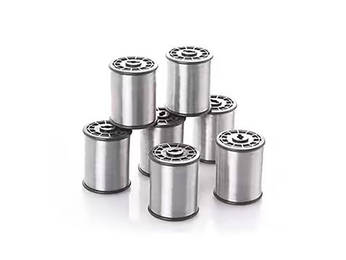
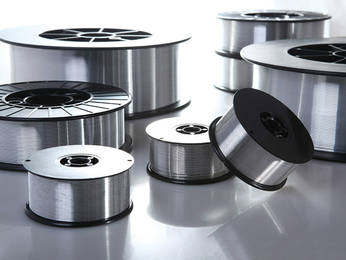
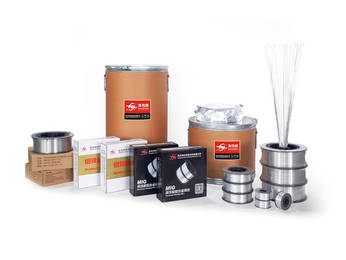
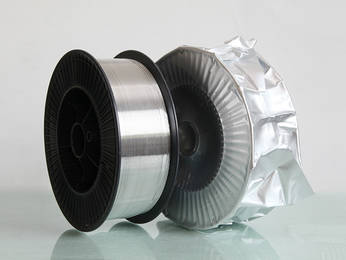
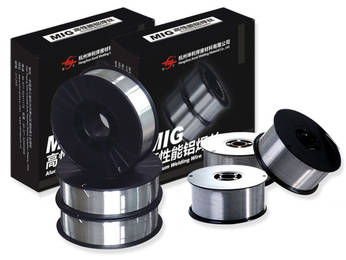
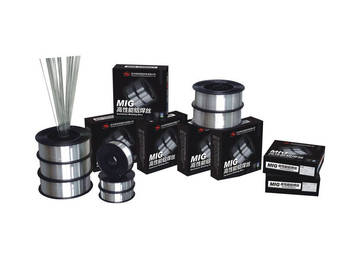
Hangzhou Kunli Welding Materials Co., Ltd., situated in the Puyang Town industrial zone of Hangzhou, is a high-technology enterprise specializing in the R&D and manufacturing of high-performance aluminum alloy welding wire. With over 20 years of expertise and international certifications including DB, CE, ABS, DNV, and CCS, our facility maintains a monthly production capacity exceeding 200MT. Kunli has successfully replaced imported materials for representative enterprises like China CRRC and Maersk through close collaboration with the Beijing Nonferrous Metals Research Institute. For precision thermal joining, er4047 welding wire, a silicon-rich eutectic alloy (11% - 13% Si), is widely utilized for its superior fluidity and narrow freezing range. However, achieving a specific aesthetic finish and managing chemical reactivity during electrolytic oxidation requires a deep understanding of the alloy's metallurgical transition.
Eutectic Silicon Concentration and Weld Bead Brightness
The silicon content in ER4047 alloy plays a dual role in both mechanical performance and surface optics. Why ER4047 produces a bright weld bead is attributed to its high fluidity at the liquidus temperature of approximately 582°C, which allows for a smoother, flatter bead profile with reduced surface roughness (Ra). What affects the brightness of aluminum welds includes the shielding gas purity and the wire's surface cleanliness. At Kunli, we utilize advanced shaving and drawing equipment to ensure the er4047 wire surface finish is free of oxides and lubricants. While the initial "as-welded" state may appear bright due to the fine eutectic structure, how to maintain aluminum weld luster involves precise control of the heat input to prevent the formation of coarse silicon precipitates that can dull the metallic reflection.
Chemical Reactivity and Post-Weld Anodizing Color Discrepancies
A frequent technical challenge in architectural and automotive aluminum fabrication is the anodizing color match for ER4047. Because er4047 welding wire contains roughly 12% silicon, it reacts differently to sulfuric acid anodizing (Type II or III) than the 6xxx series base metals. Why ER4047 turns black after anodizing is a result of the silicon particles remain insoluble in the oxide layer, creating a dark grey or black soot-like appearance. What are the alternatives to ER4047 for color matching? If a clear or silver anodized finish is required, engineers often shift to 5xxx series fillers, though they lack the crack resistance of ER4047 in thin sections. For components where ER4047 brazing alloy fluidity is non-negotiable, designers must account for the high contrast between the dark weld zone and the lighter base metal in the final finish.
[Technical image of ER4047 weld bead comparison: As-welded vs. Post-anodized]
Thermal Properties and Liquation Cracking Resistance
The melting range of ER4047 welding wire is approximately 574°C to 582°C, which is significantly lower than the 4043 alloy. This low melting point of ER4047 aluminum wire makes it an excellent choice for brazing applications where minimizing the Heat Affected Zone (HAZ) is critical. How ER4047 reduces liquation cracking is through its ability to fill solidification shrinkage gaps quickly during the cooling phase. For engineers at Maersk or CRRC, tensile strength of ER4047 joints is verified to ensure it meets the structural requirements of specialized containers and rail components. The corrosion resistance of ER4047 welds remains stable in most industrial environments, provided the magnesium content of the base metal is low, preventing the formation of brittle Mg2Si intermetallic compounds.
| Chemical/Physical Property | Standard ER4043 | Kunli ER4047 (AlSi12) |
| Silicon Content (Si %) | 4.5 - 6.0% | 11.0 - 13.0% |
| Liquidus Temperature (°C) | 632°C | 582°C |
| Anodized Color Result | Light Grey | Dark Grey / Black |
| Fluidity Rating | Good | Excellent (Eutectic) |
| Electrical Conductivity (IACS %) | Approx. 42% | Approx. 36% |
Mechanical Integrity and Industrial Quality Management
To ensure ER4047 weld quality, Kunli implements a strict quality control system following IATF and international marine standards. Testing the ductility of ER4047 welds involves guided bend tests to ensure the eutectic silicon does not introduce excessive brittleness in dynamic loading scenarios. Why Kunli ER4047 is used in heat exchangers relates to its exceptional leak-tightness and hermetic sealing capabilities of aluminum brazing. By providing a high-purity aluminum welding wire that replaces imported products, we serve over 30 countries with stable, high-performance materials. Whether utilized in automotive radiator brazing or aerospace structural joining, our er4047 welding wire delivers the metallurgical consistency required for high-precision mass production and complex thermal management systems.
Industrial Hardcore FAQ
Q1: Can I use ER4047 for structural welding of 6061-T6 aluminum?
A1: Yes, it is often used to minimize the risk of solidification cracking. However, be aware that the high silicon content will make the weld darker than the base metal if the assembly is later anodized.
Q2: What is the benefit of the "shaved" wire process used by Kunli?
A2: Shaving removes the outer layer of the wire where oxides and contaminants are most concentrated. This significantly reduces weld porosity (hydrogen entrapment) and improves arc stability in automated MIG welding.
Q3: Why does ER4047 have a narrower freezing range than ER4043?
A3: ER4047 is close to the eutectic point of the Al-Si system. This means it transitions from liquid to solid almost instantly at a single temperature, which prevents the "mushy" stage that leads to shrinkage cracks.
Q4: Can ER4047 be used for TIG welding as well as MIG?
A4: Absolutely. It is available in both spooled wire for MIG and 1000mm cut lengths for TIG (GTAW) applications, providing the same high fluidity and low melting point in both processes.
Q5: How does Kunli ensure the 200MT monthly capacity remains consistent in quality?
A5: We utilize international advanced manufacturing equipment and conduct batch-testing for chemical composition (Spectrometer) and physical tolerances (Digital Calipers/Micrometers) to maintain IATF and marine class standards.
Technical References
- AWS A5.10: Specification for Bare Aluminum and Aluminum-Alloy Welding Electrodes and Rods.
- ISO 18273: Welding consumables — Wire electrodes, wires and rods for welding of aluminium and aluminium alloys.
- ASTM B285: Standard Specification for Aluminum and Aluminum-Alloy Welding Rods and Bare Electrodes.
NEXT:How to Weld Cast Aluminium: Techniques, Prep & Common Mistakes