English
  Deutsch


How to Weld Cast Aluminium: Techniques, Prep & Common Mistakes
Article Directory
- 1 Why Cast Aluminium Is Harder to Weld Than Wrought Aluminium
- 2 Essential Preparation Before You Strike an Arc
- 3 Choosing the Right Welding Process
- 4 Selecting the Correct Filler Wire
- 5 TIG Welding Cast Aluminium: Settings and Technique
- 6 Post-Weld Treatment
- 7 Common Causes of Weld Failure on Cast Aluminium
- 8 When Welding Is Not the Right Option
Yes, cast aluminium can be welded — but it requires careful preparation, the right process, and an understanding of why it behaves differently from wrought aluminium. The most reliable method is TIG welding (GTAW) with AC current, using ER4043 or ER5356 filler wire, after thorough cleaning and preheating the part to 150–230°C (300–450°F). Skip any of these steps and you risk cracking, porosity, or incomplete fusion.
Why Cast Aluminium Is Harder to Weld Than Wrought Aluminium
Cast aluminium alloys contain higher levels of silicon (up to 12% in some die-cast grades) and often have trapped gases, oxide inclusions, and internal porosity from the original casting process. When you apply heat, these trapped gases expand and escape through the weld pool, causing bubbles and voids. The uneven grain structure also makes the material more prone to hot cracking near the heat-affected zone (HAZ).
Common cast aluminium alloys you'll encounter include:
- A356 / 356.0 — cylinder heads, intake manifolds (most weldable)
- A380 — die-cast housings, brackets (very difficult, high zinc content)
- 319 — engine blocks (moderate difficulty)
- 535 — marine parts (weldable, high magnesium)
If you don't know the exact alloy, treat it as a challenging job and err on the side of more prep work.
Essential Preparation Before You Strike an Arc
Preparation accounts for roughly 80% of a successful cast aluminium weld. Poor prep is the primary reason welds fail.
Step 1 — Identify and remove contamination
Oil, grease, paint, and old gasket material must be removed before any heat is applied. Use acetone or a dedicated aluminium cleaner on a lint-free cloth. Do not use a petroleum-based solvent — it leaves residue. For engine parts, a hot tank soak or parts washer with an aluminium-safe degreaser followed by a rinse is standard practice in professional shops.
Step 2 — Mechanical cleaning of the oxide layer
Aluminium forms an aluminium oxide layer (Al₂O₃) almost instantly on exposure to air. This oxide has a melting point of approximately 2,050°C — far higher than the 660°C melting point of aluminium itself. If you weld over it, the oxide prevents fusion. Use a dedicated stainless steel wire brush (never one used on steel or it will contaminate the aluminium) to scrub the joint area immediately before welding. A flap disc at 80 grit on an angle grinder also works well for larger areas.
Step 3 — V-groove or bevel the crack
For cracks, grind or route a full V-groove down to clean, sound metal. The groove should be at least 3–4 mm wide at the top and reach the full depth of the crack. At the end of each crack, drill a 3–4 mm stop-drill hole to prevent the crack from continuing under heat. If you skip stop-drilling, the crack will often extend 10–15 mm beyond where you can see it during welding.
Step 4 — Preheat the part
Preheating reduces thermal shock and drives out moisture. Use an oven, heat gun, or propane torch to bring the part up to 150–230°C (300–450°F). Verify temperature with a contact thermometer or temperature-indicating sticks (Tempilstik). For thin-walled castings under 6 mm, the lower end of this range (150°C) is sufficient. Thick parts like engine blocks benefit from the higher end. Do not exceed 260°C — above this, some alloys begin to lose strength permanently.
Choosing the Right Welding Process
| Process | Best for | Skill level | Notes |
| TIG (GTAW) – AC | Precision repairs, thin sections, visible welds | High | Best control; AC current cleans the oxide layer |
| MIG (GMAW) | Thicker sections (>6 mm), production work | Medium | Faster deposition; use a spool gun for soft wire |
| Oxy-acetylene | Field repairs, remote locations | High | Requires aluminium flux; high distortion risk |
| Laser welding | Aerospace, precision thin-wall | Specialist | Minimal HAZ; not accessible for most shops |
For the vast majority of repair work — cracked manifolds, broken brackets, damaged castings — TIG welding with AC is the go-to choice. Set your machine to AC with high-frequency start, use 100% argon shielding gas at 10–15 L/min, and select a pure tungsten or zirconiated tungsten electrode (not the thoriated type used for steel).
Selecting the Correct Filler Wire
Two filler alloys cover most cast aluminium jobs:
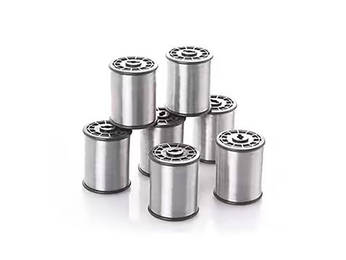
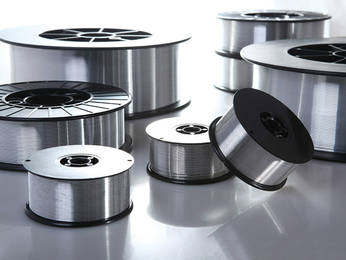
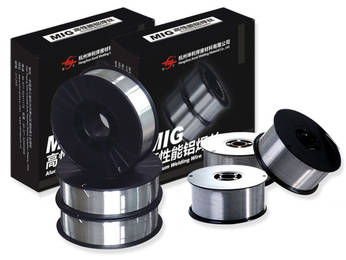
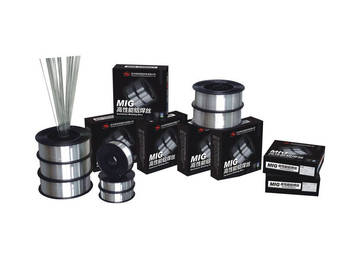
- ER4043 (4% silicon) — the most common choice for cast aluminium. It flows well, minimises cracking, and is forgiving. Use this for engine components, housings, and unknown alloys.
- ER5356 (5% magnesium) — stronger and harder, but more prone to hot cracking on high-silicon castings. Use when post-weld strength is a priority and you know the base alloy is compatible (e.g., 535 or 5xxx series castings).
Filler diameter should generally match the material thickness: 1.6 mm wire for sections up to 4 mm, 2.4 mm for 4–8 mm, and 3.2 mm for heavier sections.
TIG Welding Cast Aluminium: Settings and Technique
Getting the settings right is critical. Use these as a starting point and adjust for your specific machine and material thickness:
- Current type: AC (alternating current)
- Amperage: approximately 1 amp per 0.025 mm (0.001 inch) of thickness — so a 6 mm casting needs roughly 240 amps at peak
- AC frequency: 80–120 Hz (higher frequency produces a narrower, more focused arc)
- AC balance: 65–70% electrode negative (EN) — this cleans the oxide without overheating the tungsten
- Shielding gas: 100% argon, 10–15 L/min
- Tungsten: 2–3 mm pure (green) or zirconiated, balled tip on AC
Keep travel speed consistent and move fast enough to avoid heat buildup in one area. Pause and allow the part to cool back to preheat temperature if you see the puddle becoming sluggish or the surrounding metal discolouring excessively. Use a back-and-forth weaving motion on wider grooves rather than stacking multiple passes in the same line.
Post-Weld Treatment
Once welding is complete, do not quench the part in water or cool it rapidly with compressed air. Allow it to cool slowly in still air, or wrap it in welding blankets to slow the cooling rate. Rapid cooling reintroduces thermal stress and can crack the weld or the adjacent casting.
After cooling, inspect the weld with dye penetrant (PT) to check for surface cracks. For pressure-bearing parts (coolant passages, fuel systems), a pressure test at 1.5× working pressure is recommended before returning the part to service.
If the casting will be machined after welding, allow it to rest for 24 hours so any residual stress can redistribute before taking finish cuts.
Common Causes of Weld Failure on Cast Aluminium
- Porosity — almost always caused by moisture, contamination, or insufficient gas coverage. Ensure the base metal is bone dry, clean the filler wire with acetone, and check for drafts that disturb the shielding gas.
- Hot cracking — occurs when the weld pool solidifies under tensile stress. Reduce restraint on the part if possible, use ER4043 (more crack-resistant), and allow slower cooling.
- Lack of fusion — usually caused by insufficient heat or an oxide layer that wasn't removed. Increase amperage slightly and re-clean the joint.
- Burn-through — the most common problem on thin sections under 3 mm. Use a backing bar (a copper or stainless backing plate behind the joint dissipates heat), and reduce amperage.
When Welding Is Not the Right Option
Some cast aluminium alloys — particularly high-zinc die-cast grades like A380 — are essentially non-weldable by conventional means. The zinc content causes severe hot cracking and porosity regardless of technique. In these cases, consider:
- Aluminium brazing or soldering — for cosmetic or low-stress repairs at temperatures below 450°C
- Metal stitching (lock-n-stitch) — a cold repair technique that uses interlocking metal pins and plugs; no heat required, preserves the original alloy properties
- Epoxy repair compounds — such as JB Weld KwikWeld or Belzona 1111, suitable for non-structural repairs where pressure and temperature are low
- Replacement casting — if the original casting is severely degraded or structurally compromised
NEXT:Why Is ER4943 Aluminum Welding Wire Better for Weld Strength