English
  Deutsch


Aluminum Alloy Wire: 5 Tips to Prevent Corrosion With Copper
Article Directory
- 1 What Is Aluminum Alloy Wire, Exactly — and How Does It Differ From Pure Aluminum?
- 2 Why Aluminum and Copper Fight Each Other at the Joint
- 3 5 Field-Proven Tips for Preventing Galvanic Corrosion at Aluminum-to-Copper Connections
- 3.1 Tip 1: Choose Connectors That Were Designed for This Problem
- 3.2 Tip 2: Anti-Oxidant Compound Is Not Optional — But Application Matters
- 3.3 Tip 3: Conductor Preparation Is Where Most Failures Actually Start
- 3.4 Tip 4: Torque Is a Specification, Not a Feeling
- 3.5 Tip 5: Sealing the Joint Against Moisture Is the Last Line of Defense
- 4 How to Recognize a Connection That Is Already in Trouble
- 5 Three Installation Scenarios Worth Walking Through
- 6 Quick Reference Job Card for Field Crews
- 7 Putting It All Together
Every material choice in electrical design carries a hidden conversation about trade-offs — weight against conductivity, cost against longevity, ease of installation against long-term reliability. Aluminum Alloy Wire sits right at the center of that conversation, valued by engineers and procurement teams who work with China Aluminum Alloy Wire Manufacturers for its favorable cost profile and impressive weight-to-performance ratio. But wherever it meets copper at a termination point, a slow, invisible failure mechanism waits. Galvanic corrosion does not announce itself; it builds resistance quietly, generates heat in the dark interior of a junction box, and turns a well-designed installation into a liability. Knowing what this conductor actually is — and what it takes to connect it to copper safely — is not optional knowledge for anyone specifying or installing it in the field.
What Is Aluminum Alloy Wire, Exactly — and How Does It Differ From Pure Aluminum?
Pure aluminum has carried electrical current in overhead lines for generations. It is light. It is inexpensive. But it is also soft, prone to creep under sustained mechanical load, and not particularly forgiving when terminations need to hold for decades under thermal cycling. Alloy variants address those weaknesses directly. By introducing measured amounts of iron, magnesium, silicon, or copper into the aluminum matrix, manufacturers produce a conductor with meaningfully improved tensile strength, better fatigue resistance, and reduced creep — without compromising the conductivity that makes aluminum appealing initially.
The practical result is a conductor that handles long spans, withstands vibration, and holds its shape at terminations far better than its pure counterpart. Overhead distribution lines, underground feeder cables, wind farm collection circuits, commercial building feeders — these are the environments where it consistently earns its place in the specification.
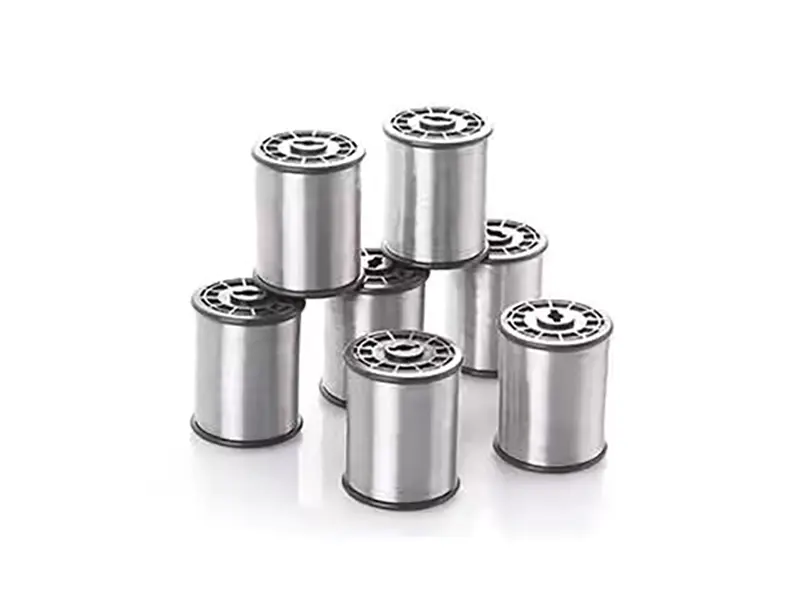
Where Is This Conductor Typically Deployed?
The range of applications is broader than many engineers initially assume:
- Overhead transmission and distribution lines (ACSR, AAAC, ACAR and related constructions)
- Service entrance and underground feeder cables in residential and commercial buildings
- Industrial feeder runs where minimizing cable weight reduces structural support requirements
- Renewable energy collection systems, particularly solar and wind installations
- Long-span wiring situations where the installed weight of copper would create unacceptable mechanical loads
How Does It Stack Up? A Direct Comparison
Numbers tell part of the story. The table below captures the key properties that typically drive conductor selection decisions:
| Property | Pure Copper | Pure Aluminum | Aluminum Alloy |
|---|---|---|---|
| Conductivity | High | Moderate | Moderate |
| Density | High | Low | Low |
| Tensile strength | Moderate | Lower | Moderate to High |
| Creep resistance | Good | Poor | Good |
| Relative cost per unit weight | Higher | Lower | Lower to Moderate |
| Galvanic risk with copper | None | Significant | Significant |
The alloy form closes the mechanical gap considerably. What it cannot close is the galvanic gap — aluminum remains anodic relative to copper regardless of what alloying elements are added. That last row is the reason the rest of this article exists.
Why Aluminum and Copper Fight Each Other at the Joint
Think of it this way: connecting aluminum to copper in the presence of moisture is like hooking up a battery you did not ask for. Two dissimilar metals, an electrolyte, and an electrical path — that is all an electrochemical cell needs to run. Aluminum, sitting further toward the anodic end of the galvanic series, gives up electrons to the copper. It corrodes. The copper, acting as the cathode, is protected at aluminum's expense.
Moisture is the electrolyte that makes this possible. Not necessarily standing water — condensation, humid air carrying dissolved salts, industrial pollutants, even the residual moisture trapped inside a connector during installation can all serve the purpose. Once the cell is active, corrosion at the aluminum surface produces aluminum oxide, a compound that is electrically resistive. Contact resistance at the joint rises. Higher resistance means more heat under load. More heat accelerates further oxidation and causes the aluminum conductor to expand and contract with thermal cycling — and because aluminum expands more than copper for a given temperature change, the mechanical joint loosens over time. Loosening increases resistance further.
It compounds. Heat drives oxidation, oxidation raises resistance, resistance generates more heat, heat loosens the mechanical connection. Left unaddressed, this cycle can eventually produce enough localized heating to damage insulation, trigger arc faults, or — in a scenario no one wants — ignite surrounding materials. The insidious part is that none of this is visible from the outside during the early stages. By the time the problem becomes apparent, significant damage may already have occurred.
The good news: every stage of this failure chain has a practical countermeasure.
5 Field-Proven Tips for Preventing Galvanic Corrosion at Aluminum-to-Copper Connections
Tip 1: Choose Connectors That Were Designed for This Problem
Here is something worth saying plainly: standard wire nuts are not appropriate for aluminum-to-copper connections. They were not designed for it, and using them in this application is a persistent source of field failures. The connector is the foundation that everything else rests on, and the right choice is a connector specifically listed and rated for aluminum-to-copper joining.
Bimetallic connectors address this effectively. They present an aluminum-compatible interface on one side and a copper-compatible interface on the other, with a metallurgically bonded transition between them — friction-welded or explosion-welded — that prevents galvanic interaction inside the connector body itself. Direct aluminum-to-copper contact is physically eliminated at the termination point.
When bimetallic connectors are not available for a particular application, tinned copper lugs offer a practical alternative. Tin sits between aluminum and copper in the galvanic series, moderating — though not fully eliminating — the corrosion potential. For larger conductors, compression splices or split bolts rated for aluminum use accomplish the same goal of creating a proper mechanical and electrical interface. Think of tin plating as a secondary defense, not a primary one.
A few selection details that matter in practice:
- Verify the connector carries appropriate certification markings for the jurisdiction. Unlisted hardware should not be substituted.
- Match the connector to the actual conductor strand class — a barrel sized for one stranding configuration may not achieve adequate contact area with another.
- Check temperature ratings. A connector rated for a lower operating temperature than the conductor's design limit creates a weak point in the system.
Tip 2: Anti-Oxidant Compound Is Not Optional — But Application Matters
Walk into many electrical supply houses and ask about connecting aluminum to copper, and someone will hand you a jar of anti-oxidant compound. They are right to do so. What sometimes gets lost in translation is that how you apply it is nearly as important as whether you apply it at all.
Anti-oxidant paste does two things simultaneously: it displaces oxygen from the contact interface, slowing the re-formation of aluminum oxide, and it fills the microscopic voids between conductor strands and connector barrel, improving actual contact surface area. A thorough, uniform coating on the stripped conductor and inside the connector barrel achieves both objectives. Generous coverage — not over-packing. Too much compound can act as a mechanical spacer that reduces clamping force on the conductor.
Not all compounds are appropriate for all connectors. A general-purpose anti-seize product may contain metallic particles — copper, zinc, nickel — that accelerate galvanic reactions rather than suppressing them. Use a compound specifically formulated and listed for aluminum electrical connections. And before reaching for the jar on any given connector, check the manufacturer's data sheet: some tin-plated and silver-plated connectors explicitly advise against compound use because it interferes with the intended contact mechanism. When the data sheet says no compound, that instruction takes precedence.
Timing matters, too. Aluminum oxide begins forming on a freshly stripped conductor surface within minutes of air exposure. Strip, prepare, and apply compound as a single continuous sequence — not strip now, apply compound later.
Tip 3: Conductor Preparation Is Where Most Failures Actually Start
A properly specified connector with compound applied will still underperform if the conductor preparation was rushed or skipped. This is where many field failures trace back — precisely because it is easy to overlook when a crew is working quickly against a deadline.
The sequence:
- Strip to the length specified by the connector manufacturer. Too short reduces contact surface; too long leaves bare conductor exposed beyond the connector, creating a secondary corrosion point.
- Inspect the strands. Nicks from the stripping tool, broken strands, or existing white powdery oxide deposits penetrating deeply between strands are grounds for cutting back further and re-stripping.
- Where the connector requires it, mechanically abrade the stripped conductor surface with a stainless-steel wire brush or appropriate abrasive pad. Use stainless steel specifically — carbon steel particles left on aluminum accelerate corrosion rather than preventing it.
- Apply anti-oxidant compound immediately after abrasion, before oxide can begin re-forming.
- Insert the conductor fully to the conductor stop. Partial insertion reduces contact length and concentrates mechanical stress at the barrel opening.
Two minutes of careful preparation per termination. That is the realistic time investment, and it eliminates a disproportionate share of the failure modes that show up during maintenance inspections years later.
Tip 4: Torque Is a Specification, Not a Feeling
This is where field practice frequently diverges from engineering intent. Proper torque at aluminum terminations is a documented specification derived from the connector design, the contact materials, and the conductor geometry. It is not a matter of tightening "firmly." Both under-torque and over-torque create problems — one leaves insufficient contact force, the other risks cracking the connector body or damaging conductor strands.
Use a calibrated torque wrench. Follow the connector manufacturer's published value. Record it.
Why does this matter more for aluminum than for copper? Two reasons. First, aluminum's coefficient of thermal expansion is higher — the conductor expands and contracts more with each load cycle, and an under-torqued connection will loosen progressively as a result. Second, aluminum creep — slow deformation of the metal under sustained compressive load — can reduce clamping force during the early weeks after energization. This is why a retorque at the initial scheduled maintenance visit after commissioning is standard practice for aluminum terminations.
For larger conductors, compression (crimp) connections are generally preferred over mechanical set-screw types. A properly made compression joint achieves full circumferential contact, distributes mechanical force uniformly, and does not loosen through thermal cycling. The important detail: use the correct die and tool combination for the specific connector. An undersized die produces an incomplete crimp that looks acceptable from the outside but has inadequate contact internally.
Document the torque value and date for each termination. On commercial and industrial projects, this record creates a commissioning baseline and supports future maintenance comparisons.
Tip 5: Sealing the Joint Against Moisture Is the Last Line of Defense
Everything in the previous four tips can be done correctly, and the connection will still degrade prematurely if it is continuously exposed to the conditions that activate galvanic corrosion. Moisture exclusion is the final barrier — and because it is site-specific, there is no single universal solution.
For indoor, dry, controlled environments, a properly torqued listed connector inside an enclosed panel or junction box with compound applied provides adequate protection in many cases.
Move outdoors, and the requirements shift. Weatherproof enclosures with positive drainage become necessary. Configurations that allow water to pool around terminations should be addressed at the design stage. Self-amalgamating tape or heat-shrink tubing with internal adhesive adds a secondary moisture barrier over connector tails where the design allows it.
In coastal locations, marine environments, or high-humidity industrial settings — chemical plants, wastewater facilities, food processing environments — the requirements escalate further. Connectors with additional plating on copper components reduce exposed surface galvanic potential. Enclosed terminal housings with IP-rated sealing and positive drainage replace open-air lugs. Dielectric grease over the fully assembled joint interior before closing the enclosure adds another barrier. Inspection intervals are also shortened — annual thermographic surveys serve as a standard practice in highly aggressive environments.
For retrofits, an important caution: do not simply re-seal an existing connection without prior assessment of its condition. White deposits, insulation discoloration, or elevated temperature readings during a thermal survey indicate that corrosion has already progressed. The correct response is to cut back to clean conductor, replace the connector, and make a new termination from the beginning of the full preparation sequence.
How to Recognize a Connection That Is Already in Trouble
Even well-made connections benefit from periodic inspection, and knowing what early-stage deterioration actually looks like makes the difference between a planned repair and an emergency response.
Visual clues. White or grayish powdery deposits around the connector body or on exposed conductor surfaces are an immediate indicator of active aluminum oxide formation. Greenish deposits suggest copper salt formation — a sign that galvanic activity has been progressing long enough to affect the copper side of the interface as well. Insulation discoloration near the termination — yellowing, browning, any hint of charring — points to elevated temperature and warrants immediate investigation.
Mechanical checks. Any perceptible movement of the conductor within the connector during an inspection is a flag. If it shifts, retorque to the manufacturer's specification. If the connector body rotates or the conductor pulls through, replace the connector entirely — retorquing a mechanically compromised connection is not a sufficient response.
Thermal scanning. Infrared thermography under normal operating load is a non-invasive and highly effective method for identifying elevated-temperature terminations before visible deterioration occurs. A connection running noticeably hotter than comparable terminations carrying similar loads is a candidate for closer inspection, even if it looks normal externally.
Resistance measurement. A calibrated low-resistance measurement across the joint provides objective data. Compare against a baseline taken at commissioning, or against the connector manufacturer's rated contact resistance. Rising resistance across successive measurement cycles confirms progressive deterioration and indicates the connection is approaching the point where replacement is preferable to further maintenance.
Maintenance Intervals by Environment
| Environment | First Retorque | Subsequent Inspections |
|---|---|---|
| Indoor, controlled | After initial load cycling | Every few years |
| Outdoor, sheltered | After initial load cycling | Every one to three years |
| Outdoor exposed or coastal | After initial load cycling | Annually |
| High-vibration industrial | During the initial week of operation | Every six to twelve months |
These are general starting points. Connector manufacturers and applicable local codes may specify different intervals, and those requirements take precedence.
Three Installation Scenarios Worth Walking Through
Scenario A: Retrofit in an Existing Building With Aluminum Branch-Circuit Wiring
When copper-terminated devices or panels are being added to a building with existing aluminum conductors, the priority is reliable, code-compliant termination without replacing the wiring itself. Identify all aluminum conductors. At each device connection point, use listed aluminum-to-copper splice connectors or a pigtail arrangement — a short copper conductor joined to the aluminum branch circuit wire through a proper listed connector, then continuing to the device terminal in copper. Apply listed compound at each splice. Verify all enclosures close properly and exclude moisture. Document termination locations in the maintenance record for future reference.
Scenario B: New Commercial or Industrial Feeder Installation
Specification language in tender documents should include connector type and certification requirements, anti-oxidant compound specification, torque values with documentation requirements, retorque scheduling, and enclosure ratings appropriate to the installation environment. Building these requirements into the tender eliminates substitution risk and creates clear acceptance criteria for commissioning inspection — both of which prevent difficult conversations during project close-out.
Scenario C: Coastal or Chemically Aggressive Environments
The standard five-tip approach still applies, but with upgraded material specifications throughout: connectors with tin or nickel plating on copper contact components; sealed terminal housings with IP-rated enclosures and positive drainage; dielectric grease inside the enclosure before sealing; annual thermographic inspection as a baseline; and replacement — not cleaning and re-use — of any connector showing visible corrosion product during inspection.
Quick Reference Job Card for Field Crews
Before signing off on any aluminum-to-copper connection, work through this checklist:
- Connector is listed and rated for aluminum use and the applicable temperature rating.
- Bimetallic or tin-plated interface confirmed — no direct aluminum-to-bare-copper contact.
- Strip length matches the connector specification.
- Conductor strands inspected and free of damage.
- Aluminum oxide mechanically removed where required, using stainless-steel tooling.
- Listed anti-oxidant compound applied immediately after preparation.
- Conductor fully inserted to the conductor stop.
- Torque applied per the manufacturer's published value using a calibrated tool; value recorded.
- Joint sealed or enclosed per site environmental requirements.
- Retorque date scheduled and recorded in the maintenance log.
Putting It All Together
Aluminum Alloy Wire fills a genuine and practical need in electrical infrastructure — lighter than copper, cost-competitive over long runs, and mechanically capable enough in its alloy form to hold terminations reliably across decades of service. Its challenge at the copper interface is not a reason to avoid it; it is a reason to understand it thoroughly. Galvanic corrosion follows known physics and responds to known countermeasures, and the five strategies covered here address every link in the failure chain that would otherwise develop silently behind a panel door. Using connectors rated for the application, applying anti-oxidant compound correctly, preparing the conductor with care, torquing to specification and planning to retorque, and sealing the joint against the environmental conditions of the specific site — none of these steps is technically complicated on its own. What makes them effective is applying all five consistently, on every connection, without treating any single one as negotiable. For engineers developing conductor specifications and procurement teams building material lists, this also defines what needs to accompany the conductor itself in the purchase: the right connectors, the right compound, the right tools, and a maintenance schedule calibrated to the site environment — all of it working together to keep aluminum-to-copper connections performing safely over the full service life of the installation.
NEXT:Alloy ER4043 vs. ER5356: Which Filler Metal Offers Better Shear Strength for Industrial Frames?