English
  Deutsch


Why Choose 4943 Aluminum Wire for Corrosion Protection
Article Directory
- 1 What ER4943 Actually Is
- 2 How Does Silicon Content Affect Corrosion Resistance?
- 3 Why ER4943 Performs Better Than ER4043 in Demanding Conditions
- 4 ER4943 vs ER4043 vs ER5356: Where Each Filler Belongs
- 5 Which Base Alloys Work Well With ER4943?
- 6 Environments Where Corrosion Resistance Determines Equipment Life
- 7 Does ER4943 Process Differently From ER4043 on the Welding Machine?
- 8 Is the Cost Difference Justified for Your Application?
- 9 Sourcing ER4943 for Production and Project Welding
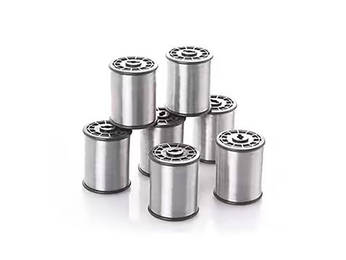
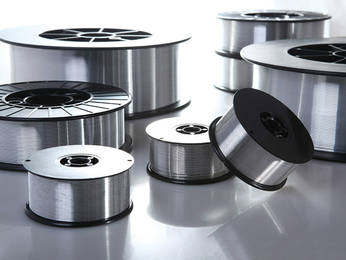
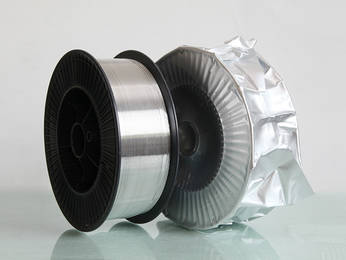
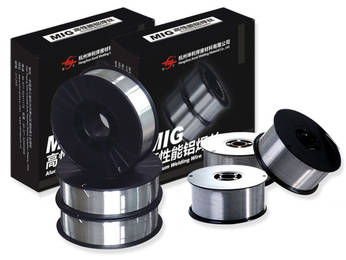
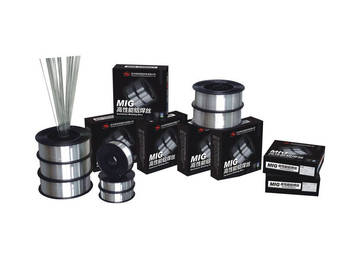
Selecting a filler metal for aluminum welding is rarely a single-variable decision, but when the project involves exposure to moisture, salt, industrial chemicals, or any environment that accelerates surface degradation, corrosion resistance moves toward the top of the evaluation criteria. Many engineers default to ER4043 because it is familiar and widely stocked, or to ER5356 because of its strength reputation — and both are legitimate choices in the right context. But the 4943 Aluminum Welding Wire occupies a specific and useful position in this landscape, combining the processing behavior of the Al-Si family with improved mechanical output that older 4043 formulations do not consistently deliver. Understanding why it behaves as it does in corrosion-sensitive applications — and where those benefits hold relevance — is what this evaluation truly seeks.
What ER4943 Actually Is
An Improved Al-Si Filler, Not Just a Marketing Update
ER4943 belongs to the aluminum-silicon filler metal family, the same broad category as ER4043. The silicon content in both drives similar weld pool fluidity and crack resistance characteristics. What sets ER4943 apart from its predecessor is a modified composition that improves the alloy’s post-weld mechanical properties — tensile strength and yield strength — while retaining the processing advantages that drove the acceptance of the 4043 family.
The silicon in the alloy reduces the melting point of the weld pool relative to pure aluminum, improving flow across the joint and reducing the crack sensitivity that makes other alloy families more difficult to weld. Silicon also plays a role in corrosion behavior, which connects directly to why this filler is worth evaluating for environments where degradation resistance is a real concern.
How Does Silicon Content Affect Corrosion Resistance?
The Chemistry Behind the Performance
Corrosion in aluminum welds is not a single mechanism. It can manifest as uniform surface oxidation, pitting, crevice attack, or galvanic interaction between dissimilar metals. The silicon content in Al-Si fillers influences how the weld metal behaves under several of these conditions.
Silicon-rich filler metals tend to form a more stable oxide layer at the weld surface compared to fillers with higher magnesium content. This oxide layer — aluminum's natural passive barrier — is what provides aluminum its inherent corrosion protection. When the weld metal composition supports a more uniform and adherent oxide film, the weld zone is less susceptible to the localized breakdown that initiates pitting.
In practice, this means welds made with ER4943 in humid or salt-exposed environments tend to show slower surface degradation than welds made with higher-magnesium fillers in the same conditions. The trade-off is that higher-silicon alloys can be more susceptible to certain forms of chemical attack in strongly alkaline environments — a consideration for specific industrial chemical exposures, though less relevant for many structural and marine applications.
Why ER4943 Performs Better Than ER4043 in Demanding Conditions
Strength at the Weld Zone Changes the Durability Picture
The corrosion story is only part of what makes ER4943 worth evaluating. The filler's improved mechanical properties add a second dimension to its durability advantage.
A weld joint that is chemically resistant but structurally weak can still fail prematurely under cyclic loading, thermal stress, or mechanical fatigue. The improved yield and tensile strength of ER4943 compared to ER4043 means the weld zone itself is more capable of sustaining service loads without deformation that could open micro-cracks — and micro-cracks in a weld are pathways for accelerated corrosive attack.
Consider what happens in a marine structural application. The weld joint is repeatedly stressed by wave loading, vibration, and thermal cycling between day and night temperatures. A weld with adequate corrosion resistance but lower strength may develop fatigue cracks over time. Those cracks break the oxide film continuity, exposing fresh aluminum to the marine environment and accelerating corrosion in exactly the zones that are already under mechanical stress. A higher-strength weld delays or prevents that crack initiation.
The combination — good silicon-based corrosion resistance plus improved mechanical performance — is what positions ER4943 favorably for applications where both variables matter.
ER4943 vs ER4043 vs ER5356: Where Each Filler Belongs
Understanding the Trade-Offs Before Making a Selection
Filler metal selection for corrosion-sensitive aluminum work often comes down to a three-way comparison. Each has genuine strengths, and each has contexts where it is not the appropriate choice.
| Property | ER4043 | ER4943 | ER5356 |
|---|---|---|---|
| Corrosion Resistance | Good in many environments | Good, improved weld strength | Good; avoid prolonged exposure to saltwater |
| Weld Pool Fluidity | Good | Good | Moderate |
| Crack Resistance | Strong | Strong | Lower — more sensitive to hot cracking |
| Tensile Strength | Moderate | Higher than ER4043 | Higher than ER4043 |
| Anodizing Response | Poor | Poor | Better appearance after anodizing |
| Suitable for Heat-Treated Base Alloys | Yes (especially 6000 series) | Yes (especially 6000 series) | Use with caution in some cases |
| Post-Weld Aging Response | Moderate | Improved | Limited |
ER4043 remains a reliable general-purpose filler where mechanical performance requirements are moderate and the priority is processability. ER5356 suits applications where higher strength is the primary driver and where anodized appearance matters — but it carries a limitation in saltwater environments where its magnesium content can contribute to stress corrosion cracking under prolonged exposure.
ER4943 occupies the space between them: it offers higher strength than 4043, improved performance in salt and marine environments compared to 5356, and processing behavior similar to the established 4043 filler that many welders already find familiar. For a project that needs improved strength without sacrificing the corrosion behavior of the silicon-bearing family, this is the combination that makes ER4943 worth evaluating specifically.
Which Base Alloys Work Well With ER4943?
Compatibility Shapes the Practical Application Range
Filler metal performance depends heavily on its compatibility with the base material being joined. ER4943 is well suited to the 6000-series aluminum alloys — 6061, 6063, 6082, and similar grades — which are among the commonly used structural aluminum alloys in transportation, marine construction, architectural framing, and industrial equipment.
The 6000 series alloys are heat-treatable and contain magnesium-silicon as the primary alloying system. ER4943's silicon content works with this chemistry to produce crack-resistant welds with good fusion and consistent bead appearance. The improved mechanical properties of ER4943 are particularly relevant when welding heat-affected zones on 6061-T6, where the base metal has been strengthened through heat treatment and the weld zone needs to maintain as much of that strength as the metallurgy allows.
For 5000-series alloys — high-magnesium grades like 5052 or 5083 — ER4943 is generally not the preferred choice. Higher-magnesium fillers are usually specified for these materials, and the corrosion behavior of the base alloy chemistry differs from the 6000-series applications where silicon-based fillers are at home.
Environments Where Corrosion Resistance Determines Equipment Life
Specific Applications Where Filler Selection Pays Off
The theoretical corrosion advantages of ER4943 become concrete when mapped against real operating environments where degradation rate determines equipment replacement cycles and maintenance cost.
Marine and coastal structures — docks, boat frames, gangways, and aluminum hull repairs all involve sustained salt spray exposure. The silicon-based oxide layer that ER4943 weld metal supports provides consistent protection in these conditions.
Trailer and transport equipment — aluminum trailers operate in environments with road salt, rain, and UV exposure across seasons. Weld joints on trailer frames, deck panels, and cross members are under both mechanical stress and corrosive exposure simultaneously.
Industrial storage and processing equipment — tanks, vessels, and structural supports in food processing, chemical handling, or water treatment environments encounter moisture, cleaning agents, and process chemicals regularly. The corrosion behavior of the weld zone in these applications affects both equipment integrity and regulatory compliance.
Outdoor architectural aluminum — structural connections in aluminum curtain wall systems, canopies, and architectural frames are exposed to the full range of weather conditions. Welds that degrade visibly affect both structural integrity and appearance, both of which carry consequences.
Automotive and light commercial vehicle structures — as aluminum content in vehicle manufacturing has increased, filler metal selection has become more consequential. ER4943's improved post-weld mechanical properties are relevant to vehicle structural applications where the joint needs to contribute to crash performance as well as long-term corrosion resistance.
Does ER4943 Process Differently From ER4043 on the Welding Machine?
Practical Considerations for the Welding Operator
One of the reasons ER4943 has gained adoption is that it does not require significant adjustment in welding procedure compared to ER4043. Operators familiar with 4043 will find that the process behavior — weld pool fluidity, spatter level, arc stability in MIG applications, and feeding behavior in wire-fed systems — is similar enough that transition is straightforward.
Key practical notes for welders switching to or specifying ER4943:
- Feed drive tension and liner wear from ER4943 wire is comparable to ER4043 of the same diameter — no significant consumable configuration changes are needed in many setups.
- Shielding gas requirements follow standard aluminum welding practice — argon or argon-helium blends suit MIG applications
- Pre-weld cleaning is as important as with any aluminum filler — oxide removal and degreasing ensure consistent fusion and prevent porosity
- Travel speed and heat input management follow the same principles as other Al-Si fillers — the improved mechanical properties come from alloy composition, not from changes to welding technique
For shops already running ER4043 successfully, evaluating ER4943 for new corrosion-sensitive work involves a relatively low process risk alongside a meaningful potential performance gain.
Is the Cost Difference Justified for Your Application?
A Practical Way to Think About the Upgrade Decision
ER4943 typically carries a modest price premium over ER4043, reflecting its formulation development. Whether that premium is justified depends on how the cost is framed.
On a per-unit volume basis, the difference is real but not large in the context of overall project cost, where labor, equipment time, and base material typically represent far larger proportions of the budget.
The more relevant comparison is lifecycle cost. If a weld made with ER4943 in a salt-exposed application holds up for a meaningfully longer period before showing corrosion-related degradation or requiring repair, the cumulative savings in maintenance labor and downtime easily exceed the filler material premium. For a ship repair yard, a trailer manufacturer, or an industrial equipment fabricator, the equipment that stays in service longer and requires fewer weld repairs over its life represents a concrete cost advantage.
For applications where corrosion exposure is minimal and mechanical strength requirements are low, the standard 4043 filler remains adequate and the upgrade to ER4943 adds cost without proportional benefit. The decision is application-specific — and the quality of that decision depends on whether the relevant variables (environment, load, service life expectation) are actually considered.
Sourcing ER4943 for Production and Project Welding
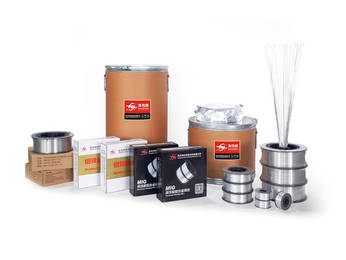
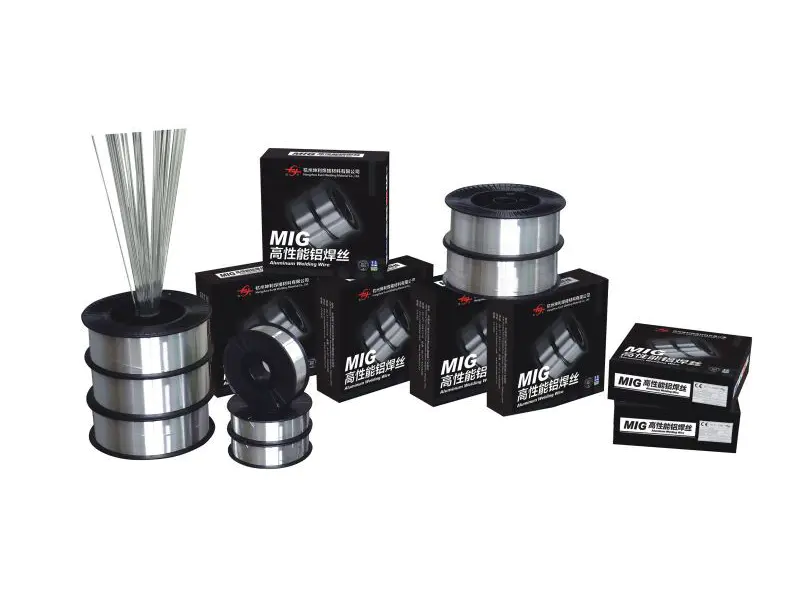
The performance advantages of ER4943 are only realized when the filler material meets its specification consistently across production batches. Alloy composition variation, wire surface quality, and dimensional consistency all affect how the filler performs in process and what the resulting weld properties look like. Hangzhou Kunli Welding Materials Co., Ltd. manufactures aluminum welding wire products including ER4943 and related filler metals for industrial, structural, and precision welding applications. Their product range covers standard and custom diameter configurations suited to MIG and TIG applications, with production quality controls focused on alloy consistency and wire surface cleanliness. If you are evaluating aluminum welding wire for sale for a new production run, a project specification, or a distribution supply arrangement, reaching out to discuss product specifications, packaging formats, and application requirements is a practical starting point for confirming that the filler material you receive will perform as the ER4943 specification requires.
NEXT:How 4943 Aluminum Welding Wire Addresses Post-Weld Strength Loss