English
  Deutsch


How 4943 Aluminum Welding Wire Addresses Post-Weld Strength Loss
Article Directory
- 1 Why Aluminum Loses Strength After Welding
- 2 What Makes ER4943 Different From ER4043?
- 3 Post-Weld Heat Treatment: An Advantage ER4943 Enables
- 4 Comparing ER4943 Against the Common Alternatives
- 5 Why the Heat-Affected Zone Is Often the Critical Design Factor
- 6 Applications Where Strength Loss Is a Documented Production Problem
- 7 Does ER4943 Process Differently in Production?
- 8 Is the Upgrade Decision Straightforward?
- 9 Sourcing ER4943 for Production Welding
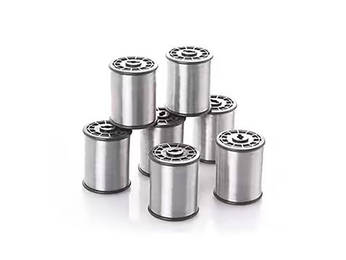
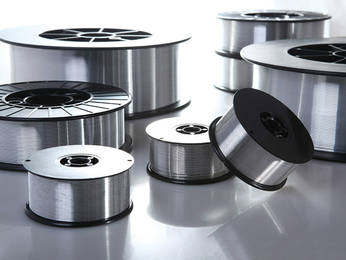
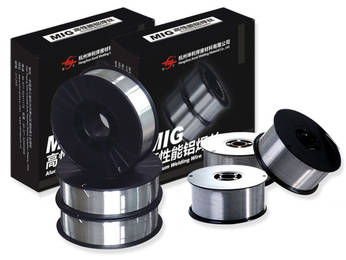
Engineers working with heat-treatable aluminum alloys know the problem well. The base material arrives rated for a specific tensile strength. Fabrication proceeds. The welds look clean. But post-weld testing or service performance reveals that the joint area — and the heat-affected zones surrounding it — are significantly weaker than the rest of the structure. For load-bearing applications, that gap between rated material strength and actual joint performance creates either over-engineering costs or genuine structural risk. The 4943 Aluminum Welding Wire was developed specifically to address this gap: a filler metal that improves post-weld mechanical performance at the joint compared to older formulations, while retaining the processing behavior that makes silicon-bearing fillers practical to use in production welding environments.
Why Aluminum Loses Strength After Welding
The Metallurgical Mechanism Behind Post-Weld Softening
To see what ER4943 does, it helps to look at why aluminum weakens at the weld zone. The answer lies in how heat-treatable aluminum alloys are strengthened.
Alloys like 6061, 6082, and 6063 achieve their mechanical properties through a precipitation hardening process. During heat treatment, fine particles of strengthening phases — typically magnesium-silicide compounds — precipitate within the aluminum matrix and impede dislocation movement, which is what actually produces strength at the atomic scale.
When welding heat is applied, two things happen in the surrounding metal:
- In the weld pool itself — the metal melts and resolidifies, and the structure it forms depends on the filler metal chemistry
- In the heat-affected zone (HAZ) — the metal does not melt, but it reaches temperatures high enough to dissolve the strengthening precipitates back into the matrix or cause them to coarsen
That coarsening and dissolution in the HAZ is the core problem. The strengthening particles that give 6061-T6 its rated properties are disrupted by welding heat, and they do not re-form simply by returning to room temperature. The result is a softened band on each side of the weld bead that is consistently weaker than both the base material and, in a well-specified weld, the weld metal itself.
This is not a quality failure in the welding process. It is a fundamental metallurgical response of heat-treatable alloys to thermal cycles. The question is how to manage it — and that is where filler metal selection enters the calculation.
What Makes ER4943 Different From ER4043?
The Composition Change That Drives Better Performance
ER4043 has been the standard Al-Si filler for general aluminum welding for decades. It works well — good fluidity, low crack sensitivity, broad compatibility with common aluminum alloys. Its limitation is that the silicon-dominated weld metal it deposits does not produce high post-weld tensile or yield strength. For structural applications where joint strength is a design variable, this is a real constraint.
ER4943 was developed as a direct evolution of ER4043. The silicon content baseline is similar, preserving the crack resistance and flow characteristics that made the older alloy widely adopted. What changed is the addition of a controlled magnesium level to the filler composition.
Magnesium in aluminum filler metal serves as a solid solution strengthener in the deposited weld metal. Unlike pure silicon, which contributes to fluidity and cracking resistance but not significantly to post-weld strength, magnesium raises the tensile and yield strength of the resolidified weld zone. This combination — silicon for processability, magnesium for strength — is what positions ER4943 as a stronger-performing alternative to ER4043 in applications where joint mechanical performance matters.
The practical implication: a weld made with ER4943 into 6061-T6 base material will have a stronger weld deposit than the equivalent joint made with ER4043. The HAZ softening still occurs — no filler metal prevents that — but the weld metal itself is now stronger, and in some cases the joint can be re-strengthened through post-weld heat treatment, which ER4943 supports better than ER4043.
Post-Weld Heat Treatment: An Advantage ER4943 Enables
Why Some Applications Can Recover Lost Strength
For projects where post-weld heat treatment is feasible — and not all are — ER4943 offers an advantage that ER4043 does not. The magnesium content in ER4943 allows the weld deposit to respond to artificial aging (T5 or T6 heat treatment cycles) in a way that produces meaningful strength recovery in the joint.
When a welded assembly is subjected to artificial aging after welding, the thermal cycle allows precipitation hardening to occur in the HAZ material that was disrupted during welding. Simultaneously, the magnesium in the ER4943 weld deposit participates in precipitation reactions within the weld metal itself, strengthening both zones.
This response is not unlimited — the HAZ will not recover to the full strength of the original base material in all cases — but the improvement is measurable and design-relevant. For fabricators who build with 6061 or 6082 and have the capability to post-weld age the assembly, specifying ER4943 instead of ER4043 enables a recovery path that the older filler does not support.
Applications where this approach is practical:
- Aluminum structural frames where post-weld oven treatment is logistically feasible
- Small to medium assemblies that can be aged as complete units
- Components that are subsequently powder-coated or painted through a process that involves heating — the coating cure temperature can be designed to coincide with an aging cycle
Comparing ER4943 Against the Common Alternatives
Different aluminum fillers suit different problems, and the choice should follow from what the application actually requires rather than from habit or availability alone.
| Filler | Weld Deposit Strength | HAZ Response | Crack Resistance | Post-Weld Heat Treatment Response | Primary Use Context |
|---|---|---|---|---|---|
| ER4043 | Moderate | Standard loss | Good | Limited | General-purpose welding, thin materials |
| ER4943 | Higher than ER4043 | Standard loss | Good | Improved | Structural applications, load-bearing joints |
| ER5356 | High | Standard loss | Lower | Limited | High-strength, non-heat-treatable base alloys |
| ER5183 | High | Standard loss | Moderate | Limited | Marine applications, 5000-series base alloys |
ER5356 is worth a specific note in this context. Its strength is higher than ER4043 in as-welded condition, and many fabricators reach for it when joint strength is a concern. The trade-off is crack sensitivity — ER5356 is more susceptible to hot cracking on certain base alloys, and it should not be used on heat-treatable alloys where post-weld heat treatment is planned, because the magnesium content can cause issues in aging cycles. ER4943 does not carry that restriction, which is part of why it is growing in acceptance for structural applications on 6000-series alloys.
Why the Heat-Affected Zone Is Often the Critical Design Factor
How Structural Engineers Should Think About Joint Efficiency
Joint efficiency — the ratio of weld joint strength to base material strength — is a design parameter that determines how much of the base material's rated performance can actually be used in a welded structure. For 6061-T6, the HAZ softening is significant enough that welded joint efficiency is well below the base material rating, regardless of which filler metal is used.
This is not a reason to abandon aluminum. It is a reason to design with HAZ softening in mind. Structural engineers working with welded aluminum use joint efficiency factors that account for this reduction, and they size members and weld placements accordingly.
Where ER4943 changes the calculus is in applications where the weld metal itself — not just the HAZ — is a load path. In a fillet weld carrying shear load, or a full-penetration butt weld in tension, the strength of the deposited weld metal directly affects how much load the joint transfers. A stronger weld deposit from ER4943 raises the joint's capacity in those configurations, even when the HAZ softening on either side cannot be avoided.
For fabricators who are currently oversizing joint dimensions to compensate for low weld metal strength — adding extra weld passes, increasing leg sizes, or adding reinforcing plates — switching to a stronger filler metal is worth evaluating as an alternative path to achieving required joint capacity.
Applications Where Strength Loss Is a Documented Production Problem
Real Contexts That Drive the Interest in ER4943
The interest in stronger aluminum filler metals is not theoretical — it maps directly onto industries where post-weld strength is an ongoing engineering and quality concern.
Automotive and light commercial vehicle structures — body-in-white components, subframes, cross members, and suspension links in aluminum increasingly require weld joints that contribute to crash energy management. A filler that produces stronger weld metal reduces the risk of joint failure modes during impact events.
New energy vehicle battery enclosures and trays — the structural frames around battery packs in electric vehicles are typically aluminum, and the weld joints in those frames carry both structural loads and play a role in battery protection during collision. Higher weld deposit strength directly affects how well those joints perform in safety-critical scenarios.
Aluminum trailer and transport equipment — trailer frames, flatbed decks, and container floor systems are repeatedly loaded and unloaded, creating fatigue conditions where weld joint strength and fatigue resistance are ongoing concerns. Fabricators in this sector have been early adopters of ER4943 precisely because fatigue life improvements at welded joints are commercially significant.
Industrial platform and walkway structures — welded aluminum platforms in chemical, oil and gas, and general industrial settings carry point loads from personnel, equipment, and material handling. Joint efficiency requirements in these applications often push engineers toward solutions that reduce over-design while maintaining structural safety margins.
Sporting equipment and recreational structures — bicycle frames, scaffolding, and portable structural systems where weight savings from aluminum are critical and joint performance cannot be compromised without affecting product safety.
Does ER4943 Process Differently in Production?
What Fabricators Actually Experience When They Switch
A filler metal that improves post-weld strength but requires significant process changes to use reliably creates a different kind of problem. The adoption of ER4943 has been partly driven by the fact that it does not impose that burden.
Process behavior in MIG and TIG applications:
- Arc stability and weld pool behavior are comparable to ER4043 — operators familiar with the older alloy do not typically need extended re-qualification or training to produce consistent results
- Wire feeding characteristics in MIG applications are similar — no significant changes to liner selection or drive roll tension are usually required
- Pre-weld preparation requirements are identical — thorough oxide removal and degreasing remain essential for porosity-free results, as with all aluminum filler metals
- Shielding gas selection follows standard aluminum welding practice — argon or argon-helium blends for MIG, pure argon for TIG
The one area worth deliberate attention during process qualification is confirming that the improved post-weld strength properties are being achieved consistently in production conditions. This means running destructive tests on production sample joints during initial qualification, not just visual inspection, since the strength improvement is not visible in the completed weld appearance.
Is the Upgrade Decision Straightforward?
Evaluating Whether ER4943 Makes Sense for a Specific Project
Not every aluminum welding application benefits from switching to ER4943. The upgrade is straightforward to justify when:
- The application is on 6000-series heat-treatable alloys where the filler's composition works well
- Post-weld joint strength is a design constraint or a recurring quality concern
- Post-weld heat treatment is planned or feasible and would benefit from a filler that supports aging response
- Joint efficiency is limiting structural design and a stronger weld deposit would reduce the over-design currently being built in
The upgrade is less compelling when:
- The application is on 5000-series non-heat-treatable alloys where ER5356 or ER5183 are the appropriate filler families
- Post-weld strength is not a design driver — the joint is adequate with ER4043 and no performance concern has been identified
- The project involves thin material where crack sensitivity and flow behavior are the governing variables
For fabricators currently using ER4043 on 6000-series structural work, running a comparative qualification test — sample joints with ER4043 and ER4943 at identical parameters, tested to the same mechanical property standard — produces concrete evidence for the upgrade decision rather than relying on published data alone.
Sourcing ER4943 for Production Welding
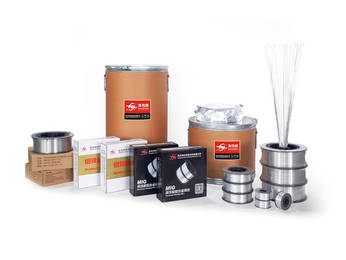
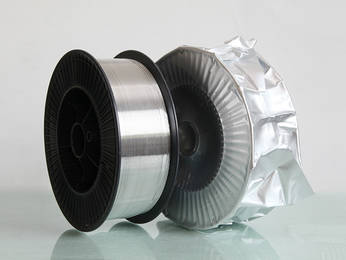
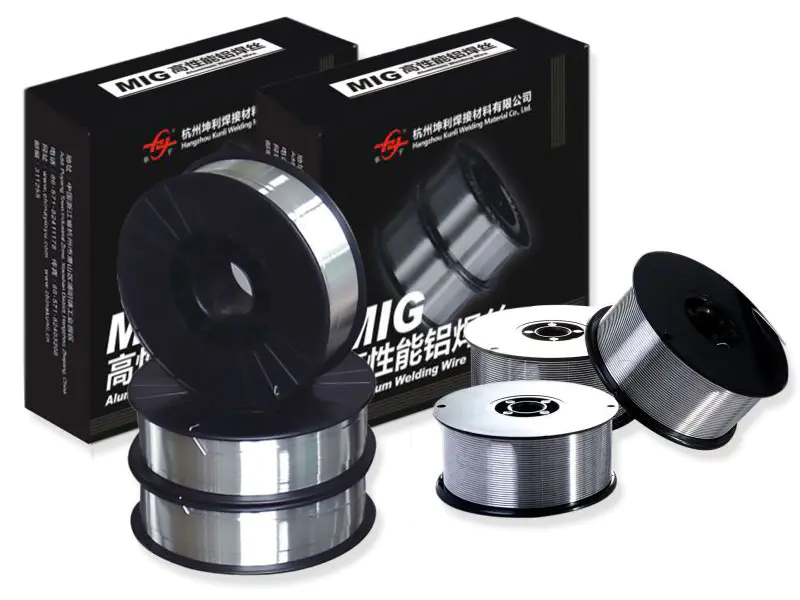
The performance of ER4943 in production depends on receiving material that meets the alloy specification consistently batch to batch. Alloy composition variation, wire surface quality, and spool packaging all affect how the filler behaves in process and what the resulting weld properties look like. Hangzhou Kunli Welding Materials Co., Ltd. manufactures aluminum welding wire products including ER4943 for industrial, structural, and precision welding applications. Their production controls target alloy composition consistency and wire surface cleanliness — the factors that determine whether the mechanical property improvements of ER4943 are reliably achieved in production rather than only in controlled test conditions. If you are evaluating Aluminum Welding Wire for sale for a structural fabrication project, a new product qualification, or ongoing production supply, reaching out to discuss wire specifications, packaging formats, and application requirements is a practical step toward confirming that the material you receive will perform as the specification requires.
NEXT:How to Reduce Porosity With 4943 Aluminum Welding Wire