English
  Deutsch


Industry Use of Aluminum ER5087 Welding Wire
Article Directory
- 1 What makes a filler choice practical for everyday welding and specialized fabrication?
- 2 Fabrication and process factors
- 3 What is the classification context for this filler and how is it commonly supplied?
- 4 How does the chemistry of this filler differentiate it from related alloys?
- 5 Why was this filler developed and what industry needs influenced its creation?
- 6 What mechanical characteristics are typically associated with weld metal produced with this filler?
- 7 How does this filler approach resistance to solidification and liquation cracking?
- 8 How does weld metal made with this filler behave in corrosive environments commonly encountered at sea?
- 9 Which base alloys are commonly paired with this filler and what pairings are less recommended?
- 10 Which welding methods are compatible with this filler and how do they differ in practice?
- 11 What practical MIG welding parameters and shielding strategies help achieve good results with this wire?
- 12 How should this wire be stored and prepared to ensure reliable feeding?
- 13 What common operator errors occur and how can they be addressed when using this filler?
- 14 How should welds be treated and finished to improve appearance and durability?
- 15 Where is this filler commonly chosen in real-world fabrication settings?
- 16 What questions are frequently asked by practitioners about this filler?
- 17 What practical checklist should a fabricator use when evaluating this filler for a project?
- 18 How can evolving industry trends influence the choice to use this filler?
For manufacturers who need to balance strength, ductility, and corrosion resistance in common structural and marine applications, Aluminum Welding Wire ER5087 is a reliable choice. The selection of filler materials must take into account both metallurgical compatibility and mechanical property matching. Its chemical composition and grain refiner additives will affect the performance of the weld in thermal cycling and chlorine-containing environments. Process adaptability and actual production conditions are equally important. The wire feeding stability of the automated welding unit, its applicability to MIG/TIG processes, and its tolerance to changes in surface condition and heat input all directly affect production efficiency. Currently, facing the urgent delivery schedules of projects such as aluminum high-speed ferries, offshore wind power transition pieces, or cryogenic storage tanks, Aluminum Welding Wire ER5087 is extending its application from technical parameters to everyday welding scenarios. Its advantage lies in its ability to meet complex challenges in actual production, such as the welding requirements of 5xxx series plates of different thicknesses, mixed 6xxx series extrusions, and the continuous requirements of automated panel production lines for the seam corrosion resistance of welds. Subsequent content will further analyze the core factors behind the widespread application of this welding wire in new welding process specifications in the marine, energy, and transportation sectors.
What makes a filler choice practical for everyday welding and specialized fabrication?
Core technical factors
- Metallurgical compatibility: The filler must be compatible with the base metal family (strength, heat-treat response, galvanic behaviour). Mismatch can lead to brittle welds, poor corrosion behaviour, or unacceptable dilution effects.
- Mechanical match: Consider the required tensile, yield, ductility, and shear behaviour of the joint. Some fillers aim to preserve ductility while others emphasize deposit strength.
- Corrosion and environmental resistance: If the structure will see salt, chemicals, or cyclic humidity, the filler's corrosion tendencies and its effect on the HAZ need to be weighed. For visible components, appearance after finishing may matter too.
Fabrication and process factors
- Weld process compatibility: Some fillers are easier to use in MIG/GMAW automation, others in TIG/GTAW handwork, or in hybrid/pulsed systems. Choose a filler that fits the intended process and transfer mode.
- Feedability and handling: Soft or large-diameter wires need appropriate feeders, liners, and spool handling. If the shop uses long feeder runs or robotic cells, feedability becomes a practical gatekeeper.
- Ease of use: How tolerant is the filler to variations in heat input, travel speed, and surface condition? More forgiving fillers reduce rework in high-throughput environments.
Production and supply considerations
- Availability and spool forms: Common spool sizes and diameters that match your equipment reduce changeovers and stock complexity. Consider packaging that protects the wire from oxidation and handling damage.
- Cost and lifecycle economics: Evaluate not only unit price but also rework risk, inspection burden, and coating/maintenance needs over the structure's life.
Quality, certification and inspection
- Acceptance criteria: Does the filler support the mechanical tests and classification rules you must meet? Check whether it is commonly used in the necessary qualification procedures.
- Nondestructive testing behaviour: Some fillers affect radiography contrast or ultrasonic signal; this can influence inspection planning and acceptance.
Practical shop-level considerations
- Surface prep and cleanliness: Fillers vary in sensitivity to oxide, oil, and contaminants. Realistic assessment of your cleaning practices helps avoid choosing a filler that needs near-perfect prep.
- Operator skill and training: A filler that demands very tight parameter control may be fine in a controlled cell, but cause variability in a mixed-skill workforce.
- Post-weld treatment workflow: Think about anodizing, painting, or heat treatment steps — choose a filler whose post-weld appearance and chemistry are compatible with those processes.
What is the classification context for this filler and how is it commonly supplied?
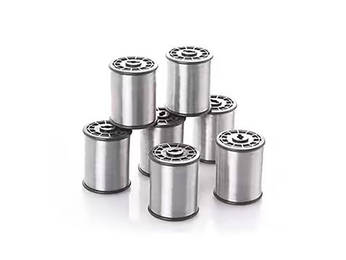
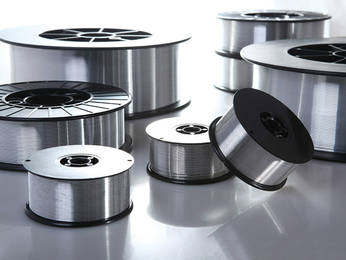
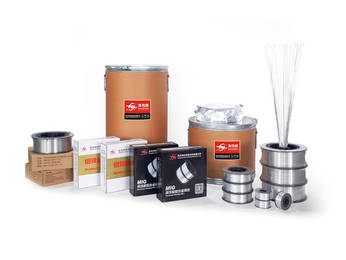
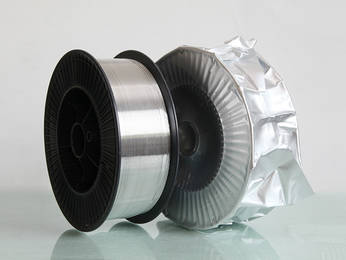
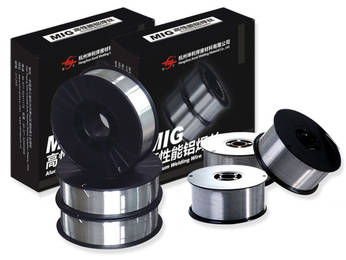
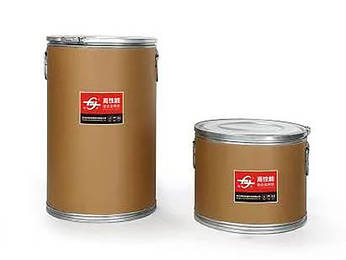
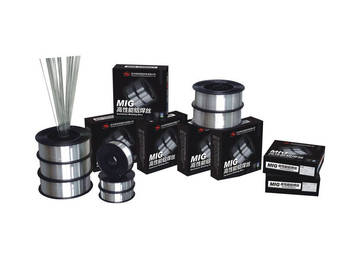
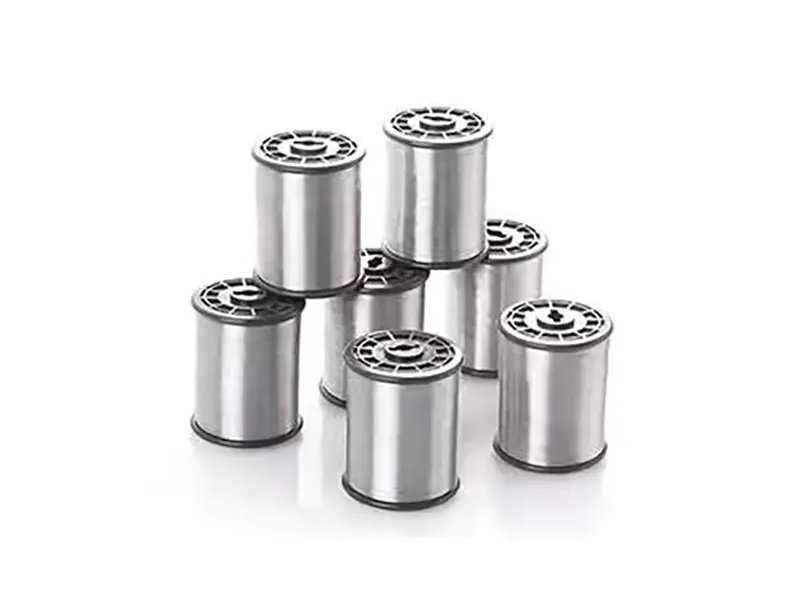
Aluminum filler metals are grouped by family and chemistry to guide welders and engineers toward compatible combinations. ER5087 sits within the family associated with magnesium-containing filler alloys, a cluster of wires and rods used where strength, ductility, and corrosion resistance are important. Delivery formats for this wire typically include machine-ready spools designed for feeding systems, various diameters to suit manual and automated processes, and packaging that preserves softness and surface cleanliness. Spools are sized to fit standard feed units and are often offered in protective, sealed packaging to help preserve feedability. When planning purchases, fabricators consider spool diameter, wire diameter range, and package features that align with their torches, feeders, and storage practices.
The alloying approach of this filler emphasizes several elements commonly used across similar series. Magnesium contributes to strength in the weld deposit and helps with solid solution strengthening. Manganese is often present to influence mechanical balance and grain structure. Trace additions of elements such as zirconium and chromium are introduced to assist grain control and microstructure stability during solidification and subsequent thermal cycles. Compared with other members of the magnesium-containing family used in similar service, this filler shows adjustments in minor additions intended to change weld metal grain size and crack sensitivity, rather than radical shifts in primary alloying. The addition of zirconium in modern variants is targeted at refining the weld metal grain structure, promoting a finer distribution of microstructural features that can influence toughness and reduce susceptibility to certain types of cracking under thermal stress.
Why was this filler developed and what industry needs influenced its creation?
The trajectory of filler development reflects feedback from fabrication sectors where dimensional stability, joint integrity, and environmental durability matter. This filler emerged from an interest in addressing cracking tendencies observed in some weld joints and from demand for weld deposits that retained good mechanical balance with common structural alloys. Industry trends such as expanded use of lightweight structures in maritime and transportation contexts, an increase in fabrication automation, and attention to lifecycle performance in harsh environments encouraged incremental changes in filler chemistries. The modification with grain-refining additions and careful control of magnesium and manganese content aims to help fabricators manage heavier sections, transitional joints, and mixed-alloy assemblies with greater confidence in soundness after welding.
What mechanical characteristics are typically associated with weld metal produced with this filler?
Weld metal produced with this filler tends to show a balance between tensile properties and ductility that aligns with the needs of structural assemblies where some toughness is required in addition to strength. The as-deposited tensile response usually falls within an expected band for magnesium-bearing weld metals, with ductility adequate for joints that experience bending or vibration. Shear performance in lap and single-lap joints is influenced by joint geometry and heat input, as with any filler. Fatigue behavior is often governed more by weld profile, surface condition, and residual stress than by filler chemistry alone, but the grain refinement introduced by certain minor elements can influence crack initiation behavior. In colder exposures the weld metal retains considerable ductility, and at elevated temperatures the deposit exhibits modest softening consistent with its alloy family.
How does this filler approach resistance to solidification and liquation cracking?
Solidification cracking arises when a weld pool's last-to-solidify regions cannot accommodate strain during cooling. This filler's chemistry and grain refinement strategy act on two fronts: modifying the solidification path and producing a finer primary grain structure that reduces localized stress concentration in boundary regions. The presence of grain-refining elements promotes a more uniform grain structure and reduces the width of vulnerable interdendritic paths where cracking can initiate. Compared to several traditional fillers used in similar joints, the altered minor element balance and attention to cleanliness during deposition can deliver lower crack sensitivity in many common joint configurations, particularly when compatible welding procedures are followed and heat input is controlled.
How does weld metal made with this filler behave in corrosive environments commonly encountered at sea?
Corrosion behavior of welded joints in chloride-bearing atmospheres depends on base alloy, filler chemistry, and weld metal microstructure. Weld deposits from this filler demonstrate a corrosion profile in marine atmospheres that reflects the underlying alloy family: when paired with compatible base materials and given appropriate surface finishing and design, they perform in a manner acceptable to many maritime applications. Stress corrosion tendencies are influenced by residual stresses and metallurgical conditions in the heat-affected zone, so design and post-weld practices matter for long-term performance. In anodic and cathodic interactions with common structural alloys, the filler tends to behave similarly to other magnesium-containing options, with anodic potential differences controlled by alloy selection. For long-term exposure on ships and offshore platforms, emphasis on proper joint design, paint or sacrificial protection, and routine inspection practices remains central.
Which base alloys are commonly paired with this filler and what pairings are less recommended?
This filler is commonly paired with structural alloys where magnesium provides part of the strength balance, including alloys used in marine and transport fabrication. It performs well with certain magnesium-bearing structural alloys and can be used with some heat-treatable alloys in transitional joints where a ductile weld deposit is desirable. Some pairings require caution: joining alloys with widely differing strength or thermal response demands welding procedures that limit heat input and control dilution. Color matching after surface finishing, including anodizing, depends strongly on base metal composition and surface treatment—welds may display a slightly different appearance after anodic processes compared with the surrounding parent material. Fabricators planning for visual finishes should trial small panels when appearance matters.
Which welding methods are compatible with this filler and how do they differ in practice?
This filler is designed for both manual and automated processes. Gas metal arc welding in both pulsed and continuous transfer modes is commonly used in production settings because of its feeding convenience and adaptability to mechanized torches. Gas tungsten arc methods are employed for precision work and root runs where a controlled heat source and fine manipulation are needed. Both manual and robotic welding setups can benefit from this filler's availability in machine-ready forms. Process choice is guided by joint geometry, production rate, and surface preparation needs.
What practical MIG welding parameters and shielding strategies help achieve good results with this wire?
Successful gas metal arc welding with this filler involves balancing heat input, deposition rate, and travel technique. Wire feed settings should match torch amperage ranges that achieve a stable arc and consistent penetration for the chosen wire diameter. Voltage and travel speed work together: a stable arc voltage that supports the chosen transfer mode and a travel speed that avoids excessive bead profile or lack of fusion are key. Shielding gas chemistry matters: argon-based mixtures are commonly used, with additions sometimes made to influence transfer mode and bead profile in pulsed systems. Contact tip to work distance, torch angle, and whether the operator pushes or pulls the weld pool all influence bead shape and fusion. Practical guidance includes testing on representative coupons before production runs and adjusting parameters to control weld pool size, wetting, and penetration.
How should this wire be stored and prepared to ensure reliable feeding?
This aluminum wire is mechanically soft and sensitive to surface contamination. Keeping spools in sealed packaging and storing them in dry, clean environments helps reduce oxidation and feeding issues. For long spools and automated feeders, attention to drive roll selection and liner condition is important to prevent birdnesting and buckling. Soft aluminum wires benefit from softer drive roll grooves and frequent inspection of liners for wear or flattening. In many applications fabricators choose low-friction liners and ensure spool mounting aligns with feed geometry to reduce drag and preserve wire roundness.
What common operator errors occur and how can they be addressed when using this filler?
Several repeatable mistakes tend to cause weld quality problems: using excessive heat input that increases dilution and can cause loss of alloying elements; failing to adequately clean oxide and surface contaminants before welding; and running parameter combinations that produce poor fusion or burn-through. Avoiding these issues requires a methodical approach: match heat input to plate thickness and joint design, clean surfaces with mechanical or chemical methods appropriate to aluminum, and use welding test samples to tune parameters. Misapplication in mixed-alloy joints or ignoring preheat and interpass temperature considerations can also lead to issues; keeping records of successful parameter sets and using consistent procedures helps reduce variability.
How should welds be treated and finished to improve appearance and durability?
Post-weld cleaning options include mechanical brushing to remove spatter and oxide, and chemical cleaning for surfaces requiring bright finishes before anodizing or painting. The way the weld metal responds to anodic treatment differs from base metals, so practitioners perform trial panels to confirm color match and surface behavior. Painting and coating adhesion depend on surface preparation and the selected coating system; use systems compatible with aluminum and follow manufacturer guidance for surface profile and cleanliness. When corrosion protection is required, consider both coating and design measures to limit crevices where corrosive media can collect.
Where is this filler commonly chosen in real-world fabrication settings?
Applications for this filler span maritime structures such as hulls and superstructures, where weldability and resistance to marine atmospheres are often required; cryogenic containment and related tanks where ductility and predictable weld metal behavior are important; certain defense and specialized transportation structures where strength and reduced weight are design drivers; and offshore infrastructure where long-term exposure to aggressive environments dictates conservative material choices. Fabricators in these sectors select fillers based on joint type, expected loads, and fabrication workflow, often favoring combinations that minimize rework and support efficient quality control.
What questions are frequently asked by practitioners about this filler?
Managers and welders often ask whether it can be used in place of other common magnesium-bearing fillers, whether it is appropriate for joining alloys outside its typical family, and whether it aligns with classification requirements from technical bodies. Answers revolve around compatibility: substitution depends on joint design, desired weld metal properties, and acceptance criteria for mechanical and environmental performance. When considering weldability with alloys from different families or with heat-treatable materials, trial welding and metallurgical review are recommended.
What practical checklist should a fabricator use when evaluating this filler for a project?
| Topic | This Filler | Typical Comparator A | Typical Comparator B |
|---|---|---|---|
| Primary application focus | Structural and marine-focused weld metal | General-purpose structural filler | Higher-magnesium deposit for heavy sections |
| Grain refinement tendency | Moderate to refined with minor additions | Less refined unless treated | Variable depending on alloying |
| Crack sensitivity in routine joints | Reduced relative to some older formulations | Moderate | Can be higher in tight joint geometries |
| Common processes used | MIG and TIG in manual and automated contexts | MIG dominant | MIG and specialty processes |
| Visual finishing after anodizing | Close but may differ by base alloy | Often similar | Visual mismatch possible with certain alloys |
How can evolving industry trends influence the choice to use this filler?
Broader industry shifts such as increased deployment of lightweight structures, emphasis on lifecycle management in harsh atmospheres, and the push toward more automated fabrication influence filler selection. As sectors pursue reduced emissions and longer service intervals, selection criteria put a premium on predictable weld metal performance, manageable distortion, and ease of automation. These trends encourage welders and engineers to consider fillers that balance deposit performance with manufacturability and inspection practicality.
With the increasing application of lightweight aluminum structures in ships that pursue higher speeds, storage tanks that need to maintain low temperatures for a long time, and platforms that need to serve at sea for decades, and the trend of replacing traditional materials, the choice of filler metal has become a key consideration affecting construction efficiency, joint stability, and total life cycle cost. Aluminum Welding Wire ER5087 continues to attract attention, thanks to its chemical composition, wire feeding characteristics, and weld performance being highly compatible with the industry's technological evolution direction. Practice has shown that welders and engineers have found that this welding wire can be seamlessly adapted to existing equipment and processes, and can also solve specific problems in projects when testing typical joints. When assessing its applicability, we need to return to the core question: how well do the chemical compositions of the filler material match those of the base alloy? Can the weld meet the requirements for mechanical properties and corrosion resistance? Can the selected process guarantee the stability and inspectability of the weld quality? In addition to focusing on qualification certification and post-weld treatment solutions, factors such as the specifications of welding wire reels, parameters of wire feeding devices, cleaning operation standards, and personnel skill levels in actual production also have a significant impact on reducing rework and ensuring long-term performance. By systematically weighing these factors, manufacturers can organically combine metallurgical requirements with production realities to produce welds that meet specifications and usage requirements.
NEXT:Aluminum Welding Wire ER4943: Practical Selection Guide