English
  Deutsch


Aluminum Welding Wire ER4943: Practical Selection Guide
Article Directory
- 1 Silicon and weld pool behavior
- 2 Practical implications for bead profile and travel technique
- 3 Base metal compatibility and selection logic
- 4 Trade-offs affecting mechanical condition after welding
- 5 Introducing Aluminum Welding Wire ER4943 into the selection conversation
- 5.1 Appearance and surface finishing considerations
- 5.2 MIG feedability and mechanical preparation of wire
- 5.3 Wire cleanliness and external finish
- 5.4 Spool winding and runout control
- 5.5 Drive system considerations and tension management
- 5.6 Handling and storage practices
- 5.7 Preventive checks and early indicators
- 6 Process setup guidance for MIG deposition with silicon-bearing wire
- 7 Comparative selection logic: ER4043 versus Aluminum Welding Wire ER4943
- 8 Frequently Asked Questions (FAQ)
Fabricators working with aluminum frequently face a familiar decision: how to balance weld pool fluidity, crack resistance, and final joint strength when joining common structural alloys. Silicon-alloyed filler wires have been used to meet requirements for smooth weld wetting and reduced solidification cracking. The deposited weld metal often exhibits lower hardness compared to heat-treated base materials. Aluminum Welding Wire ER4943 enters this conversation as a silicon-bearing option formulated to narrow that strength gap while keeping the handling and flow characteristics that welders value in everyday production. Understanding where this wire fits among established choices helps teams select the filler that aligns with both process stability and service-life requirements.
Silicon and weld pool behavior
Silicon in filler compositions alters several metallurgical and processing characteristics that directly shape weldability. When silicon is present, the deposited metal's melting range narrows and the molten metal's flow characteristics change in a way that enables the puddle to wet joint faces more readily. This wetter puddle behavior assists in filling grooves and tying into the joint toes in confined geometries or positional welding, and it tends to reduce susceptibility to solidification cracking in materials that are sensitive during cooling. These effects make silicon-bearing fillers a routine consideration where weld pool fluidity and crack avoidance are priorities.
Practical implications for bead profile and travel technique
Improved puddle fluidity simplifies control of the bead shape when operators need a smooth contour or minimal overlap. Travel speed, torch angle, and the sequence of passes interact with the fluidity changes induced by silicon; welders typically adapt by moderating travel speed and maintaining consistent torch angle to prevent excess remelting or undercut. Where automated deposition is used, parameter windows may shift relative to filler wires without silicon, and programming or operator training should account for that behavior to maintain consistent bead geometry.
Base metal compatibility and selection logic
When selecting a silicon-bearing filler, consider the base alloy family and the service demands placed on the joint.
- Manganese-containing non-heat-treatable alloys: These alloys commonly accept silicon-bearing filler because the improved wetting supports clean toe formation and a uniform bead without requiring complex post-weld treatments. The aesthetic finish achievable with a silicon-containing deposit is often acceptable for exposed joints.
- Magnesium–silicon heat-treatable alloys, including commonly used structural grades such as 6061-T6: These alloys benefit from silicon-bearing filler when the priority is reducing hot-crack sensitivity or achieving a smooth weld surface in constrained joints. The filler's fluidity reduces the incidence of solidification-related cracking and allows deposits that are easier to shape.
- Magnesium-rich base alloys: These alloys can be welded with silicon-bearing filler, but the selection should weigh the weld zone mechanical condition against the parent metal's properties and the intended post-weld processing path. In some situations, alternative fillers that emphasize magnesium content are chosen to achieve closer mechanical matching after heat treatment; those alternatives typically increase sensitivity to hot cracking and require stricter control of welding procedure and dilution.
Trade-offs affecting mechanical condition after welding
A consistent feature of welding heat-treatable aluminum with silicon-bearing filler is that the deposited metal commonly remains in an as-welded metallurgical condition distinct from the original heat-treated parent material. That means the weld metal's tensile and ductility characteristics frequently differ from the surrounding heat-treated alloy after any post-weld thermal process. Where service criteria call for the joint to attain mechanical properties similar to the original heat-treated condition after post-weld processing, an assessment is required: choosing a magnesium-focused filler may produce a weld that more closely matches the parent material after thermal treatment, but that choice brings an increased risk of hot cracking during solidification. Determining the priority between restored strength and crack resistance is an early step in filler selection.
Introducing Aluminum Welding Wire ER4943 into the selection conversation
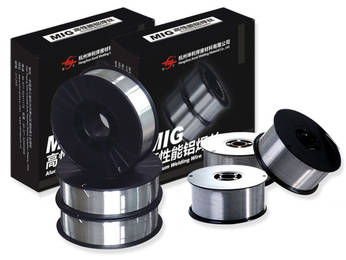
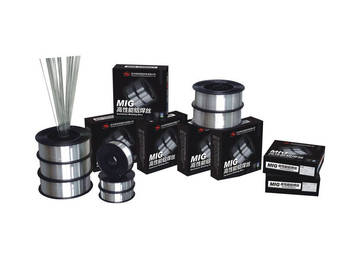
Aluminum Welding Wire ER4943 is a filler that is formulated to provide an elevated as-welded strength level while retaining many of the handling and weld pool characteristics associated with silicon-bearing wires. Where project requirements call for a combination of enhanced deposited strength and the handling benefits associated with silicon, ER4943 can be considered as an option. The practical result is a filler that preserves manageable puddle fluidity and feeding behavior while offering incremental improvements in as-welded mechanical condition compared with some other silicon-bearing wires. When specifying ER4943, verify that weld procedure specifications, operator practice, and acceptance criteria align with the filler's mechanical profile and post-weld expectations.
Appearance and surface finishing considerations
Silicon-bearing weld deposits frequently respond differently to surface finishing processes than the base metal. When exposed surfaces are to be anodized or otherwise color-matched after welding, anticipate a darker appearance in the welded zone relative to the parental surface. This color change can be mitigated to a degree by consistent cleaning, controlled etch/finish procedures, and in-process masking, but it should be part of the aesthetic evaluation before final filler selection on visible components.
MIG feedability and mechanical preparation of wire
Achieving steady, high-rate deposition with aluminum wire requires attention to wire condition and feed path mechanics beyond what is typical for ferrous wire. The following practical controls improve feedability and reduce unplanned downtime.
Wire cleanliness and external finish
Incoming wire should be free of residual drawing agents and avoid contact contamination that compromises arc stability or causes porosity. Routine tactile and visual inspection at the time of spool change, as well as simple wipe testing, reduce the chance that surface residues will disrupt deposition. A uniform external finish reduces friction through contact tips and liners and helps maintain steady drive pressures.
Spool winding and runout control
Even winding with secure anchoring at the spool minimizes sudden pay-off variations and reduces the chance of slack events that cause bird-nesting or tangles. The wire's cast and helix should be consistent so it centers reliably through the guide path. Liner condition and drive roll profile should be matched to the wire's external surface and intended feed speed, with inspection and replacement triggered by observable performance degradation.
Drive system considerations and tension management
Select drive roll type that suits the wire surface — profiles that match the wire material will reduce slippage and minimize deformation. Liner diameter, guide geometry, and contact tip orifice size should be checked against the wire condition before high-rate runs. Tension and spool braking should be adjusted to maintain controlled pay-off that prevents sudden acceleration of the spool.
Handling and storage practices
Protect wire spools from dust, moisture, and oil during storage. Single-use sealing of newly opened spools and attention to handling practices that avoid kinks maintain dimensional uniformity and reduce feed interruptions.
Preventive checks and early indicators
Conduct visual and tactile checks before loading wire. Monitor drive force during initial welds to detect liner friction or feed misalignment early. Record patterns of wear to inform replacement of liners, drive rolls, and contact tips based on observed degradation rather than a fixed schedule. These practices reduce process variability and preserve weld quality.
Process setup guidance for MIG deposition with silicon-bearing wire
Parameter windows for deposition with silicon-bearing wire typically favor travel speed and heat input adjustments that harness the filler's fluidity without causing excess remelting at the joint root. In fillet work or narrow groove joints, ensure that travel speed produces sufficient tie-in at the toe without producing sag or excessive fusion into the parent material. For automated applications, confirm spool braking and pay-off geometry before production runs to avoid acceleration spikes that can create feed interruptions.
TIG arc stability and ER4043
In TIG welding, consistent arc focus and controlled melting are central to quality appearance and adequate penetration. For silicon-bearing TIG wire such as ER4043, two production-level requirements are particularly notable.
Alloy homogeneity and chemical control
Consistent silicon distribution along the wire length reduces variation in melting rate and puddle fluidity. Non-uniform chemistry can cause intermittent changes in arc characteristics and puddle response, which represent a source of process instability when tight bead geometry is required.
Dimensional control and diameter variation
Diameter variation in TIG filler wire affects electrical resistance and therefore metal feed and melting rate. Close dimensional control reduces variability in penetration and bead appearance, and is especially relevant when automating filler feed or when precise fusion depth control is required. For automated TIG setups, confirm tight tolerances on filler wire diameter as part of incoming inspection.
Operator technique and shielding practices
Arc focus and shielding consistency are essential when using silicon-bearing TIG wire. Keep shielding flow and cleanliness consistent to avoid disturbances from vaporized surface contaminants. Maintain steady filler feed and a controlled approach to root manipulation in groove welding to exploit the filler's flow properties while avoiding excess throat penetration or burn-through in thin sections.
Comparative selection logic: ER4043 versus Aluminum Welding Wire ER4943
Both wires offer improved fluidity through silicon additions, but their practical selection depends on the priority between in-service mechanical expectation and deposition handling.
ER4043 provides predictable puddle fluidity and is often used where wetting and reduced hot-crack sensitivity are priorities. It is a common choice for joining heat-treatable base metals when a manageable weld pool and consistent bead appearance are required.
Aluminum Welding Wire ER4943 is formulated to provide an increased as-welded strength profile while retaining many of the handling features of silicon-bearing wires. When a project requires a higher deposited strength without relying on base metal dilution or an altered welding procedure, ER4943 can be considered, with the caveat that its metallurgical and feeding characteristics must be matched to the assembly's joint design and acceptance criteria. Verify that the filler aligns with the required post-weld expectations before committing.
Decision framework for filler selection
Adopt a structured approach to choosing between ER4043, ER4943, or alternative filler types:
- Define the mechanical acceptance criteria for the welded joint after all post-weld processing.
- Identify whether crack resistance during solidification or regaining a heat-treated condition after post-weld thermal cycles is the higher priority.
- Evaluate joint geometry and position; if the joint or position requires elevated fluidity for proper fill, a silicon-bearing filler is appropriate.
- Confirm appearance requirements for anodizing and surface finishing; plan finish operations to account for darker weld zones where applicable.
- Validate feed system compatibility and incoming wire quality to ensure consistent deposition.
Inspection and qualification
Document the chosen filler and parameter window in the welding procedure documentation. Perform qualification welds that replicate production joint fit-up and thickness combinations. Include visual inspection of bead profile, non-destructive examination where required by specification, and mechanical testing against acceptance criteria to confirm that the selected filler and process deliver the expected joint performance.
Operational tips and common troubleshooting
- If bead wetting is insufficient when using a silicon-bearing filler, review travel speed and arc length to ensure the puddle benefits from the filler's flow characteristics.
- If feed interruptions occur, check spool winding, liner condition, and drive roll profile for compatibility with the wire surface.
- Where color mismatch post-finishing is unacceptable, trial post-weld surface treatments and consider alternative filler options if the mechanical trade-offs are acceptable.
- If arc instability appears during TIG welding, inspect filler wire for surface contamination and confirm diameter uniformity as part of incoming inspection.
Frequently Asked Questions (FAQ)
1. Why is ER4043 Silicon Aluminum Welding Wire prone to lower strength when welding 6061-T6?
When Welding 6061 T6 with ER4043 filler metal, the resulting weld metal is a simple binary Al-Si alloy. It lacks the magnesium and silicon ratios necessary for age-hardening, meaning the weld zone does not fully respond to T6 heat treatment, resulting in reduced strength compared to the base metal.
2. What is the primary reason that MIG welding feedability standards for aluminum are so strict?
Aluminum wire is softer and more easily deformed than steel, and its surface oxide layer is abrasive. Strict standards for surface finish, cleanliness, and mechanical cast/helix are necessary to prevent shaving, friction, and jamming in the wire liner and contact tip.
3. Does the silicon content in ER4043 improve or reduce hot cracking susceptibility?
The silicon content in the ER4043 Silicon Aluminum Welding Wire significantly reduces hot cracking susceptibility by widening the freezing range of the molten pool and increasing the fluidity of the weld puddle, which helps fill solidification shrinkage.
4. For which aluminum series is the ER4043 Aluminum welding wire compatibility considered excellent?
Good welding performance is achieved with both 3xxx (non-heat-treatable) and 6xxx (heat-treatable) aluminum alloys using this wire, while acknowledging that the weld strength in 6xxx series may not match that of the base material.
5. How does wire purity contribute to TIG welding arc stability with ER4043?
High purity ensures the chemical composition is uniform and minimizes the presence of low-boiling-point trace elements. These elements can vaporize into the arc, disrupting the shielding gas envelope and causing arc wander or instability.
NEXT:Can Aluminum Braided Wire Meet Your Design Needs?