English
  Deutsch


How to Optimize Your Welding Settings When Using ER5183 Wire
Article Directory
- 1 Why Equipment Setup Determines Your Success
- 2 How Does Wire Feed Speed Affect Your Welds?
- 3 Voltage Settings That Create Quality Beads
- 4 Shielding Gas Selection Matters
- 5 Preparing Your Work Surface
- 6 What Causes Porosity and How to Avoid It?
- 7 Travel Speed Balances Heat Input
- 8 Managing Different Material Thicknesses
- 9 Joint Configuration Influences Parameter Selection
- 10 Troubleshooting Wire Feeding Issues
- 11 Push vs. Pull Technique
- 12 Fine-Tuning Parameters for Tricky Jobs
- 13 Adapting to Welding Position
- 14 Optimizing Torch Angle
- 15 Signs of a Good Weld
- 16 Keeping Records for Better Results
- 17 Developing Reliable Technique
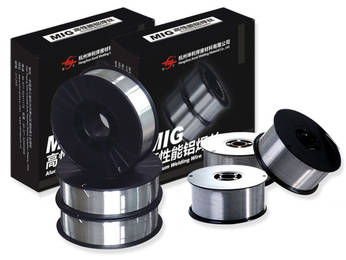
Working with aluminum presents unique challenges that many welders encounter daily. When you choose Aluminum Welding Wire ER5183 for your projects, understanding how to optimize your machine settings becomes crucial for achieving clean, strong welds. This filler metal contains magnesium and manganese, making it particularly suitable for marine applications, automotive components, and structural fabrications where corrosion resistance matters.
Why Equipment Setup Determines Your Success
Your welding setup shapes the quality of every bead you lay down. Before you pull the trigger, think about how your machine, gun, and feeder work together with the soft aluminum wire running through them.
Drive Roll Choice
Aluminum's low hardness means U-groove or knurled rolls will dig in and deform the wire, causing feed problems. Switch to smooth V-groove rolls made specifically for non-ferrous fillers. Set the tension just tight enough to push the wire reliably without leaving visible marks or flattening it.
Contact Tip Details
Ordinary copper tips designed for steel wear out fast with aluminum and can cause arcing inside the tip. Opt for longer-lasting brass or chrome-plated versions that cut down on drag. Choose a tip bore roughly 0.002 inch oversized compared to your wire diameter - this gives clearance to avoid jamming while keeping solid current transfer for a steady arc.
Liner Setup
Employing steel spiral liners for aluminum wire feeding presents a risk of mechanical abrasion and potential wire distortion, factors that can contribute to feed reliability issues such as jamming. Install Teflon or nylon liners instead; their slick interior lets the wire slide freely all the way to the tip. Keep the torch cable as short as you can - preferably 12 to 15 feet or less - to reduce friction and make feeding smoother and more consistent.
Liner Requirements
Every knob on the machine influences the others. Change voltage, and you may need to tweak wire speed; bump the feed rate, and the arc length or heat input shifts. Finding the sweet spot means adjusting one parameter at a time, watching the puddle and listening to the arc, then fine-tuning the rest to lock in a stable, well-formed bead.
| Material Thickness | Wire Feed Speed | Voltage Setting | Gas Flow Rate |
|---|---|---|---|
| Thin Section | Lower Range | Lower Range | Lower to Medium Range |
| Medium Section | Medium Range | Medium Range | Medium Range |
| Thick Section | Higher Range | Higher Range | Higher Range |
These ranges provide starting points rather than absolute rules. Your specific application, joint configuration, and welding position require individual assessment.
How Does Wire Feed Speed Affect Your Welds?
Wire feed speed directly determines how much filler metal gets deposited into the weld pool every second. If you run it too slow, the puddle overheats and risks burning through thin sections or leaving a weak, under-reinforced bead. Crank it too high, and you end up with excess buildup that doesn't fuse properly, creating a lumpy, convex bead with poor tie-in at the edges. Start in the middle of the recommended range for your wire diameter and thickness, then listen to the arc - a steady, crisp crackle usually means you're in the ballpark. Popping, crackling, or heavy spatter signals it's time to tweak the speed up or down. For vertical or overhead work, drop the feed speed 10 to 15 percent from flat-position settings to keep the puddle manageable and prevent sagging.
Voltage Settings That Create Quality Beads
Voltage sets the arc length and how heat spreads across the joint. Lower settings tighten the arc for deeper penetration on thin stock, while higher voltages widen it for flatter, wider beads that cover thicker plates. A good voltage shows in the bead shape: slightly convex with even toes and little spatter. Too low, and the bead humps up with narrow, poor wetting at the edges. Too high, and it flattens out or dips concave, throwing more spatter and risking undercut.
Shielding Gas Selection Matters
Pure argon shielding gas typically supports a stable arc, minimal spatter, and sufficient penetration when welding with ER5183 filler wire on materials of moderate thickness. It shields the puddle well and keeps oxidation at bay. Adding 25 to 35 percent helium ramps up heat for thicker sections or materials that suck up heat fast, giving deeper penetration without losing control. Aim for 20 to 35 cubic feet per hour of flow - enough to protect the weld but not so much that it wastes gas or blows the puddle around.
Preparing Your Work Surface
Aluminum's oxide layer forms the instant the metal touches air and melts at a much higher temperature than the base, so it blocks fusion if you don't clean it off first. Grab a stainless steel brush kept only for aluminum to avoid iron contamination that can cause rust or cracks later. Brush in one direction to lift the oxide without embedding it deeper. Wipe with acetone or a dedicated aluminum cleaner to remove oils, then let it dry fully before striking the arc.
What Causes Porosity and How to Avoid It?
Porosity in aluminum welds shows up as tiny bubbles trapped in the bead, weakening the joint and often failing inspections. The main culprit is hydrogen gas that dissolves in the molten pool but can't escape as the metal cools and solidifies. Sources include moisture on the base material or filler wire, hydrocarbons from oil or grease, or poor shielding that lets air sneak in and react with the hot aluminum.
To keep porosity down with ER5183 wire, store spools in a dry cabinet or sealed bag with desiccant. Even a short time in humid air lets the wire pick up moisture under its thin oxide layer, which then turns to steam in the arc. If the wire looks dull or gray instead of shiny, wipe it with a clean cloth soaked in acetone or alcohol right before loading, or swap in fresh wire if the coating is heavy.
Outdoors or in drafty shops, any breeze over about five miles per hour can push shielding gas away and let nitrogen or oxygen contaminate the puddle. Set up portable windscreens, weld inside a booth when possible, or wait for calmer conditions to keep the gas blanket intact.
Travel Speed Balances Heat Input
Travel speed directly affects how heat builds up and how well the filler fuses. Crawling along too slowly dumps excessive heat into one spot, risking burn-through on thin stock, warping, or overly deep penetration that weakens the backside. Rushing forward too fast starves the joint of filler, leaving cold laps, lack of fusion, or a thin, undersized bead.
Keep your hand steady and your pace even from start to finish of each pass. Pausing mid-weld piles up extra metal and creates bulges; speeding up suddenly thins the bead and cuts strength. Watch the puddle size as your guide - it should stay roughly the same width throughout, with a gentle teardrop shape trailing behind the arc.
Managing Different Material Thicknesses
Thin aluminum sheet demands light touch and lower heat. Too much amperage warps panels or punches holes straight through. Drop wire feed speed and voltage well below settings for thicker metal, use short arc length, and push the torch at about 15 to 20 degrees forward to spread heat ahead and protect the material below.
Material from 1/8 to 1/4 inch thick forgives small mistakes better and gives clear feedback through bead shape. You can experiment with settings here to build muscle memory - watch how changes in voltage or speed instantly affect wetting and profile.
Heavy plate over 3/8 inch usually needs multi-pass welds. The root pass must penetrate fully without blowing through; follow with fill and cap passes that add reinforcement smoothly. Let the metal cool between passes to avoid heat buildup that leads to distortion or cracking in heat-treatable alloys.
Joint Configuration Influences Parameter Selection
Butt joints need complete penetration from top to root. Leave a small land and 1/16-inch gap at the bottom to give the arc room to keyhole and fuse both sides. Settings should produce a slightly crowned bead that ties in cleanly without undercut.
Fillet welds in structural work should have equal legs for balanced strength. Hold the torch at 45 degrees right in the corner, weaving slightly if needed to wash metal up both faces evenly. Adjust travel speed until both legs match size and show full fusion.
Lap joints heat the top sheet much faster while the bottom acts as a heat sink. To avoid melting holes in the overlap, aim the arc more toward the thicker or lower piece, using a steeper work angle to direct heat away from the thin top layer. Lower overall heat input and watch closely for signs of burn-through.
Troubleshooting Wire Feeding Issues
Bird-nesting happens when soft aluminum wire loops and tangles between the drive rolls and the liner, usually because tension is off. Too much pressure flattens or scores the wire, making it jam later; too little lets it slip, losing feed force. Start by loosening the rolls completely, then tighten gradually until the wire advances steadily when you squeeze the trigger but stops instantly when you pinch the wire just ahead of the rolls - no visible marks should appear on the surface.
Inconsistent or jerky feeding leads to unstable arcs, wandering beads, and spatter. Check the liner first: kinks, sharp bends, or a cable that's too long create drag points. Built-up aluminum shavings inside the liner act like sandpaper and grab the wire randomly. Swap out liners every few months in heavy use, or sooner if feeding starts feeling rough. Trim the liner to the correct length and blow it out with compressed air regularly to keep the inside clear.
Push vs. Pull Technique
Using a forehand (push) torch angle positions the arc ahead of the weld pool, which tends to produce a wider, flatter bead with reduced penetration. This technique is effective for welding thin aluminum, as it directs heat forward to help prevent burn-through while maintaining effective shielding gas coverage over the molten area.
Pulling the torch (backhand, dragging) focuses the arc straight into the puddle, driving deeper penetration and building a taller, narrower bead. It's the better choice for thicker sections or vertical welds needing strong root fusion, as the concentrated heat helps the filler wet into the joint sides and fight gravity.
Fine-Tuning Parameters for Tricky Jobs
Pulsed MIG cycles rapidly between a high peak current for penetration and droplet transfer and a low background current that keeps the arc alive without adding much heat. The result is solid fusion with far less overall warmth into the part - ideal for minimizing distortion on thin panels or welding heat-treatable alloys that lose strength when overheated.
Set the background low enough to avoid freezing the puddle but high enough for steady arc, then adjust peak current and pulse frequency for the desired droplet rate. Higher frequencies give smoother, finer ripples; lower ones produce a stacked-dime look with deeper tie-in.
Adapting to Welding Position
In the flat position, gravity aids in stabilizing the molten pool. This condition permits operation at higher thermal inputs and travel speeds, enabling greater deposition rates and supporting efficient workflow. Take full advantage whenever the part can be positioned this way.
Vertical welding demands cutting parameters 10 to 20 percent from flat settings to keep the molten metal from sagging. Uphill travel provides better penetration on thicker plate and lets you weave slightly to shelf the puddle; downhill works faster on thin sheet but requires even tighter control to avoid excessive runoff.
When welding in the overhead position, reducing the current and wire feed speed helps maintain a smaller, more controllable weld pool to prevent sagging or dripping. Keep stick-out short, move steadily without pausing, and use a slight side-to-side motion if needed to maintain control. Build plenty of practice on scrap before tackling overhead on real workpieces.
Optimizing Torch Angle
The angle at which you hold the torch against the workpiece directly influences how heat spreads and how the bead forms. A gun angle held at 90 degrees to the workpiece directs the arc energy more directly into the joint, contributing to deeper weld penetration. Tilting it either forward (push) or backward (drag) shifts that heat flow and changes puddle behavior.
In aluminum MIG welding, a slight gun tilt in either the push or drag direction is often used, as it contributes to a balance between bead profile and operational control. Shallower angles focus heat more intensely, digging deeper into thicker sections for stronger root fusion.
Signs of a Good Weld
A quick look at the finished bead tells you a lot about your settings and technique. Even, regular ripples running the length of the weld show steady travel speed and balanced heat. The toes should blend smoothly into the base metal with no grooves (undercut) or heavy overlap.
Weld color is another reliable clue. Clean, well-shielded aluminum beads stay shiny and silver. A dull gray or chalky white film points to poor gas coverage that let oxygen in during welding. Heavy black smut usually means oil, grease, or shop dirt burned into the surface - always clean that off thoroughly before starting.
Keeping Records for Better Results
Write down the settings that work well on each job: wire feed speed, voltage, gas flow, torch angle, travel speed, material thickness, and joint type. Building a personal log lets you dial in proven numbers quickly when you face similar work later, saving time and scrap.
Note problems and fixes too. When porosity, excessive spatter, or feed jams show up, record what change solved it - new liner, lower tension, higher gas flow, or whatever. Over months, you'll create tailored guidelines that match your exact machine, gun, and shop conditions.
Developing Reliable Technique
The consistency of a weld is frequently tied to the welder's skill and steady control, rather than solely to the pursuit of specific machine settings.. Train yourself to move the torch at a constant pace without sudden stops or rushes. Keep the same stick-out distance - usually 3/8 to 1/2 inch - from tip to work every inch of the pass; even small variations shift voltage and arc stability.
Focus your eyes on the weld pool itself, not the bright arc. The way the molten metal flows and wets the edges gives instant feedback: too cold and it piles up stiffly; too hot and it runs away or sags. A good puddle moves smoothly just ahead of the arc, filling the joint evenly without overflowing.
Always run test coupons on scrap that matches your real workpiece in alloy and thickness. Confirm penetration, bead shape, and lack of defects before welding the actual part. Make one small change at a time when tweaking - bump voltage a half-volt or slow travel slightly - until everything lines up perfectly.
NEXT:Key Factors to Consider When Choosing Aluminum Alloy Welding Wire