English
  Deutsch


How Joint Design Selection Influences ER4943 Performance?
Article Directory
- 1 What is Aluminum Welding Wire ER4943?
- 2 What Makes ER4943 Different From Other Aluminum Fillers
- 3 Fillet Welds Show ER4943 at Its Finest
- 4 Can Thin Sections Benefit From This Filler Choice?
- 5 Edge and Corner Configurations Demand Careful Technique
- 6 Understanding Multi-Layer Applications and Their Requirements
- 7 How Do Complex Geometries Respond to This Wire?
- 8 Robotic Welding Applications and Consistency Requirements
- 9 Comparing Performance Across Different Joint Configurations
- 10 Material Compatibility Considerations Across Base Metals
- 11 Post-Weld Finishing and Surface Treatment Compatibility
- 12 Practical Considerations for Production Environments
- 13 Welding Parameter Development for Different Joint Types
When assembling aluminum structures, welders must carefully choose filler metals that complement the specific joint configuration, as this decision profoundly impacts weld quality and integrity. The Aluminum Welding Wire ER4943 provides an effective compromise for overcoming several typical hurdles in one product, blending silicon's contribution to smoother flow with magnesium's role in boosting post-weld strength. Refined over years of alloy development studies, this wire minimizes the tendency for hot cracks to form while allowing precise management of the weld puddle. Compared to unalloyed aluminum rods or common alternatives such as 4043 or 5356, its precisely tuned chemistry influences molten metal dynamics and cooling patterns, offering notable improvements in many joint types but necessitating adjusted techniques and settings in others to ensure reliable results.
What is Aluminum Welding Wire ER4943?
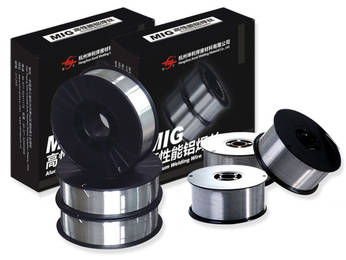
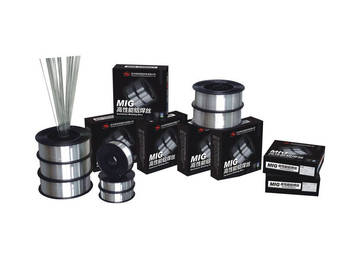
Aluminum Welding Wire ER4943 serves as a specialized filler metal for fusing aluminum alloys in processes like MIG and TIG welding, acting as the added material that melts to form the joint between base pieces.

Basic Composition
This wire is primarily aluminum alloyed with silicon (around 5-6%) as the main element, along with small additions of magnesium and other trace components to refine its performance. The ER prefix indicates its suitability for both electrode roles in MIG and rod form in TIG applications.
Why These Elements Matter
Silicon primarily lowers the melting point, boosts the weld pool's fluidity for better wetting and penetration, and significantly lowers hot cracking risks during solidification. The minor magnesium inclusion enhances the deposit's tensile and shear strength without compromising flow characteristics much.
The Enhanced Alternative
Engineered as an advancement over traditional options, Aluminum Welding Wire ER4943 builds on the popular ER4043 (high-silicon, low-magnesium) by incorporating targeted additions that increase post-weld strength—often 25-50% higher in yield and ultimate tensile values—while retaining similar ease of use. It differs markedly from ER5356 (high-magnesium, low-silicon), which prioritizes even greater strength and corrosion resistance but can suffer from reduced fluidity and higher cracking sensitivity in some setups.
Practical Characteristics
Welders often note its notable puddle control, smooth joint filling, limited smut or discoloration, and lower shrinkage distortion. It delivers reliable crack resistance in constrained or heat-treatable alloys, produces clean beads with good appearance, and supports full post-weld heat treatment without needing heavy base metal dilution for strength.
Common Applications
This filler wire is suited for applications requiring a balance of sound strength, favorable weldability, and crack resistance. Typical uses include automotive components (such as EV battery trays and frames), aerospace structures, heat exchangers, marine fittings, architectural elements, and general fabrication involving alloys from the 1XXX, 3XXX, 6XXX series, low-magnesium 5XXX series, or cast alloys.
Limitations
While versatile, it may not be the preferred choice for heavily loaded structural joints where ER5356 is often specified, and it may not match the corrosion resistance required for severe saltwater exposure. It is also less suited for applications requiring high ductility or precise anodizing color matches.
How It Compares
- Versus ER4043: Aluminum Welding Wire ER4943 offers noticeably higher mechanical strength and shear resistance with comparable fluidity and low cracking tendency.
- Versus ER5356: It provides better flow, easier handling, and lower hot crack risk, though with somewhat reduced overall strength and marine corrosion protection.
Overall, Aluminum Welding Wire ER4943 stands out as a high-performance choice for fabricators seeking improved strength over standard silicon-based fillers without sacrificing the weldability that makes aluminum joining manageable in diverse shop and field settings.
What Makes ER4943 Different From Other Aluminum Fillers
The formulation of Aluminum Welding Wire ER4943 relies on a precise equilibrium of silicon and magnesium in its makeup. Silicon lowers the alloy's melting temperature and improves fluidity, facilitating its flow into tight joint configurations. Magnesium contributes to the weld's post-cooling strength and provides resistance to environmental corrosion. This integrated strategy results in a filler that adheres more effectively to the base metals than numerous competitors, enabling the liquid pool to expand and adapt to the joint contours with reduced need for welder adjustments.
The controlled silicon proportion tackles a longstanding issue in aluminum fabrication: the vulnerability to fractures during the cooling phase in specific alloys. Through fine-tuning the interval between liquid and solid states, developers crafted a consumable that lingers in a pliable condition for an extended period, permitting built-up heat-induced tensions to ease off prior to complete setting. Such a property shines in assemblies with high constraint or quick temperature drops that could typically provoke splits.
Shop technicians and assemblers appreciate an additional hands-on advantage in cleanup and refinement steps. The crystalline arrangement that forms upon hardening interacts reliably with polishing compounds and machining implements, yielding steady outcomes in surface readiness. For connections destined for coating, electrochemical finishing, or similar processes, this dependable response leads to lower scrap rates and uniform aesthetics throughout manufacturing lots.
Fillet Welds Show ER4943 at Its Finest
When two aluminum pieces meet at an angle, the resulting joint geometry places specific demands on the filler metal's behavior. In fillet welds—common in T-joints or overlapping lap arrangements—the molten deposit must bridge the space between surfaces, thoroughly wet both sides, and form clean, rounded transitions without sharp undercuts or excessive convexity. Aluminum Welding Wire ER4943 is often selected for such applications owing to its notable fluidity.
Picture a typical right-angle corner formed by two plates or sheets. As the welding arc melts the Aluminum Welding Wire ER4943 and edges of the base material, gravity pulls the puddle downward, yet it must still climb and adhere to the upright face. Fillers with lower flow often fail to wet the vertical toe properly, leaving concave areas that concentrate stress and look uneven. The silicon content in this wire gives the pool the necessary low viscosity to spread upward more readily, producing fuller, more symmetrical fillets while requiring less torch manipulation or wide weaving patterns.
Overlapped sheets create another frequent configuration where fluidity proves critical. The filler needs to penetrate the tight crevice between the lapped surfaces while simultaneously building a reinforced crown on the exposed edge. Inadequate wetting can trap unfused zones or leave small gaps that weaken the joint and invite corrosion over time. The enhanced wetting properties of Aluminum Welding Wire ER4943 promote reliable contact with both sheets, minimizing internal voids and delivering stronger, more dependable bonds.
In industries where welded joints stay exposed, such as marine construction, ornamental metalwork, or specialty vehicle fabrication, the bead appearance matters greatly. Welds deposited with this wire typically exhibit smoother contours and fewer surface irregularities thanks to balanced flow and predictable cooling. This translates directly into reduced post-weld cleanup—less aggressive grinding or sanding is needed to reach an attractive finish, which cuts labor costs and lowers the chance of removing too much material and exposing hidden flaws.
Can Thin Sections Benefit From This Filler Choice?
Working with thin aluminum sheet introduces problems that heavier stock rarely encounters. Slim gauges dissipate heat quickly, raising the ever-present danger of burn-through, and they warp readily from welding heat, demanding tight control over energy input during the entire operation. In direct edge-to-edge butt welds on sheet, the selected filler plays a major role in both weldability and final joint integrity.
The reduced melting temperature tied to elevated silicon levels proves especially helpful when joining thin material. Aluminum Welding Wire ER4943 liquefies at a point nearer to the base alloy's fusion range, letting welders run lower current levels that deliver just enough energy for fusion without overwhelming the workpiece. Lower overall heat helps prevent holes blown through the sheet and curbs buckling or distortion by limiting the thermal load on the surrounding metal.
Straight-edge butt joints on light-gauge aluminum require exact management of the weld pool. The operator needs sufficient temperature for root penetration yet must avoid dripping excessive metal out the back side. The high fluidity of Aluminum Welding Wire ER4943 allows consistent root filling even when edge alignment or gap width fluctuates slightly along the seam, offering valuable tolerance for real-world fit-up variations and boosting throughput in repetitive production runs.
When sheets are thick enough to allow beveled edges, the preparation creates a small reservoir for deposited metal while keeping the overall section relatively thin. Thorough wetting of the angled faces is essential to guarantee full fusion and eliminate pockets of oxide or lack-of-fusion defects. The alloying in Aluminum Welding Wire ER4943 encourages strong capillary action and surface adhesion, promoting clean, complete bonding across the entire joint cross-section.
Edge and Corner Configurations Demand Careful Technique
When aluminum pieces join at sharp or wide angles, the joint shape dictates how the molten weld metal will move and settle. Outside corners—where the angle opens downward or outward—let gravity help pull the filler into place along both faces. Inside corners, on the other hand, force the puddle to climb upward into the tight apex while still building adequate thickness on each leg.
Aluminum Welding Wire ER4943 proves especially useful in those demanding inside corner setups. As the arc fuses the edges, the pool needs to reach deep into the root and wet both surfaces evenly. Stiffer fillers often form a convex bridge across the corner without fully penetrating the apex, leaving a mechanically weak joint and an unattractive concave root. The silicon content in Aluminum Welding Wire ER4943 lowers viscosity enough to push metal reliably into that narrow zone, resulting in stronger fusion at the root and a cleaner, more balanced bead profile.
Edge welds, where two pieces align nearly flush along their thicknesses, depend on full penetration to develop proper strength. Particularly in lighter gauges, welders often melt both edges together and rely on added filler to tie them securely. The balanced flow behavior of Aluminum Welding Wire ER4943 keeps the puddle responsive—neither racing ahead of the torch nor falling short—allowing precise regulation of through-thickness fusion and consistent crown height.
In visible architectural work such as handrails, storefront framing, and ornamental panels, these corner and edge joints stay exposed to view. Fabricators in those fields prioritize smooth, uniform welds that blend seamlessly with the surrounding material. The deposition and solidification traits of Aluminum Welding Wire ER4943 produce beads that typically need only light dressing to look professional, cutting down on finishing time and helping keep projects on schedule and within budget.
Understanding Multi-Layer Applications and Their Requirements
Heavy aluminum plates and structural sections usually demand multipass welding to build up enough metal in the joint. Every layer deposits additional heat into the workpiece and forms a new solidified surface that the next pass must bond to perfectly. Strong interlayer adhesion is essential to avoid cracks, porosity, or inconsistent strength across the full weld thickness.
V-groove designs give welders clear access to the bottom of the joint for the initial root run and create ample room for progressive filling as layers stack upward. Aluminum Welding Wire ER4943 exhibits controlled cooling behavior that lowers the chance of hot tears forming between passes, even when shop schedules allow only brief cooling intervals. This dependability supports steady production rates in busy fabrication environments.
U-grooves and J-grooves impose tighter contours and often call for tailored torch angles to guarantee fusion along the curved sidewalls. Good sidewall wetting is critical to prevent lack-of-fusion defects without constant torch weaving or oscillation. The silicon addition in Aluminum Welding Wire ER4943 gives the puddle the necessary mobility to spread upward along those faces, ensuring solid contact and complete melding with the base metal.
The root pass in any grooved joint largely dictates the success of the finished weld. Defects or incomplete penetration at the root cannot be corrected by later capping layers. The responsive flow of Aluminum Welding Wire ER4943 assists welders in producing clean root passes by allowing metal to bridge the root opening reliably and develop a uniform reinforcement on the backside when single-sided access is required.
| Joint Type | Primary Challenge | ER4943 Advantage | Common Applications |
|---|---|---|---|
| Fillet (T-joint) | Vertical surface wetting | Enhanced upward flow | Structural frames, enclosures |
| Lap Joint | Gap filling between surfaces | Penetration into tight spaces | Body panels, skin attachments |
| Butt Joint (thin) | Burn-through risk | Lower heat input requirement | Sheet metal fabrication |
| Inside Corner | Fighting gravity | Silicon-enhanced fluidity | Box sections, containers |
| Groove (thick) | Multi-pass compatibility | Reduced hot cracking | Heavy structural components |
| Edge Joint | Complete penetration | Controlled puddle behavior | Panel assembly, plate joining |
How Do Complex Geometries Respond to This Wire?
Actual fabrication work seldom sticks to basic joint designs. Most structures mix several joint styles in one assembly, forcing the filler metal to handle shifting angles, gaps, and heat patterns without faltering. In these mixed setups, the adaptability of Aluminum Welding Wire ER4943 gives welders a clear edge.
Tube-to-plate welds highlight this real-world variety. The round tube surface contacts the flat plate along a path where the angle changes continuously around the perimeter. As the torch moves along the circumference, the joint shifts from a standard fillet profile to something closer to an edge or outside corner. A filler that copes smoothly with these transitions lets the operator finish the entire saddle joint using the same wire and similar travel speed or weave pattern, avoiding mid-job changes that slow production.
Full-circumference welds on pipe-to-pipe or disc-to-cylinder connections demand steady puddle behavior while the part turns under a fixed torch or as the welder works around a stationary piece. The molten metal must flow evenly to build a uniform bead without dripping downward in the overhead portion or pooling excessively at the bottom. The tuned flow properties of Aluminum Welding Wire ER4943 provide enough fluidity for good wetting yet sufficient surface tension to hold shape through all clock positions, helping maintain consistent penetration and crown appearance.
Out-of-position welding introduces further demands. Flat welding lets gravity help spread and support the pool, but vertical-up or overhead runs require the deposit to stay put against downward pull. Excessive liquidity would cause sagging or dropout in those orientations, while too little would hinder fusion in flat work. Aluminum Welding Wire ER4943 strikes a practical compromise—offering responsive flow for ease in downhand while remaining controllable overhead or on vertical faces, provided the welder adjusts heat input and manipulation technique appropriately.
Robotic Welding Applications and Consistency Requirements
Automated welding setups require exceptional uniformity from all supplies, especially the filler wire. Robotic torches follow exact programmed routes without the ability to react instantly to changes in the molten pool, so the wire must deliver identical flow, burn-off, and cooling traits from start to finish of a shift. Any inconsistency in puddle behavior, electrical characteristics, or shrinkage can generate systematic flaws that escape notice until dozens or hundreds of assemblies are complete.
The tightly regulated alloy content of Aluminum Welding Wire ER4943 provides the dependability that mechanized cells need. Manufacturing controls hold chemical makeup within narrow limits reel after reel, ensuring predictable performance that lets technicians establish process settings once and apply them confidently across long production series with minimal revalidation.
A steady arc is vital for machine welding success. As power travels down the wire and bridges to the workpiece, the glowing plasma must stay calm and centered to distribute heat evenly and achieve designed penetration and profile. The specific alloy additions in Aluminum Welding Wire ER4943 cooperate with standard argon-based shielding to sustain smooth, quiet arc operation, delivering the repeatable fusion and bead dimensions essential for automated precision.
Consistent surface finish on the deposited metal also carries importance when welds stay in view or when quality checks include visual examination. In robotic lines producing large volumes of matching parts, normal bead-to-bead differences must remain small so inspectors can quickly spot real problems. Aluminum Welding Wire ER4943 yields reliably uniform ripple patterns and color on good welds, sharpening the distinction between acceptable work and actual rejectable faults.
Comparing Performance Across Different Joint Configurations
Choosing the right filler for aluminum welding always involves weighing trade-offs, since no one wire dominates every situation. Performance differences become clearest when matching the consumable to the specific joint type, base alloy, thickness, and service conditions.
In fillet welds where visual quality is a priority—such as architectural frames or consumer products—Aluminum Welding Wire ER4943 frequently outperforms high-magnesium options. Magnesium-rich fillers such as 5356 offer good as-welded tensile strength, though they tend to produce coarser ripples and require additional torch manipulation to develop smooth contours. When the joint geometry already supplies sufficient load-carrying capacity and surface finish drives the decision, the smoother flow and cleaner beads from Aluminum Welding Wire ER4943 make it the practical choice.
Thin butt joints on sheet or light plate highlight another area where this wire shines. Its lower melting range and responsive puddle allow welders to run cooler settings that secure full penetration while avoiding melt-through or excessive warping. Filler alloys designed for heavy structural applications may introduce excessive heat into thinner materials, which can result in distortion, burn-through, or challenging post-weld cleaning.
Conversely, deep groove welds in heavily loaded thick sections sometimes demand the higher strength of magnesium-based alternatives. If engineering calculations require the deposit to equal or surpass the base material's yield strength, the moderate mechanical properties of Aluminum Welding Wire ER4943 may fall short. Fabricators then often accept the trickier handling of high-magnesium wires to gain the needed structural performance.
Lap joints exposed to aggressive conditions provide yet another consideration. Aluminum Welding Wire ER4943 offers solid general corrosion resistance, but prolonged contact with seawater, de-icing salts, or harsh chemicals can favor specialized high-magnesium or zinc-bearing fillers designed for those environments. The balanced alloy performs reliably across a range of fabrication applications, though more specialized options may be preferred where high durability is required.
Material Compatibility Considerations Across Base Metals
Aluminum alloys differ widely in their chemical makeup and mechanical traits, resulting in a broad array of possible pairings between base material and filler. Aluminum Welding Wire ER4943 was engineered to match effectively with many of these alloys, yet welders still need to recognize its boundaries to prevent metallurgical issues in certain combinations.
Its blend of silicon and magnesium gives Aluminum Welding Wire ER4943 strong compatibility with alloys across multiple series, including wrought sheet, extruded profiles, and various castings—each of which reacts differently with deposited metal. The alloy design accommodates many of these interactions reliably, while certain base metals show improved compatibility with alternative filler metals.
Low-magnesium alloys typically pair well with this wire, as the modest magnesium it adds improves weld strength without introducing large electrochemical differences that could accelerate corrosion. On the other hand, alloys rich in magnesium or copper can produce mismatches that encourage selective attack in service or slightly lower overall joint efficiency.
Heat-treatable grades introduce separate concerns. These alloys rely on controlled aging or solution treatment for their high strength, but the intense heat of welding destroys that refined microstructure in the fusion zone and nearby metal. No filler, including Aluminum Welding Wire ER4943, can recover the original precipitation-hardened condition, so the welded region inevitably ends up softer than the unaffected base material. While this wire performs comparably to other options here, fabricators must account for the inherent strength reduction around every joint in strengthened alloys.
Post-Weld Finishing and Surface Treatment Compatibility
Most aluminum assemblies move on to post-weld finishing steps such as grinding, sanding, buffing, anodizing, or coating application. The way these processes interact with the deposited metal depends heavily on its alloy content and resulting grain structure. Welds made with Aluminum Welding Wire ER4943 typically respond favorably to common finishing methods, provided operators use suitable tools, speeds, and preparation sequences.
Mechanical cleanup through grinding or sanding smooths out bead crowns and feathers the weld into adjacent parent material. The solidified structure from Aluminum Welding Wire ER4943 machines consistently under abrasives, avoiding both rapid wheel loading and stubborn hard spots that slow material removal. The silicon level produces a moderately hard yet workable matrix that lets fabricators blend transitions efficiently without burning through or creating deep gouges.
Electrochemical finishes like anodizing demand tight process control to minimize visible differences between weld and base areas. The differing chemical composition between the filler and the base metal can result in a varied appearance of the anodized oxide layer along the weld seam. Aluminum Welding Wire ER4943 behaves similarly to other popular fillers in this respect—no aluminum welding consumable fully eliminates color mismatch—so designers and finishers should plan for some contrast or mask welded zones when uniform appearance is critical.
Paint and powder-coat systems bond reliably to welds deposited with this wire as long as standard aluminum pretreatment is followed. Thorough cleaning to remove welding smut, oxide films, and residues ensures good adhesion without special measures beyond normal practice. The alloy makeup of Aluminum Welding Wire ER4943 introduces no unusual blistering, peeling, or under-film corrosion risks compared to conventional fillers, making it compatible with typical marine, architectural, and industrial coating specifications.
Practical Considerations for Production Environments
In actual welding shops, factors beyond pure weld quality often drive filler choices. Reliable wire feed, ease of storage, and overall expense all play into daily decisions on what consumable to stock and use.
Aluminum Welding Wire ER4943 generally runs smoothly through typical MIG equipment. Its standard diameters and clean surface finish promote trouble-free passage through cables, liners, and feed rollers. Most feeding interruptions stem from poorly adjusted drive systems, kinked liners, or worn contact tips rather than the wire itself, though keeping spools clean and dry still prevents occasional glitches.
Like all aluminum wires, it can pick up surface contaminants if left unprotected in damp air. Although the alloy does not absorb moisture internally, prolonged exposure to high humidity encourages oxide buildup and light corrosion on the surface that can disrupt arc starts or contaminate the weld. Storing reels in original packaging or sealed bags with desiccant packets, especially in non-climate-controlled facilities, preserves feed reliability and weld cleanliness over time.
Price plays a practical role as well. Some basic fillers sell for less per kilogram, but their handling quirks can add labor hours through slower travel speeds or extra cleanup. Aluminum Welding Wire ER4943 sits in the mid-price bracket among aluminum MIG wires, and shops often find its combination of good flow, crack resistance, and clean beads offsets the moderate cost by reducing rework and boosting welder productivity in everyday fabrication tasks.
Welding Parameter Development for Different Joint Types
Getting good results with any aluminum filler depends on dialing in the right machine settings for the joint type, base metal thickness, and fit-up conditions. Published starting parameters offer a useful baseline, but welders almost always need to fine-tune voltage, amperage, and travel speed through trial runs on scrap material matching the job.
For fillet welds, intermediate current levels are often applied to deliver sufficient heat for proper toe fusion while minimizing excessive crown height. Travel speed has a big influence on bead shape—quicker movement yields narrower, more rounded profiles, while slower speeds spread the metal wider and flatter. The responsive flow of Aluminum Welding Wire ER4943 lets operators push higher travel speeds and still obtain clean, uniform fillets with minimal undercut or excessive convexity.
Thin-sheet butt joints call for precise control to secure full root penetration while avoiding holes or dropout on the backside. Beginning with conservative amperage and slowly raising it while watching the puddle helps pinpoint the safe operating window. Thanks to its lower melting characteristics, Aluminum Welding Wire ER4943 typically achieves reliable fusion at reduced heat input, allowing welders to stay toward the cooler side of the parameter envelope for a given gauge.
Thicker groove welds need substantially higher current to guarantee sidewall tie-in and sufficient depth of fusion. Multipass sequences give welders control over total heat buildup by permitting cooling between layers, which limits distortion and ensures the groove fills completely. Aluminum Welding Wire ER4943 maintains steady puddle behavior from root to cap passes, although operators should monitor for increasing fluidity as the workpiece temperature rises during extended welding.
Joint design and filler metal traits come together in aluminum work to unlock various paths for better efficiency and results. Understanding how this wire's composition and characteristics align with various joint designs enables workshop teams to select a suitable product for their specific requirements. Be it fusing slim panels for building facades or putting together robust load-bearing parts, Aluminum Welding Wire ER4943 delivers key edges in cases where smooth puddle movement and polished bead looks tip the scales in decision-making. With focused effort on handling methods, fine-tuned process controls, and tailored job specs, operators can fully tap into what this wire brings to the table, all while spotting when a different consumable fits better for niche demands like top-tier toughness or harsh exposure resistance.
NEXT:How to Optimize Your Welding Settings When Using ER5183 Wire