English
  Deutsch


How MIG Wire Cast and Helix Affect Weld Quality?
Article Directory
- 1 Understanding Aluminum MIG Wire in Welding Applications
- 2 Key Properties of Aluminum Welding Wire You Need to Know
- 3 What Wire Cast Means in Aluminum MIG Wire
- 4 What Wire Helix Means and Why It Matters
- 5 Weld bead placement accuracy in automated systems
- 6 How Cast and Helix Affect MIG Welding Performance
- 7 Wire Feeding Problems Caused by Poor Cast and Helix
- 8 How to Evaluate Aluminum MIG Wire Quality Before Use
- 9 Equipment Settings That Interact with Wire Cast and Helix
- 10 Best Practices to Reduce Welding Issues from Cast and Helix
- 11 When to Replace or Reject Aluminum MIG Wire
- 12 Aluminum MIG Wire vs Steel MIG Wire Feeding Behavior
- 13 Scenarios Involving Cast and Helix Considerations
- 14 Frequently Asked Questions About Aluminum MIG Wire, Cast, and Helix
- 14.1 What Is Aluminum MIG Wire Used For?
- 14.2 Why Is Aluminum Harder to Weld Than Steel?
- 14.3 What Is the Difference Between Cast and Helix in Welding Wire?
- 14.4 How Does Wire Cast Affect Feeding Performance?
- 14.5 Can Poor Helix Cause Welding Defects?
- 14.6 What Is the Ideal Cast for MIG Welding Wire?
- 14.7 How Do I Know if My Wire Has Too Much Helix?
- 14.8 Does Wire Quality Affect Birdnesting Issues?
- 14.9 What Liner Should Be Used for Aluminum MIG Wire?
- 14.10 How Can I Improve Wire Feeding Stability in Aluminum Welding?
If your wire keeps tangling, your arc feels unstable, or you are dealing with constant birdnesting, you already know how frustrating Aluminum MIG Welding can be. The feeding system jams at the worst moment, spatter builds up faster than expected, and troubleshooting takes longer than the weld itself. Many welders spend hours adjusting drive roll tension or swapping liners before realizing the root cause sits much earlier in the process — inside the wire geometry itself. Understanding Aluminum MIG Wire, along with the specific parameters of wire cast and helix, is where consistent, clean welds actually begin.
Understanding Aluminum MIG Wire in Welding Applications
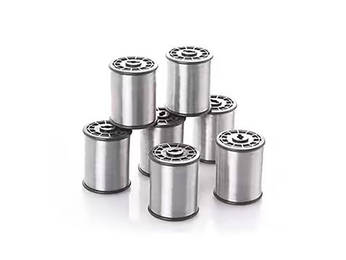
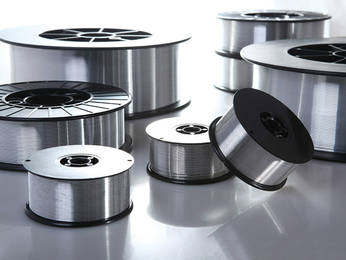
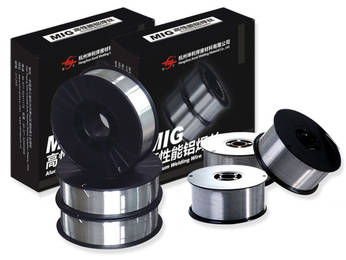
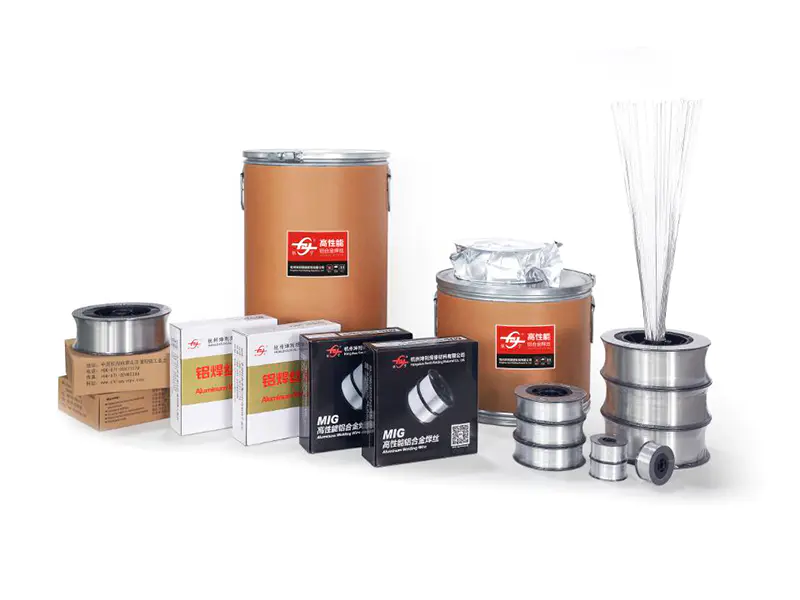
Aluminum MIG Wire is a consumable electrode used in gas metal arc welding to join aluminum base materials. Unlike steel, aluminum is significantly softer, more prone to surface oxidation, and conducts heat differently — which means the wire itself must be manufactured and handled with far greater precision.
Common application areas include:
- Automotive body panels and frames
- Marine structures and hulls
- Aerospace fabrication
- Lightweight enclosures and structural frames
- HVAC and food-grade equipment
Because aluminum forms an oxide layer almost instantly when exposed to air, the wire surface must remain clean and consistent from the spool to the contact tip. Any contamination or surface irregularity will translate directly into arc instability.
Key Properties of Aluminum Welding Wire You Need to Know
Aluminum MIG Wire behaves very differently from steel wire during feeding. Knowing these properties helps you set up your system correctly before the arc even starts.
- Softness: Aluminum wire deforms easily under drive roll pressure, which means excessive tension creates shavings inside the liner.
- Oxidation sensitivity: The wire surface oxidizes rapidly, making cleanliness during storage and handling critical.
- Low column strength: Because aluminum is soft, the wire cannot push through resistance the way steel can. Any friction in the liner, conduit, or contact tip causes immediate feeding problems.
- Surface finish: Consistent surface quality directly affects arc stability and contact tip lifespan.
What Wire Cast Means in Aluminum MIG Wire
Wire cast refers to the natural curvature or loop diameter that a length of wire forms when it is released freely from the spool and placed flat on a surface. It is a direct result of how the wire was wound during manufacturing.
When you unroll a section of wire and lay it on the floor, it forms a circle or a partial arc. The diameter of that circle is the cast measurement.
Why cast matters:
- A cast that is too tight (small diameter) causes the wire to curve aggressively inside the liner, increasing friction and contact tip wear.
- When the cast is oversized or inconsistent, the wire may drift within the gun. This can result in an unsteady arc and reduced control over the weld puddle.
- Consistent cast throughout the spool ensures predictable wire tracking from the drive rolls through to the contact tip.
Aluminum wire is particularly sensitive to cast variation because its softness means it cannot self-correct inside the liner the way a stiffer steel wire might.
What Wire Helix Means and Why It Matters
Helix is often confused with cast, but they describe different geometrical behaviors of the wire.
Cast = the lateral curvature of the wire (how it curves in a flat plane)
Helix = the axial deviation of the wire as it exits the spool (how much it spirals or twists upward or sideways along the wire's length)
When you pull wire off a spool and hold it at one end, helix is the vertical rise or lateral drift you observe along that length of wire. Even a small amount of helix causes the wire to exit the contact tip at an angle rather than straight, which directly affects:
- Torch angle consistency
- Arc location relative to the joint
- Contact tip wear patterns
Weld bead placement accuracy in automated systems
In manual welding, helix is annoying. In automated or robotic welding systems, even minor helix deviation causes repeatable positioning errors that accumulate across a production run.
How Cast and Helix Affect MIG Welding Performance
The table below summarizes the practical welding effects caused by out-of-specification cast and helix values:
| Parameter | Too Tight / Too High | Too Loose / Inconsistent | Effect on Weld |
|---|---|---|---|
| Cast (too tight) | Wire curves sharply in liner | — | Feeding friction, birdnesting |
| Cast (inconsistent) | — | Wire wanders inside conduit | Arc wander, poor bead placement |
| Helix (excessive) | Wire exits tip at angle | — | Torch instability, contact tip wear |
| Helix (inconsistent) | — | Variable arc direction | Spatter increase, fusion defects |
| Both out of spec | Combined feeding difficulty | Combined arc instability | Increased rework, downtime |
Both parameters work together. A wire with good cast but excessive helix still causes arc instability. A wire with consistent helix but tight cast still produces feeding problems. Quality control of both is necessary for reliable performance.
Wire Feeding Problems Caused by Poor Cast and Helix
Feeding failures in Aluminum MIG Welding are usually not random. They trace back to wire geometry in a predictable pattern:
- Birdnesting — Wire piles up at the drive rolls when forward momentum is blocked by friction caused by tight cast inside the liner.
- Erratic arc — Inconsistent helix causes the wire tip position to shift during welding, changing the effective arc length moment to moment.
- Burnback — Wire feeding slows or stops while the arc continues, melting the wire back into the contact tip.
- Excessive liner wear — Tight cast forces the wire to press against the liner wall continuously, generating aluminum shavings that accumulate and block the liner.
- Increased downtime — Each feeding failure requires the operator to stop, clear the blockage, potentially replace the liner or contact tip, and restart.
In high-volume production, even a small reduction in feeding reliability has a significant impact on throughput.
How to Evaluate Aluminum MIG Wire Quality Before Use
Before loading a spool, a few simple checks can tell you whether the wire is likely to perform reliably.
- Spool release check: Pull approximately one meter of wire from the spool and release it on a flat surface. Observe the natural loop. The diameter should be consistent and appropriate for your liner length and gun configuration.
- Helix check: Hold one end of a pulled length of wire and observe how much the wire deviates vertically or laterally. Minimal deviation indicates well-controlled helix.
- Surface inspection: The wire surface should appear clean, uniform, and free of oxidation, pitting, or discoloration.
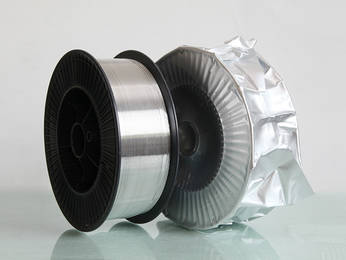
- Spool packaging: Wire should be sealed in moisture-resistant packaging. Damaged or open packaging is a contamination risk.
- Manufacturer documentation: Reputable suppliers provide cast and helix specifications with their products. Absence of this data is a quality signal worth noting.
Equipment Settings That Interact with Wire Cast and Helix
Even with well-manufactured wire, your equipment setup must be matched to aluminum wire behavior.
- Drive roll tension: Use U-groove drive rolls designed for aluminum. Adjust tension to a level that allows reliable feeding while avoiding deformation of the wire. Applying too much tension can crush softer aluminum wire and promote shaving formation.
- Liner type: Teflon or nylon liners are strongly recommended for aluminum. Steel liners generate friction and aluminum shavings that accelerate feeding problems.
- Torch length: Shorter torch lengths reduce the total liner distance the wire must travel, which reduces the cumulative effect of cast-induced friction.
- Contact tip sizing: Aluminum wire expands when heated. Use contact tips sized slightly larger than the wire diameter
Best Practices to Reduce Welding Issues from Cast and Helix
Consistent welding output requires consistent wire handling from storage through to the weld pool.
- Store wire in sealed packaging in a dry environment until ready to use.
- Avoid leaving partial spools open to ambient humidity for extended periods.
- Match the wire feed system (push, pull, or push-pull) to the wire diameter and gun cable length.
- Inspect and replace liners on a scheduled basis rather than waiting for a failure.
- Clean the wire path, drive rolls, and inlet guide regularly to remove accumulated aluminum debris.
- When setting up for a new spool, always perform the cast and helix checks described above before beginning production.
When to Replace or Reject Aluminum MIG Wire
Not every spool is worth fighting with. Certain signs indicate the wire will cause more problems than it solves:
- Cast diameter is visibly inconsistent from the inner wraps to the outer wraps of the spool.
- The wire surface shows gray discoloration, pitting, or a powdery residue (oxidation).
- Feeding instability occurs immediately after loading and cannot be resolved by drive roll or liner adjustment.
- The wire has been stored in open or damaged packaging and has been exposed to moisture.
- Helix deviation is visible to the naked eye when pulling wire from the spool.
Rejecting a substandard spool before it enters production saves far more time than troubleshooting the downstream problems it creates.
Aluminum MIG Wire vs Steel MIG Wire Feeding Behavior
Understanding the contrast between aluminum and steel wire feeding helps explain why aluminum-specific equipment and procedures exist.
| Property | Aluminum MIG Wire | Steel MIG Wire |
|---|---|---|
| Hardness | Soft, deforms easily | Rigid, self-supporting |
| Column strength | Low — cannot push through friction | High — tolerates liner friction |
| Oxidation rate | Rapid surface oxidation | Slower, less critical |
| Liner requirement | Teflon or nylon required | Steel liner acceptable |
| Drive roll type | U-groove, low tension | V-groove, standard tension |
| Cast/Helix sensitivity | High — directly affects feed and arc | Moderate — more forgiving |
on or minor cast variation through its inherent rigidity. Aluminum wire cannot. Every friction source in the system compounds, which is why cast and helix matter so much more in aluminum welding applications.
Scenarios Involving Cast and Helix Considerations
While cast and helix affect all aluminum MIG welding, certain environments amplify their impact significantly:
- Thin-gauge aluminum welding: Low heat input requirements mean any arc instability immediately produces burn-through or incomplete fusion. Consistent wire geometry is essential.
- Automated welding systems: Robots and mechanized torches depend on repeatable wire positioning. Helix deviation causes the arc to land off-target consistently, producing systematic weld defects.
- High-speed production lines: Higher wire feed speeds amplify the effects of feeding friction and arc variation. Problems that are minor at low speed become failures at production speed.
- Precision fabrication: Applications requiring tight dimensional tolerances on weld bead width and placement cannot tolerate arc wander caused by helix inconsistency.
Frequently Asked Questions About Aluminum MIG Wire, Cast, and Helix
What Is Aluminum MIG Wire Used For?
It is used to weld aluminum alloys in applications including automotive, marine, aerospace, and structural fabrication where lightweight materials are needed.
Why Is Aluminum Harder to Weld Than Steel?
Aluminum is softer, oxidizes rapidly, has lower column strength, and requires more precise feeding equipment and technique compared to steel.
What Is the Difference Between Cast and Helix in Welding Wire?
Cast refers to the lateral curvature of the wire when released from the spool. Helix refers to the axial spiral or twist the wire exhibits along its length as it exits the spool.
How Does Wire Cast Affect Feeding Performance?
When aluminum wire comes off the spool with a tight or inconsistent curve, this shape increases friction inside the liner. The result can be more erratic feeding, birdnesting, and accelerated wear on contact tips.
Can Poor Helix Cause Welding Defects?
Yes. Excessive helix causes the wire to exit the contact tip at an off-center angle, producing arc wander, inconsistent bead placement, and increased spatter.
What Is the Ideal Cast for MIG Welding Wire?
Ideal cast varies by gun configuration and liner length, but the wire should form a consistent, gentle arc when released — neither extremely tight nor completely straight. Manufacturer specifications should be referenced for each wire type.
How Do I Know if My Wire Has Too Much Helix?
Pull a length of wire from the spool and observe vertical or lateral drift. If the wire visibly spirals or deviates significantly from a straight horizontal plane, helix is excessive.
Does Wire Quality Affect Birdnesting Issues?
Yes. Inconsistent cast resulting from variations in manufacturing quality is a recognized factor in birdnesting during aluminum MIG welding.
What Liner Should Be Used for Aluminum MIG Wire?
Teflon or nylon conduit liners are recommended. They reduce friction significantly compared to steel liners, which is critical given aluminum wire's low column strength.
How Can I Improve Wire Feeding Stability in Aluminum Welding?
Use the correct liner type, minimize drive roll tension, inspect and replace worn components regularly, store wire properly, and source wire from suppliers with documented cast and helix specifications.
Getting aluminum MIG welding right consistently comes down to understanding that wire quality, geometry, and your feeding system all function as one interconnected system. When cast is controlled, helix is minimal, and the feeding path is matched to the wire's properties, the arc stabilizes, spatter drops, and rework decreases. If you are sourcing Aluminum MIG Wire for production or fabrication work and need a supplier with documented wire geometry standards and consistent quality control, Hangzhou Kunli Welding Materials Co., Ltd. is a manufacturer worth contacting. Their focus on aluminum wire quality — from surface finish through to cast and helix consistency — directly addresses the feeding and arc stability challenges that affect real welding operations. Reach out to their team to discuss your wire specifications and find the right solution for your application.
NEXT:How to Use ER4943 Aluminum Welding Wire for Strong Welds