English
  Deutsch


How to Use ER4943 Aluminum Welding Wire for Strong Welds
Article Directory
- 1 The Two Processes That Apply to ER4943
- 2 Why GMAW Is the Dominant Process for This Wire
- 3 Shielding Gas Selection
- 4 Equipment and Setup Considerations for GMAW
- 5 TIG Welding with ER4943: When and How
- 6 Joint Preparation for Both Processes
- 7 Application Contexts Where Process Selection Matters
- 8 Sourcing ER4943 with Process Documentation in Mind
- 9 A Supplier Who Supports Both the Material and the Process
- 10 Take the Next Step
Aluminum Welding Wire ER4943 is formulated for applications where weld strength and resistance to cracking both matter. Choosing the right welding process for this wire is not a secondary concern — the process shapes how the wire's composition expresses itself in the finished joint. A wire with well-designed alloy chemistry still depends on compatible process conditions to deliver what it is designed to do.
The Two Processes That Apply to ER4943
GMAW Is the Primary Process for ER4943
Gas Metal Arc Welding — commonly called MIG welding — is the welding process widely paired with Aluminum Welding Wire ER4943 in production environments. The wire feeds continuously through the gun, the arc is sustained between the wire tip and the workpiece, and the weld pool forms and advances along the joint in a single continuous pass.
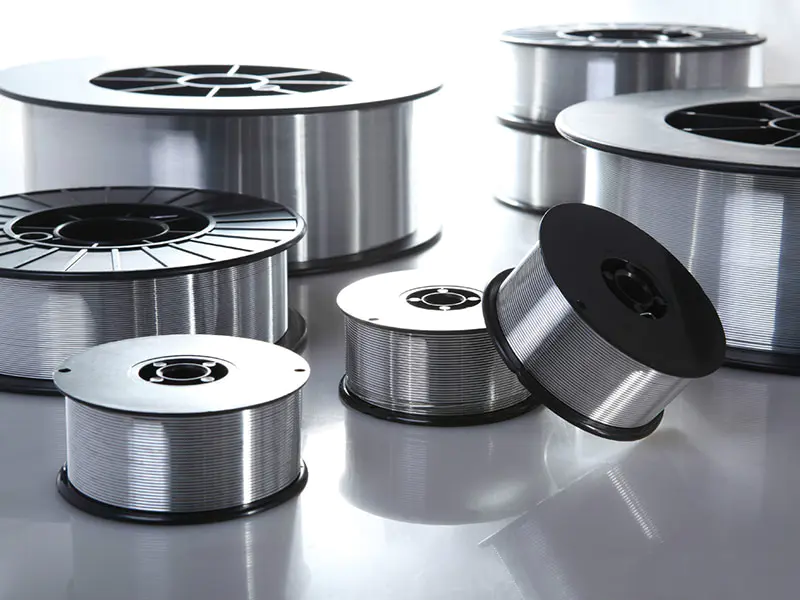
GMAW suits ER4943 because the process is compatible with the wire's pool behavior. The silicon content in ER4943 produces a fluid, responsive pool that works well with the continuous energy input of a MIG arc. The wire feeds and burns at a rate that can be matched to the pool's characteristics, giving the welder control over bead width and penetration.
GTAW Is the Alternative for Lower-Volume or Higher-Precision Work
Gas Tungsten Arc Welding — TIG welding — uses a non-consumable tungsten electrode to create the arc, and the filler wire is fed separately into the pool by hand. ER4943 can be used as filler rod in TIG applications, though the process is slower and more operator-dependent than GMAW.
TIG welding with ER4943 is appropriate when the joint geometry is complex, the material thickness is lower, or the application demands a higher degree of control over heat input and bead placement. It is also used in repair situations where production speed is less critical than precision.
Why GMAW Is the Dominant Process for This Wire
Feed Rate and Arc Stability Work Together
In GMAW, the wire feeds continuously at a set rate, and the arc length adjusts dynamically based on the electrical characteristics of the setup. For aluminum wire, this dynamic requires careful calibration — aluminum is softer than steel, and the feed system has to handle it without kinking or slipping.
Aluminum Welding Wire ER4943, because of its silicon content, is marginally harder than pure aluminum wire. That slight hardness advantage helps the wire feed more consistently through the drive rolls and liner, which supports arc stability. A stable arc means a more consistent pool, which means more consistent welds across a production run.
Spray Transfer Is the Appropriate Transfer Mode
For aluminum welding with GMAW, spray transfer is the standard arc transfer mode. In spray transfer, the wire melts at the tip and transfers to the pool as a stream of fine droplets rather than as large globules. The arc is smooth, the spatter is low, and the energy input is consistent.
ER4943's composition supports spray transfer well. The pool fluidity provided by the silicon content is compatible with the energy level that spray transfer delivers — the pool wets out without excessive spreading, and the bead profile stays controlled.
Pulse Transfer Adds Control for Thinner Material
Pulse MIG welding alternates between a high-energy pulse — during which metal transfer occurs — and a lower background current that keeps the arc alive without depositing metal continuously. The result is a lower average heat input compared to continuous spray transfer.
For Aluminum Welding Wire ER4943 used on thinner sections or heat-sensitive assemblies, pulse transfer reduces the risk of burn-through and distortion while maintaining the arc characteristics that produce good fusion. Many production setups for aluminum use pulse GMAW as the default mode because of this balance.
Shielding Gas Selection
Pure Argon Is the Standard Choice
Aluminum welding with GMAW requires shielding gas that protects the pool from atmospheric contamination without introducing elements that interfere with arc behavior or weld chemistry. Pure argon meets both requirements for a broad range of aluminum welding applications.
Argon produces a stable arc with good cleaning action on the aluminum oxide layer. It also supports the spray transfer mode that suits ER4943. Using argon with this wire keeps the shielding chemistry consistent with the alloy chemistry — no unexpected interactions in the pool.
Argon-Helium Mixtures for Specific Situations
Helium added to argon increases the energy of the arc and raises heat input at the same travel speed. This can be useful when welding thicker sections where penetration depth is a concern, or in situations where faster travel speeds are needed to maintain productivity.
The trade-off is that helium is more expensive than argon and the arc becomes less stable as helium content rises. For standard ER4943 applications, pure argon is adequate. Argon-helium mixtures are worth considering when the base material is thick or when the setup demands higher deposition rates.
Equipment and Setup Considerations for GMAW
The Gun and Liner Need to Match Aluminum Requirements
Aluminum wire behaves differently from steel wire in the feed system. It is softer, more prone to deformation under drive roll pressure, and more sensitive to friction in the liner. Running aluminum wire through a setup designed for steel is a common source of feed problems.
For Aluminum Welding Wire ER4943, the liner should be made from a low-friction material — nylon or PTFE-lined options are standard for aluminum. The drive rolls should be U-groove type with low contact pressure to avoid deforming the wire. A push-pull gun system, where a secondary motor at the gun assists the main drive, reduces the feed path friction that causes birdnesting and inconsistency in longer cable setups.
Contact Tip Selection Affects Current Transfer
The contact tip is where electrical current transfers from the gun to the wire. For aluminum, the contact tip bore size needs to account for the fact that aluminum wire expands more than steel wire as it heats up inside the tip. A tip that is too tight causes the wire to stick and burn back. A tip that is too loose allows the wire to wander and destabilizes the arc.
Using contact tips rated specifically for aluminum wire, rather than adapting steel-spec tips, removes one variable from the setup and keeps current transfer consistent across the weld.
Wire Spool Position and Reel Tension
For shorter feed path setups using a standard push-only drive, the spool should be mounted as close to the drive rolls as practical to reduce the unsupported length of wire in the system. Reel brake tension should be set low — just enough to prevent overrun when the wire stops feeding — because excess back tension works against the drive motor and increases the chance of slip.
These are setup details that experienced aluminum welding shops manage as standard practice, but they are worth reviewing when introducing Aluminum Welding Wire ER4943 to a line that has been running a different material.
TIG Welding with ER4943: When and How
When TIG Is the Right Choice
TIG welding with ER4943 rod is appropriate in several situations that GMAW does not handle as cleanly:
- Joint access is limited and the gun cannot be positioned correctly for consistent GMAW
- Material thickness is low and the heat input from GMAW spray transfer would cause distortion
- The application requires close control over penetration depth and bead geometry
- Repair or rework work on existing assemblies where the surrounding material limits how aggressively the arc can be run
In these cases, TIG gives the operator direct control over the arc and the rate of filler addition, which compensates for the lower productivity compared to wire-feed processes.
AC Current for Aluminum TIG
Aluminum TIG welding uses alternating current rather than the direct current used for steel. The AC waveform alternates between a cleaning half-cycle — which removes the oxide layer from the base metal — and a penetrating half-cycle that drives heat into the joint.
ER4943 rod works with standard AC TIG setups for aluminum. The silicon content in the filler does not require special adjustments to the AC balance settings, though operators typically tune balance toward the penetrating side when working on thicker sections to maintain adequate fusion depth.
Rod Diameter and Feed Rate in TIG
During TIG welding, the filler rod is added by hand to the front of the weld pool. The diameter of the rod determines how much metal is added per unit length, and the feed rate determines how that addition interacts with the pool temperature and travel speed.
For ER4943, selecting a rod diameter appropriate to the material thickness follows the same general logic as other aluminum TIG fillers. Thinner sections use smaller diameter rod to maintain control over the heat input; thicker sections use larger diameter to add enough metal without excessive passes. The pool behavior of ER4943 — fluid with good wetting — makes it reasonably forgiving during TIG application.
Joint Preparation for Both Processes
Oxide Removal Is Non-Negotiable
Aluminum forms an oxide layer on its surface almost immediately on exposure to air. That oxide layer has a higher melting point than the aluminum beneath it, and it does not fuse cleanly into the weld pool. If it is not removed before welding, it becomes a contamination source in the joint.
For both GMAW and TIG with Aluminum Welding Wire ER4943, oxide removal is a standard pre-weld step:
- Wire brush the joint faces with a stainless steel brush used only for aluminum
- Chemical cleaning with an appropriate aluminum degreaser removes surface oils and residue
- For TIG, the AC cleaning action handles the oxide at the pool, but the base cleaning still applies
Porosity and inadequate fusion in aluminum welds are often traced to insufficient surface preparation, even when the filler wire and welding process are compatible.
Moisture Control Before and During Welding
Moisture is a hydrogen source, and hydrogen in the weld pool produces porosity in aluminum. Wire stored in humid conditions can absorb moisture at the surface; base metal stored in cold conditions can condense atmospheric moisture when moved to a warmer welding area.
For Aluminum Welding Wire ER4943, storage in its original sealed packaging until use is the standard practice. Wire that has been on the spool and exposed to humidity for extended periods should be inspected — and in some cases, dried — before use in applications where porosity control is formally specified.
Preheat for Thicker Sections
Preheat is not standard practice for aluminum welding in the same way it is for steel, but for thicker sections it can be useful. Cold base metal draws heat away from the pool faster than the arc can supply it, which affects fusion depth and can cause the pool to solidify before full penetration is achieved.
A moderate, controlled preheat — applied evenly across the joint area — slows the heat loss rate and gives the pool time to develop properly. Excessive preheat is counterproductive and can affect the heat-affected zone properties, so temperature control matters. This applies to both GMAW and TIG applications with ER4943.
Application Contexts Where Process Selection Matters
Automotive and Transportation Components
Aluminum welding in automotive fabrication and repair often involves 6000-series base alloys — the group that Aluminum Welding Wire ER4943 is particularly well suited to. GMAW with spray or pulse transfer is standard in production settings. The combination of process speed and the wire's cracking resistance makes it a practical fit for structural components and closures.
Structural Fabrication
Structural aluminum fabrication — frames, supports, load-bearing assemblies — requires welds that meet mechanical property specifications as well as visual standards. ER4943's strength and ductility in the as-welded condition make it appropriate for these applications. GMAW is the standard process for production; TIG may be used for details or repairs.
Maintenance and Repair Welding
Repair welding often involves unknown base material conditions, irregular joint geometry, and constraints on heat input. TIG with ER4943 rod is frequently the practical choice in these situations because of the control it allows. The wire's hot cracking resistance is also relevant — repair welds that are welded in multiple passes carry more thermal cycling risk, and a filler that is less prone to cracking holds up better under those conditions.
Sourcing ER4943 with Process Documentation in Mind
For procurement teams and welding engineers specifying Aluminum Welding Wire ER4943, the practical side of sourcing involves more than chemical composition. Process documentation — how the wire performs in the intended process, what parameters it was tested at, and what certifications apply — supports welding procedure qualification and ongoing quality assurance.
Suppliers who can provide lot-level chemical analysis, wire mechanical property data, and consistent packaging to prevent contamination before use are better positioned to support production environments where weld quality is formally controlled.
A straightforward checklist for sourcing conversations:
- Chemical composition certification by production lot
- Mechanical property data for the wire
- Available diameters for the intended process and application
- Packaging options that support moisture control during storage
- Regarding the planned production volume, considerations include the required timeframe and order quantity commitments
A Supplier Who Supports Both the Material and the Process
Understanding the recommended welding process for ER4943 is part of the equation. The other part is sourcing wire that is produced consistently enough to make that process work reliably across production lots.
A reliable supplier of Aluminum Welding Wire ER4943 should be able to demonstrate lot-level consistency and full chemical traceability, with certification documentation available to support welding procedure qualification and quality control requirements. Sourcing teams can reach out directly to discuss specifications, request samples, or work through supply terms for their application.
Take the Next Step
If you are setting up a welding procedure for Aluminum Welding Wire ER4943, or evaluating wire sources for a current production requirement, a conversation with a technically informed supplier is a practical starting point. Reach out to Hangzhou Kunli Welding Materials Co., Ltd. to request samples, review lot certifications, or discuss supply arrangements suited to your process and volume.
NEXT:Why Is ER4943 a Versatile Choice for Mixed Alloy Welding?