English
  Deutsch


How Aluminum Welding Wire ER4943 Beats Hot Cracking
Article Directory
- 1 What is Aluminum Welding Wire ER4943 ?
- 2 What Causes Hot Cracking in Aluminum Welding and How Does It Develop?
- 3 When is ER4943 not the right filler and what limitations must be considered
- 4 The Chemical Balance That Makes ER4943 Different
- 5 Which Base Materials Benefit From ER4943 Application
- 6 How Welding Process Selection Influences Crack Prevention
- 7 Can Welding Technique Overcome Material Limitations
- 8 Understanding Mechanical Properties of ER4943 Welds
- 9 ER4943 Performance Compared to Alternative Filler Metals
- 10 How does the silicon-magnesium balance reduce hot cracking risk?
- 11 Joint Design Strategies That Support Crack Prevention
- 12 Storage and Handling Practices That Preserve Wire Quality
- 13 Training Considerations for Welders Using ER4943
- 14 Quality Verification Methods for Crack Detection
- 15 When ER4943 May Not Be the Right Choice
- 16 The Economics of Crack Prevention
- 17 Practical Implementation for Manufacturing Operations
Aluminum Welding Wire ER4943 tackles a common issue in Aluminum Welding: stopping hot cracking in joints that standard fillers struggle with. This filler metal uses measured silicon and magnesium to improve flow and joint strength during fusion welding. It delivers consistent results in areas needing solid resistance to cracking during cooling, like building frames, boat parts, and vehicle structures. By managing how the weld solidifies and moves, ER4943 gives welders a dependable option to keep joints sound while allowing later steps such as anodizing.
What is Aluminum Welding Wire ER4943 ?
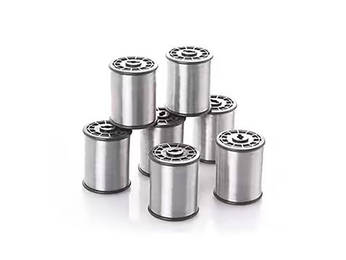
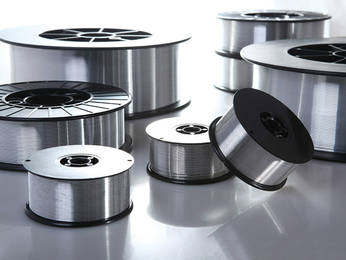
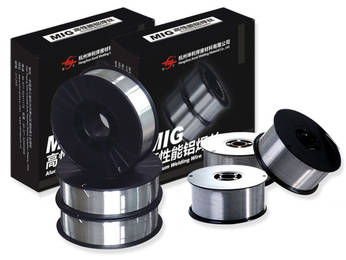
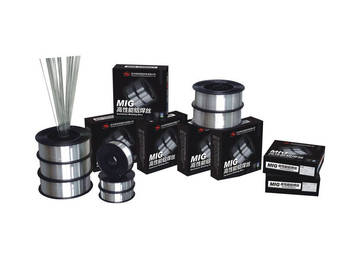
Aluminum Welding Wire ER4943 is a solid filler wire made mainly from aluminum, with added silicon and a small amount of magnesium. It is produced to uniform size and composition for MIG and TIG welding. Fabricators use it when joining aluminum parts that need good resistance to cracking during cooling, along with reasonable strength and flow. It suits applications like structural pieces, marine parts, and vehicle components where weld reliability matters, and it works with later treatments such as anodizing.
In practical application, ER4943 is selected for welding aluminum components where service performance and resistance to weld zone defects are important but where extremely high post-weld strength is not the sole priority. Typical uses include joining structural aluminum extrusions, sheet and plate in frameworks or enclosures, and assemblies where weld appearance, corrosion behavior, and downstream finishing (such as anodizing) are considerations.
What Causes Hot Cracking in Aluminum Welding and How Does It Develop?
Hot cracking, also known as solidification cracking, takes place as the weld metal cools and hardens, when it can no longer handle the pulling forces from shrinking. During the shift from liquid to solid, areas with lower melting points create thin, partly liquid layers between grains or dendritic structures.
If the cooling joint is restrained or cools unevenly, these layers face tension. When the remaining liquid cannot fill or heal the gaps, cracks start and spread along the weakened grain paths.
Several factors raise the chance of this happening:
- Thermal stresses imposed by weld thermal cycles and joint restraint. Higher restraint or abrupt thermal gradients increase tensile demand.
- Alloy solidification range. Alloys with broad freezing ranges and extensive segregation tend to form more interdendritic liquid at the end of solidification.
- Grain structure morphology. Columnar grain structures with long, continuous grain-boundary networks can provide uninterrupted paths for crack propagation.
- Welding parameters and heat input. Excessive or poorly controlled heat input can widen the solidification range expression and create larger interdendritic films.
- Joint geometry and fit-up. Sharp changes in section or constrained joints amplify strain during contraction.
Alloy systems vary in susceptibility. Some common structural aluminum series present different risks because of composition and solidification behavior; design and process choices should reflect that. Hot cracking presents notable economic and structural consequences, as cracked welds may necessitate repair, result in scrap, or reduce safety margins within load-bearing components. Industries where lightweighting, corrosion performance, and fatigue resistance are critical—such as transportation, marine, and some structural applications—are especially sensitive to weld integrity and the downstream consequences of cracking.
When is ER4943 not the right filler and what limitations must be considered
ER4943 is not universally appropriate. Consider these limitations:
- Strength trade-offs: Compared with high-magnesium fillers, ER4943 provides lower peak strength. For joints where ultimate tensile capacity is critical, a higher-strength filler may be required.
- Anodizing and color match: Silicon content affects anodized appearance; if color match is a strict requirement for visible architectural components, trial panels are necessary.
- Availability and cost: Procurement planning should incorporate operational constraints and supply chain price fluctuations by confirming lot availability and delivery timelines.
- Handling and storage: Like other aluminum alloys, ER4943 wire requires drying and protection from contamination. Moisture or oil contamination can introduce porosity and degrade weld quality.
- Sensitivity to contamination: Trace impurities on base metals can interact with the filler chemistry; strict cleaning disciplines are necessary.
- Skill requirements: While ER4943 improves weldability, it does not remove the need for trained welders and qualified procedures. Poor technique can still produce defects unrelated to filler chemistry.
When joint requirements go beyond what ER4943 can deliver, a review should look at other filler alloys, changes to joint layout to lower restraint, or stronger checks after welding.
The Chemical Balance That Makes ER4943 Different
Aluminum Welding Wire ER4943 gains its crack resistance from a careful mix of silicon and magnesium that changes how the weld pool cools and hardens. Silicon addition modifies the solidification behavior of molten metal. It forms a eutectic with aluminum, resulting in solidification at reduced temperatures and within a narrower range compared to pure aluminum or wires with higher magnesium content. This shorter vulnerable period cuts down on the time weak liquid films linger between dendrites, lowering crack risks.
Silicon also boosts pool fluidity, letting liquid metal reach spots where cooling shrinkage opens gaps. This filling action stops cracks by keeping solidifying areas supplied with material to handle contraction. Better flow further aids bead look and depth, producing cleaner joints with solid tie-in to base metal.
Magnesium in ER4943 adds more than strength. It provides solid-solution hardening in the finished weld, keeping mechanical properties solid without losing crack control. Magnesium helps form finer grains as the metal cools, breaking up possible crack routes. Its level stays measured compared to stronger fillers, steering clear of the crack proneness seen in high-magnesium options.
| Element | Primary Function | Secondary Benefit |
|---|---|---|
| Silicon | Reduces solidification range | Improves weld pool fluidity |
| Magnesium | Provides strength | Refines grain structure |
| Manganese | Controls grain size | Enhances mechanical properties |
| Iron | Limited as impurity | Maintains ductility |
| Copper | Minimized for hot shortness | Prevents stress corrosion |
The blend of silicon and magnesium in ER4943 produces combined benefits that each element alone could not deliver. Silicon lays the groundwork for crack resistance by guiding solidification, while magnesium supplies the weld with sufficient mechanical strength for load-bearing uses. This pairing lets ER4943 perform well on base materials prone to cracking with either high-silicon or high-magnesium fillers.
Metallurgical Characteristics of ER4943 That Influence Hot Cracking Resistance
- Solidification Behavior: ER4943 shows a tighter freezing range at small scales thanks to silicon forming eutectics. This leaves less lingering liquid between dendrites when pulling stresses peak.
- Grain Structure Formation: Silicon encourages rounded, equiaxed grains in the weld under suitable cooling. These grains break up long boundary paths, shortening possible crack routes.
- Phase Distribution: Silicon-rich eutectic parts spread evenly instead of building wide low-melt films at boundaries. Measured magnesium curbs large brittle compounds.
Which Base Materials Benefit From ER4943 Application
Heat-treatable aluminum alloys form the main group where Aluminum Welding Wire ER4943 shines. These alloys mix aluminum with magnesium and silicon to gain their specific strength and behavior, and their makeup pairs well with ER4943's chemistry for smooth dilution in the weld. Everyday examples span production, from extruded sections in frames to parts in vehicles, all gaining from the filler's ability to curb cracks during joining.
These alloys build strength through precipitation hardening, a heat treatment that forms tiny particles inside the aluminum structure. Welding disturbs this hardened state in the area near the joint, causing some softening. Choosing the right filler metal helps keep the joint solid even with this local change. ER4943 works well with the chemistry of these base materials and supplies enough strength in the finished weld.
Joining different aluminum alloys is another area where ER4943 proves useful. Fabricators often need to connect alloys with varying compositions in the weld zone. When one or both contain notable magnesium and silicon, ER4943 supplies the needed crack resistance for sound joints. It acts as a bridging filler, forming weld metal that fits both sides.
Marine building makes wide use of aluminum for its corrosion handling and good strength relative to weight. Boat makers and yard welders deal with mixed alloy setups, including heat-treatable types joined to others. ER4943 manages many of these pairings, creating joints that hold up in saltwater settings without cracks that weaken the structure.
Car making has increased aluminum use to cut weight and improve fuel use. Vehicle frames now feature heat-treatable alloys needing crack-resistant welding. From support parts to outer panels, ER4943 supports solid assembly of pieces that face strict safety rules and real-world stresses.
How Welding Process Selection Influences Crack Prevention
Gas Metal Arc Welding dominates aluminum fabrication for its productivity and ease of automation. The process feeds wire continuously while shielding gas protects the weld pool from atmospheric contamination.ER4943 performs well with this method, creating stable arcs and smooth metal transfer that promote uniform weld deposits. The wire's composition allows for spray transfer at moderate current levels, producing joints with good mechanical properties and minimal spatter.
Pulsed techniques offer additional benefits when using Aluminum Welding Wire ER4943 on crack-sensitive applications. The pulsing current creates controlled droplet transfer while reducing overall heat input to the base material.Lower heat input narrows the heat-affected zone and reduces the thermal stresses that contribute to cracking. The technique proves particularly valuable on thin sections where excessive heat risks distortion and burn-through.
Gas Tungsten Arc Welding offers fine control for important joints where quality must hold firm. The method keeps the heat source separate from the filler, letting welders guide the pool shape on its own. ER4943 feeds evenly in this setup, its makeup forming pools that react steadily to torch movement. The approach works well for root runs, fixes, and cases where bead look counts.
Shielding gas choice affects weld soundness and crack control no matter the method. Pure argon serves as the usual pick for aluminum, giving solid arc hold and workable pool guidance. Some welders utilize helium mixes to improve heat and penetration on thicker pieces, although straight argon addresses the majority of ER4943 requirements.
Current and voltage settings need tuning to part thickness and joint layout. Stronger currents drive deeper reach but lift heat and leftover stress. Welders weigh these to gain full join-up without overdone thermal swings that invite cracks. ER4943's blend allows some leeway in settings compared to fillers more prone to cracking.
Travel speed affects bead width and cooling speed, both tied to crack risk. Quicker travel forms slimmer beads with faster solidification, which can lower cracking chances but may leave incomplete fusion. Slower travel adds heat, broadening the fused area for better depth while raising thermal stress. kunliwelding suggests travel speeds that yield even, smooth beads without too much buildup or dips.
Can Welding Technique Overcome Material Limitations
Welder approach and skill play a large part in controlling cracks, even with suitable fillers. Torch angle shapes heat spread and depth, and wrong angles can build stress points that encourage cracking. Keeping steady tip-to-work distance supports even arc and heat along the weld.
Bead order matters on multi-pass or complex pieces where welds interact. Planned sequencing spreads stress evenly, avoiding buildup in weak spots. Welders often start from the middle outward or use patterns that offset shrinkage pull.
Interpass temperature management stops heat pile-up that worsens cracking. Allowing cooling between passes keeps base metal in safe ranges and avoids cycles that weaken properties. Some jobs use air cooling or set max temperatures before next passes.
Joint prep influences crack likelihood by affecting hold and stress. Good fit-up cuts gaps needing heavy filler, lowering shrinkage strain. Groove angles and root gaps get careful sizing for access and balanced stress during cooling.
Pre-weld cleaning clears oxides and contaminants that block fusion or add crack risks. Aluminum oxide builds fast on open surfaces, hindering wetting. Welders remove it mechanically or chemically right before starting, ensuring clean base for filler contact.
Fixturing balances hold with freedom. Over-tight clamping locks parts, pushing stress into cooling weld metal. Smart fixture setup supports while permitting slight shift to handle shrinkage.
Understanding Mechanical Properties of ER4943 Welds
ER4943 weld metal reaches solid tensile levels for many structural uses, keeping ductility to handle service loads without sudden break. The silicon-magnesium mix provides solution strengthening for practical bearing in as-welded state. Though not reaching high-magnesium filler strength, ER4943 supplies enough for cases prioritizing crack control.
Yield strength marks when lasting shape change starts under load, key for stressed parts. ER4943 joints show yield values fitting common aluminum structure designs, especially with heat-treatable bases. Filler and base pairing creates assemblies that resist work stresses without over-bend.
Elongation shows ductility—stretch before fracture. Good elongation means material absorbs energy and manages stress points without snap failure. ER4943 welds offer favorable stretch, aiding joint toughness and shock resistance.
Hardness spread across weld, heat zone, and base reveals property shifts. ER4943 forms even hardness transitions, cutting stress at borders where mismatches could fail. Smooth change from weld to base boosts joint dependability.
Fatigue strength counts for parts with repeat loading. Crack-free welds resist fatigue better than flawed ones with stress starters. ER4943's crack control directly lifts fatigue life in moving structures.
Corrosion handling depends on makeup and structure. ER4943's silicon level gives suitable resistance for varied settings, often better than high-magnesium options in harsh air.
Corrosion resistance in aluminum welds depends on the alloy composition and the microstructure that develops as the metal cools. The silicon content in ER4943 helps create favorable performance in many environments, particularly standing up better than high-magnesium fillers, which can be more susceptible in salty air or harsh industrial settings. The resulting weld metal manages common forms of aluminum corrosion while preserving its mechanical reliability.
ER4943 Performance Compared to Alternative Filler Metals
Fillers containing silicon present different balances between crack resistance and mechanical strength. Filler metals with increased silicon content offer improved fluidity and effective crack resistance, with a corresponding reduction in strength. Welds produced with these tend to have reduced tensile and yield figures, limiting their use to applications where peak load-bearing isn't critical. Welders weigh whether strong crack prevention or elevated strength better suits the specific job.
Color matching becomes a factor when welded assemblies undergo anodizing for protection or visual appeal. Varying silicon quantities influence the shade after anodizing, with greater amounts producing darker areas in the weld. Projects requiring uniform finish often favor fillers with moderate silicon, like ER4943, for improved consistency in appearance.
High-magnesium fillers offer more strength than ER4943, yet they bring increased chances of hot cracking on heat-treatable base materials. Their makeup results in wider solidification ranges, fostering cracks in restrained joints. Fabricators handling certain alloys might select these for the strength advantage, whereas heat-treatable work benefits more from ER4943's ability to control cracking.
Cost influences filler decisions, but the expenses from repairing cracked welds generally surpass any initial savings from cheaper wire. ER4943 typically prices between pure silicon and high-magnesium types, reflecting its even composition and broad applicability. kunliwelding observes that complete cost assessments should account for lower scrap rates and steadier workflow when judging filler value.
| Filler Type | Silicon Level | Magnesium Level | Crack Resistance | Strength Level | Common Uses |
|---|---|---|---|---|---|
| High Silicon | Elevated | Minimal | Very High | Lower | Non-structural joints |
| ER4943 | Moderate | Low-Moderate | High | Moderate | Heat-treatable alloys |
| High Magnesium | Minimal | Elevated | Moderate | Higher | Structural applications |
| Balanced Alloy | Low | Low | Variable | Lower | General fabrication |
Many filler metals share similar uses, so several choices can often work for the same welding job. The selection depends on several considerations: the compatibility of filler chemistry with the base material, the specified joint strength, the potential for cracking in the configuration, subsequent finishing processes such as painting or anodizing, and budget constraints. Knowing these balances lets welders and fabricators select the filler that truly matches the work, instead of always using one they know well that might not give the full results wanted. For example, one filler might focus on strong crack prevention but give a bit less strength, while another boosts strength yet raises crack risk. A third could offer better match for surface treatments.This careful thinking makes sure joints get the right mix of durability, look, and reliability without extra fixes or spending.It also stops cases where a usual filler does okay but a more suited one could cut problems, save effort, or improve long-run performance.
By evaluating these factors for each application, fabricators can align material and process selections with project requirements. This supports consistent quality across various projects and contributes to predictable outcomes in production.
How does the silicon-magnesium balance reduce hot cracking risk?
Silicon and magnesium influence weld solidification and final properties through complementary mechanisms. Silicon predominantly affects the thermal pathway and liquid flow in the molten pool; magnesium influences ductility and strength without generating excessive intermetallic formation at the concentrations used in ER4943.
Silicon's effects on solidification include:
- Eutectic formation and freezing range reduction: Silicon increases the fraction of low-melting eutectic constituents that solidify later in the weld metal. While eutectic phases themselves solidify at lower temperatures, their morphology and distribution can create a backfilling action that helps close gaps formed by contraction.
- Fluidity and weld pool behavior: Higher silicon content boosts fluidity in the molten metal, letting it spread more readily across the joint. This better flow encourages thorough wetting of the base material, aids in bridging tiny gaps caused by thermal shrinkage, and permits liquid metal to refill contracting areas before solidification finishes. The outcome is less trapped liquid between dendrites, which would otherwise linger at grain boundaries and form vulnerable spots open to cracking.
Magnesium's contributions are subtler at the low levels present in ER4943:
- Strength and ductility balance: The modest magnesium addition delivers gentle solid-solution strengthening, contributing to the weld's toughness without losing flexibility in the fine-grained structure. It allows the weld metal to keep ductility, absorbing stresses instead of breaking abruptly. Limiting magnesium prevents brittle intermetallic compounds that form at higher amounts and could promote cracking. This measured level ensures the weld gains practical mechanical traits while keeping crack resistance as the main focus.
- Compatibility with post-weld treatments: The low magnesium amount supports later steps like forming or surface finishing by lowering the chance of unwanted precipitates that harm properties.
When silicon and magnesium work together in ER4943, several practical benefits emerge directly tied to hot-crack resistance:
- Narrower effective solidification range: Silicon changes how liquid and solid fractions distribute during cooling, so the last material to freeze is more manageable or better filled by flowing metal.
- Backfilling mechanism: Enhanced wetting and pool movement let liquid metal supply interdendritic gaps in the final solidification stages, stopping continuous liquid films that allow cracks to spread.
- Grain refinement and crack path interruption: Greater eutectic formation and nucleation foster finer, rounded grains that make crack routes longer and more twisted; this setup demands more energy for cracks to advance.
Low-silicon fillers leave long dendritic arms with thin liquid films between them, while ER4943's makeup promotes secondary phases and flow that pack interdendritic spaces, breaking continuous crack paths and spreading strain through a more yielding structure.
Joint Design Strategies That Support Crack Prevention
Groove preparation shapes stress spread and restraint during welding. Single-vee grooves focus heat narrowly, raising crack chances on thicker parts. Double-vee setups share heat between sides, easing gradients and stresses. The extra prep time often pays off with crack-prone materials.
Root opening size controls filler amount and gap closure speed. Too wide gaps need many passes with high heat, lifting crack risk. Too narrow ones limit reach and cause fusion flaws. Fabricators set openings that balance entry and heat management.
Bevel angles affect torch reach and fusion at groove faces. Steep ones hinder access, shallow ones may demand more filler. Common angles strike a useful middle for aluminum work with ER4943.
Backing strips or gas aid root quality and full penetration without top skill. Permanent backing joins the structure, adding material that alters stiffness and crack exposure. Temporary backing or gas helps the pool on root passes without staying in the joint.
Fillet welds vary from groove ones in key measures. Leg length and throat depth set load handling. The corner between faces builds natural stress, needing careful handling. ER4943's crack resistance assists fillet joints where nearby material hold increases risk.
Storage and Handling Practices That Preserve Wire Quality
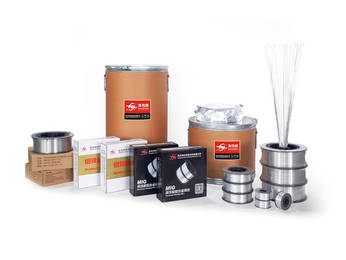
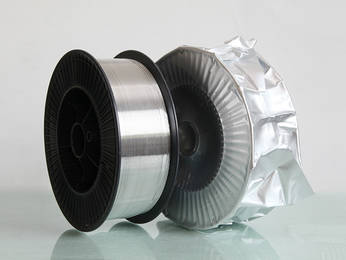
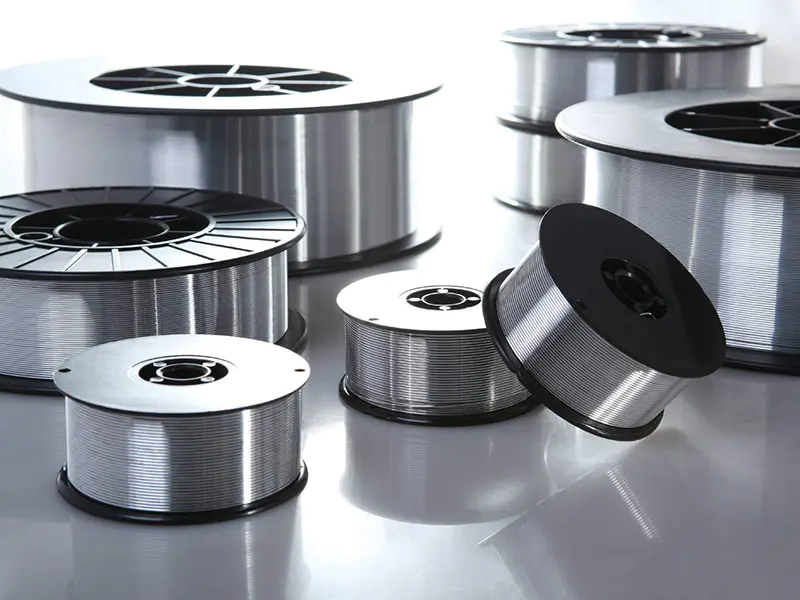
Aluminum's active nature calls for careful storage to keep welding performance steady.Moisture pickup leads to porosity and weaker welds, so sealed packing is important for longer keeping. Keep original containers closed until use, then reseal opened ones or move to dry storage.
The condition of the wire surface has a direct effect on how the arc behaves and how the metal transfers during welding. Contamination from fingerprints, dust collected from the air, or exposure in improper storage leads to unstable arcs and various weld defects, including porosity, inconsistent bead appearance, or poor fusion. In contrast, wire that stays clean and bright encourages steady arc performance and smooth, uniform metal deposition, producing higher-quality welds with fewer issues.
Temperature variations during storage also influence the wire's spooling behavior and feeding reliability. Wire kept in very cold conditions can become brittle, making it more likely to snap or form tangles as it moves through the feeder. On the other hand, warmer storage accelerates surface oxidation, which dulls the wire and can interfere with electrical contact and arc starting. Maintaining wire in stable, moderate temperatures and low-humidity settings helps preserve its original properties, ensuring consistent feeding and reliable welding results throughout its usable period.
Kunliwelding suggests rotating welding wire stock, allowing newer material to be used prior to any potential effects from aging. Date marks on packs help follow material age and flag wire needing check.Though aluminum wire lasts longer than steel, rotation keeps results uniform.
Wire diameter choice changes deposit speed and heat input.Thinner diameters work with lower current for thin material, while thicker ones allow higher rates on heavy sections.ER4943 comes in common sizes, offering options for different jobs.
Training Considerations for Welders Using ER4943
Grasping aluminum's distinct welding traits forms the base for good ER4943 use. Welders coming from steel work need to note aluminum's faster heat spread, lower melt point, and quick oxide buildup. These call for changed methods that training must cover step by step.
Arc starting procedures differ for aluminum and steel welding. Aluminum welding benefits from a higher initial current to break through its surface oxide layer and establish a stable arc. Welders apply tailored starting methods to prevent cold starts, which can cause fusion issues or contamination, and to avoid excessive heat that may result in burn-through or material distortion.
Developing puddle observation skills enables welders to follow the solidification process and make immediate adjustments. The more fluid behavior of aluminum weld pools means paying close attention to surface tension cues that indicate proper wetting and fusion. Skilled welders quickly detect minor shifts in puddle look that suggest the need for changes in settings or hand movement.
Travel speed and wire feed rate must stay coordinated to control bead shape and internal soundness. When these fall out of sync, results can include underfilled areas, overbuilt reinforcement, or weak bonding zones. Training places strong emphasis on keeping this balance steady across the entire weld length.
Restart techniques are important to avoid defects where welding pauses and resumes. Filling craters at the end of a pass prevents stress buildup from empty depressions. Correct restart practices maintain uniform quality and keep transition areas free from features that could encourage cracking.
Quality Verification Methods for Crack Detection
Visual inspection provides an initial assessment for aluminum welds, revealing surface cracks, porosity, and other visible imperfections. Inspectors review bead contour, surface smoothness, and how the weld blends into the base metal. Though effective for visible issues, hidden cracks below the surface call for further methods to ensure thorough detection.
Liquid penetrant testing reveals cracks open to the surface through capillary action that draws colored dye into defects. After cleaning and applying developer, cracks appear as colored indications against contrasting backgrounds. The method provides sensitive crack detection without expensive equipment, making it accessible for fabrication shops of all sizes.
Radiographic examination involves directing penetrating radiation through the weld to produce images that show the internal structure. Cracks show up as dark lines on the resulting film or digital capture, though the way the crack is oriented to the beam can influence how easily it is detected. This method calls for certified operators and strict adherence to radiation safety measures, but it creates lasting records of the weld's internal condition for future reference or review.
Ultrasonic testing sends high-frequency sound waves into the material, which bounce back from internal flaws such as cracks, porosity, or areas lacking fusion. Skilled technicians read the returning signal patterns to identify the type of defect, estimate its size, and pinpoint its location within the weld. Current systems often include imaging options that offer clearer views, making assessment more reliable than older approaches based solely on signal strength.
Destructive testing, by cutting and examining sections of the weld, confirms internal quality when non-destructive techniques leave questions or when qualifying a welding procedure needs direct metallurgical evidence. Macro-etching highlights the fusion zone, heat-affected zone, and any crack layouts in the cut view, providing a clear picture of how the weld bonded to the base material.
Microscopic viewing delves deeper, revealing grain arrangement and specific metallurgical details that affect strength, ductility, and overall behavior.
When ER4943 May Not Be the Right Choice
For applications where weld strength is a defined requirement, engineers may opt for high-magnesium filler metals, which offer this characteristic despite an associated increase in cracking susceptibility. In structural setups where joints offer good access and restraint levels stay moderate, these stronger fillers can occasionally be used safely to gain the desired mechanical advantages. The decision always involves carefully weighing the benefits of added strength against the risks of cracking, taking into account the exact loads the part will bear and the necessary safety margins.
Anodizing for corrosion protection or visual appeal also plays a role in filler selection when a consistent look across the entire piece is important. The silicon present in Aluminum Welding Wire ER4943 results in weld zones that appear slightly darker after anodizing compared to the surrounding base material. While this color difference is milder than what occurs with fillers containing more silicon, projects that demand completely even appearance may turn to other solutions, such as mechanical surface treatments or simply accepting a small variation in shade.
Certain aluminum alloys do not align perfectly with ER4943's characteristics, calling for alternative fillers to produce dependable joints. Materials designed for very high strength often require specialized fillers tailored to their particular chemistry. Pure aluminum or low-alloy varieties can sometimes yield better outcomes with fillers that have adjusted silicon amounts, depending on the specific demands of the work.
Automated or robotic welding setups may lean toward different fillers based on how the wire feeds through the system or the particular requirements of the process. In robotic environments with steady parameters and tightly controlled conditions, higher-strength materials that might crack during manual welding can sometimes perform adequately. The overall capabilities of the welding equipment thus affect filler choices beyond just matching the base material.
The Economics of Crack Prevention
Hot cracking in welds leads to immediate setbacks in material and labor costs, directly affecting the bottom line for fabrication operations. When cracks appear in intricate or high-value assemblies, the entire component may need to be discarded, turning a single defect into a loss that greatly exceeds the expense of a basic repair. Fabricators routinely monitor rejection rates to gain a clear understanding of how weak crack resistance translates into tangible financial consequences.
Rework not only pushes back completion dates but also ties up machines and skilled workers that could be applied to incoming projects. Extracting defective welds through grinding or machining requires extra setup and surface preparation before any rewelding can begin. Going through several repair attempts escalates spending and subjects the base material to repeated heating, which can gradually weaken its original characteristics.
Issues that escape detection—cracks hidden within the weld—generate ongoing obligations long after the part ships. Warranty repairs, customer replacements, or broader recalls create expenses and risks that quickly surpass any upfront savings from choosing lower-cost fillers. Industries with demanding safety requirements, such as aerospace and transportation, are especially aware of these dangers, which explains their strict material guidelines. Kunliwelding points out that thorough cost evaluations tend to support crack-resistant fillers like ER4943, even when their unit price is higher than some options. The gains from fewer scrapped parts, steadier workflow, and more dependable outcomes provide returns that cover the added investment.
Shops that carefully follow complete figures—including scrap levels, rework hours, and overall output—regularly uncover clear economic benefits from selecting the right filler. Production flow gains when welders reach good results without constant fine-tuning of settings or involved steps. Fillers that call for preheating, strict temperature control between passes, or complicated weld ordering slow down the pace compared to simpler materials. ER4943's more tolerant nature supports quicker progress while upholding quality levels.
Beyond direct numbers, using a filler that cuts crack risk improves planning reliability. Schedules become more predictable, and capacity can be allocated with greater confidence. This steadiness helps manage labor and equipment use, contributing to overall shop efficiency. Longer-term, consistent quality lowers the chance of customer concerns and builds steady relationships. Parts that perform as expected reduce return visits and strengthen trust, encouraging ongoing business.
In competitive fields, the indirect costs of unreliable welds—lost time, strained partnerships, or missed opportunities—often prove heavier than material price differences. In summary, viewing filler selection through a full-cost perspective shows that prioritizing crack prevention supports stronger operations, reduced risk, and sustained profitability in demanding fabrication settings.
Practical Implementation for Manufacturing Operations
Creating welding procedures involves preparing detailed documents that outline the filler metal, base material pairings, joint designs, welding parameters, and specific technique guidelines. Procedure qualification testing confirms that the described methods yield sound welds before they are put into regular production. ER4943-based procedures generally qualify without difficulty when used with suitable material combinations.
Welder qualification confirms that individuals have the required skills to produce consistent, high-quality welds. These qualification tests replicate real production scenarios, followed by thorough examination to ensure the welds are free from cracks and other flaws. Companies keep organized records showing each welder's approved capabilities for particular procedures and material types.
Material traceability systems follow filler metal from initial purchase all the way to use on the shop floor, verifying that the correct materials are applied. Methods like bar coding or written logs link specific wire batches to individual jobs, making it easier to investigate and resolve any quality concerns that appear later. Traceability standards differ across industries, with fields like aerospace and pressure vessel work requiring especially detailed records.
Preventive maintenance on welding equipment helps sustain reliable performance that directly affects weld quality. Wire feeders benefit from routine checks and liner changes to avoid irregular feeding that leads to defects. Power sources require periodic calibration to guarantee they deliver settings accurately as specified in procedures.
Continuous improvement efforts rely on quality data to spot chances for better results or lower expenses. Monitoring causes of rejections, frequency of rework, and material usage uncovers trends that point to possible updates in procedures or additional training. Companies dedicated to progress regularly review their processes instead of treating existing performance as fixed.
Aluminum Welding Wire ER4943 gives welders a direct means to manage hot cracking issues in aluminum fabrication. Its blend of silicon and magnesium illustrates how intentional alloy design curbs solidification problems while delivering reliable weld consistency across different tasks. In areas emphasizing joint reliability—such as vehicle production, boat construction, and framework assembly—this filler provides a workable option that fits real workshop conditions. Achieving solid outcomes with ER4943 relies on understanding its niche: a filler that pairs effectively with proper welding practices, joint preparation, and quality oversight. Applied where it suits best, it supports robust aluminum builds that balance crack avoidance with needed strength and surface compatibility.
NEXT:Which Aluminum Alloys Work Well with ER4943 Welding Wire