English
  Deutsch


ER5183 Welding Wire vs. ER5356: When Should You Choose the Higher Strength Option for 5083 Aluminum?
Article Directory
- 1 Mechanical Strength and Chemical Composition Divergence
- 2 Performance in Marine and Cryogenic Environments
- 3 B2B Procurement: Why Kunli Aluminum Alloys are the Global Choice
- 4 Frequently Asked Questions (FAQ)
- 4.1 1. When is it mandatory to use er5183 welding wire over ER5356?
- 4.2 2. Can I use er5183 aluminum wire for shipbuilding on 6xxx series alloys?
- 4.3 3. How does the wholesale er5183 mig welding wire from Kunli handle porosity?
- 4.4 4. Is er5183 suitable for robotic welding applications?
- 4.5 5. Why is er5183 used for LNG and cryogenic tanks?
In the specialized world of aluminum fabrication, selecting the correct filler metal is a critical engineering decision that dictates the structural integrity and longevity of the joint. For the high-strength 5083 aluminum alloy—widely used in marine hulls, pressure vessels, and cryogenic tanks—the debate often centers on whether to use the industry-standard ER5356 or the high-performance er5183 welding wire. Hangzhou Kunli Welding Materials Co., Ltd., a high-technology enterprise with over 20 years of expertise, understands that while both wires belong to the 5xxx series (Al-Mg), their mechanical diverging points are significant. Our facility in Hangzhou utilizes international advanced manufacturing equipment to produce wires that have successfully replaced imported high-end products for major clients like China CRRC and Maersk.
Mechanical Strength and Chemical Composition Divergence
The primary technical difference between these two filler metals lies in their magnesium (Mg) and manganese (Mn) content. er5183 welding wire is specifically formulated with a higher magnesium content (typically 4.3% to 5.2%) compared to ER5356. According to the latest AWS A5.10/A5.10M:2023 Specification for Bare Aluminum and Aluminum Alloy Welding Electrodes and Rods, the increased alloy content in ER5183 is designed to match the high shear strength of 5083 base metals. This makes high strength er5183 filler for marine aluminum the superior choice for structural applications where joint efficiency must exceed 275 MPa. While ER5356 is a versatile, general-purpose wire, it may result in lower as-welded tensile strength when paired with 5083-H116 or 5083-H321 plates.
Source: AWS - A5.10/A5.10M:2023 Aluminum Filler Metal Specifications
Comparison: Mechanical Properties in 5083 Welds
In high-load marine environments, ER5183 provides a higher tensile strength and better resistance to stress corrosion cracking. In contrast, ER5356 is often selected for its slightly better ductility and cost-effectiveness in non-structural or thin-gauge applications.
| Property | ER5356 Filler Metal | er5183 welding wire |
| Magnesium (Mg) Content | 4.5% - 5.5% (Nominal 5%) | 4.3% - 5.2% (Optimized for 5083) |
| Manganese (Mn) Content | 0.05% - 0.20% | 0.50% - 1.0% (Superior Strengthening) |
| Typical Weld Strength (MPa) | ~260 - 280 MPa | ~285 - 310 MPa |
| Anodized Color Match | Excellent (White) | Good (White/Grey) |
Performance in Marine and Cryogenic Environments
The choice of filler metal is further complicated by environmental factors. er5183 aluminum wire for shipbuilding is specifically engineered to resist salt-water corrosion and maintains its toughness at extremely low temperatures. Recent industry data from the 2025 Global Aluminum Market Growth Analysis by Technavio suggests that the maritime and LNG (Liquefied Natural Gas) sectors are increasingly mandating ER5183 for hull construction to ensure a service life exceeding 40 years. For B2B procurement, opting for wholesale er5183 mig welding wire ensures that the fabricated structures meet the rigorous safety certifications of societies such as DNV, ABS, and CCS—certifications that Hangzhou Kunli has maintained for decades.
Source: Technavio - Aluminum Market Growth and Forecast 2025-2029
Environment-Specific Suitability
While both alloys offer excellent seawater resistance, ER5183 is specifically recommended for structures operating continuously in high-chloride environments. Conversely, ER5356 remains the preferred option for truck frames and smaller fishing boats where moderate strength is sufficient.
| Environmental Factor | ER5356 Performance | er5183 welding wire Performance |
| Salt Water Corrosion | High Resistance | Ultra-High (Optimized for Hull Plates) |
| Cryogenic Toughness | Good | Exceptional (Standard for LNG tanks) |
| Post-Weld Heat Treatment | Not Recommended (>65°C) | Not Recommended (>65°C) |
| Primary Application | General purpose fabrication | High-strength structural maritime |
B2B Procurement: Why Kunli Aluminum Alloys are the Global Choice
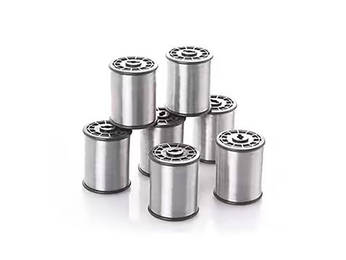
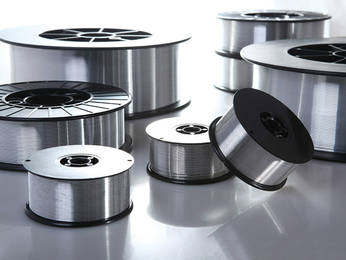
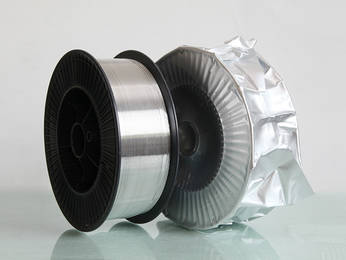
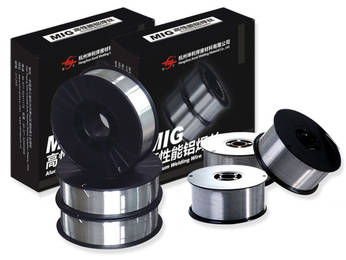
For large-scale fabricators, the consistency of precision layered er5183 spool for robotic welding is as important as the chemical composition. Inconsistent wire diameter or surface contaminants can lead to arc instability and porosity. At Hangzhou Kunli, our 200MT monthly capacity and strict ISO9001 quality control systems ensure that our aws a5.10 er5183 wire for pressure vessels provides flawless feedability. By collaborating with elite research institutes like the Beijing Nonferrous Metals Research Institute, we have refined our production process to deliver "Made in China" excellence that competes directly with the most prestigious global brands.
- International Certifications: Our wires carry DB, CE, ABS, DNV, and CCS approvals for global compliance.
- Advanced Manufacturing: International-grade equipment ensures high-performance er5183 welding wire with minimal surface friction.
- Expertise: 20+ years of aluminum alloy wire production experience specializing in 5xxx series.
- Supply Reliability: Qualified supplier to China CRRC and Maersk, capable of large-quantity bulk supply.
Frequently Asked Questions (FAQ)
1. When is it mandatory to use er5183 welding wire over ER5356?
ER5183 is mandatory when the design specifies 5083 aluminum and requires the maximum possible joint strength. It is the industry standard for high-strength maritime structures and pressure vessels where ER5356 might fall short of the required tensile properties.
2. Can I use er5183 aluminum wire for shipbuilding on 6xxx series alloys?
While primarily designed for 5xxx series, ER5183 can be used for 6xxx series (like 6061) if strength is prioritized over crack resistance. However, for most 6xxx applications, 4xxx series fillers are often preferred to avoid solidification cracking.
3. How does the wholesale er5183 mig welding wire from Kunli handle porosity?
Our er5183 welding wire undergoes a proprietary cleaning and shaving process to remove surface oxides and hydrocarbons, which are the primary causes of hydrogen-induced porosity in aluminum welds.
4. Is er5183 suitable for robotic welding applications?
Yes. Our precision layered er5183 spool for robotic welding is designed for high-speed automated processes, ensuring stable wire feeding without "bird-nesting" or arc interruptions.
5. Why is er5183 used for LNG and cryogenic tanks?
Our aws a5.10 er5183 wire for pressure vessels retains its impact toughness and tensile strength at cryogenic temperatures, preventing brittle fractures that can occur in other metals when exposed to liquid natural gas.
NEXT:How to Store ER5183 Welding Wire to Maintain Welding Quality