English
  Deutsch


ER5154 Wire: Properties, Applications & Welding Guide
Article Directory
- 1 What Is ER5154 Wire and Where Does It Fit?
- 2 Chemical Composition at a Glance
- 3 Mechanical Properties of ER5154 Weld Deposits
- 4 Key Applications of ER5154 Wire
- 5 Compatible Base Metals
- 6 Welding Parameters and Process Guidelines
- 7 Pre-Weld Preparation: Why It Is Non-Negotiable
- 8 ER5154 vs. ER5356 vs. ER5183: How to Choose
- 9 Storage, Handling, and Quality Assurance
- 10 Compliance and Certifications
- 11 Troubleshooting Common ER5154 Welding Issues
- 12 Summary: Why ER5154 Wire Deserves Its Place in Your Process
ER5154 wire is an aluminum-magnesium (Al-Mg) alloy MIG/TIG welding wire containing approximately 3.1–3.9% magnesium, engineered for welding 5xxx-series aluminum alloys and pressure vessels. It delivers outstanding corrosion resistance in marine and chemical environments, moderate-to-high tensile strength (up to 270 MPa as-welded), and excellent ductility — making it a go-to filler metal wherever structural integrity and long service life matter most.
What Is ER5154 Wire and Where Does It Fit?
Classified under AWS A5.10/A5.10M, ER5154 wire belongs to the 5xxx aluminum-magnesium family. The designation breaks down as: E = electrode, R = rod (usable for both MIG and TIG), 51 = Al-Mg series, 54 = specific alloy composition. Magnesium is the primary alloying element, solid-solution strengthening the weld deposit without requiring post-weld heat treatment.
ER5154 sits between ER5052 (lower Mg, ~2.5%) and ER5183 (higher Mg, ~4.75%) on the strength-ductility spectrum. This makes it ideal when engineers need more strength than ER5052 can provide, but want better hot-crack resistance and forming compatibility than ER5183 or ER5356 offer in certain applications.
Chemical Composition at a Glance
Understanding the chemistry helps predict how the wire will behave in the arc and in service. The following table reflects AWS A5.10/A5.10M limits:
| Element | Content (wt%) | Role in the Alloy |
|---|---|---|
| Magnesium (Mg) | 3.10 – 3.90 | Primary strengthener; corrosion resistance |
| Chromium (Cr) | 0.15 – 0.35 | Grain refinement; stress-corrosion resistance |
| Manganese (Mn) | 0.50 max | Secondary strengthening |
| Silicon (Si) | 0.25 max | Controlled low to minimize hot cracking |
| Iron (Fe) | 0.40 max | Impurity control |
| Copper (Cu) | 0.10 max | Kept low to preserve corrosion resistance |
| Zinc (Zn) | 0.20 max | Impurity; excess reduces corrosion resistance |
| Titanium (Ti) | 0.06 max | Grain refiner |
| Aluminum (Al) | Remainder | Base matrix |
The deliberate addition of chromium (0.15–0.35%) is a defining feature of ER5154, differentiating it from ER5052. Chromium suppresses recrystallization and significantly improves resistance to stress-corrosion cracking (SCC) — a key concern in marine pressure vessels and cryogenic tanks.
Mechanical Properties of ER5154 Weld Deposits
Typical as-welded mechanical properties (per AWS A5.10 and manufacturer test data):
| Property | Typical Value | Test Condition |
|---|---|---|
| Tensile Strength | 240 – 270 MPa (35–39 ksi) | As-welded, all-weld-metal |
| Yield Strength (0.2%) | ~115 – 130 MPa | As-welded |
| Elongation | 16 – 22% | 50 mm gauge length |
| Shear Strength | ~145 MPa | Estimated ~55% of UTS |
| Hardness | ~60 HRB | Vickers/Rockwell B |
The elongation of 16–22% is notably high for a filler metal at this strength level. This ductility allows welded joints to absorb dynamic loads and accommodate thermal cycling without brittle fracture — a critical advantage in pressure vessels and transport tanks subject to repeated pressurization.
Key Applications of ER5154 Wire
ER5154 wire is specified across demanding industries. Below are the primary application sectors:
ER5154 is one of the approved filler metals under ASME Section IX for welding 5154-H aluminum pressure vessels. Its corrosion resistance and ductility are essential for tanks storing LPG, ammonia, and industrial gases at pressures up to 1.7 MPa.
Salt-spray resistance exceeding 1,000 hours (ASTM B117) makes ER5154 the wire of choice for welding hulls, superstructures, and deck fittings on aluminum vessels. Unlike steel, ER5154-welded aluminum structures resist galvanic and crevice corrosion in seawater indefinitely.
Bulk liquid transport tankers (fuel, chemicals, food grade) welded with ER5154 achieve the combination of light weight and structural strength needed to maximize payload while meeting DOT/UN regulations. A typical 40,000-liter aluminum tanker using ER5154 can weigh 30–35% less than an equivalent steel unit.
Aluminum alloys do not undergo ductile-to-brittle transition at cryogenic temperatures, unlike most steels. ER5154-welded joints maintain full toughness down to -196°C (liquid nitrogen), making it suitable for LNG storage and aerospace fuel systems.
The low copper content (0.10% max) and chromium addition give ER5154 welds excellent resistance to dilute acids, alkalis, and many organic solvents — meeting the requirements of chemical plant piping and reactor vessels.
Compatible Base Metals
ER5154 is compatible with a defined range of 5xxx aluminum base alloys. Mismatching filler to base metal is one of the most common causes of weld cracking and corrosion failures.
| Base Metal | Compatibility | Notes |
|---|---|---|
| 5154 / 5154A | Primary match | Same alloy; optimal color match and corrosion uniformity |
| 5052 | Excellent | ER5154 provides stronger weld than ER5052 on this base |
| 5086 | Good | Common in marine fabrication; check SCC requirements |
| 5454 | Good | Used in heated fuel/chemical tanks; Mg ≤ 3% in service above 65°C |
| 3003 / 3004 | Acceptable | Reduced efficiency; ER4043 may be preferred for cosmetic welds |
| 6061-T6 | Conditional | Risk of hot cracking; ER4043 or ER5356 often preferred |
Welding Parameters and Process Guidelines
Correct process setup is essential to achieving the published mechanical properties. ER5154 responds well to both GMAW (MIG) and GTAW (TIG) processes.
GMAW (MIG) Recommended Parameters
| Parameter | 1.0 mm Wire | 1.2 mm Wire | 1.6 mm Wire |
|---|---|---|---|
| Voltage (V) | 20 – 23 | 22 – 26 | 24 – 28 |
| Wire Feed Speed (m/min) | 8 – 12 | 6 – 10 | 4 – 7 |
| Current (A) | 90 – 140 | 120 – 190 | 180 – 280 |
| Shielding Gas | 100% Argon (99.99% purity) at 15–20 L/min | ||
| Polarity | DCEP (DC Electrode Positive) | ||
| Travel Speed (mm/min) | 400 – 700 (spray arc preferred) | ||
GTAW (TIG) Recommended Parameters
| Parameter | Value/Setting |
|---|---|
| Tungsten Type | Pure tungsten (EWP) or zirconiated (EWZr) |
| Current Type | AC (High-Frequency stabilized) |
| Current Range | 80 – 220 A depending on material thickness |
| Shielding Gas | 100% Argon, 10–15 L/min |
| Preheat | Not required for thicknesses under 12 mm; 60–100°C for thicker sections |
Pre-Weld Preparation: Why It Is Non-Negotiable
Aluminum's native oxide layer (Al₂O₃) melts at approximately 2,050°C — far above aluminum's own melting point of 660°C. If not removed, the oxide layer causes incomplete fusion, porosity, and inclusions.
- Degrease first: Wipe base metal and filler wire with acetone or isopropyl alcohol (IPA) to remove oils and hydrocarbon contamination. This alone eliminates a large portion of hydrogen-sourced porosity.
- Mechanical oxide removal: Use a dedicated stainless steel wire brush (never shared with steel) to break up the oxide immediately before welding. Time is critical — aluminum reoxidizes within 2–4 hours at ambient humidity.
- Chemical etching (for critical joints): A 5% NaOH solution rinse followed by HNO₃ neutralization provides the cleanest surface for ASME code-quality welds.
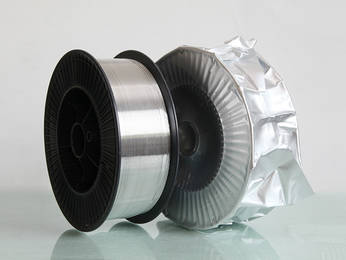
- Wire storage: Keep ER5154 spools in sealed packaging at 15–25°C with desiccant. Moisture absorbed by the wire surface converts to hydrogen porosity in the arc.
ER5154 vs. ER5356 vs. ER5183: How to Choose
These three wires are frequently compared. The choice often comes down to service environment and strength requirements:
| Wire | Mg Content | UTS (As-Welded) | Best For | Avoid When |
|---|---|---|---|---|
| ER5154 | 3.1 – 3.9% | 240 – 270 MPa | Pressure vessels, marine, cryogenic, chemical tanks | Anodizing required (color mismatch vs. 6061) |
| ER5356 | 4.5 – 5.5% | 260 – 290 MPa | Structural, automotive, high-strength general fabrication | Service temps above 65°C (SCC risk with high Mg) |
| ER5183 | 4.3 – 5.2% | 270 – 300 MPa | High-strength marine, thick section structural | Thin sheet; higher hot-crack sensitivity |
ER5154's chromium content gives it a specific advantage over ER5356 in environments where stress-corrosion cracking is a concern, even though ER5356 has slightly higher strength. For pressure vessels operating at elevated humidity or salt environments, ER5154 is frequently the code-specified choice over ER5356.
Storage, Handling, and Quality Assurance
Filler wire quality directly impacts weld quality. For ER5154 wire, the following practices are industry-standard:
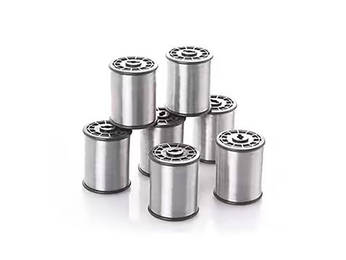
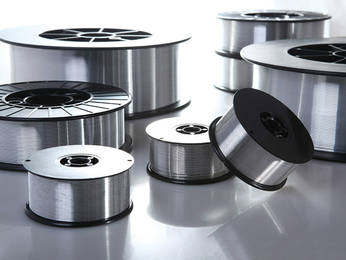
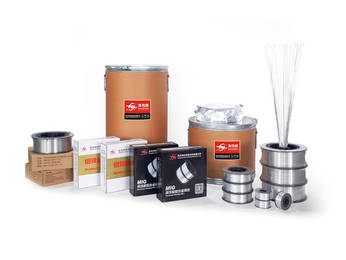
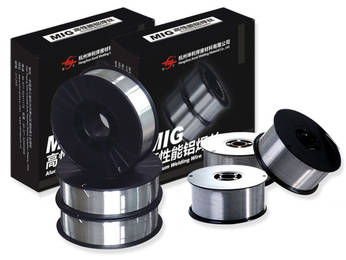
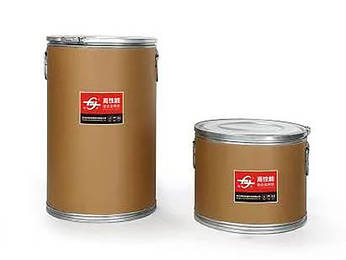
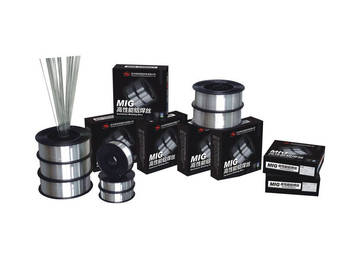
- Packaging formats: Available as 0.5 kg spools (TIG cut lengths), 2 kg / 7 kg MIG spools, and 15–30 kg bulk drums for automated wire feeders. Drums reduce changeover time in high-production environments by up to 85% compared to 2 kg spools.
- Surface finish: Specify "bright finish" wire (clean, lightly lubricated) for GMAW. Avoid heavily lubricated wire, which increases carbon contamination and porosity risk.
- Certification traceability: Each spool or batch should carry a mill certificate confirming chemical composition per AWS A5.10 and heat/lot number for traceability in ASME/PED-coded work.
- Shelf life: In original sealed packaging, ER5154 wire has a practical shelf life of 3–5 years. After opening, use within 6 months and reseal with desiccant between sessions.
- Diameter tolerances: AWS specifies ±0.008 mm on diameter for 1.2 mm wire. Exceeding this causes inconsistent wire feed, burn-back, and arc instability.
Compliance and Certifications
For engineered and code-quality fabrication, verify that the ER5154 wire you source meets the following standards:
- AWS A5.10/A5.10M: The primary U.S. classification standard for aluminum filler metals, covering chemical composition limits, mechanical property requirements, and packaging.
- ISO 18273: International standard equivalent, used for CE-marked fabrications in Europe and international procurement.
- ASME SFA-5.10: ASME Boiler and Pressure Vessel Code adoption of AWS A5.10, required for ASME Section VIII pressure vessel fabrication.
- EN 18273 / EN 573: European Norm alignment for shipbuilding and chemical plant work under PED (Pressure Equipment Directive 2014/68/EU).
- RoHS / REACH compliance: Relevant for end-products sold in the EU; ER5154 is inherently compliant given its composition.
Troubleshooting Common ER5154 Welding Issues
| Problem | Likely Cause | Corrective Action |
|---|---|---|
| Porosity in weld bead | Moisture on wire or base metal; contaminated shielding gas | Degrease, rebake wire (120°C/2h), check gas hose for leaks |
| Burn-through on thin sheet | Excessive heat input; incorrect travel speed | Increase travel speed; use pulse MIG or reduce wire diameter |
| Worm-track (tunneling) porosity | Oxide contamination, poor gas coverage | Increase gas flow to 18–22 L/min; re-clean joint |
| Incomplete fusion | Insufficient heat input; poor joint fit-up | Increase wire feed speed; reduce root gap inconsistency |
| Dark/smutty weld surface | Contaminated wire surface; AC balance off (TIG) | Replace wire spool; adjust AC balance toward 65–70% EP |
| Wire birdnesting (GMAW) | Kink in liner, worn drive rolls | Use U-groove drive rolls; replace liner; check wire straightness |
Summary: Why ER5154 Wire Deserves Its Place in Your Process
ER5154 wire occupies a well-defined and difficult-to-substitute niche. Its combination of 3.1–3.9% magnesium for strength, chromium for stress-corrosion resistance, and low silicon for hot-crack control makes it uniquely suited for pressure vessels, marine fabrication, cryogenic equipment, and chemical tanks. With tensile strengths of 240–270 MPa, elongation exceeding 16%, and compatibility with the most demanding fabrication codes (ASME, ISO, AWS), it is a filler metal that rewards the fabricator who understands its strengths and respects its preparation requirements.
When sourcing ER5154 wire, prioritize certified mill traceability, proper diameter tolerances, and appropriate packaging for your production volume. Applied with correct pre-weld cleaning, matched process parameters, and sound joint design, ER5154 consistently delivers weld deposits that outlast the structures around them.
NEXT:ER4043 Wire: Specs, Applications & Welding Parameters