English
  Deutsch


ER4043 Wire: Specs, Applications & Welding Parameters
Article Directory
- 1 What ER4043 Wire Is and Why Silicon Content Matters
- 2 ER4043 Chemical Composition and Mechanical Properties
- 3 Base Metal Compatibility — What Alloys ER4043 Welds Best
- 4 ER4043 vs ER5356 — Choosing the Right Wire for Your Application
- 5 MIG Welding Parameters for ER4043 Wire
- 6 TIG Welding with ER4043 Rod — Technique and Rod Sizes
- 7 Storage, Handling, and Porosity Prevention for ER4043 Wire
ER4043 wire is a silicon-aluminum alloy welding wire containing 4.5–6.0% silicon by weight, classified under AWS A5.10 / ASME SFA 5.10 for aluminum and aluminum-alloy welding. It is the most widely used aluminum MIG and TIG wire in general fabrication, automotive, marine, and aerospace repair work — chosen for its excellent fluidity, low cracking sensitivity, and high weld quality finish on a broad range of aluminum base alloys. If you are selecting aluminum welding wire for a new application, ER4043 is the correct default choice for most 6xxx-series and heat-treatable aluminum alloy work unless your application specifically requires the higher strength of ER5356 or the color-match characteristics of ER5554/ER5183.
What ER4043 Wire Is and Why Silicon Content Matters
The designation ER4043 follows the AWS electrode/rod classification system: "E" indicates electrode, "R" indicates rod (it functions as both), "4043" places it in the 4000-series aluminum-silicon alloy family. The high silicon content — up to 6% — fundamentally determines the wire's behaviour during welding in three ways:
First, silicon lowers the melting point of the aluminum filler, improving fluidity and wetting action in the weld pool. A 4043 weld pool flows more readily into joint gaps and irregular groove geometries than a lower-silicon filler, which is why ER4043 is preferred for out-of-position welding and for joints with variable fit-up. Second, silicon narrows the solidification range of the weld metal — the temperature window between liquidus and solidus is reduced, which dramatically lowers hot-cracking (solidification cracking) sensitivity. This is the primary reason ER4043 is used on 6xxx-series alloys like 6061, 6063, and 6082, which are themselves susceptible to hot cracking when welded with fillers that widen rather than narrow the solidification range. Third, the silicon content produces a slightly darker, grey-tinged weld bead surface, which is a known characteristic — anodized 4043 welds appear darker than the parent metal, which is relevant in architectural and decorative applications where weld appearance post-anodize matters.
ER4043 Chemical Composition and Mechanical Properties
The following tables present the AWS A5.10 specified chemical limits and the as-deposited mechanical properties for ER4043 wire. These are the values against which certification test results should be verified when qualifying a new supplier.
| Element | AWS Min (%) | AWS Max (%) | Role in Weld Metal |
|---|---|---|---|
| Silicon (Si) | 4.5 | 6.0 | Primary alloy — fluidity, crack resistance |
| Iron (Fe) | — | 0.80 | Impurity limit — excess causes brittleness |
| Copper (Cu) | — | 0.30 | Impurity — corrosion sensitivity above limit |
| Manganese (Mn) | — | 0.05 | Grain structure control |
| Magnesium (Mg) | — | 0.05 | Low Mg avoids Mg2Si embrittlement |
| Zinc (Zn) | — | 0.10 | Impurity — volatilisation fume at excess |
| Titanium (Ti) | — | 0.20 | Grain refiner — reduces porosity tendency |
| Aluminum (Al) | Remainder | — | Base metal |
| Mechanical Property | As-Deposited Value | Test Condition |
|---|---|---|
| Tensile Strength | 186 MPa (27 ksi) | AWS A5.10 all-weld-metal tensile |
| Yield Strength (0.2% offset) | 137 MPa (20 ksi) | As deposited, no post-weld heat treat |
| Elongation | 8% minimum | 50 mm gauge length |
| Shear Strength | ~124 MPa (18 ksi) | Fillet weld shear test |
Base Metal Compatibility — What Alloys ER4043 Welds Best
ER4043 is not universally compatible with all aluminum alloys. Its high silicon content makes it excellent for some alloy families and unsuitable or restricted for others. The following breakdown covers the most common base metal families encountered in fabrication and repair work:
- 6xxx series (6061, 6063, 6082, 6005): The primary application for ER4043. These alloys contain magnesium and silicon as strengthening elements, and their solidification range is closely matched by the 4043 filler. Hot cracking resistance in 6061-T6 welded with ER4043 is significantly better than with ER5356. Post-weld heat treatment of 6061 joints welded with ER4043 is possible and allows partial recovery of T6 strength — the weld zone can reach approximately 60–70% of base metal strength after solution and age treatment.
- 3xxx series (3003, 3004): Good compatibility. ER4043 welds 3003 and 3004 without hot cracking, and the resulting weld has acceptable corrosion resistance for typical 3xxx applications (HVAC ductwork, heat exchangers, cookware). Strength is adequate for non-structural service.
- 1xxx series (1100, 1050, 1070): Compatible and commonly used for 1100 aluminum, where ER4043 provides better fluidity and slightly higher weld strength than a pure 1xxx filler. Used in chemical and food processing equipment where corrosion resistance of the base metal is the design driver.
- 2xxx series (2024, 2014, 2219): Restricted use — ER4043 can be used on 2219 with care, but most 2xxx alloys are considered non-weldable or require specific filler selection. Do not use on 2024 without consulting a welding engineer.
- 5xxx series (5052, 5083, 5086, 5456): Not recommended. When ER4043 is deposited on 5xxx alloys containing more than 3% magnesium (5083, 5086, 5456), the resulting weld metal contains excessive Mg2Si, which precipitates at grain boundaries and severely reduces ductility and corrosion resistance. Use ER5356 or ER5183 for structural 5xxx work.
- 7xxx series (7005, 7039): Limited and application-specific. ER4043 is sometimes used on weldable 7xxx alloys, but the low-magnesium composition means the weld zone cannot respond to post-weld age hardening as effectively as higher-Mg fillers. Consult the alloy data sheet.
ER4043 vs ER5356 — Choosing the Right Wire for Your Application
The two most common aluminum welding wires are ER4043 and ER5356, and the selection between them is one of the most frequently mishandled decisions in aluminum fabrication. They are not interchangeable, and the correct choice has significant effects on cracking, strength, and service performance.
| Property | ER4043 | ER5356 |
|---|---|---|
| Primary alloying element | Silicon (4.5–6.0%) | Magnesium (4.5–5.5%) |
| Tensile strength (as deposited) | 186 MPa (27 ksi) | 290 MPa (42 ksi) |
| Hot cracking resistance | Excellent | Good (lower than 4043 on 6xxx) |
| Weld pool fluidity | High — good flow and wetting | Lower — stiffer pool |
| Post-anodize appearance | Dark grey / black bead | Near-match to 6xxx base metal |
| Corrosion resistance (saltwater) | Good for non-marine | Superior — preferred for marine |
| Best base alloys | 6xxx, 3xxx, 1xxx | 5xxx, 6xxx (where strength is priority) |
| Elevated temperature service | Acceptable (no Mg sensitisation) | Not recommended above 65°C (sensitisation risk) |
The practical decision rule: use ER4043 when welding 6xxx alloys where cracking risk is the primary concern, where the weld will see elevated temperature service, or where post-weld heat treatment is planned. Use ER5356 when the base metal is a 5xxx structural alloy, when maximum as-deposited strength is required, or when post-anodize colour match is important for aesthetic reasons.
MIG Welding Parameters for ER4043 Wire
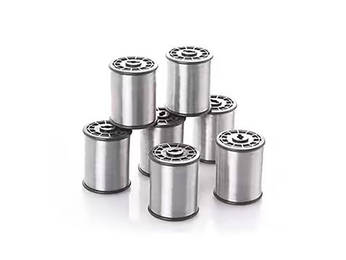
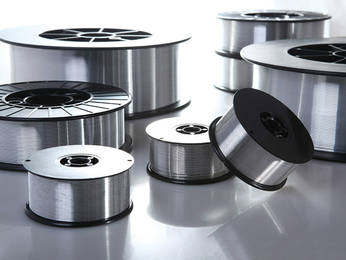
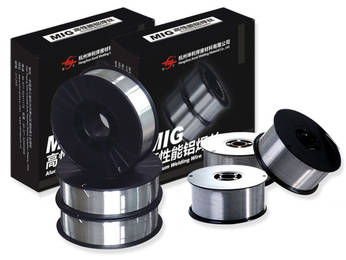
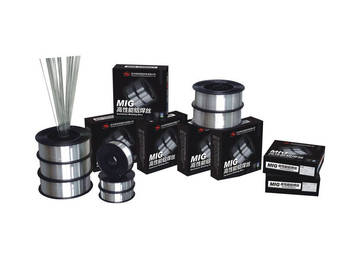
ER4043 wire is available in standard MIG spool diameters of 0.030 in (0.8 mm), 0.035 in (0.9 mm), 0.047 in (1.2 mm), and 1/16 in (1.6 mm). Wire diameter selection is driven by base metal thickness and the welding machine's amperage range. The following parameters are starting points for flat and horizontal position welding on clean 6061-T6 base metal:
| Wire Diameter | Base Metal Thickness | Amperage | Wire Feed Speed | Voltage |
|---|---|---|---|---|
| 0.030 in (0.8 mm) | 1.5–3.0 mm | 60–100 A | 300–450 ipm | 15–18 V |
| 0.035 in (0.9 mm) | 2.0–5.0 mm | 90–140 A | 350–500 ipm | 17–20 V |
| 0.047 in (1.2 mm) | 4.0–10.0 mm | 130–200 A | 280–420 ipm | 19–23 V |
| 1/16 in (1.6 mm) | 8.0 mm and above | 200–300 A | 200–350 ipm | 22–26 V |
Key process requirements that differ from steel MIG welding and must be observed with ER4043:
- Use 100% argon shielding gas: No CO2 or mixed gases — CO2 oxidises aluminum violently and produces a contaminated weld. Pure argon at a flow rate of 35–50 CFH (17–24 L/min) is standard for most MIG applications. For larger joint volumes or windy outdoor conditions, increase to 55–60 CFH.
- Use a Teflon or nylon MIG liner: The soft, low-friction surface of ER4043 wire causes it to bird-nest and jam in standard steel liners. A Teflon liner rated for aluminum wire is mandatory for reliable wire feed, particularly for wire runs longer than 8 feet (2.4 m). Replace the contact tip frequently — aluminum is softer than steel and wears the tip bore oval faster.
- Push angle, not drag: Aluminum MIG should be run with a push (forehand) technique — the gun tilted 10–15 degrees in the direction of travel. A drag (backhand) angle traps the argon shielding gas behind the weld pool, causing porosity and oxidation inclusions in the bead.
- Pre-clean aggressively: Aluminum oxide forms immediately on any exposed surface and has a melting point of 2,072°C — far above the melting point of the base metal (660°C). Wire brush the joint with a stainless steel brush (dedicated to aluminum only — never carbon steel), then wipe with acetone immediately before welding. Do not touch the cleaned surface with bare hands.
- Preheat for thick sections: On base metal above 6 mm thickness, preheat to 100–150°C (212–302°F) to reduce thermal gradient and prevent porosity caused by rapid solidification of the outer weld zone before the pool has fully degassed. Do not exceed 180°C on 6xxx alloys in the T6 condition — over-ageing begins above this temperature and reduces heat treatment response.
TIG Welding with ER4043 Rod — Technique and Rod Sizes
As an "ER" (electrode/rod) classification, ER4043 wire is also supplied as cut-length TIG rods, typically in 36-inch (914 mm) lengths at diameters of 1/16 in, 3/32 in, and 1/8 in (1.6, 2.4, and 3.2 mm). TIG welding with ER4043 is preferred for precision work, thin-section repair, and applications requiring the best possible weld appearance and minimal heat input.
- Use AC current: Aluminum TIG requires AC (alternating current) to provide cathodic cleaning action on the aluminum oxide layer. The positive half-cycle blasts oxide from the surface; the negative half-cycle heats the tungsten. A 60–75% EN (electrode negative) balance is optimal for most applications — more EN produces a narrower, hotter arc with better penetration; more EP increases oxide cleaning at the expense of tungsten life.
- Use a pure tungsten or zirconiated tungsten electrode: Pure tungsten (green band) forms a ball end during AC welding that is stable and preferable to ceriated or thoriated electrodes, which are designed for DC applications. Zirconiated tungsten (white band) carries higher current than pure tungsten and is preferred for higher-amperage AC applications. Grind electrode to a blunt point before forming the ball — do not use on DC first.
- Rod diameter relative to base metal: As a rough guide, rod diameter should match or be one size below the base metal thickness up to about 4 mm. For 2 mm base metal, a 1/16 in (1.6 mm) rod is appropriate; for 4–6 mm base metal, 3/32 in (2.4 mm); for 6–10 mm, 1/8 in (3.2 mm). Larger-diameter rods used on thin material chill the weld pool and cause lack of fusion.
- High-frequency start and no scratch: Always use high-frequency (HF) arc start — never touch-start or scratch-start on aluminum TIG. Scratch starting contaminates the electrode with aluminum oxide, which then transfers tungsten inclusions into the weld. HF start initiates the arc at a defined gap without electrode contact.
Storage, Handling, and Porosity Prevention for ER4043 Wire
Porosity — gas voids trapped in the solidified weld — is the most common quality defect in aluminum welding, and ER4043 wire condition is a primary contributing factor. Aluminum oxide and hydrated aluminum hydroxide on the wire surface are the main porosity sources; both are preventable with correct storage and handling:
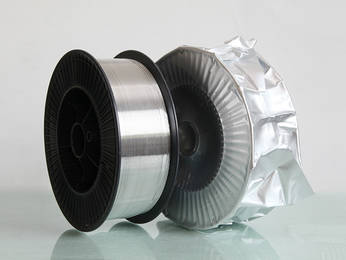
- Store in sealed packaging until use: ER4043 wire and rod absorb moisture from humid air within hours of package opening. A spool of wire left on the MIG machine in a humid shop overnight can develop sufficient surface hydroxide to cause visible porosity in the next day's welding. Store open spools in a sealed bag with a desiccant pouch. Return cut TIG rods to their original sealed tube. A heated rod oven (60°C / 140°F) is the best long-term storage solution in humid environments.
- Inspect wire surface before use: New ER4043 wire should have a bright, slightly metallic-silver surface finish. Wire that appears dull white, has visible white powder on the surface, or has visible pitting should be rejected — the surface oxide/hydroxide layer is already developed and will cause porosity regardless of cleaning effort on the base metal.
- Do not use wire or rods that have been wet: Moisture absorbed into the aluminum hydroxide layer on the wire surface decomposes to atomic hydrogen during welding. Hydrogen has extremely high solubility in liquid aluminum but near-zero solubility in solid aluminum — the gas precipitates as pores during solidification. Even brief exposure to rain or condensation on a TIG rod renders it unsuitable for production welding without re-drying.
- Minimum bend radius for wire handling: ER4043 work-hardens under bending — the soft aluminum wire kinks irreversibly if bent to a radius less than approximately 10× its diameter. Kinked wire causes inconsistent wire feed, erratic arc length, and variable deposition in MIG welding. Never force a spool to unwind by pulling the wire at an angle — feed from a properly mounted spool holder that allows free rotation.
NEXT:Is 5183 Aluminium MIG Wire corrosion resistant