English
 Deutsch



Custom Aluminum Alloy Welding Wire: Key Specifications for OEM Applications
Article Directory
- 1 The Alloy Decision: Matching Wire Chemistry to Base Metal and Duty
- 2 Diameter Tolerance, Cast and Helix: The Hidden Variables
- 3 Surface Quality and Feedability: Where Rework Costs Are Born
- 4 Certification, Traceability, and OEM Supplier Qualification
- 5 Packaging, Spooling, and Volume Commitments
- 6 Import Replacement: The Strategic Shift in Custom Alloy Wire Sourcing
- 7 Frequently Asked Questions
- 7.1 What diameter tolerances should OEMs specify for custom aluminum alloy welding wire?
- 7.2 How does cast and helix affect robotic MIG welding?
- 7.3 Which certifications should an OEM verify before qualifying an aluminum welding wire supplier?
- 7.4 What minimum order quantities can a custom alloy wire supplier support?
An OEM welding engineer sourcing filler metal for a rail fabrication program cannot validate custom aluminum alloy welding wire through trial and error. Every spool that enters production must meet a documented alloy composition, hold a defined diameter tolerance, feed without interruption through robotic equipment, and ship with lot-level traceability. The specifications written into the purchase order decide whether the first weld passes qualification or the first shift ends in rework.
Custom aluminum alloy welding wire is a filler metal produced to a buyer-specified AWS classification, chemical composition, diameter, packaging configuration, and quality standard for a defined welding process and structural application. OEM purchasing teams evaluate wire as a process input with measurable consequences for cycle time, rework rate, and final product certification, not as a commodity.
Custom aluminum alloy welding wire is a filler metal with a specified alloy classification, controlled chemistry, verified mechanical properties, and defined packaging, manufactured to satisfy an OEM's qualification and production requirements.
The Alloy Decision: Matching Wire Chemistry to Base Metal and Duty
The first specification an OEM locks is the alloy classification, because it fixes the chemical composition range and the mechanical envelope of the weld deposit.
Selecting the wrong alloy chemistry is the most frequent cause of weld cracking, strength shortfalls, and corrosion failures in aluminum fabrication. The filler system must be matched to the base alloy, the service environment, and post-weld requirements such as anodizing or heat treatment. Alloy choice also interacts with the welding process: pulsed MIG, spray transfer, and TIG each impose different current density and cooling conditions on the same filler chemistry.
| Classification | Primary Elements | Typical Base Alloys | As-Welded Strength | Main Limitation |
| ER4043 | Al-Si 5% | 6061, 6063, 3003 | Moderate | Lower strength in 5xxx joints |
| ER4943 | Al-Si 5% + Mg | 6061 structural | Higher than 4043 | Higher unit cost |
| ER5356 | Al-Mg 5% | 5052, 5083, 6061 | High | Not for elevated-temperature service |
| ER5183 | Al-Mg 4.5% + Mn | 5083, 5086 | High | Requires higher feed force |
| ER5087 | Al-Mg 4.5% + Zr | High-strength structures | Highest in 5xxx | Zirconium premium |
For OEMs welding 6061-T6 extrusions, ER4043 remains the default because of its solidification crack resistance and smooth bead profile. If the welded assembly must carry load without post-weld heat treatment, ER4943 or a 5xxx-series alloy is the safer specification.
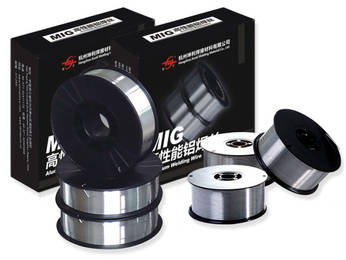
 ER4043 Silicon Aluminum Welding Wire for 6061 ExtrusionsThis 5% silicon filler offers good flowability and crack resistance, matching the default choice for welding 6061-T6 without post-weld heat treatment. Its broad compatibility with common alloys makes it a practical baseline for OEM assemblies.View Product →
Diameter Tolerance, Cast and Helix: The Hidden Variables
Diameter tolerance, cast, and helix are the physical specifications that separate production-grade wire from laboratory-grade material.
An OEM line running robotic MIG at 12 meters per minute of wire feed cannot absorb a 0.05 mm diameter fluctuation. The change shifts current density, arc stability, and penetration profile. AWS A5.10 sets diameter tolerance at plus or minus 0.01 mm for wire diameters up to 1.6 mm; custom suppliers that hold this band deliver consistent arc behavior across shifts.
- Diameter: 0.8 mm, 1.0 mm, 1.2 mm, and 1.6 mm are the standard OEM line sizes; tolerance per AWS A5.10 is +/- 0.01 mm.
- Cast: the natural loop diameter after wire is released, controlled between 100 mm and 450 mm depending on alloy and diameter.
- Helix: the vertical rise of the cast loop, maximum 25 mm; excessive helix causes erratic arc position and burnback.
Field reports from equipment makers and filler metal suppliers attribute roughly 60 percent of MIG feed disruptions on aluminum lines to cast and helix variations, not to wire chemistry.
Before approving a custom wire source, OEMs should request a cast and helix measurement from the same production spool that will feed the line trial. A visual check at the contact tip is not a specification.
Surface Quality and Feedability: Where Rework Costs Are Born
Surface condition determines whether the wire reaches the arc cleanly and whether the deposit stays free of porosity.
Aluminum wire carries a natural oxide film that is harder than the base metal and has a higher melting point. If drawing lubricant, moisture, or oxide remnants remain on the surface, the weld pool absorbs hydrogen and porosity forms. Custom wire from a controlled manufacturing line is drawn with specific lubricant chemistry, cleaned, and spooled under controlled conditions to keep the surface repeatable.
Controlled surface wire
Consistent feeding, stable arc, minimal spatter, and porosity below 2 pores per 100 mm of weld in radiographic testing.
Uncontrolled surface wire
Erratic feeding, arc instability, porosity clusters, faster contact tip wear, and unscheduled line stoppages.
OEM weld shops that switched from the lowest-cost import wire to a custom specification with controlled surface quality report rework reductions of 15 to 30 percent on aluminum MIG lines, based on production data published by Chinese alloy wire manufacturers. For marine and automotive lines running ER5356, the same surface discipline directly affects saltwater corrosion performance and fatigue life of the welded assembly.
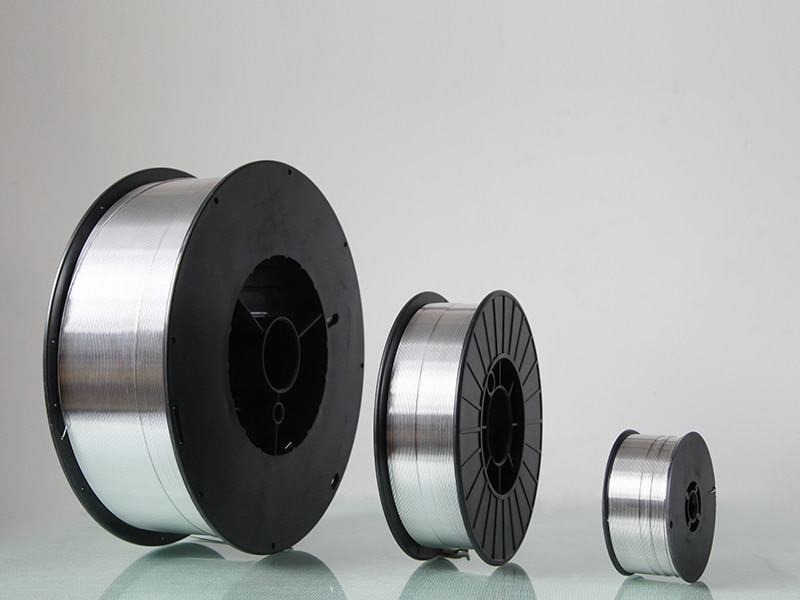 ER5356 Aluminum Welding Wire for Marine and Automotive LinesWith 5% magnesium, this wire provides high strength and corrosion resistance, suiting 5xxx, 6xxx, and 7xxx alloys. Its controlled surface quality helps reduce rework and supports saltwater performance in demanding welded structures.View Product →
Surface quality is not visible on a certificate of analysis. It is verified by feed force readings, arc stability logs, and porosity counts on the first production part.
Certification, Traceability, and OEM Supplier Qualification
Certifications and lot traceability are the evidence an OEM needs to verify that the wire on the spool matches the wire in the purchase order.
Every production lot of custom aluminum alloy welding wire should ship with a mill test report listing chemical composition, mechanical properties, and the applicable AWS classification. The RFQ should reference the complete aluminum welding wire specification set defined by the program, not just the alloy name on the drawing.
| Certification | Scope | Typical OEM Trigger |
| DB | German railway approval | Rail vehicle body fabrication |
| CE | EU conformity | Equipment exported to Europe |
| ABS | American Bureau of Shipping | Marine structures and offshore |
| DNV | Det Norske Veritas | Shipbuilding and marine welding |
| CCS | China Classification Society | Vessels classed in China |
Hangzhou Kunli Welding Materials Co., Ltd., a manufacturer with more than 20 years of aluminum alloy wire production experience, holds DB, CE, ABS, DNV, and CCS approvals and has passed qualification audits for CRRC and Maersk supply chains. That record means its custom wire programs have been reviewed against real OEM quality systems, not only internal QC documentation.
An OEM-qualified wire supplier delivers more than product: it delivers evidence. Lot traceability, retained samples, and audit-ready process records are part of the purchased item.
Packaging, Spooling, and Volume Commitments
Packaging is a process specification, not a logistics afterthought, because the wrong spool or winding pattern stops an automated line.
An OEM robotic cell is configured around a spool size, a payoff mechanism, and a wire feed system. If the custom wire arrives on the wrong flange or with a cast that does not match the straightener setup, the line stops. The packaging spec on the engineering drawing must include spool type, winding pattern, layer count, and splice limits per spool.
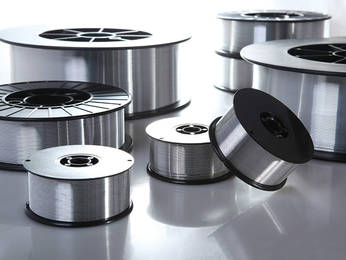
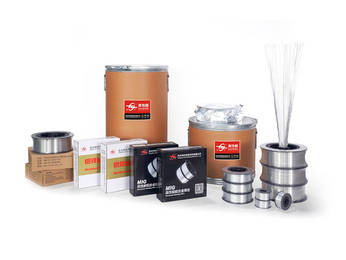
- D200 and D300 spools: standard for manual and robotic MIG, 2 to 6 kg per spool.
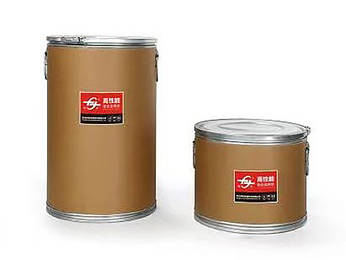
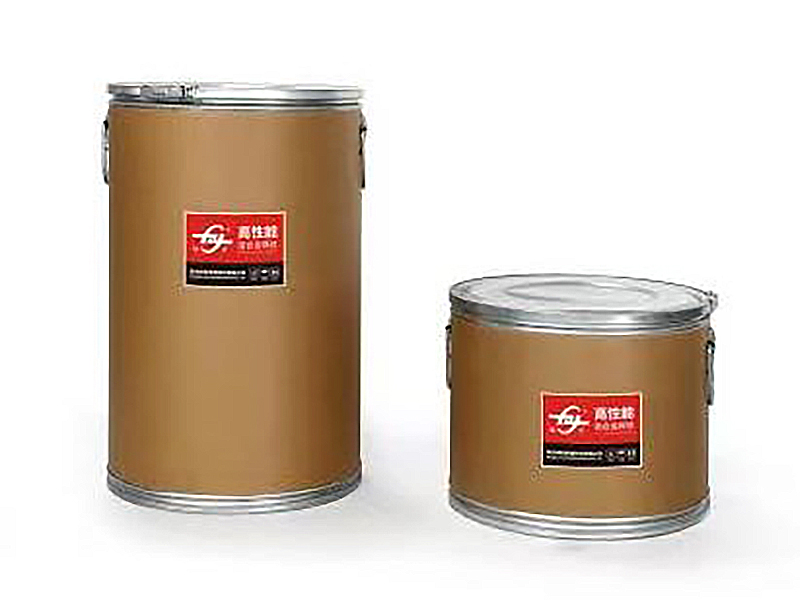
- Barrel and drum packaging: 50 to 150 kg for high-volume automated lines.
- Payoff packs: up to 250 kg of continuous feed for shipyard and field welding.
Volume reliability is the second half of the packaging equation. A supplier with 2,500-plus tons of annual aluminum alloy wire capacity and 200-plus tons of monthly output can hold multi-month frame agreements without pushing OEMs into spot-market buying. That buffer directly reduces supply risk for programs that run continuous shifts.
20+
years of aluminum alloy wire manufacturing experience
2500 t
annual production capacity for alloy wire
30+
countries receiving export shipments
Import Replacement: The Strategic Shift in Custom Alloy Wire Sourcing
The economics and lead-time risk of imported aluminum welding wire have shifted OEM programs toward qualified domestic custom suppliers.
Imported premium wire carries longer lead times, higher logistics costs, and a slower technical feedback loop. A custom alloy wire maker can adjust the specification, run a production trial, and stabilize delivery within weeks. Hangzhou Kunli's product history follows this pattern: its wires replaced imported high-performance aluminum welding materials in domestic programs after passing the same qualification gates as the foreign incumbents. The company's manufacturing base in Xiaoshan District employs a workforce in which more than 90 percent of line operators hold technical education backgrounds, and its R&D cooperation with Beijing General Research Institute for Nonferrous Metals and Central South University supports continuous alloy refinement.
Typical as-welded tensile strength by custom aluminum alloy welding wire classification
For OEM programs that need a custom aluminum alloy welding wire with consistent mechanical properties across multiple lots, working with a certified domestic supplier shortens the qualification loop and keeps engineering ownership closer to the line. High-strength 5xxx applications, including rail vehicle structures and marine assemblies, benefit most from this model because the supplier's qualified process window becomes the OEM's starting point.
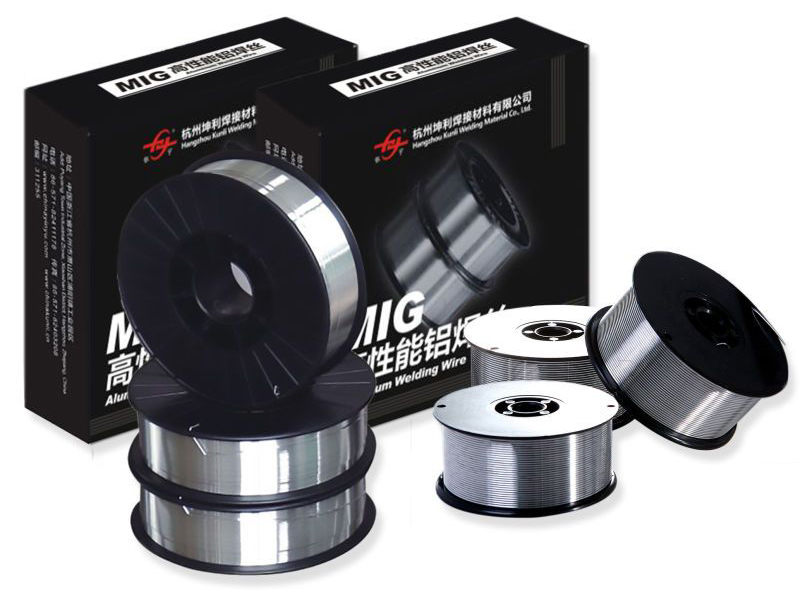 ER5183 Aluminum Welding Wire for High-Strength Marine and RailThis 4.5% magnesium filler delivers higher as-welded strength than ER5356, with excellent seawater corrosion resistance and cryogenic toughness. It suits 5083 and other 5xxx/6xxx/7xxx alloys in rail, marine, and pressure vessel applications.View Product →
Frequently Asked Questions
What diameter tolerances should OEMs specify for custom aluminum alloy welding wire?
AWS A5.10 allows plus or minus 0.01 mm for wire diameters up to 1.6 mm. OEM purchase orders should state the tolerance explicitly and request a measurement report for each production lot, because diameter drift changes current density and arc stability on automated lines.
How does cast and helix affect robotic MIG welding?
Cast and helix control how the wire behaves between the spool and the contact tip. Excessive helix makes the wire orbit, causing erratic arc position, burnback, and premature tip wear. For OEM robotic cells, keep cast between 100 and 450 mm and helix below 25 mm.
Which certifications should an OEM verify before qualifying an aluminum welding wire supplier?
For marine, rail, and export programs, verify ABS, DNV, CCS, and DB approvals plus CE conformity where the end product enters the EU market. The supplier should also provide lot-level mill test reports with chemical composition and mechanical property data for every wire lot shipped.
What minimum order quantities can a custom alloy wire supplier support?
Custom suppliers with 200-plus tons of monthly capacity can support trial spools of 5 to 10 kg for line qualification and production volumes of hundreds of kilograms per alloy per month under frame agreements. The spool and packaging specification is often a bigger constraint than alloy chemistry.
NEXT:Aluminum Welding Wire After Opening: How Should the Spool Be Handled?