English
 Deutsch



Aluminum Welding Wire Specifications: Key Parameters to Include in Your RFQs
Article Directory
- 1 The five parameter blocks a complete RFQ has to cover
- 2 Alloy and designation: write the class, not the nickname
- 3 Chemistry limits, certificates and lot traceability
- 4 Diameter, cast, helix and surface condition
- 5 Packaging: spool standard, net weight and winding
- 6 Approvals, third-party inspection and factory documentation
- 7 Commercial terms: volume, Incoterm and delivery
- 8 Six checks before the RFQ leaves your desk
- 9 Questions that come up in almost every aluminum wire inquiry
An aluminum welding wire RFQ that reads "ER5356, 1.2 mm, 500 kg" leaves at least eleven decisions to the supplier. Diameter tolerance, cast, helix, surface lubricant, spool type, net weight, certificate type, lot traceability, packing, approval marks and delivery terms all stay open, and two suppliers can answer that one sentence with two different products at the same price.
A complete aluminum welding wire RFQ fixes 14 to 18 data points across five parameter blocks: alloy and standard designation, chemistry and certification, dimensional and surface condition, packaging, and commercial terms. Buyers who put those five blocks on a single page get quotations that can be compared line by line instead of guessed at.
The five parameter blocks a complete RFQ has to cover
Comparable quotations exist only when every supplier answers the same parameter list, so organize the RFQ around five blocks and reject any specification that wanders outside them.
| Block | What the RFQ must state | Common omission |
| 1. Alloy and designation | AWS A5.10 class, EN ISO 18273 equivalent, UNS number | A trade nickname such as "5356 wire" |
| 2. Chemistry and certification | Element ranges, certificate type, heat number, traceability | A mill certificate with no heat number |
| 3. Dimensions and surface | Diameter, tolerance, cast, helix, surface, temper | "1.2 mm" with no tolerance or cast value |
| 4. Packaging | Spool standard, spool material, net weight, winding, desiccant | "Export packing" with no spool definition |
| 5. Commercial terms | Volume tiers, Incoterm, lead time, price validity, approvals | Approvals discovered after the order is placed |
Two blocks decide whether the weld passes; the other three decide whether the wire feeds properly and clears customs. All five belong in the same document, signed by the same two people.
Alloy and designation: write the class, not the nickname
The alloy line must carry a published classification, because both AWS A5.10/A5.10M and EN ISO 18273 define exactly what a class such as ER5356 or AlMg5Cr(A) is permitted to contain.
AWS A5.10 covers bare aluminum electrodes, wires and rods, and it is the reference used across North America and much of Asia. EN ISO 18273 is the harmonized European classification, and a CE-marked structural wire is normally declared against it. Quoting both lines costs nothing and removes the most common cause of a wrong-alloy shipment. The AWS A5.10 bare aluminum filler classification list runs from ER1100 through the 4xxx and 5xxx families.
| Class | ISO 18273 | Typical base metal | Why it is chosen |
| ER4043 | AlSi5 | 6061, 3003, castings | Silicon-based, high fluidity, darker anodized finish |
| ER4047 | AlSi12 | Heat exchangers, brazed assemblies | Lowest melting range of the common classes |
| ER5356 | AlMg5Cr(A) | 5052, 5083, 6061 | General-purpose 5xxx, good color match after anodizing |
| ER5183 | AlMg4.5Mn | 5083, 5383 | Higher as-welded strength for marine structures |
| ER5087 | AlMg4.5MnZr | 5083, 7020 | Zirconium addition improves cracking resistance |
The 4xxx and 5xxx split drives the rest of the specification. ER4043 and ER4047 are silicon-based: fluid, tolerant of dirtier or cast base metal, and darker after anodizing. ER5356, ER5183, ER5087, ER5554 and ER5556 are magnesium-based, deliver higher as-welded strength on 5xxx plate, and hold their color through anodizing.
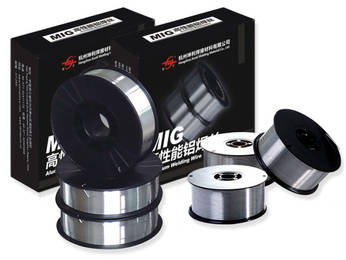
 ER4043 Silicon Aluminum MIG/TIG Welding WireSilicon-based Al-Si5 filler for fluid welds on 6xxx and cast aluminum; available in MIG/TIG, drum and coil formats with AWS A5.10 and ISO 18273 compliance.View Product →
Chemistry limits, certificates and lot traceability
Name the chemistry ranges and the certificate type: EN 10204 type 3.1 is the baseline document for industrial aluminum filler, because it ties tested chemistry and dimensions to one specific heat number.
Chemistry is where two wires that both read ER5356 stop being the same product. ER5356 carries 4.5 to 5.5 percent magnesium, with manganese, chromium and titanium each controlled between 0.05 and 0.20 percent. ER4043 carries 4.5 to 6.0 percent silicon with iron capped at 0.80 percent. A supplier at the top of a range and one at the bottom are both compliant, so say whether you need the middle of the range or whether any compliant value will do.
AWS A5.10 maximum specified content of key elements, percent by weight
Beryllium is the one line with no room to negotiate. AWS A5.10 caps beryllium at 0.0003 percent in every class, and the RFQ should ask the supplier to confirm it on the certificate rather than assume it.
A certified lot is one production run: one heat number, one diameter, one surface condition and one spool configuration, supported by a certificate that matches chemistry and dimensions back to that number. Traceability in an RFQ means buying this unit, not a certificate covering a year of output.
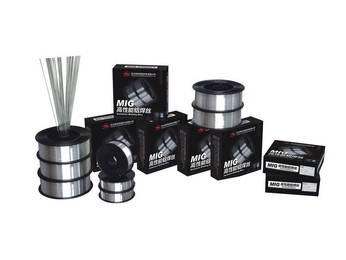
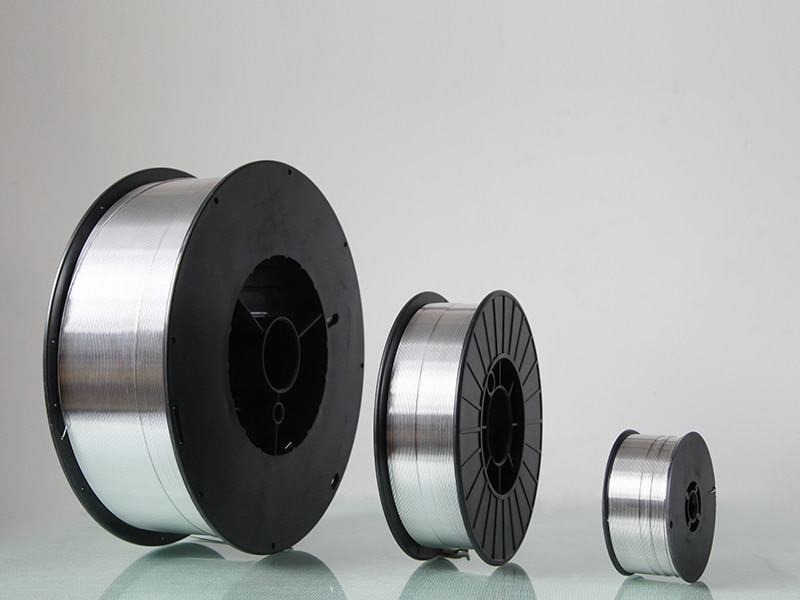 ER5356 Magnesium-Chromium Aluminum MIG/TIG Welding WireAl-Mg5 filler for 5xxx/6xxx/7xxx alloys with 330 MPa as-welded strength and corrosion resistance; supplied as MIG, TIG, drums and coils with AWS A5.10/ISO 18273 compliance.View Product →
Diameter, cast, helix and surface condition
Diameter alone is not a specification. A workable RFQ states the diameter, the tolerance the wire will be inspected against, the cast and helix range, and the surface condition.
Cast is the diameter of the circle a length of wire forms once it is unspooled; helix is how far it lifts out of a flat plane. Both are controlled values in AWS A5.10, and both decide whether the wire reaches the contact tip without tangling in the liner. Controlled cast and helix is often the difference between a wire that runs at 9 m per minute on a robotic cell and one that stalls. Surface condition counts just as much: drawing lubricant left on the wire burns into the arc and drives porosity, so ask for a bright, lubricant-free surface and say how it is verified.
- Diameter with the tolerance you will inspect
- Cast and helix values with the measuring length
- Bright, lubricant-free surface condition
- Temper and finish after drawing
- "1.2 mm wire"
- "Standard winding"
- "Normal surface"
- "As per industry practice"
Packaging: spool standard, net weight and winding
Specify four packaging values, because the wire feeder is built around them: spool standard, spool material, net weight per spool, and winding pattern.
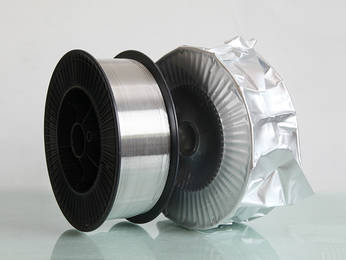
EN ISO 544 defines the spool sizes used in aluminum MIG welding, including S200 at 200 mm and S300 at 300 mm. Plastic spools are the usual choice for aluminum because they resist handling dents and cannot contaminate the wire with rust. Precision layer winding keeps the wire from crossing itself during payout.
- Spool type and material, for example S300 plastic
- Net weight per spool at the ordered diameter
- Winding pattern and layer control
- Desiccant and barrier bag for sea freight
- Label content: class, diameter, heat number, net weight, production date
Add the pallet or pallet-free requirement and the shipping marks in the same clause. Wire that arrives on the wrong spool is unusable, not simply late.
Approvals, third-party inspection and factory documentation
List every approval the project requires, mark each one mandatory or optional, and state whether certificates must be issued per shipment or per order.
Classification society approvals appear in aluminum RFQs as often as chemistry does. The marks that recur are ABS, DNV, CCS and DB, alongside a CE declaration against EN ISO 18273 and an ISO 9001:2015 quality management certificate. Offshore and shipbuilding packages usually name a 5xxx class. ER5183, or AlMg4.5Mn, with 4.3 to 5.2 percent magnesium and 0.50 to 1.0 percent manganese, is the one most often written into those specifications.
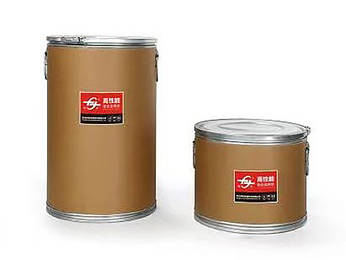
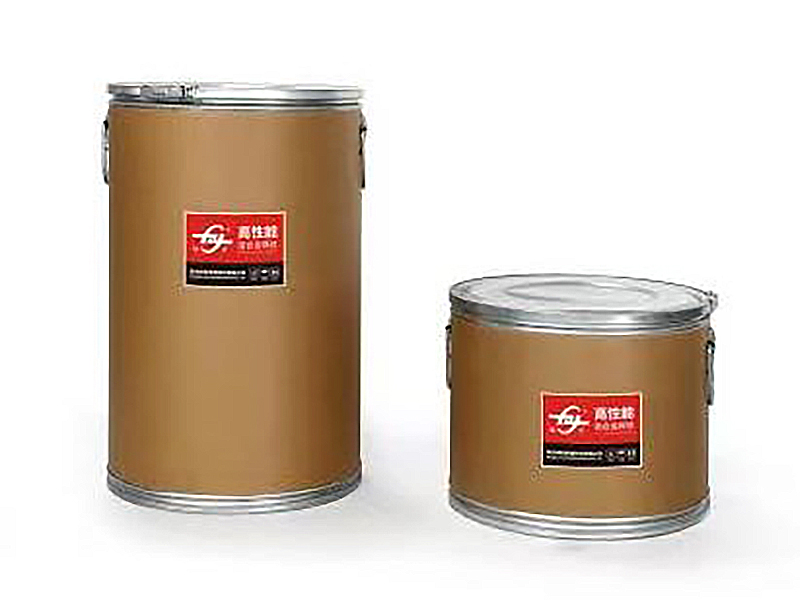
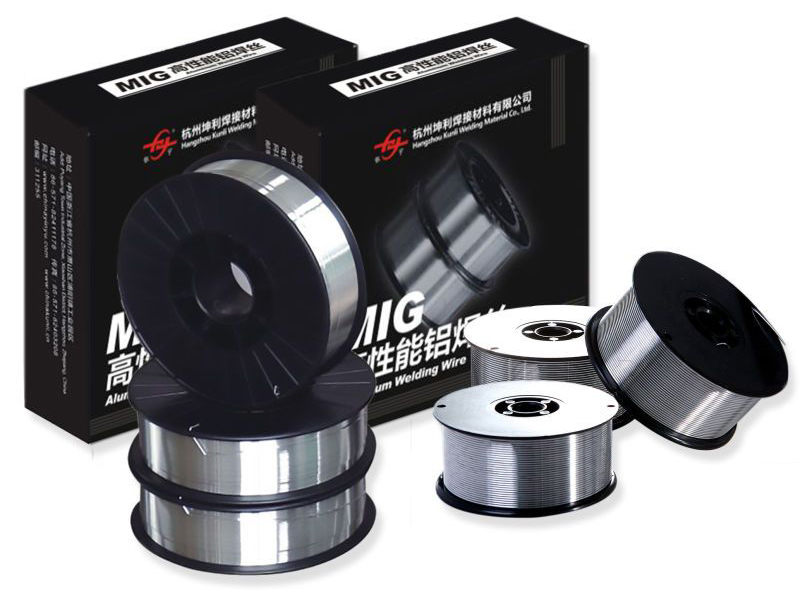 ER5183 AlMg4.5Mn Aluminum Welding Wire for Marine and Cryogenic UseMagnesium-manganese filler for shipbuilding, offshore and cryogenic LNG tanks; carries DB, CE, ABS, DNV, DNV-GL and CCS approvals with AWS A5.10/ISO 18273 compliance.View Product →
Also ask for the manufacturing plant and how the certificate is generated. Hangzhou Kunli Welding Materials Co., Ltd. lists DB, CE, ABS, DNV and CCS approvals across its aluminum welding wire and aluminum alloy wire lines, which is the level of documentation an RFQ should be able to request from any supplier before trial orders begin.
Commercial terms: volume, Incoterm and delivery
Volume tiers, Incoterm, lead time and price validity belong in the same document as the technical specification, because splitting them guarantees a mismatch between what the welding engineer approved and what the purchase order says.
- Incoterm and named port of destination
- Lead time for a first article and for repeat orders
- Price validity and any alloy surcharge mechanism
- Minimum order quantity per diameter and per spool type
- Inspection rights and the claim window after arrival
Then check published capacity against your monthly draw. Hangzhou Kunli Welding Materials Co., Ltd. states annual aluminum wire capacity above 2,500 t and monthly output above 200 t, with roughly half of production exported to more than 30 countries. A buyer drawing 20 t per month should confirm at least 10 percent of headroom above its own forecast before it commits to a single source.
Six checks before the RFQ leaves your desk
- Fix the base metal and the joint first. The filler class follows from the alloy being welded, not from what is in stock.
- Write the classification twice, once against AWS A5.10 and once against EN ISO 18273.
- Paste in the chemistry limits, the certificate type and the heat number requirement.
- Add diameter, tolerance, cast, helix and surface condition with the inspection method.
- Lock packaging: spool standard, material, net weight, winding and desiccant.
- Attach the commercial sheet: volume, Incoterm, lead time, approvals and price validity.
Questions that come up in almost every aluminum wire inquiry
Which filler class should a 5083 aluminum RFQ name?
ER5183 (AlMg4.5Mn) or ER5087 (AlMg4.5MnZr) when as-welded strength matters on 5083 and 5383 base metal. ER5356 (AlMg5Cr(A)) is the lower-cost general-purpose option where the joint is not strength-critical and the finish will be anodized.
Should a European RFQ cite AWS A5.10 or EN ISO 18273?
Cite both. EN ISO 18273 is the harmonized classification behind CE-marked consumables in Europe, and AWS A5.10 is the reference used in North America and much of Asia. One line such as ER5356 / AlMg5Cr(A) removes the ambiguity at zero cost.
What certificate type should an aluminum wire RFQ demand?
EN 10204 type 3.1 as a minimum, quoting the heat number together with tested chemistry and diameter. Type 3.2 is worth the premium only when a notified body or the end client must witness the test, which is typical on pressure equipment and offshore packages.
How many data points make an RFQ too long?
Keep the technical sheet to 14 to 18 data points across the five blocks. Past that point buyers start carrying clauses over from unrelated projects, and suppliers quote around the noise instead of the requirement.
NEXT:Aluminum Welding Wire After Opening: How Should the Spool Be Handled?