English
  Deutsch


Choosing the Right Aluminum Alloy Welding Wire
Article Directory
- 1 What are Aluminum Alloy Welding wires and why do alloy types matter
- 2 Does the welding process affect the choice of welding wire
- 3 How do alloying elements change weld behavior
- 4 Common filler families compared
- 5 How to choose filler for different base metals
- 6 Manufacturing and quality control for Welding Wire
- 7 Can handling and storage alter performance
- 8 Practical welding techniques for MIG and TIG with aluminum filler wire
- 9 Wire handling and process pairing
- 10 What troubleshooting steps fix feed and porosity issues
- 11 Inspection checklist for incoming spools
- 12 What operational changes improve welding outcomes
- 13 How do supply trends affect filler availability and choices
- 14 Welding techniques to reduce distortion and improve weld quality
- 15 What inspection regimes catch hidden quality problems
- 16 How to manage alloy selection when electrical or environmental demands change
- 17 What does a compact feed troubleshooting table look like
- 18 Why documentation and supplier communication matter
- 19 How training extends consumable life and reduces downtime
- 20 Practical pairing table for shop scenarios
- 21 What sampling and acceptance steps protect production runs
- 22 Practical considerations for collision repair and detailed assembly
- 23 What adjustments reduce porosity and incomplete fusion
- 24 How to read specifications and codes for Aluminum Alloy Welding Wire
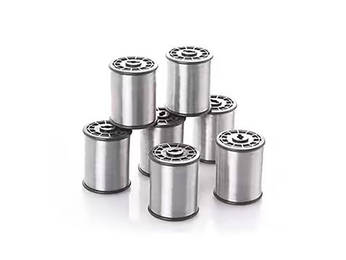
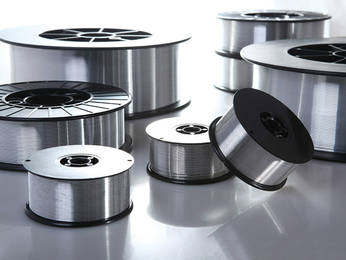
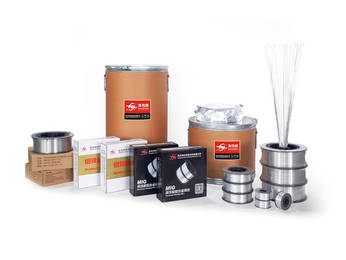
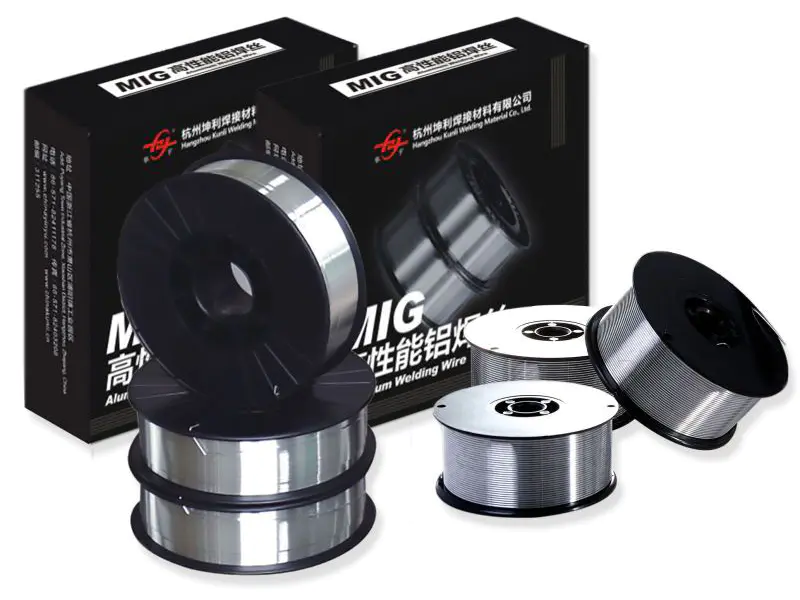
Across fabrication and repair shops, consistent consumable quality directly affects weld outcomes, and Aluminum Alloy Welding Wire Suppliers influence arc stability, feedability, and deposit behavior through alloy formulation, surface treatment, and spool packaging. Choosing vendors that document production controls, preserve dimensional tolerances, and protect wire from contamination makes it easier for welding teams to achieve repeatable results across MIG and TIG processes.
What are Aluminum Alloy Welding wires and why do alloy types matter
Aluminum Alloy Welding wires are filler metals developed for welding aluminum in MIG and TIG processes. They supply the material to fill the joint and are made from specific alloys to blend with the base aluminum, promoting good weld strength, ductility, corrosion resistance, and surface quality.
Why alloy types matter
- Fluidity and wetting: Alloys containing silicon (4xxx series) flow well, aiding joint filling and reducing porosity for smoother finishes.
- Strength and ductility: Wires with magnesium (5xxx series) provide added strength for parts subject to loads or flexing.
- Corrosion resistance: Particular alloy formulations hold up better against environmental factors like water, salt, or chemicals.
- Compatibility with base metal: Matching alloys prevents cracking, incomplete fusion, or adverse reactions, especially across varying aluminum types.
- Post-weld treatment response: Certain fillers work well with painting or anodizing, helping maintain consistent color and protection.
Does the welding process affect the choice of welding wire
Yes, MIG and TIG handle filler material differently, so process choice influences alloy selection for feeding, melting, and weld performance.
MIG Welding Considerations
- Wire acts as electrode and filler, fed continuously by machine.
- Reliable feeding is key; alloys such as 4043 or 5356 are frequently used for smooth delivery and stable arcs.
- Even melting supports effective spray or pulsed transfer.
TIG Welding Considerations
- Filler rods are introduced by hand apart from the tungsten electrode.
- Manual addition opens up more alloy possibilities beyond mechanical feed constraints.
- Fluid alloys assist with thin sections; stronger ones fit heavier joints.
Key Implications
- Alloy, diameter, and wire quality need to suit the process's feeding and heat requirements.
- MIG relies on consistent feed and deposition; TIG on accurate bead formation and heat adjustment.
- An alloy can vary in behavior between processes, guiding choices according to material gauge, joint details, and weld goals.
How do alloying elements change weld behavior
Alloying additions in filler wire alter melting characteristics, fluidity, strength of the deposited metal, and how the weld reacts to post-weld environments. Elements that promote fluid flow improve wetting and reduce the tendency for certain cracking modes, while elements that contribute strength can also change ductility and susceptibility to environmental attack. The choice between fluidity-focused fillers and strength-focused fillers is a trade-off: one favors ease of deposition and cosmetic appearance, the other favors load-bearing performance and resistance to stress in service.
Manufacturers tailor chemical balances to address common shop problems: some formulations help the molten pool run smoothly into roots and corners, others prioritize retention of tensile characteristics when welds are stressed in service. When joining different base metals, the filler chemistry is selected to avoid brittle intermetallic compounds and to preserve corrosion behavior.
Common filler families compared
| Filler family trait | Typical welding behavior | Practical selection hint |
|---|---|---|
| Fluidity-focused | Smooth wetting, lower tendency to contract cracks | Use where appearance and thin-gauge handling matter |
| Strength-focused | Higher deposited-metal strength, greater stiffness | Use where structural loads and weld durability matter |
| Corrosion-oriented | Enhanced resistance to oxidizing environments | Use for heat exchangers and exposed assemblies |
| Cast-compatible | Designed for bonding cast components to wrought pieces | Use with preheat and controlled travel to avoid defects |
Each family offers advantages and constraints. Match expectations about deposit appearance, mechanical behavior, and finishing requirements to the wire family chosen.
How to choose filler for different base metals
Selecting filler begins with an honest assessment of the base components and their intended service. Consider whether the joint will be painted, anodized, exposed to corrosive atmospheres, or loaded under mechanical stress. A filler that blends aesthetically with a finish may not supply the mechanical endurance required by a framed structure, and vice versa. When dissimilar base metals are present, choose a filler that minimizes harmful reaction zones while supporting acceptable strength.
Perform trial welds on representative stock where possible. Visual inspection, simple bend checks, and targeted weld tests help confirm that the chosen filler produces the expected balance of appearance and performance before full production begins.
Manufacturing and quality control for Welding Wire
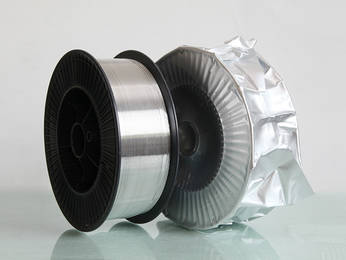
Producers control multiple variables during wire production. Surface cleanliness reduces adhesion of oils and residues. Dimensional precision ensures the wire feeds without sudden diameter variations that choke the feed system. Winding practices preserve coil shape to prevent looped turns that can cause feed interruptions. Protective packaging that limits exposure to airborne contaminants and moisture helps maintain wire condition during storage and transport.
On the procurement side, ask suppliers about traceability practices and inspection steps performed prior to shipment. Incoming inspection at the shop—visual checks and a short feed test—catches problems early and reduces scrap from suspect spools.
Can handling and storage alter performance
Yes. Wire that is stored in uncontrolled environments collects residues or absorbs moisture, both of which degrade feed behavior and promote defects in welded joints. Rewinding spools or forcing wire into inappropriate reels introduces memory and kinks that later tangle. Establish storage routines that isolate spools from shop dust and that use simple desiccant measures when ambient humidity is elevated. When a spool looks discolored, sticky, or flattened in turns, set it aside and evaluate it with a quick feed check before use.
Practical welding techniques for MIG and TIG with aluminum filler wire
MIG practice emphasizes steady feed and arc control. Use feed systems and liners suited to soft aluminum feedstock, verify drive-roll profile compatibility, and manage station settings so that the arc achieves a steady transfer mode that deposits metal without excessive spatter. Shielding coverage must be continuous and free from drafts; nozzle cleanliness extends the period between consumable changes.
TIG technique places more control in the operator's hand. Manual filler feeding lets the operator shape the bead, adjust filler addition, and respond to pool dynamics. Alternating current characteristics are used to break surface oxide while keeping heat input within limits that avoid excessive distortion. For both methods, joint prep and cleanliness are fundamental: removal of oils, oxidation, and foreign deposits improves wetting and reduces pinhole defects.
Wire handling and process pairing
| Welding method | Feed style | Handling emphasis |
|---|---|---|
| MIG continuous | Mechanical feed | Liner and drive-roll compatibility, shielding gas stability |
| TIG manual | Hand-fed filler rod | Pool control, AC settings, oxide management |
What troubleshooting steps fix feed and porosity issues
Begin with simple checks: ensure correct drive-roll type and pressure, confirm liner integrity and cleanliness, check spool seating and brake settings, and examine contact tips for internal buildup. Porosity often traces to contamination either on the base metal, the filler, or within shielding coverage. Replace suspect contact components, purge the liner and feed path, and perform a controlled feed test to simulate welding conditions before returning to production.
When porosity persists after mechanical checks, revisit surface cleaning methods and shielding gas delivery. Air currents or an obstructed nozzle can defeat even careful preparation, so confirm gas flow and nozzle geometry in situ.
Inspection checklist for incoming spools
| Item | Accept criteria |
|---|---|
| Coil shape | Turns retain roundness with no flattened sections |
| Surface condition | No visible residue, sticky spots, or discoloration |
| Winding tension | No loose turns that could slip during feed |
| Packaging | Seals intact and presence of protective packet where provided |
A physical feed test that routes an initial segment through the intended liner and drive system provides prompt confirmation of feedability.
What operational changes improve welding outcomes
Training and standardization reduce variation. Simple shop standards—cataloging drive-roll profiles for each wire diameter, labeling spools with intended process parameters, and scheduling liner replacement intervals—prevent common, recurring faults. Small investments in storage and a few spare liners and drive rolls eliminate the need to rush repairs under pressure, reducing scrap and the frequency of interrupted runs.
How do supply trends affect filler availability and choices
Shifts in manufacturing demand and material sourcing can alter which filler chemistries and spool formats are available at any time. Adapting procurement practices by maintaining relationships with multiple sources, planning inventory for critical jobs, and qualifying alternative filler families in advance reduces exposure to sudden shortages. When supply patterns tighten, have an approved compatibility matrix to evaluate substitution options and run qualification welds before committing parts to production.
Welding techniques to reduce distortion and improve weld quality
For thin assemblies, minimize heat input through intermittent tacks, reduced arc-on time, and controlled travel speed. Fixturing and sequence planning that distributes thermal stresses help preserve dimensional integrity. When cosmetic finish matters, practice controlled filler addition and maintain a consistent torch angle to limit undercut and irregular bead features.
Beyond visual checks, sample welds from new batches reveal tendencies toward porosity, inconsistent wetting, or unexpected mechanical characteristics. Record-keeping that captures spool identifiers, feed test results, and weld appearance photographs supports supplier communication when problems arise. Use simple non-destructive checks appropriate to the component to verify joint performance before assembly.
How to manage alloy selection when electrical or environmental demands change
If service conditions demand higher strength or greater corrosion resistance, the filler selection strategy should shift toward chemistries that enhance those properties while preserving feedability. In some cases, surface finish compatibility, such as color matching after surface treatments, dictates filler choice more strongly than mechanical characteristics. Trial welds remain the safest route to confirming choice under the specific joint and finishing conditions at hand.
What does a compact feed troubleshooting table look like
| Symptom | Likely mechanical cause | Immediate action |
|---|---|---|
| Tangled wire at rollers | Excess tension or crumpled liner | Reduce tension, replace liner |
| Stuttering feed | Debris in liner or worn guide | Clean or replace liner, clear nozzle |
| Tip clogging | Oxide on wire or buildup | Refresh wire spool and tip, inspect storage |
| Small pores in bead | Contamination or gas loss | Clean parts, verify shielding coverage |
These checks rapidly isolate whether the issue originates in material, equipment, or environment.
Why documentation and supplier communication matter
When a spool underperforms, precise records of batch identifiers and observed behavior help suppliers trace root causes and respond with corrective action. Clear documentation shortens response cycles and reduces repeated mistakes, particularly when a recurring pattern suggests a process or packaging concern at the supplier end.
How training extends consumable life and reduces downtime
Operators who recognize early signs of liner wear, understand correct drive-roll selection, and adhere to spool handling routines stop many issues before they arise. A short, practical skills session that demonstrates feed testing and simple maintenance tasks returns measurable operational benefits by lowering stoppage frequency.
Practical pairing table for shop scenarios
| Situation | Recommended filler trait | Handling note |
|---|---|---|
| Rapid small repairs | High fluidity filler, small spool | Short feed path and minimal heat |
| Production fabrications | Balanced strength filler, spool-fed | Robust feeder and scheduled maintenance |
| Cast component work | Cast-tailored filler | Controlled travel and preheating |
What sampling and acceptance steps protect production runs
Before production use, perform a short functional test with each new spool by feeding a segment through the intended liner and drive combination. Produce a short weld on representative stock, visually inspect the bead, and record the conditions that produced satisfactory results. If any anomaly appears, quarantine the spool and notify the supplier with clear documentation.
Practical considerations for collision repair and detailed assembly
Delicate panels require wire that wets quickly without creating large heat-affected zones. Short feed paths and operator dexterity support minimal distortion. For heavier shop structures, choose fillers that supply a robust deposit and ensure feeder systems match the spool mass and intended wire diameter.
What adjustments reduce porosity and incomplete fusion
Pre-clean base edges, maintain consistent shielding gas flow, and inspect contact components to ensure the current path is stable. For persistent fusion problems, slightly increase heat input while controlling travel speed to allow the molten pool to adequately wet the joint root. Always validate adjustments on scrap before applying them to critical components.
How to read specifications and codes for Aluminum Alloy Welding Wire
Understanding Wire Classification
Aluminum Welding Wire s have standardized labels that indicate their alloy and role, such as ER4043 or ER5356.
- ER confirms the material is designed for electrode use in MIG welding or as a filler rod in TIG welding.
- The numeric part specifies the alloy series, identifying primary elements like silicon or magnesium and their standard uses.
Chemical Composition
Specifications describe the alloying elements and their allowed percentage ranges.
- Silicon assists with fluidity, wetting, and crack prevention, often applied in casting repairs or general fabrication.
- Magnesium strengthens the weld and enhances corrosion resistance, fitting structural or outdoor parts.
- Elements such as manganese or copper affect toughness and durability.
These ranges guide wire selection to match base metal chemistry and application needs.
Mechanical Properties
Documentation includes typical values for the weld deposit, covering:
- Tensile strength – resistance to pulling stress.
- Yield strength – limit before permanent deformation.
- Elongation – measure of ductility.
This helps choose wire for joints with particular strength or flexibility requirements.
Application Guidelines
Specifications normally list:
- Suitable base aluminum types or series.
- Compatible processes (MIG or TIG).
- Notes on exposure conditions, including corrosion or temperature.
Traceability and Certification
Quality wires provide supporting records that detail:
- Batch or lot numbers.
- Test results showing compliance with composition and property standards.
Shop Use Considerations
- Match the wire label to the base material and job specifics.
- Review alloy elements for the intended weld performance.
- Note process details, such as feeding for MIG or rod handling for TIG.
- Use certified wire stored correctly to ensure reliable results and fewer defects.
Aligning procurement practices with shop requirements—establishing incoming inspection steps, running short feed tests, and keeping clear records—reduces surprises and supports steady production. When supplier capabilities and workshop procedures are synchronized, routine welding tasks run with fewer interruptions and clearer expectations for weld quality.
NEXT:Aluminum Mig Wire Feeding Secrets Revealed