English
  Deutsch


Why Do Aluminum Welds Keep Cracking — And What You're Overlooking?
Article Directory
- 1 What Is Inside an Aluminum Filler Wire?
- 2 Filler Alloy Comparison at a Glance
- 3 Does Filler Chemistry Actually Change Mechanical Performance?
- 4 How Does Alloy Pairing Affect Cracking and Porosity?
- 5 A Structured Path from Base Alloy to Wire Selection
- 6 Process Conditions That Interact With Filler Behavior
- 7 How Anodizing Changes the Wire Selection Equation
- 8 Storage and Handling: Why Wire Condition Matters
- 9 Applications That Shape the Selection Decision
- 10 Procurement and Supply Chain Considerations
- 11 How Market Conditions Are Shaping Filler Wire Availability
- 12 Standards, Testing, and Quality Assurance
- 13 Frequently Asked Questions
- 13.1 What is an Aluminum filler Wire and how does it differ from steel Wire?
- 13.2 What is the practical difference between silicon-bearing and magnesium-bearing Wires?
- 13.3 How do I select the right filler for 6061 base Alloy?
- 13.4 Can 5xxx base Alloys be welded with 4xxx filler?
- 13.5 Which Filler Provides Uniform Results After Anodizing?
- 13.6 How does filler chemistry affect porosity and hot cracking?
- 13.7 Does the Welding process affect which Wire I should choose?
- 13.8 Are there special handling requirements for Aluminum Wire?
- 13.9 What does a filler Wire classification standard actually guarantee?
- 13.10 How do I qualify a filler metal for a structural application?
- 13.11 How are market trends affecting filler Wire availability and cost?
- 13.12 Where can I find a filler selection chart and how should I use it?
- 14 Bringing It Together: A Path Forward for Fabricators and Engineers
Every joining operation in Aluminum fabrication requires thoughtful decision-making that influences the final component more than many fabricators recognize. Selecting the proper Aluminum Alloy Welding Wire represents one of these key choices. It affects the flow and stability of the weld pool, the strength and reliability of the completed joint under load, the way the surface accepts chemical treatments, and the overall longevity of the structure in its operating conditions. Nevertheless, decisions about Wire are frequently made late in the process, often driven by cost considerations or what happens to be on hand rather than by engineering requirements. Addressing the composition appropriately at the outset is a fundamental requirement that influences the entire fabrication sequence.
What Is Inside an Aluminum Filler Wire?
Aluminum filler metals belong to well-defined Alloy groups, each with a tailored mix of elements that controls melting characteristics, flow during Welding, solidification behavior, and performance once in place. Grasping the key differences among these groups provides the essential starting point for informed selection.
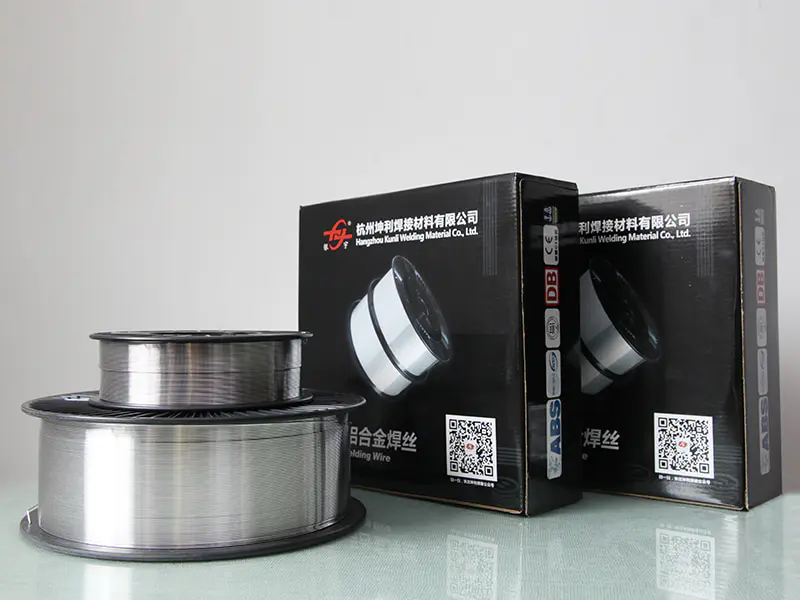
Fillers that include silicon lower the melting range of the weld pool and promote better flow. This suits them to applications where a consistent bead shape, lower risk of cracking, and effective filling of gaps take priority. Fillers incorporating magnesium yield stronger weld deposits and are selected when the joint must handle substantial loads, endure repeated stress, or perform in corrosive settings such as those involving saltwater or aggressive chemicals. These categories fill separate needs in the decision framework, and one does not serve as a direct replacement for the other in every situation.
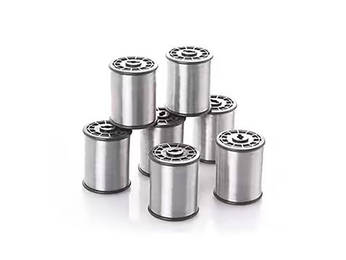
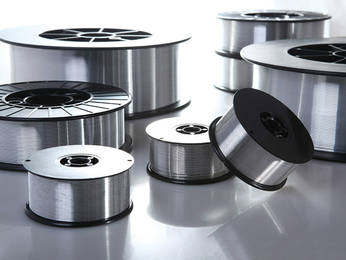
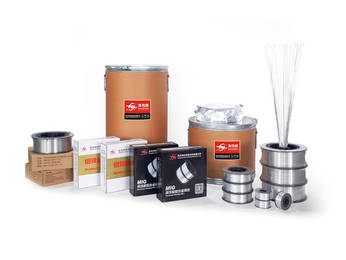
The Wire's delivery format also impacts its suitability for different fabrication methods. Continuous spools work well for automated or semi-automated Welding setups, while straight cut lengths enable more precise manual control in positions that demand careful placement. Diameter plays a direct role in managing heat; choosing a smaller diameter for thinner materials calls for careful adjustments to travel speed and other settings to prevent excessive penetration or overheating in the joint area.
Filler Alloy Comparison at a Glance
| Filler Group | Key Alloying Element | Weld Strength | Anodize Finish | Cracking Risk | Suited To |
|---|---|---|---|---|---|
| Silicon-bearing (ER4043) | Silicon | Moderate | Dark grey | Low | 6xxx alloys, cosmetic welds, general assembly |
| Silicon-bearing (ER4047) | Silicon | Moderate | Very dark grey | Low | Brazing, clad sheet, high-fluidity applications |
| Magnesium-bearing (ER5356) | Magnesium | Moderate to high | Grey to bronze | Low to moderate | 5xxx alloys, marine structures, trailer frames |
| Magnesium-bearing (ER5183) | Magnesium + Manganese | Moderate to high | Close to base metal | Low | Marine plate, shipbuilding, pressure vessels |
| Pure aluminum (ER1100) | Minimal alloying | Lower | Close match | Low | 1xxx alloys, electrical conductors, decorative uses |
Does Filler Chemistry Actually Change Mechanical Performance?
Yes, and the variation can prove meaningful based on the type of loading the joint will face. The filler incorporates into the weld pool, blending with the base metal to create a combined composition as it solidifies. The prevailing elements in that mixture govern attributes including tensile strength, ductility, fatigue endurance, and sensitivity to cracking from heat or applied forces.
Silicon-containing fillers result in weld metal that solidifies over a shorter temperature span, thereby limiting the opportunity for hot cracking to develop. This comes with a reduction in yield strength compared to magnesium-containing options. The difference holds importance for joints subject to considerable static or cyclic loads, but it may carry less weight for decorative welds destined to be smoothed and coated.
Magnesium-containing Aluminum Alloy Welding Wire presents its own distinct factors. Magnesium contributes to strengthening through solid solution effects and bolsters resistance to corrosion in challenging exposures. At the same time, these fillers tend to attract moisture during storage more readily, and specific pairings with heat-treatable base Alloys can heighten the possibility of stress corrosion cracking in severe conditions. Effective choices involve carefully considering these aspects instead of applying one filler type universally.
How Does Alloy Pairing Affect Cracking and Porosity?
Solidification cracking and porosity are defect types closely associated with filler chemistry during Aluminum Welding. A clear understanding of their causes supports choices grounded in material behavior rather than established routines.
Regarding hot cracking: Aluminum Alloys pass through a range of temperatures during solidification instead of freezing at one fixed point. This produces a semi-solid phase where shrinkage stresses can separate grain boundaries before full solidification. Silicon additions shorten this critical interval and generate a more fluid pool capable of filling emerging separations. For this reason, silicon-bearing fillers serve as the typical option when joining 6xxx series Alloys, which show particular vulnerability to solidification cracking. Pairing magnesium-bearing fillers with 6xxx base Alloys can result in a weld metal composition that sits in a zone of elevated cracking risk; steps such as preheating, thoughtful joint preparation, and controlled Welding speed offer mitigation but do not remove the concern entirely.
Regarding porosity: Aluminum maintains a stubborn oxide layer with a melting point well above that of the underlying metal. If the arc fails to break it adequately or if preparation does not remove it, oxide can contaminate the weld pool. Hydrogen acts as the chief cause of porosity, dissolving into the molten Aluminum and forming voids as it is expelled during freezing if escape paths close too soon. Maintaining Wire cleanliness, controlling storage to limit humidity exposure, and preparing surfaces thoroughly help restrict hydrogen entry; improper handling or damp conditions can introduce moisture that breaks down into hydrogen upon arc contact.
A Structured Path from Base Alloy to Wire Selection
Selecting the appropriate Aluminum Alloy Welding Wire extends beyond a quick reference; it involves a logical progression that begins with the base material and concludes with practical verification through test welds. This method offers fabricators and engineers a consistent approach.
- Determine the base Alloy series. The numbering system reveals the dominant Alloying elements: 1xxx indicates nearly pure Aluminum, 5xxx includes magnesium, and 6xxx combines magnesium and silicon in a heat-treatable form. Each series carries established filler recommendations tied to cracking behavior and compositional matching.
- Evaluate the service conditions. Will the joint encounter saltwater, chemical exposure, or higher temperatures? Does it require resistance to repeated loading? Will anodizing follow? These considerations help focus the range of suitable Wires right away.
- Review a compatibility reference. Charts from manufacturers align base Alloys with filler options, indicating preferred matches and workable alternatives based on metallurgical data and performance testing.
- Coordinate Wire with the Welding method. Particular diameters and compositions respond differently depending on the transfer characteristics in automated systems; a Wire that performs smoothly in robotic applications may require more skill for manual use in confined spaces.
- Conduct a test weld and assess results. In cases involving structural demands or safety implications, preparing a sample weld and examining it through visual inspection, bend tests, or additional nondestructive methods provides the essential validation.
Process Conditions That Interact With Filler Behavior
The Wire functions within the context of the overall Welding setup. Adjustments to process parameters determine how the filler's composition translates into the actual weld outcome. Two welders working with identical Wire and base Alloy can achieve noticeably different weld quality if shielding gas composition, travel speed, or heat input fail to align properly with the Wire characteristics and the joint configuration.
| Process Variable | Effect on Weld Quality | Guidance |
|---|---|---|
| Shielding Gas | Argon provides a stable arc and good fusion. Helium increases heat input and penetration for thick sections. | For general Aluminum Welding, pure argon is commonly used. Helium may be added when deeper penetration is needed. |
| Travel Speed | Slow speed increases heat input and HAZ width; excessive speed risks incomplete fusion. | Adjust speed to material thickness and wire size. Increase speed before lowering voltage to control heat. |
| Wire Feed Rate | Higher feed raises deposition rate and heat input; excessive feed may cause bead instability and porosity. | Set feed rate to achieve desired bead profile and confirm arc stability before production. |
| Preheat | Reduces thermal gradients and cooling rate; useful for thick or crack-sensitive alloys. | Apply only when necessary. Avoid overheating, especially in heat-treated alloys. |
| Interpass Temperature | Excessive interpass heat promotes grain growth and softening in heat-treatable alloys. | Control cooling between passes, particularly for 6xxx and heat-treated tempers. |
How Anodizing Changes the Wire Selection Equation
Anodizing develops a deliberate oxide coating on the Aluminum surface, which enhances corrosion protection and supports decorative finishes through coloring. The difficulty in anodized weldments arises because the weld deposit and the base metal respond differently during the process, often resulting in contrasting shades even when the weld appears uniform before treatment.
Silicon-bearing Wires typically yield darker weld zones after anodizing because of the way silicon-rich phases distribute in the solidified metal. In applications where the weld remains visible—such as architectural components or consumer products—this produces a noticeable dark line along the joint, regardless of the bead's initial appearance. For functional anodizing where visual uniformity is not a priority, this outcome may be tolerable.
Magnesium-bearing Wires generally produce deposits that anodize in a manner more similar to many 5xxx and 6xxx base Alloys. When anodized appearance is specified, selecting a magnesium-bearing Aluminum Alloy Welding Wire is a common approach to achieving consistent surface tone. In such cases, filler selection should include input from the finishing group rather than remaining solely with the Welding team.
Storage and Handling: Why Wire Condition Matters
Aluminum filler Wire responds more readily to environmental factors than steel Wire does. Upon exposure to air, Aluminum quickly develops a surface oxide layer, which continues to grow under conditions of humidity and fluctuating temperatures. Any moisture present on the wire releases hydrogen into the weld pool during arc initiation, and hydrogen is a known contributor to porosity in aluminum welds.
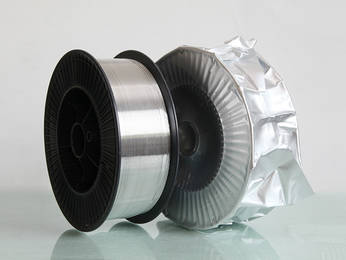
- Store spools and cut rods in their original sealed containers until needed for Welding. Avoid leaving opened spools uncovered on the work area between work periods.
- Keep storage spaces at consistent temperature and controlled low humidity levels. Variations in temperature promote condensation on the Wire surface.
- Use clean, dry gloves when handling cut-length rods. Oils from skin contact and trace moisture serve as sources of contamination that alter weld pool behavior.
- Discard Wire from packaging that has been torn or otherwise compromised. Oxidation that develops from extended exposure to ambient conditions cannot be adequately removed by surface cleaning.
- Examine partially consumed spools prior to continued use. Any visible discoloration or surface texture on the Wire signals oxide accumulation that can impair arc performance and reduce overall weld integrity.
Applications That Shape the Selection Decision
Marine and Offshore Fabrication
Components exposed to saltwater or spray face ongoing electrochemical action concentrated at weld locations. Magnesium-bearing fillers create weld deposits with improved resistance to this form of attack, which explains the widespread preference for 5xxx-series Wires in hull plating, deck elements, and marine structural framing. Selecting an incompatible filler can establish a galvanic couple at the joint interface, accelerating material loss at key areas where structural reliability is a primary concern.
Is 4xxx Filler the Right Choice for Trailer and Transport Frames?
Trailer and transport frame fabrication commonly involves joining 6061 or 6082 Alloys using fillet welds that experience bending, vibration, and occasional impact loads. Silicon-bearing fillers see frequent use in these applications because they decrease the likelihood of cracking when Welding heat-treatable Alloys and deliver smooth, visually appealing beads. In situations where sustained dynamic loading is a primary design consideration, certain specifications call for magnesium-bearing Wire to enhance fatigue resistance in the weld deposit, while accepting the need for stricter controls to manage cracking risk.
Precision and Pressure-Rated Assemblies
Pressure vessels, aerospace fittings, and precision structural elements typically include specified filler requirements linked to material certifications and qualified Welding procedures. In these settings, the Aluminum Alloy Welding Wire receives designation not during shop-floor decisions but through engineering documentation or Welding procedure specifications that undergo testing, review, and approval. Suppliers must furnish documentation that includes lot traceability, chemical composition reports, and mechanical property data to maintain the integrity of the qualification.
Procurement and Supply Chain Considerations
Procuring filler wire for ongoing production involves considerations beyond cost per unit weight alone. Classification standards permit a range of acceptable chemistries, and two batches that both conform to the standard can exhibit different behavior near the boundaries of their composition ranges. Partnering with a supplier that maintains tight control over lot-to-lot chemistry consistency—beyond basic compliance—helps minimize process variability without necessitating repeated procedure requalification.
- Order Wire by specifying both the Alloy designation and the relevant classification standard. Relying solely on the designation does not ensure traceability or verified testing.
- For critical work, require material test reports and certificates of conformance with every shipment. These documents should list measured chemical values rather than general statements of meeting requirements.
- Match spool sizes to anticipated usage rates. Large spools that remain partially used over long periods increase the chance of contamination and storage-related issues.
- In operations spanning multiple locations, adopt a single qualified supplier whenever feasible. Switching suppliers can introduce differences that necessitate revalidation of qualified Welding procedures.
How Market Conditions Are Shaping Filler Wire Availability
Global demand for Aluminum Alloy Welding Wire and related consumables has grown steadily alongside transportation electrification, renewable energy infrastructure build-out, and the broader push toward weight reduction in manufactured goods. As Aluminum content increases in vehicles, rail cars, and industrial equipment, the volume of joining work requiring a well-specified filler metal grows in parallel.
| Market Indicator | Current Context (Condensed) |
|---|---|
| Global welding consumables market | Large and mature market; aluminum filler demand is growing faster than the overall consumables category. |
| Growth trajectory | Steady growth driven primarily by transportation, shipbuilding, and infrastructure sectors. |
| Raw material sensitivity | Filler wire pricing is directly influenced by primary aluminum and magnesium costs; concentrated smelting supply leads to periodic price volatility. |
| Automation influence | Robotic and mechanized welding increases demand for tight diameter tolerances and stable chemistry; manual-grade tolerances are insufficient for high-speed automated systems. |
These developments carry real implications for procurement groups. In certain areas, delivery schedules for specialized Alloy batches have grown longer owing to restrictions in Wire drawing capabilities. Maintaining a reasonable inventory of approved Wire for important projects has turned into a widely adopted strategy for handling potential disruptions.
Standards, Testing, and Quality Assurance
Classification standards for Aluminum filler metals establish precise boundaries for chemical makeup, criteria for mechanical performance tests, and specifications for labeling. Any product marketed under a particular classification must fulfill every stipulation of that standard, with the supplier tasked with retaining proof of adherence.
- In structural Welding work, insist on filler Wire that adheres to an accepted classification standard and is accompanied by a certificate of conformance tied to the individual lot.
- Qualification of a Welding procedure calls for mechanical evaluation of the deposited weld metal, typically through tensile and bend tests. The exact lot of Wire employed in the qualification process needs to be noted and used consistently in follow-on production.
- Criteria for accepting non-destructive examination results come from the governing fabrication code or the customer's requirements. Visual checks and radiographic methods see the broadest application, whereas ultrasonic examination fits thicker components.
- Prior to any post-weld heat treatment, ensure the filler Alloy aligns with the intended thermal cycle. Certain filler compositions do not age in a way that complements the temper conditions found in heat-treatable base Alloys.
Frequently Asked Questions
What is an Aluminum filler Wire and how does it differ from steel Wire?
An Aluminum Alloy Welding Wire acts as the added material fed into the weld pool to join Aluminum base metals. In contrast to steel Wire, it requires close alignment with the particular base Alloy family to steer clear of cracking problems or corrosion mismatches, and it involves unique choices in shielding gas, storage conditions, and preparation steps for the workpiece.
What is the practical difference between silicon-bearing and magnesium-bearing Wires?
Silicon-bearing Wires promote smoother flow in the weld pool and lessen the chance of hot cracking, which makes them appropriate for 6xxx series Alloys along with welds focused on appearance or basic assembly. Magnesium-bearing Wires generate weld deposits of greater strength and enhanced resistance to corrosion, positioning them as the go-to for load-bearing joints and marine uses. The two families do not lend themselves to unrestricted substitution.
How do I select the right filler for 6061 base Alloy?
Silicon-bearing filler stands as the conventional pick for 6061, given that 6xxx Alloys tend toward hot cracking when joined using magnesium-bearing Wire under typical single-pass dilution levels. If added strength in the weld deposit becomes necessary and cracking can be addressed via joint configuration and Welding settings, magnesium-bearing Wire enters consideration, provided the procedure receives rigorous qualification.
Can 5xxx base Alloys be welded with 4xxx filler?
It can be done from a technical standpoint, yet the drawbacks deserve attention. Silicon-bearing fillers used with 5xxx base Alloys yield weld metal of lower strength than a corresponding magnesium-bearing filler would, and the pairing may elevate the potential for stress corrosion cracking in the demanding settings where 5xxx Alloys typically serve. For the majority of 5xxx work, a matched magnesium-bearing filler continues to offer the better outcome.
Which Filler Provides Uniform Results After Anodizing?
Magnesium-bearing fillers create deposits that take on an anodized finish more similar in appearance to adjacent 5xxx and 6xxx base materials. Silicon-bearing fillers commonly result in noticeably darker zones after anodizing. In cases involving architectural visibility or consumer products where the final look post-anodizing matters as a requirement, test the Wire selection by anodizing a trial piece ahead of committing to full-scale work.
How does filler chemistry affect porosity and hot cracking?
Adding silicon narrows the range of solidification temperatures and boosts fluidity in the weld pool, both contributing to reduced cracking tendency. Porosity arises chiefly from hydrogen originating in Wire moisture, base metal surface contaminants, or shielding gas with elevated humidity. Chemistry of the filler plays only an indirect role in porosity; primary prevention centers on thorough cleaning, suitable storage, and effective shielding gas control.
Does the Welding process affect which Wire I should choose?
Yes. The combination of Wire diameter and feeding behavior interacts with the transfer mode of the process to shape heat input and the resulting bead geometry. Wires that perform reliably in certain modes may show instability in others. Hand-fed techniques give the welder more room to vary Wire position and addition rate, although the chemistry decision stays set after Wire selection. Align the Wire with the process through qualification of the procedure.
Are there special handling requirements for Aluminum Wire?
Aluminum Wire forms oxide quickly in air and picks up moisture readily in humid conditions. Either factor can compromise weld results. Retain Wire in its sealed original packaging until the time of use, place it in storage with steady temperature and low humidity, and manage it with clean gloves. For environments with steady high output, look into enclosed storage units that regulate humidity for partially used spools.
What does a filler Wire classification standard actually guarantee?
A classification standard confirms the Wire stays within set chemical composition ranges and, in classifications based on deposited weld metal, satisfies baseline mechanical property thresholds. It offers no assurance of uniformity across lots within those ranges, nor does it confirm compatibility with a given Welding process. Responsibility for those elements falls to procedure qualification and the controls maintained by the fabricator.
How do I qualify a filler metal for a structural application?
The process entails preparing a test weld following the planned procedure parameters with the chosen Wire lot, then applying the mechanical and visual examinations called for by the relevant code. Record the outcomes in a Welding procedure qualification record. The specific Alloy and classification of Wire used in that qualification must appear in the associated Welding procedure specification.
How are market trends affecting filler Wire availability and cost?
Increased consumption stems from expanding needs in electrified transport, offshore renewable installations, and automated fabrication methods. Fluctuations occur periodically in the costs of primary Aluminum and magnesium inputs, while Wire drawing operations face capacity limits in various locations. Fabricators committed to extended production schedules more often keep reserve stock on hand to buffer against fluctuations in delivery schedules and pricing.
Where can I find a filler selection chart and how should I use it?
Manufacturers of Wire and organizations focused on Welding technology provide selection charts. These documents pair base Alloys with filler Alloys, marking recommended matches and noting workable alternatives. Begin with the chart for direction, then proceed to verify the selection by producing a prototype weld and conducting suitable evaluations prior to production release. The charts supply broad guidance; unique operating conditions may call for an adjusted choice.
Bringing It Together: A Path Forward for Fabricators and Engineers
The choice of Aluminum Alloy Welding Wire directly influences joint integrity, long-term durability, surface appearance after finishing, and overall reliability across an entire production run. Fabricators and engineers who approach this decision as a deliberate engineering step typically experience reduced need for rework, more uniform weld results, and stronger performance when components encounter real-world service demands or post-weld treatments. Moving forward rests on three straightforward commitments: align the Wire's composition with the specific base Alloy family and the expected operating environment instead of relying on one filler type for all work; incorporate consistent storage and handling routines into daily shop practices so the Wire reaches the arc in the condition intended by the Welding procedure; and partner with a supplier capable of delivering reliable lot-to-lot chemistry control along with full traceability to sustain qualification documentation and steady production performance.
Implementing these practices does not demand major overhauls, but it does call for intentional attention at each phase of fabrication. Kunli centers its approach on precisely this framework, providing Aluminum filler products backed by dependable metallurgical uniformity, detailed lot-specific documentation, and thorough technical guidance to support demanding fabrication needs—from the initial Alloy evaluation all the way through to final procedure approval and production.
NEXT:Why Choose Kunli TIG Welding for Precision and Control