English
 Deutsch



Quality Standards for Aluminum Welding Wire Manufacturing: What Buyers Must Know
Article Directory
- 1 The Real Cost of Wire That Only Looks Compliant
- 2 AWS A5.10: The Specification That Defines the Wire
- 3 AWS A5.01: The Procurement Standard Most Buyers Skip
- 4 ABS, DNV, CCS: Why Type Approvals Matter More Than a Brochure
- 5 Inside a Wire Mill: Where Consistent Quality Is Actually Made
- 6 Five Questions to Ask Before You Qualify a Supplier
The Real Cost of Wire That Only Looks Compliant
A spool of aluminum welding wire can pass inspection and still bring a production line to a stop. A batch of 1.2 mm ER5356 arrives with the right label and a certificate that lists the right chemistry. Within the first hour, the cast is too tight, the helix forces the wire against the liner, and the arc wanders. The weld cell starts producing porosity instead of parts.
Quality standards for aluminum welding wire manufacturing exist to prevent exactly this kind of failure. When they are applied properly, they control not only what the alloy contains, but also how the wire is drawn, cleaned, spooled, packaged, and documented. When they are treated as paperwork, every one of those variables becomes a risk.
The practical question for a buyer is not whether the wire is certified. It is which standards were applied during production, how consistently they were applied, and what documentation actually follows the spool to the shop floor. The true cost of a bad batch is rarely the spool price; it is the rework, the rejected parts, and the lost production time that arrive with it.
AWS A5.10: The Specification That Defines the Wire
The most widely referenced document for bare aluminum filler metals is AWS A5.10, Specification for Bare Aluminum and Aluminum-Alloy Welding Electrodes and Rods. It controls the manufacturing process, testing requirements, chemical composition, packaging, and identification of aluminum welding wire. A wire that does not meet A5.10 cannot honestly be sold as a weldable aluminum filler metal, regardless of price.
| Controlled parameter | What it governs | Where it is set |
|---|---|---|
| Chemical composition | Strength, corrosion resistance, crack sensitivity | Alloying and casting, verified by spectrometer analysis |
| Diameter and ovality | Current density and wire delivery | Drawing dies and in-line gauging |
| Cast and helix | Feed stability in MIG and robotic welding | Final spooling tension and packaging |
| Surface finish and cleanliness | Porosity, arc stability, contact tip life | Shaving, degreasing, and contamination controls |
| Packaging and labeling | Lot identity and storage life | Sealed packaging with heat and lot codes |
Chemistry Is the Floor, Not the Ceiling
Composition limits define what the alloy must contain. For ER5356, magnesium must stay in the range of about 4.5 to 5.5 percent. For ER4043, silicon is controlled to give good flow and crack resistance when welding 6xxx-series alloys. A mill that aims for the middle of the range delivers weld metal whose properties stay stable from lot to lot. A mill that drifts toward the edge of the specification produces wire that meets the paperwork but not the application.
For routine fabrication on 6xxx-series aluminum, most shops choose an ER4043 silicon aluminum welding wire because of its fluidity and its ability to reduce hot cracking in the weld pool. The alloy, though, only performs as well as the production controls behind the spool.
 ER4043 Aluminum Welding Wire Manufacturers,SuppliersAs China ER4043 Aluminum Welding Wire Manufacturers and OEM/ODM Suppliers, Hangzhou Kunli welding materials Co., Ltd. provide wholesale A...View Product →
Traceability Is a Quality Attribute
The lot code on a spool is not administrative detail. It links that spool to the actual chemistry test, the mechanical test, and the production records. If a joint fails in the field, traceability determines whether the problem can be isolated to one heat or dismissed as an operator issue. That is one reason welding wire quality directly impacts weld results, especially when the wire has been in storage for months before it reaches the feeder.
AWS A5.01: The Procurement Standard Most Buyers Skip
A5.10 defines what the wire must be. AWS A5.01, Procurement Guidelines for Consumables, defines how to buy it: what information belongs on the purchase order, when sampling and testing are required, how many samples are drawn per lot, and how to accept or reject delivery. Most buyers never see it, and that is where the risk enters.
If a purchase order only says "ER5356, 1.2 mm," the buyer has not actually specified a quality level. The supplier is free to ship wire from multiple heats, rerolled coils, or material without traceable test records. The consequences show up later as feed problems in robotic cells, inconsistent color match after anodizing, and occasional cracking that no one can explain.
Codes such as AWS D1.2, Structural Welding Code - Aluminum, assume that the filler metal itself was manufactured and verified under A5.10. If that foundation is weak, neither the procedure qualification nor the welder can compensate.
Serious suppliers respond to A5.01-style requirements without resistance. They provide mill test certificates, lot-level traceability, and a clear statement of the acceptance criteria used at final inspection. Reviewing the complete aluminum welding wire range from a manufacturer with in-house production gives you a documented path from chemistry to spool, rather than a broker's promise.
ABS, DNV, CCS: Why Type Approvals Matter More Than a Brochure
For shipyards, offshore fabricators, and safety-critical structural work, a chemistry certificate is not sufficient. Classification societies audit both the product and the production process. Approvals from ABS, DNV, and CCS are not issued for one batch; they apply to the manufacturer's process and are maintained through periodic audits and retesting.
| Approval | Scope | Typical sector |
|---|---|---|
| ABS | Marine materials and consumables | Shipbuilding, offshore structures |
| DNV | Materials and consumables approval | Marine, energy, heavy industry |
| CCS | Marine welding consumables | Vessel construction, marine engineering |
| CE | Conformity for regulated product requirements | Export to markets requiring CE marking |
What an Approval Actually Covers
Type approval is a continuing obligation. The manufacturer must keep the process stable, document changes, and welcome auditors back at regular intervals. If the line drifts, the approval is at risk. For that reason, an approval list is a stronger signal of manufacturing discipline than a single page of test results.
In saltwater and low-temperature service, 5xxx-series alloys dominate. An ER5356 aluminum welding wire remains the default choice for many marine fabricators because it combines good strength with dependable corrosion resistance in joints on 5xxx base materials.
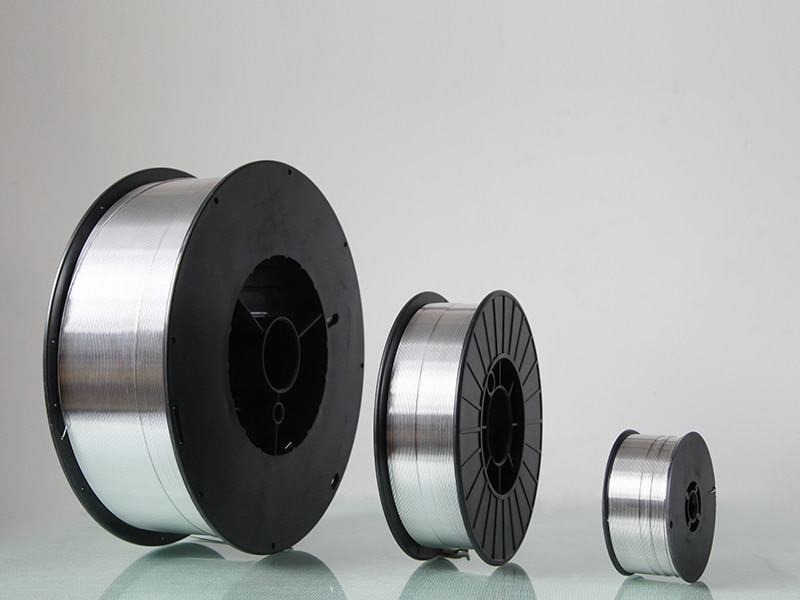 Aluminum Welding Wire ER5356 - Kunliwelding ManufacturerKunli is your go-to wholesaler for Aluminum Welding Wire ER5356, offering ideal corrosion resistance and strength. Suitable for marine, a...View Product →
Matching Alloy Choice to Approval Scope
An approved wire still has to match the parent metal and the service condition. For higher-strength structural joints on alloys such as 5083, the filler metal must deliver adequate as-welded strength and ductility. Alloy selection interacts with approval status: the best specification in the world does not help if the production line cannot hold the chemistry aim and surface finish requirements every shift.
Inside a Wire Mill: Where Consistent Quality Is Actually Made
Quality cannot be tested into a spool at the end of the line; it has to be built at every step. The production sequence for aluminum welding wire includes precise alloying, casting with oxide control, continuous rolling and drawing with controlled reduction, surface shaving to remove oxide, degreasing and cleaning, precision spooling with tension control, and sealed packaging with moisture protection.
The testing program matches these steps. Chemical analysis verifies the alloy aim. Tensile and bend tests check mechanical behavior. Diameter gauges confirm dimensional consistency. Cast and helix measurements predict feeding performance in MIG guns and robotic torches. Surface checks catch lubricant residue or oxide that causes porosity and arc instability. Most reputable mills run under ISO 9001, but an ISO certificate describes the management system; it does not by itself prove that the wire will feed correctly.
The difference between a reliable wire and a troublesome one is usually not the material grade. It is the discipline of holding the same aim point across thousands of metres of wire. A manufacturer with dedicated aluminum welding wire production lines, such as Hangzhou Kunli Welding Materials, builds the production schedule around those checkpoints rather than against them.
When the joint is load-bearing and the parent alloy is a 5xxx series plate, structural specifications often call for a wire with a wider strength margin. In that situation, an ER5183 aluminum welding wire gives designers the additional margin that some marine and structural applications require.
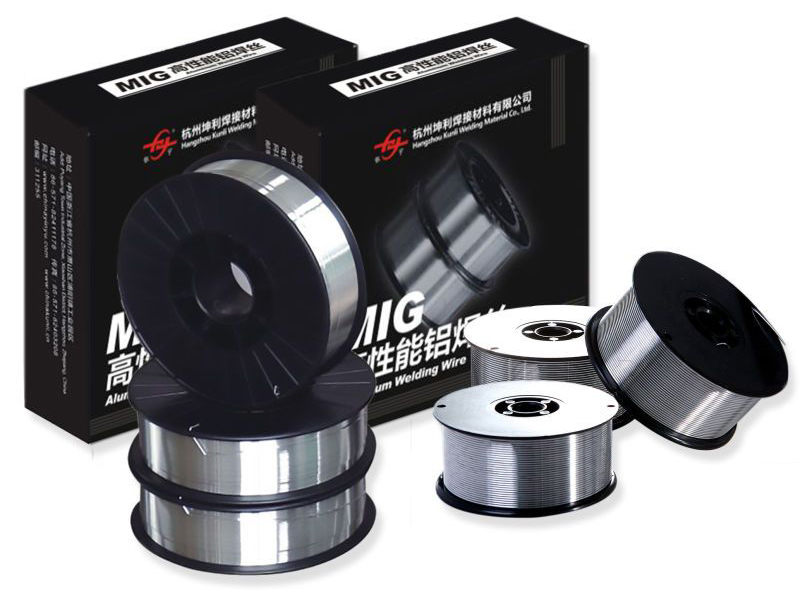 Aluminum Welding Wire ER5183 Manufacturers - Kunli SuppliersAluminum Welding Wire ER5183 supplied by Kunli manufacturer, suitable for automotive, and industrial welding with great strength and corr...View Product →
Five Questions to Ask Before You Qualify a Supplier
Standard compliance is the entry ticket. The following questions separate suppliers who manage quality from those who merely claim it.
- Which product specification does the wire meet, and can you state the edition, such as AWS A5.10 or EN ISO 18273?
- Is a mill test certificate available for each heat and lot, with the measured values that correspond to the spool in question?
- What are your acceptance limits for cast, helix, and diameter, and what are the current measured values?
- Which classification approvals do you maintain, and when was the last audit?
- How is the wire surface protected during drawing and packaging, and what is the recommended storage life?
Quality standards for aluminum welding wire manufacturing define the minimum. Consistent manufacturing turns that minimum into reliable welds. When the wire behaves the same way on the first spool and the hundredth, the quality system is doing its job, and that is the only standard that matters on the shop floor.
NEXT:How Do Aluminum Welding Wire Manufacturers Control Wire Quality