English
  Deutsch


How Does the Low Melting Point of ER4047 Welding Wire Minimize Distortion in Thin-Gauge Aluminum Components?
Article Directory
- 1 1. Thermal Dynamics: Eutectic Composition and Melting Range
- 2 2. Fluidity and Capillary Action in Thin-Gauge Joints
- 3 3. Reducing the Heat Affected Zone (HAZ)
- 4 4. Crack Sensitivity and High Silicon Benefits
- 5 5. Frequently Asked Questions (FAQ)
- 5.1 1. Is er4047 welding wire suitable for structural load-bearing welds?
- 5.2 2. Can I use ER4047 with standard TIG welding equipment?
- 5.3 3. What is the difference between er4047 vs er4043 aluminum welding wire?
- 5.4 4. Does ER4047 require special storage conditions?
- 5.5 5. Why is ER4047 often called a "brazing" alloy?
- 6 Industry References
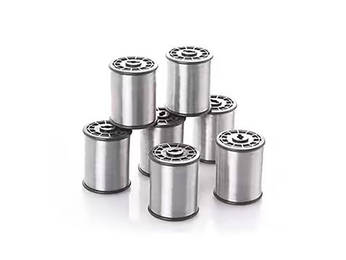
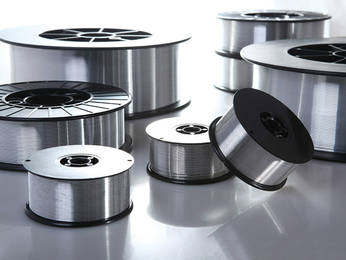
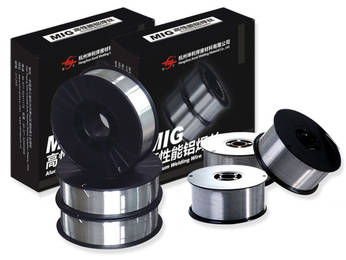
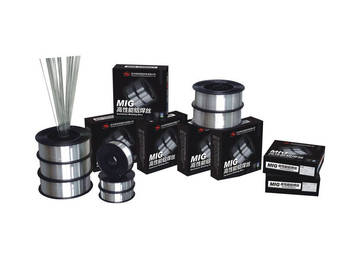
Precision welding of thin-gauge aluminum requires a delicate balance between achieving structural fusion and managing thermal expansion. The er4047 welding wire, a 12% silicon aluminum alloy, is specifically engineered to address the challenges of heat-sensitive components. Unlike standard filler metals, the eutectic composition of this alloy provides a significantly lower melting range. Hangzhou Kunli Welding Materials Co., Ltd., a high-technology enterprise with over 20 years of experience, specializes in the R&D and manufacturing of these high-performance aluminum alloy welding wires. With international certifications such as ABS, DNV, and CE, our production process ensures that the er4047 welding wire maintains a stable chemistry to successfully replace imported products in demanding sectors like aerospace and rail transport.
1. Thermal Dynamics: Eutectic Composition and Melting Range
The core technical advantage of er4047 welding wire lies in its 12% silicon content, which brings the alloy close to its eutectic point. This specific chemistry results in a narrow "mushy zone" and a lower liquidus temperature compared to 5% silicon alloys like ER4043. When a welder uses a low melting point aluminum filler rod, the arc energy required to transition the wire from solid to liquid is reduced. This allows for faster travel speeds and lower current settings, which are essential for preventing burn-through in thin aluminum. In comparison to ER4043, ER4047 allows the weld pool to solidify rapidly, locking the components in place before significant thermal expansion can occur.
Comparison: Thermal Properties of Common Aluminum Fillers
The reduction in the melting temperature directly correlates to the total heat input delivered to the Heat Affected Zone (HAZ), which is the primary driver of component warping.
| Property | ER4043 (5% Si) | ER4047 Welding Wire (12% Si) |
| Melting Range | 1065°F - 1170°F | 1065°F - 1085°F |
| Fluidity | Moderate | Excellent (High silicon content) |
| Heat Input Required | Higher | Lower (Energy efficient) |
2. Fluidity and Capillary Action in Thin-Gauge Joints
Thin-gauge components often utilize lap joints or tight-fit butt joints where accessibility is limited. The er4047 welding wire is renowned for its exceptional fluidity. High silicon content reduces surface tension in the molten state, allowing the filler metal to flow smoothly into tight tolerances via capillary action. This is a critical factor when considering er4047 vs er4043 aluminum welding wire for brazing or thin-wall applications. By achieving a flat, clean bead profile with minimal reinforcement, the residual stress concentrations that typically lead to "oil-canning" or twisting in thin sheets are significantly mitigated.
Comparison: Weld Bead Morphologies
A more fluid filler metal produces a smoother transition between the weld and the base metal, reducing the mechanical stresses associated with high-profile beads.
| Metric | General Purpose Fillers | High Silicon ER4047 |
| Wetting Angle | Steeper (Increased Stress) | Shallower (Reduced Stress) |
| Capillary Rise | Limited | Superior (Ideal for tight joints) |
| Post-Weld Shrinkage | Higher due to heat volume | Lower due to localized fusion |
3. Reducing the Heat Affected Zone (HAZ)
The Heat Affected Zone is where the majority of metallurgical distortion originates. Using er4047 aluminum MIG welding wire enables the operator to utilize pulsed-MIG or precision TIG techniques that concentrate energy. Because the er4047 welding wire melts at a lower temperature than the base 6xxx or 5xxx series aluminum, the base metal reaches a plastic state for a shorter duration. This minimizes the "thermal footprint" of the weld. Hangzhou Kunli collaborates with institutes like the Beijing Nonferrous Metals Research Institute to ensure our wire provides a stable production process, allowing users to achieve "zero defect" results even on materials thinner than 1.5mm.
4. Crack Sensitivity and High Silicon Benefits
Silicon acts as a powerful deoxidizer and helps reduce the coefficient of thermal expansion during the solidification phase. ER4047 welding wire applications often include heat exchangers and radiators where leak-tightness is non-negotiable. The high silicon level effectively moves the weld chemistry out of the "short-cracking" range, providing a robust solution for reducing weld cracking in aluminum. When combined with the low melting point, the result is a weldment that is not only dimensionally accurate but also structurally sound and free of internal micro-fissures.
Key Technical Advantages of Kunli ER4047:
- Reduced Distortion: Lower heat input preserves the geometry of thin-gauge parts.
- International Certification: Successfully certified by DB, CE, ABS, DNV, and CCS.
- Clean Surface Finish: Advanced manufacturing equipment ensures an ultra-clean wire surface for arc stability.
- Expert Collaboration: Backed by research from Central South University and Shanghai Cable Research Institute.
5. Frequently Asked Questions (FAQ)
1. Is er4047 welding wire suitable for structural load-bearing welds?
While ER4047 has excellent fluidity and low distortion, it is often preferred for leak-tightness and brazing. For heavy structural loads, the ductility of the specific base metal and filler combination should be analyzed, though it is widely used in automotive framing.
2. Can I use ER4047 with standard TIG welding equipment?
Yes. ER4047 TIG welding rod is a standard choice for precision repair and thin-gauge assembly due to its easy-to-control puddle and low melting point.
3. What is the difference between er4047 vs er4043 aluminum welding wire?
The main difference is the silicon content. ER4047 contains 12% Si, making it more fluid and lower-melting than the 5% Si found in ER4043, which is better for minimizing warping.
4. Does ER4047 require special storage conditions?
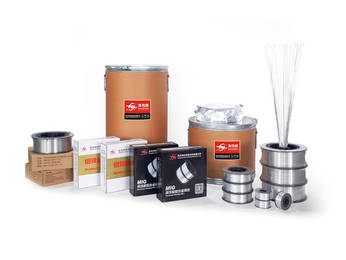
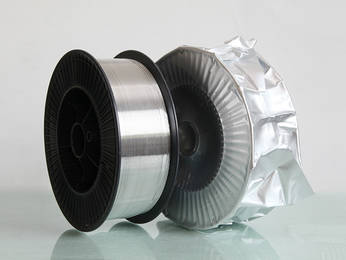
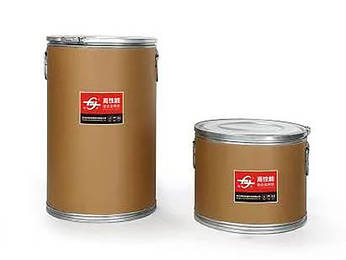
Like all aluminum alloys, it should be kept in a dry, temperature-controlled environment to prevent oxidation. Hangzhou Kunli's high-quality packaging helps protect the wire during international shipping to over 30 countries.
5. Why is ER4047 often called a "brazing" alloy?
Due to its low melting point (which is below the liquidus of many base aluminum alloys), it is frequently used in brazing applications where the base metal is not fully melted, further reducing distortion.
Industry References
- American Welding Society (AWS) A5.10: Specification for Bare Aluminum and Aluminum-Alloy Welding Electrodes and Rods.
- International Organization for Standardization (ISO) 18273: Welding consumables — Wire electrodes, wires and rods for welding of aluminum and aluminum alloys.
- "Thermal Analysis of Eutectic Aluminum-Silicon Alloys," Journal of Materials Processing Technology (2025).
- Hangzhou Kunli Welding Materials Internal Quality Management System and Certification Manual (2026).
NEXT:Aluminum Welding Wire Guide for MIG and TIG