English
  Deutsch


Why is ER4047 Welding Wire the Preferred Choice for Leakage-Free Joints in Automotive Heat Exchangers?
Article Directory
- 1 Metallurgical Composition: The Power of Silicon
- 2 High Fluidity and Capillary Action in Thin-Wall Structures
- 3 Thermal Stability and Corrosion Resistance
- 4 Conclusion: Engineering Leak-Free Excellence
- 5 Metallurgical Evolution: The Impact of Silicon Concentration
- 6 Frequently Asked Questions (FAQ)
- 7 Industry References
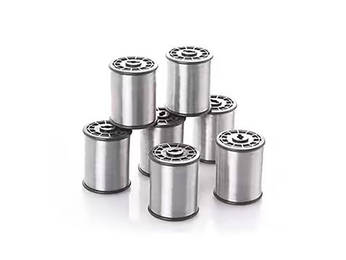
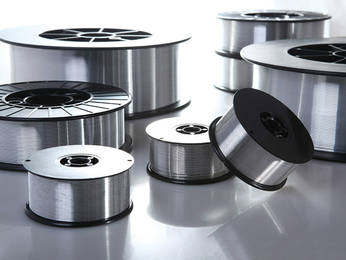
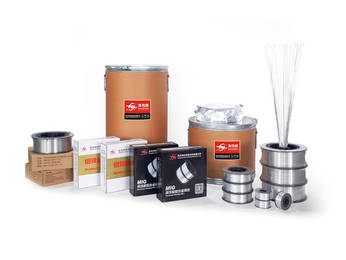
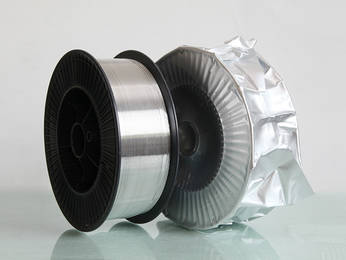
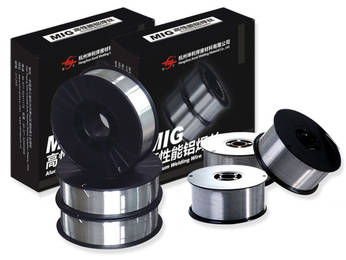
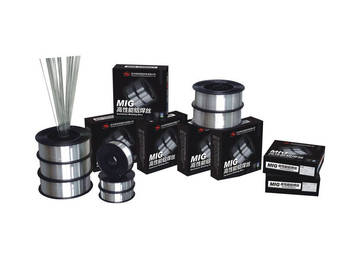
In the high-precision manufacturing of automotive heat exchangers—such as radiators, condensers, and evaporators—the integrity of every joint is non-negotiable. Leakage in these components leads to system failure and costly recalls. ER4047 welding wire has emerged as the definitive solution for these applications due to its unique metallurgical properties. Hangzhou Kunli Welding Materials Co., Ltd., a high-technology enterprise with over 20 years of experience in Xiaoshan District, Hangzhou, specializes in high-performance aluminum alloy manufacturing. Our international-grade production lines deliver ER4047 welding wire that meets the rigorous standards of global leaders like China CRRC and Maersk, successfully replacing imported materials with domestic excellence.
Metallurgical Composition: The Power of Silicon
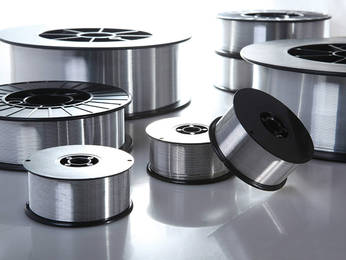
The primary differentiator of ER4047 welding wire is its high silicon content (approximately 12%). This specific aluminum silicon welding wire for brazing is engineered to lower the melting point and narrow the solidification range. Unlike ER4043, which contains only 5% silicon, ER4047 approaches the eutectic point of the aluminum-silicon alloy system. This results in a material that transitions rapidly from liquid to solid, significantly reducing the "mushy zone" where shrinkage cracks typically form. For engineers, this means a low melting point aluminum welding wire that ensures hermetic seals in thin-walled automotive tubes.
| Feature | ER4043 (5% Si) | ER4047 (12% Si) |
| Melting Range | Approx. 573°C - 632°C | Approx. 577°C - 582°C (Eutectic) |
| Fluidity | Moderate | Excellent / High Fluidity |
| Crack Sensitivity | Higher in narrow joints | Extremely Low |
High Fluidity and Capillary Action in Thin-Wall Structures
Automotive heat exchangers consist of intricate fins and tubes with wall thicknesses often below 1.0mm. To join these components without burn-through, a high fluidity aluminum welding wire is essential. ER4047 exhibits exceptional "wetting" characteristics, allowing the molten metal to flow deeply into tight capillaries. While standard alloys might struggle to penetrate complex joints, ER4047 aluminum alloy wire for radiators creates smooth, concave fillets that distribute stress evenly. This high-flow capability is a primary reason why ER4047 welding wire is favored for automated brazing and TIG/MIG welding in mass production environments.
Comparison of Joint Penetration
The superior wetting of ER4047 provides a cleaner aesthetic and a more structurally sound bond compared to general-purpose aluminum fillers.
| Joint Metric | Standard Aluminum Fillers | ER4047 Brazing Wire |
| Capillary Rise | Limited; requires larger gaps. | Deep; ideal for tight tolerances. |
| Fillet Appearance | Often convex or irregular. | Smooth, concave, and uniform. |
| Post-Weld Cleanup | Moderate due to spatter/soot. | Minimal; very clean finish. |
Thermal Stability and Corrosion Resistance
Automotive components operate under constant thermal cycling and exposure to road salts. ER4047 welding wire offers excellent corrosion resistance and maintains its structural integrity across a wide temperature spectrum. At Hangzhou Kunli, our aluminum alloy wire for automotive components undergoes strict quality control to ensure low impurity levels (such as Iron and Copper), which are critical for preventing galvanic corrosion in heat exchanger cores. By collaborating with institutes like the Beijing Nonferrous Metals Research Institute, we have perfected a production process that ensures our wire performs as a high performance ER4047 filler metal in the most demanding environments.
- Certifications: Our wire is certified by DB, CE, ABS, DNV, and CCS, ensuring global compliance.
- Capacity: With over 200MT monthly capacity, we supply 50% of our products to over 30 countries including the USA, Mexico, and Japan.
- Purity: Advanced manufacturing equipment removes surface oxides and hydrogen, eliminating porosity in the final weld.
Conclusion: Engineering Leak-Free Excellence
The transition to ER4047 welding wire in the automotive sector is driven by the need for efficiency, reliability, and precision. Its eutectic-like behavior and high fluidity make it the optimal choice for thin-walled heat exchangers. Hangzhou Kunli Welding Materials Co., Ltd. remains committed to breaking the status quo of imported dependency by providing world-class aluminum welding solutions that empower global automotive manufacturers to achieve leak-free excellence.
Metallurgical Evolution: The Impact of Silicon Concentration
Both alloys belong to the 4xxx series aluminum-silicon group, but the difference in silicon weight percentage dictates the "fluidity-to-ductility" ratio. As a qualified supplier for CRRC and Maersk, Kunli produces ER4047 welding wire with 12% silicon to achieve near-eutectic performance, whereas ER4043 (5% Si) is a general-purpose filler for thicker sections.
1. Solidification Dynamics and Crack Sensitivity
The "mushy zone"—the temperature range between liquidus and solidus—is the primary cause of solidification cracking. ER4047 welding wire has a significantly narrower melting range than ER4043. This rapid solidification is essential for aluminum silicon welding wire for brazing, as it prevents the "hot shortness" often seen in complex automotive joints under high thermal stress.
| Specification | ER4043 (AlSi5) | ER4047 (AlSi12) |
| Silicon Content (%) | 4.5% - 6.0% | 11.0% - 13.0% |
| Solidification Range | Approx. 59°C (Wide) | Approx. 5°C (Ultra-Narrow) |
| Leak-Tightness | Good | Superior (Eutectic Flow) |
2. Fluidity and Capillary Wetting
In high fluidity aluminum welding wire applications, such as joining thin fins to radiator tubes, the filler metal must travel into tight gaps. ER4047 behaves almost like water when molten, whereas ER4043 is more viscous. This allows ER4047 aluminum alloy wire for radiators to create the ultra-thin, hermetic seals required for modern high-pressure cooling systems.
[Image comparing the wetting angle and capillary rise of ER4043 vs ER4047 on an aluminum substrate]
- ER4043: Preferred for structural welds where some ductility is required; however, it requires wider joint clearances.
- ER4047: The industry standard for aluminum alloy wire for automotive components that require high-speed automated brazing or oven brazing (CAB).
- Joint Design: ER4047 allows for a significant reduction in joint gap size, saving material weight and increasing heat transfer efficiency.
3. Mechanical Properties and Post-Weld Performance
While ER4047 welding wire is superior for leak-free performance, it is inherently more brittle than ER4043 due to the higher silicon volume. Engineers must balance the need for a low melting point aluminum welding wire with the vibration-resistance requirements of the vehicle's engine bay.
| Mechanical Metric | ER4043 Joint | ER4047 Joint |
| Typical Tensile Strength | 160 - 180 MPa | 170 - 190 MPa |
| Elongation/Ductility | 8% - 15% (Higher) | 2% - 5% (Lower/Brittle) |
| Corrosion Resistance | Excellent | Excellent (Kunli High-Purity Wire) |
4. Manufacturing Precision at Kunli
At Hangzhou Kunli Welding Materials Co., Ltd., we utilize international advanced manufacturing equipment to ensure our high performance ER4047 filler metal is free of surface contaminants. With a monthly capacity of 200MT and 50% export volume, we provide stable production processes that allow our ER4047 wire to successfully replace expensive imported products in the automotive supply chain.
Frequently Asked Questions (FAQ)
- Q1: Can ER4047 be used for structural aluminum welding?
A: While ER4047 is excellent for leak-tightness and brazing, it is generally not recommended for high-stress structural applications compared to 5xxx series alloys due to lower shear strength. - Q2: Why is ER4047 better than ER4043 for thin materials?
A: Because ER4047 is a low melting point aluminum welding wire with a very narrow solidification range, it minimizes the heat input required, preventing burn-through on thin-wall tubes. - Q3: Does ER4047 require specialized flux?
A: For torch or furnace brazing, a non-corrosive flux is typically used with aluminum silicon welding wire for brazing to remove surface oxides and promote wetting. - Q4: Is ER4047 suitable for anodizing?
A: Aluminum-silicon alloys like ER4047 will turn dark grey after anodizing. If color matching is required, 5xxx series wires are usually preferred. - Q5: How does Kunli ensure the quality of its ER4047 wire?
A: We utilize international advanced manufacturing and complete testing equipment, coupled with over 20 years of expertise and a strict ISO-compliant quality control system.
Industry References
- AWS A5.10: Specification for Bare Aluminum and Aluminum-Alloy Welding Electrodes and Rods.
- International Aluminum Institute (IAI): Metallurgy of Aluminum-Silicon Eutectic Systems.
- ISO 18273: Welding consumables — Wire electrodes, wires and rods for welding of aluminum and aluminum alloys.
- Journal of Materials Processing Technology: Fluidity and Wetting Characteristics of Al-Si Braze Alloys.
NEXT:Does Using ER5183 Welding Wire Significantly Improve the Tensile Strength of Joints in Heavy-Duty Structural Welding?