English
  Deutsch


ER4047 Aluminum MIG Welding Wire: Complete Guide
Article Directory
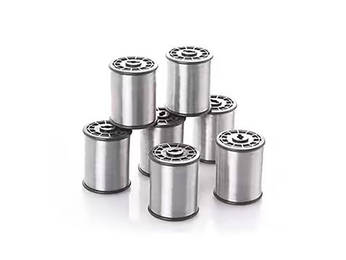
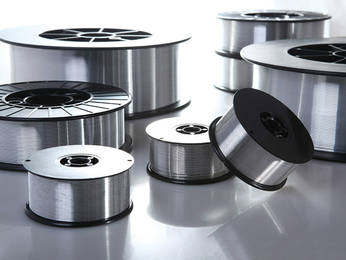
ER4047 aluminum MIG welding wire is a high-silicon filler alloy engineered for maximum fluidity, crack resistance, and clean bead appearance on aluminum base metals. With a silicon content of 11–13% — nearly double that of ER4043 — it delivers superior results on automotive castings, heat exchangers, and any joint where distortion control and leak-tight integrity are non-negotiable.
What Is ER4047 Wire Used For?
ER4047 aluminum MIG welding wire is the specified filler alloy for applications where hot-cracking resistance and low post-weld distortion are the primary engineering requirements. Its elevated silicon content produces a weld puddle with exceptional fluidity, allowing it to flow into tight joints and fill porosity-prone geometries that challenge lower-silicon alloys.
ER4043 vs ER4047: Side-by-Side Differences
Both ER4043 and ER4047 aluminum MIG welding wire are 4xxx-series silicon alloys, but their properties diverge significantly enough to make alloy selection a critical engineering decision rather than a preference.
- Silicon: 4.5–6.0%
- Solidus: 574°C / Liquidus: 632°C
- Wider freezing range — more fluid control
- Good general-purpose performance
- Fully anodizable — light gray finish
- Lower cost per kilogram
- Moderate crack resistance
- Higher elongation at break (~8%)
- Silicon: 11.0–13.0%
- Solidus: 577°C / Liquidus: 613°C
- Narrower freezing range — less distortion
- Preferred for castings and thin sections
- Poor anodize response — dark gray or black
- Slightly higher cost
- Superior hot-crack resistance
- Lower elongation (~3–5%)
The decisive advantage of ER4047 aluminum MIG welding wire over ER4043 is its narrower solidification range — just 36°C versus 58°C. This tighter range reduces the time the weld metal spends in a partially liquid, crack-susceptible state, which is why automotive and casting repair specifications overwhelmingly mandate ER4047 over ER4043.
Does ER4047 Require Shielding Gas?
Yes. ER4047 aluminum MIG welding wire requires an external shielding gas for all MIG (GMAW) and TIG (GTAW) processes. The standard specification is 100% pure argon at a flow rate of 15–25 CFH (7–12 L/min) depending on joint geometry and torch travel speed.
Argon provides the cathodic cleaning action necessary to break up the aluminum oxide layer (Al2O3) that reforms almost instantly on the base metal surface. Without it, oxide inclusions contaminate the weld pool and produce porous, structurally compromised beads. There is no flux-core variant of ER4047 for self-shielded operation.
Is ER4047 Aluminum Wire Anodizable?
ER4047 weld deposits have very poor anodizing response and are not recommended for applications requiring a uniform decorative or protective anodized finish. The high silicon content (11–13%) causes the weld zone to absorb significantly more dye than the surrounding base metal during anodizing, resulting in a dark gray to near-black appearance that contrasts sharply with the anodized aluminum substrate.
For anodized assemblies — architectural extrusions, consumer electronics enclosures, or decorative panels — ER4043 produces a light gray anodized weld zone that is more cosmetically acceptable, though still not a perfect color match to the base metal. If color-match anodizing is a firm requirement, ER5356 or alloy-matched filler selection should be evaluated with the anodizing supplier before fabrication begins.
ER4047 Welding Wire Melting Point
ER4047 aluminum MIG welding wire has a solidus temperature of 577°C (1,071°F) and a liquidus temperature of 613°C (1,135°F). This gives it a narrow melting range of just 36°C — the key physical property that underpins its superior hot-crack resistance.
In practical welding terms, the narrow melting range means the weld pool transitions rapidly from fully liquid to fully solid. Less time in the partially solidified "mushy zone" means less opportunity for solidification cracking to initiate at grain boundaries under thermal contraction stress — a critical property when welding highly restrained castings or dissimilar aluminum joints.
| Property | ER4047 | ER4043 | ER5356 |
| Solidus (°C) | 577 | 574 | 570 |
| Liquidus (°C) | 613 | 632 | 635 |
| Melting range (°C) | 36 | 58 | 65 |
| Tensile strength (MPa) | 165–185 | 145–165 | 260–290 |
| Silicon content (%) | 11–13 | 4.5–6 | 0.25 max |
Frequently Asked Questions
Can ER4047 be used to weld 6061 aluminum?
Yes. ER4047 is one of the preferred filler alloys for welding 6061-T6 aluminum, particularly where hot-crack sensitivity is a concern. The high silicon content compensates for the crack-susceptible 6061 base metal chemistry. Post-weld heat treatment (T6) can recover a significant portion of the base metal strength lost in the heat-affected zone.
What wire diameter should I use for MIG welding thin aluminum sheet?
For aluminum sheet between 1.5mm and 3mm, a 0.9mm (0.035 in) diameter ER4047 wire is the standard selection. For sections above 4mm, 1.2mm (0.047 in) wire delivers better deposition rates without the feeding instability that affects small-diameter wire at high amperages. Always use a Teflon or nylon liner in the MIG gun to prevent aluminum wire shaving and feeding jams.
Does ER4047 work with a spool gun?
Yes — and a spool gun is actually the recommended delivery method for ER4047 aluminum MIG welding wire in any MIG setup. Aluminum wire is soft and prone to birdnesting in push-only wire feeders with long cable assemblies. A spool gun mounts the wire spool directly at the torch, eliminating the feed path where kinking and shaving occur.
Is ER4047 suitable for welding aluminum to copper?
No. ER4047 is not suitable for aluminum-to-copper dissimilar metal joints. The high silicon content does not address the intermetallic compound formation (CuAl2) that makes aluminum-copper fusion welds inherently brittle. Dissimilar aluminum-to-copper joining requires friction welding, explosion welding, or specially engineered transition inserts rather than conventional filler alloys.
NEXT:ER5154 Al-Mg Alloy Wire: Strength, Uses & Selection Guide