English
  Deutsch


ER5154 Al-Mg Alloy Wire: Strength, Uses & Selection Guide
Article Directory
Among aluminium welding consumables, ER5154 Al-Mg alloy wire occupies a precisely defined performance window — stronger than ER4043 silicon-base fillers, more corrosion-resistant than ER5052, and formulated specifically for welding medium-strength aluminium-magnesium base metals in marine, pressure vessel, and structural fabrication environments. Getting the specification right requires understanding where ER5154 fits in the AWS A5.10 filler classification system, what mechanical properties the deposited weld metal delivers, how to match wire diameter and process parameters to the application, and which environmental conditions call for ER5154 over competing alloy designations.
Which Applications Suit ER5154 Wire?
ER5154 wire is formulated for welding 5xxx-series aluminium base metals — primarily 5154, 5254, 5454, and 5056 alloys — where the deposited weld metal must match or exceed the corrosion resistance and mechanical properties of the base material. Its moderate magnesium content of 3.1–3.9% positions it between the low-Mg ER5052 and the high-Mg ER5183 in the aluminium filler selection matrix.
Boat hulls, deck structures, fuel tanks, and gangways fabricated from 5xxx-series aluminium plate. ER5154 is preferred over ER4043 in marine environments because silicon-base fillers accelerate galvanic corrosion when immersed in saltwater. The weld deposit's corrosion potential closely matches 5154 and 5454 base metal, preventing preferential weld-zone attack in seawater immersion.
Storage tanks for chemicals, LPG, cryogenic fluids, and process gases fabricated from 5154-H32 or 5454-H34 plate. AWS D1.2 and ASME Section IX qualify ER5154 for pressure-retaining welds in these applications. The alloy's low crack sensitivity and full penetration capability on material thicknesses from 3 mm to 50 mm make it a standard filler specification in pressure vessel fabrication codes.
Truck bodies, tanker trailers, rail car bodies, and bus structures fabricated from 5xxx-series extrusions and plate. ER5154 delivers adequate as-welded strength for non-heat-treated structural joints while maintaining the ductility necessary to absorb road-load fatigue cycles — a combination that ER5356 high-Mg fillers can compromise through elevated residual stress in thin-section joints.
Curtain wall framing, bridge decking, and structural members in coastal or industrial atmospheric environments. ER5154 is specified where the finished weld must resist industrial pollutants, acid rain, and coastal salt deposition without protective coating. Joint efficiency exceeds 85% of base metal tensile strength in T-joint and butt-joint configurations on 5154 and 5454 base metals.
- 5154, 5254 — direct match alloy series
- 5454, 5056 — AWS A5.10 qualified combination
- 5052 — acceptable with reduced joint efficiency
- 3003, 3004 — limited structural application
- 6061, 6063 — use ER4043 or ER5356 instead
- 7xxx series — high-Mg fillers cause hot cracking
- 2xxx series — filler incompatibility with Cu-bearing alloys
- 1xxx pure aluminium — strength mismatch
What Is ER5154 Welding Wire Strength?
Mechanical properties of ER5154 deposited weld metal are governed by AWS A5.10 / ISO 18273 specification minimums. The figures below represent all-weld-metal test results — properties measured on weld deposits made under controlled laboratory conditions, which serve as the baseline for engineering calculations.
| Property | ER5154 (As-Welded) | ER5052 (As-Welded) | ER5356 (As-Welded) | ER4043 (As-Welded) |
| Tensile Strength | 240 MPa min | 175 MPa min | 260 MPa min | 145 MPa min |
| Yield Strength (0.2%) | 130 – 150 MPa | 95 – 110 MPa | 145 – 165 MPa | 70 – 85 MPa |
| Elongation | 17 – 22% | 17 – 22% | 17 – 20% | 9 – 12% |
| Hardness (HB) | 60 – 68 | 45 – 55 | 65 – 75 | 35 – 45 |
| Shear Strength | 140 – 155 MPa | 100 – 115 MPa | 155 – 170 MPa | 80 – 95 MPa |
ER5154 is a non-heat-treatable filler — post-weld heat treatment (PWHT) does not increase weld metal strength and may reduce corrosion resistance by precipitating beta-phase (Al3Mg2) at grain boundaries above 65°C. For applications requiring post-weld heat treatment, consult the applicable fabrication code before specifying ER5154 over alternative fillers in the 5xxx or 4xxx series.
Which ER5154 Wire Offers the Best Corrosion Resistance?
ER5154 Al-Mg alloy wire derives its corrosion resistance from its magnesium content and the electrochemical compatibility of its weld deposit with 5xxx-series base metals. Three distinct corrosion mechanisms are relevant to specifying ER5154 in service environments.
ER5154 weld deposits have a corrosion potential of approximately -760 mV (SCE) in 3.5% NaCl solution — closely matching 5154 and 5454 base metal at -740 to -760 mV. This potential match prevents galvanic couple formation between weld zone and HAZ, which is the dominant corrosion mechanism in welded aluminium structures in seawater. Comparative immersion tests show ER5154 deposits lose less than 0.05 mm/year in continuously immersed seawater environments at ambient temperature.
Aluminium-magnesium alloys with Mg above 3% can sensitise — precipitating corrosion-susceptible beta phase at grain boundaries — when held at temperatures between 65°C and 175°C for extended periods. ER5154, at 3.1–3.9% Mg, sits at the lower boundary of this sensitisation risk range. For applications involving sustained elevated-temperature service, ER5052 (2.2–2.8% Mg) provides a safer alternative; for ambient-temperature marine and chemical service, ER5154 presents no sensitisation risk within its rated operating envelope.
In atmospheric exposure testing per ASTM B117 salt spray (500-hour cycle), ER5154 weld deposits on 5154 base metal show no pitting initiation after 500 hours. Industrial atmosphere exposure data from coastal and petrochemical environments shows surface oxidation rates of less than 0.02 mm/year without protective coating. This atmospheric performance exceeds ER4043 deposits by a factor of three to four in chloride-laden industrial atmospheres.
How to Choose ER5154 Alloy Wire
Selecting the correct ER5154 wire specification involves matching five parameters to the welding process, base metal condition, and service environment before ordering.
MIG (GMAW) applications use 0.9 mm wire for material thicknesses up to 4 mm, 1.0–1.2 mm for 4–12 mm, and 1.6 mm for material above 12 mm or high-deposition-rate production welding. TIG (GTAW) rod diameters of 1.6 mm, 2.4 mm, and 3.2 mm correspond to base metal thicknesses of 1.5–4 mm, 3–8 mm, and 6–15 mm respectively. Undersized wire produces cold-lap defects on thicker sections; oversized wire on thin material causes burn-through and excessive heat input to the HAZ.
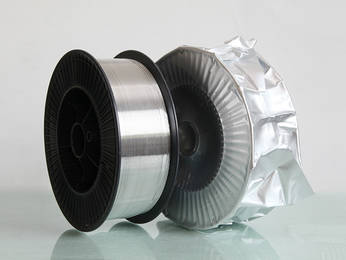
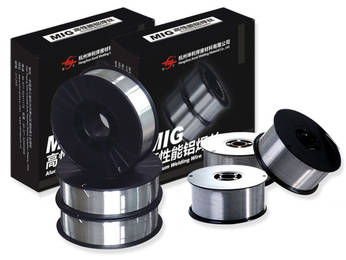
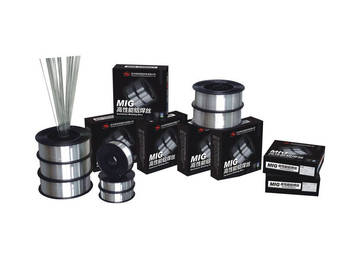
Specify bright finish or precision-layer wound wire for MIG applications — non-uniform oxide layers on wire surface introduce arc instability and weld porosity on aluminium. Wire must be stored in sealed packaging at less than 60% relative humidity; moisture absorption on the wire surface is the single largest cause of hydrogen porosity in aluminium MIG welds. Reject any wire showing surface discolouration, oxidation spotting, or spool damage before use.
Require wire certified to AWS A5.10 / ASME SFA-5.10 with mill test certificate (MTC) showing actual chemical composition per heat. For pressure vessel and aerospace applications, EN ISO 18273 certification and third-party inspection documentation are required under most applicable fabrication codes. Confirm that the certificate lot number matches the wire spool markings before use — uncertified or misidentified filler wire is a non-conformance under ASME, EN 1090, and AWS D1.2 fabrication standards.
MIG welding ER5154 requires 100% argon shielding gas or Ar/He mixtures (up to 25% helium for increased penetration on material above 10 mm). Helium addition raises arc voltage and heat input — beneficial on heavy sections, detrimental on sheet material below 3 mm. CO2 additions are not acceptable for aluminium MIG — carbon dioxide reacts with the molten pool, introducing porosity and oxide inclusions that reduce weld metal tensile strength below AWS minimum requirements.
Verify that ER5154 achieves the required joint efficiency for the structural calculation. On 5154-H32 base metal (tensile strength 230–270 MPa), ER5154 at 240 MPa minimum provides 89–100% joint efficiency in butt welds. On higher-strength 5454-H34 base metal (270–305 MPa), joint efficiency drops to 79–89% — potentially requiring design allowance or a shift to ER5356 if joint efficiency requirements exceed 90% per the applicable structural code.
NEXT:ER5087 Aluminum Welding Wire: Industrial Uses, Strength & Marine Applications