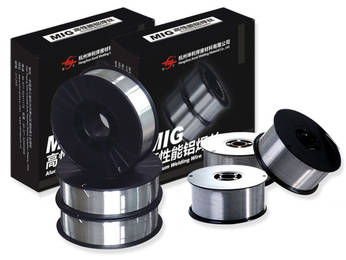
English
  Deutsch


Custom Aluminum Welding Wire Solutions for Industrial Applications: A Buyer's Guide
Article Directory
Consider a common scenario at a mid-sized fabrication plant: welding crews were reworking 6061-T6 frames for a transit project at a rate that pushed delivery dates to the limit. The filler wire had been chosen years earlier, ordered on price, and never questioned. After the alloy was re-matched to the base material and the wire geometry was verified for the robotic feed line, the rejection rate fell by almost half within two weeks.
That sequence repeats across shipyards, rail workshops, and structural fabricators. In industrial applications, custom aluminum welding wire solutions are not about exotic chemistry. They are about aligning alloy type, wire geometry, packaging, documentation, and technical support with the actual conditions of the job. The practical conclusion is straightforward: the wire specification determines a large share of the weld quality, and it deserves the same discipline as the weld procedure.
What a custom aluminum welding wire solution actually involves
When a manufacturer calls a wire "custom," it rarely means inventing a new alloy. In day-to-day industrial buying, it means defining four variables against your process: alloy family, wire geometry, spool condition, and documentation.
Alloy family selection: 4xxx, 5xxx, and special grades
The alloy family determines weld strength, corrosion resistance, crack resistance, fluidity, and the weld’s appearance after anodizing. Aluminum-silicon fillers such as ER4043 and ER4047 are fluid and tolerant, which is why they dominate repair and 6xxx-series fabrication. Aluminum-magnesium fillers such as ER5356, ER5183, and ER5087 develop higher as-welded strength and handle marine and structural service better. Special grades such as ER4943 and ER2319 exist for cases that standard families cannot cover well.
| Alloy family | Typical base alloys | Main advantage | Risk to watch |
|---|---|---|---|
| 4xxx (ER4043, ER4047) | 6061, 6063, cast aluminum | Good fluidity, crack resistance, anodizing color match | Lower as-welded strength in highly loaded 5xxx joints |
| 5xxx (ER5356, ER5183, ER5087) | 5083, 5754, marine-grade plate | High weld strength, corrosion resistance, cryogenic service | May crack when welding thick 6xxx sections under restraint |
| Special grades (ER4943, ER2319) | Automotive structures, aerospace assemblies | Better as-welded strength or strict traceability | Limited availability; must be specified early |
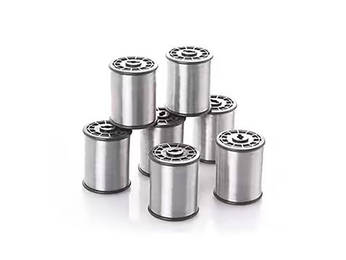
For general structural and repair work on 6xxx-series aluminum, the ER4043 silicon aluminum welding wire provides the fluidity and crack resistance that welders expect from a 4xxx filler. When the part must resist marine spray or keep a near-match anodized color, the ER5356 aluminum welding wire is the typical starting point. For high-strength structural assemblies where creep and weld-metal strength matter across the life of the part, the ER5087 magnesium aluminum welding wire raises the 5xxx family’s performance level.
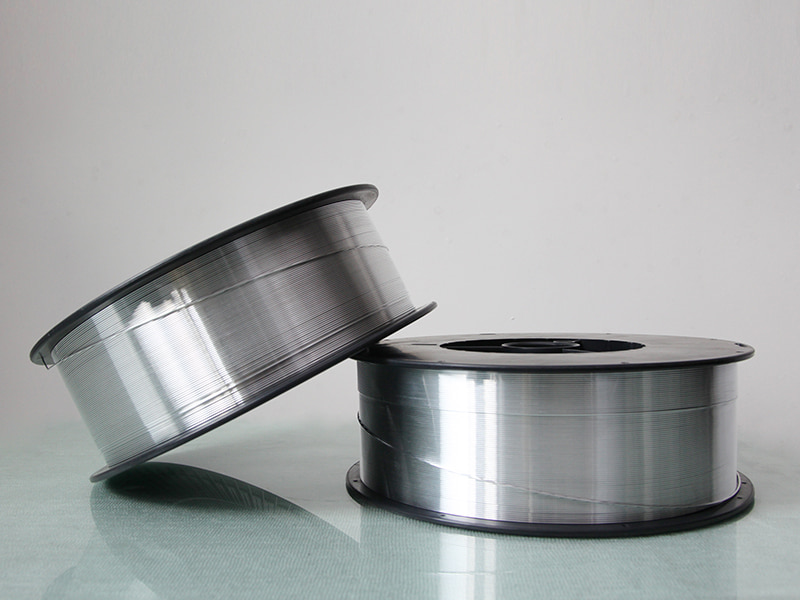 Aluminum Welding Wire ER5087 - Kunli Manufcturers&SupplierER5087 aluminum wire offers high strength, great corrosion resistance and reliable weldability for 5xxx/6xxx/7xxx series aluminum in indu...View Product →
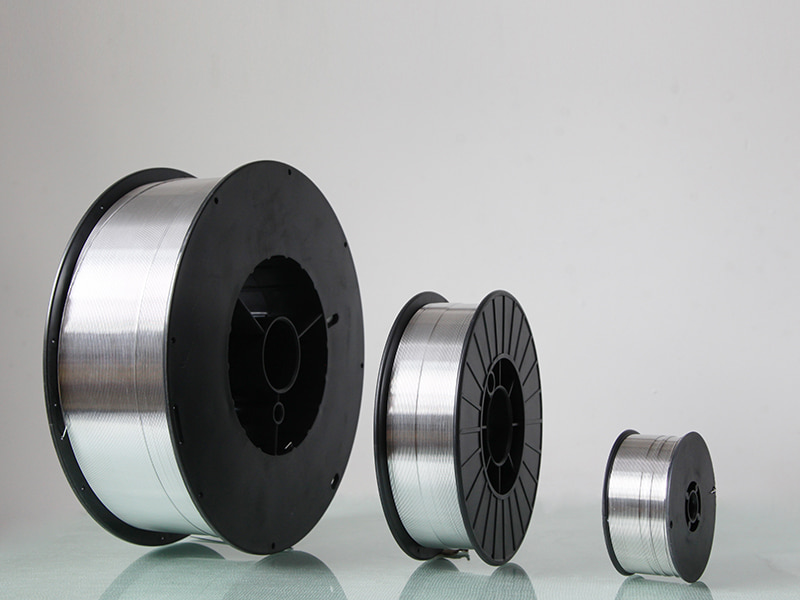 Aluminum Welding Wire ER5356 - Kunliwelding ManufacturerKunli is your go-to wholesaler for Aluminum Welding Wire ER5356, offering ideal corrosion resistance and strength. Suitable for marine, a...View Product →
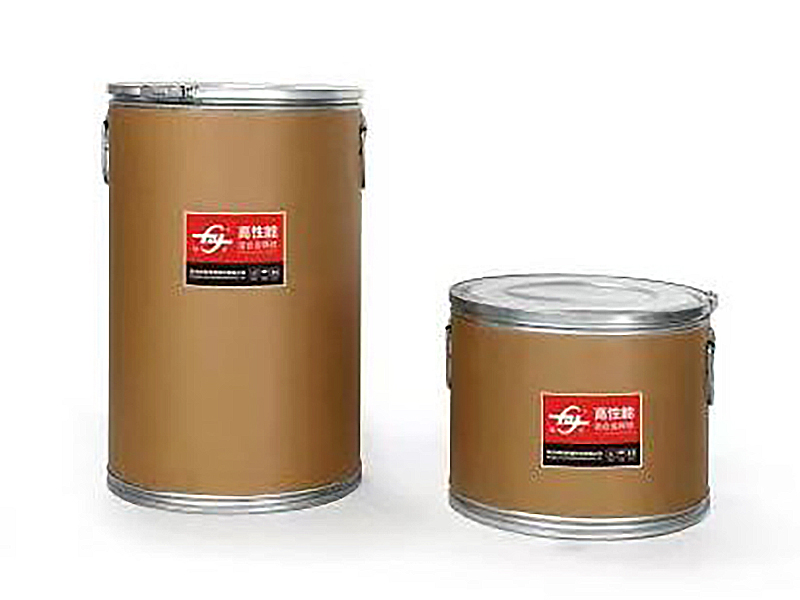 ER4043 Aluminum Welding Wire Manufacturers,SuppliersAs China ER4043 Aluminum Welding Wire Manufacturers and OEM/ODM Suppliers, Hangzhou Kunli welding materials Co., Ltd. provide wholesale A...View Product →
Diameter tolerance, cast, and helix
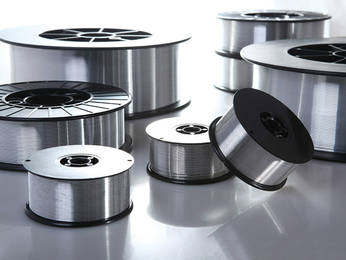
Aluminum wire feeds differently than steel. Deviations in diameter create inconsistent contact inside liners and contact tips, which shows up as an erratic arc, porosity, or burn-back. Cast—the diameter of the wire’s natural loop—and helix—the vertical lift when the wire is cut from the spool—determine whether the wire tracks smoothly through the gun. A custom solution should set these values against the intended equipment, especially for robotic cells or long push-pull lines. That is why wire feed stability cannot be inspected by looking at the spool label.
Industrial applications that drive custom wire requirements
Each industry brings a different set of conditions to the wire specification. Understanding those conditions helps you explain the request to a supplier—and helps the supplier build the right solution.
Marine and offshore structures
Shipbuilding and offshore fabrication demand salt-water corrosion resistance and classification-ready documentation. A hull panel welded with 5xxx wire keeps the mechanical properties needed for marine atmospheres, and approvals such as ABS, DNV, or CCS require documented control on every batch. Buyers in this sector should verify that the supplier can provide certificates that match the specific project class, not just a general alloy compliance statement.
Rail and heavy transport
Rail vehicle bodies combine long 6xxx extrusions with 5xxx sheet. Welding speeds are high, access is limited, and the weld seam influences both crash behavior and fatigue life. Consistent wire feeding, tight diameter control, and batch-to-batch uniformity keep automated lines running. A custom order may be as simple as a specific spool size, a layer-wound package for robotic use, or a switch to ER4943-grade wire for improved as-welded strength. The full logic behind those choices is explained in how to choose aluminum welding wire.
Aerospace and high-performance fabrication
Where traceability is mandatory, a custom solution moves beyond chemistry into documentation. Alloys such as ER2319 serve welded aerospace assemblies, and the manufacturer must trace a spool back to its cast analysis, heat, and production record. For less exotic industries, the same traceability discipline is useful whenever weld quality is audited by a third party.
What buyers should verify before ordering custom wire
A custom specification works only if the supplier can hold it in production. The following checkpoints separate a commodity spool from an engineered supply.
| Checkpoint | What to confirm | Why it matters |
|---|---|---|
| Alloy composition and standard | AWS A5.10 classification, batch certificate | Chemistry errors change cracking resistance and strength |
| Diameter tolerance | Deviation within the standard; no drawing marks | Poor feeding and unstable arc in MIG |
| Cast and helix | Cast diameter and helix within the wire specification | Erratic wire feeding in robotic or long-line systems |
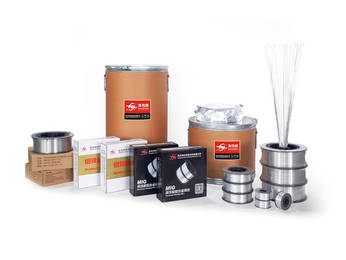
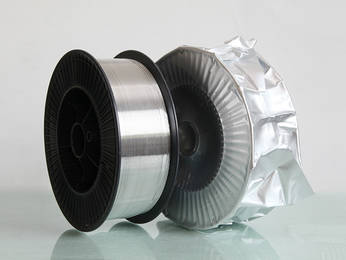
| Spool and packaging | Layer-wound spool, sealed bag, moisture barrier, desiccant | Contamination and tangling cause porosity and downtime |
| Traceability | Batch code on each spool, mill test certificate | Required for rail, marine, and aerospace audits |
| Technical support | Welding engineer available for parameter review | Reduces trial runs and startup problems |
For a broader look at how supplier capabilities influence compatibility, see evaluating aluminum alloy welding wire suppliers.
How the right supplier backs up custom specifications
Custom aluminum welding wire solutions only matter if the supplier can repeat them at scale. A manufacturer with dedicated aluminum wire production, complete inspection equipment, and a stable process answers the questions that actually count. At Hangzhou Kunli Welding Materials, for example, more than 20 years of aluminum alloy wire production and an annual capacity of more than 2500 tons allow the factory to hold cast, helix, and chemistry across an entire batch.
For buyers, the practical signals are simple: Can the supplier issue classification-ready documents for rail and marine projects? Can the sales and export team manage a shipment to North America, Southeast Asia, or Europe without breaking the packaging specification? Can welding engineers review parameters during startup? With 50 percent of output exported to more than 30 countries and certifications including DB, CE, ABS, DNV, and CCS, the answer is built into the manufacturing system rather than handled case by case.
This is what separates a wire catalog from a custom solution. The chemistry is only the beginning; the process discipline that keeps every spool inside the documented specification is what protects your weld quality and your schedule.
Avoiding common procurement mistakes with custom wire
Most problems with aluminum welding wire are not random. They come from repeatable mistakes that are easy to avoid once the wire is treated as an engineered input.
- Choosing an alloy out of habit instead of checking the base alloy, joint restraint, and service environment.
- Ordering only by diameter and ignoring cast, helix, and spooling requirements.
- Skipping moisture protection in storage and transport; aluminum wire picks up surface moisture, which becomes porosity in the weld.
- Assuming every supplier supplies certificates. Ask for samples, batch records, and parameter recommendations before placing the order.
- Measuring the decision in price per spool instead of cost per good weld. Rework, downtime, and rejected assemblies usually cost more than the wire itself.
Start with the welded component: base alloy, joint design, service environment, feed distance, and whether the line is manual or automated. Then define the wire. A genuine custom aluminum welding wire solution should give you an alloy that is available at the required volume, consistent from spool to spool, classified to the relevant standard, and delivered with technical support. That is how a procurement conversation moves from price per kilogram to quality per weld.
NEXT:How Can Braided Aluminum Wire Support Flexible Connections