English
 Deutsch



Aluminum Welding Wire for Thin Aluminum: Key Selection Factors Explained
Article Directory
Set a 1.6 mm 6061-T6 sheet on the bench with the same 1.2 mm ER5356 wire that ran clean on 8 mm plate, and the failure is predictable: burn-through in the first third of the bead, distortion that lifts the sheet, and porosity trails behind every hesitation. Wire that works on thick plate is the wrong material on thin sections because wire choice, not machine settings, sets the heat balance. These are the selection factors that matter when the base metal is 3 mm or thinner.
Why Thin Aluminum Punishes the Wrong Wire Choice
Thin aluminum fails when heat input exceeds what the cross-section can conduct away, and wire selection determines how much heat enters the joint.
Aluminum conducts heat at roughly 237 W/mK, four to five times faster than mild steel, while its melting point is only 660 °C. The oxide layer on the surface melts near 2,072 °C. That gap between melting the base and breaking through the oxide is so narrow that any extra heat from an oversized wire appears immediately as burn-through or sagging.
Three wire-related factors become the critical variable below 3 mm thickness:
- Heat input: a larger diameter wire demands higher current to melt, and the thin section cannot absorb that energy fast enough.
- Arc force: heavy 5xxx wires produce a hotter, more aggressive arc that cuts through thin material before the pool can freeze.
- Fluidity: a wire that wets out quickly closes the weld pool sooner, reducing the time the molten zone stays open on thin sheet.
Burn-through occurs when the weld pool penetrates the full section thickness and molten metal falls out. On aluminum below 3 mm, burn-through is a wire selection problem before it is a settings problem.
Alloy Family First: 4xxx vs 5xxx
For thin aluminum, the 4xxx family (aluminum-silicon) is the safer default, while 5xxx wires (aluminum-magnesium) are reserved for joints that need their strength or corrosion matching.
ER4043 and ER4047 are the two 4xxx wires fabricators rely on for thin stock. Their silicon content of 5% and 12% respectively lowers the melting range and raises fluidity, so the weld pool wets out and freezes quickly - a quick freeze is the best defense against burn-through. On 6xxx base metals such as 6061, 4xxx wires also resist hot cracking better than 5xxx wires.
ER5356 and ER5183, the 5xxx workhorses, deliver higher as-welded strength and a good color match after anodizing on 5xxx base metals. The trade-off on thin sheet is a harsher arc and a slower-wetting pool. When the joint truly needs 5xxx strength, 1.0 mm ER5356 is workable; 1.2 mm is rarely justified on 2 mm stock.
| Selection criterion | ER4043 (Al-Si5) | ER5356 (Al-Mg5) |
| Best base metal match | 3xxx, 6xxx, 6061, cast aluminum | 5xxx, 5052, 5083, 5086 |
| Hot-cracking resistance on 6xxx | High | Moderate, needs careful technique |
| As-welded strength | Lower, about 170-200 MPa | Higher, about 240-280 MPa |
| Fluidity on thin sheet | Excellent, fast wetting | Lower, harsher arc |
| Anodized color match | Darker grey | Good match on 5xxx base |
| Burn-through risk on 2 mm | Lower | Higher |
For most thin 6xxx sections, the ER4043 product line below is a practical starting point for trial runs.
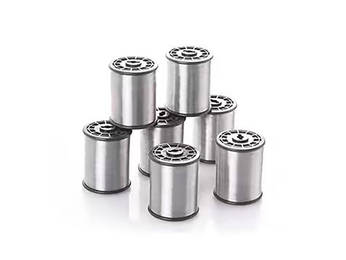
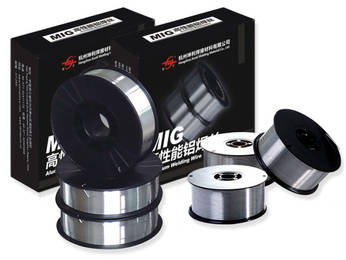
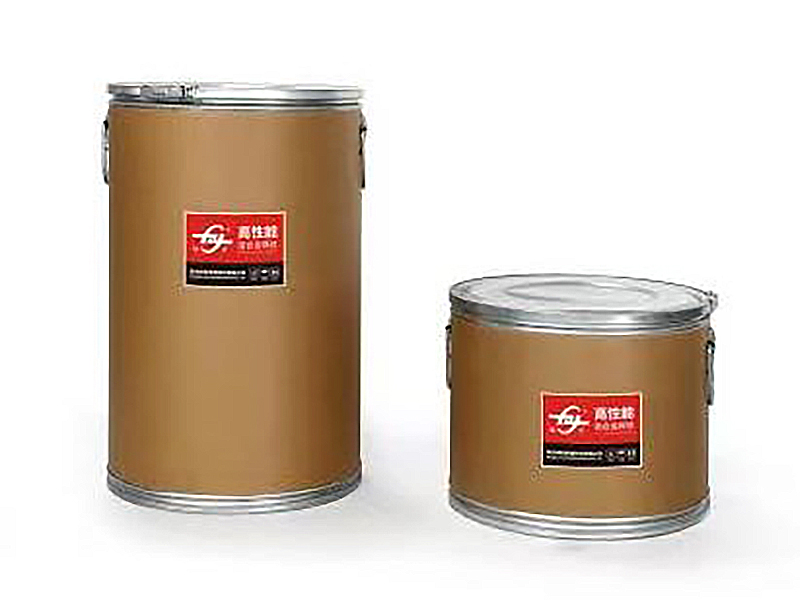 ER4043 Silicon Aluminum Welding Wire for Thin 6xxx SectionsThis 5% silicon filler metal offers good flowability and penetration, making it a practical starting point for trial runs on thin 6xxx aluminum sections before adjusting wire diameter.View Product →
Wire Diameter Controls Heat Input
Wire diameter is the most direct lever on heat input: for aluminum thinner than 3 mm, drop from 1.2 mm to 1.0 mm or 0.8 mm before touching voltage or travel speed.
Use the thickness of the joint to set the starting diameter, and treat the current range as the consequence, not the input. A 1.2 mm wire needs roughly 120-160 A to melt properly; a 0.8 mm wire melts cleanly at 60-90 A. On 2 mm sheet, that difference is the line between a crisp bead and a row of holes.
Feeding is the second half of the diameter problem. Aluminum wire is soft, and 0.8 mm wire has roughly a third of the column strength of 1.2 mm. That is why cast and helix tolerances matter: cast, the natural diameter of the wire loops, should stay between 300 and 600 mm, while helix, the vertical lift from a flat surface, should stay under 12 mm. Values outside this range produce birdnesting, erratic arc starts, and inconsistent wire extension.
For thin 4xxx applications where the pool must freeze as fast as possible, ER4047 with 12% silicon pushes fluidity even further than ER4043.
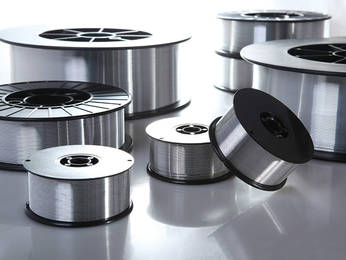
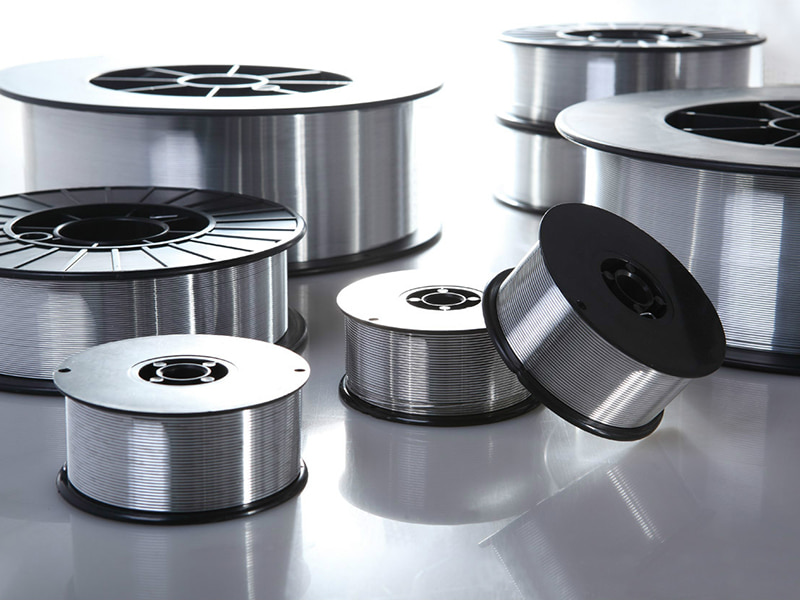 ER4047 Aluminum MIG Welding Wire with 12% SiliconWith 12% silicon, this wire delivers higher fluidity than ER4043, helping the weld pool freeze faster for thin 4xxx applications. Also provides excellent corrosion resistance and low deformation.View Product →
Feedability and Supply Quality Decide Consistency
Consistent thin-sheet welding is impossible if alloy chemistry, surface condition, and mechanical tolerances drift between spools.
Porosity on aluminum comes mostly from hydrogen, introduced by surface oxides, drawing lubricants, and absorbed moisture. A wire that looks clean can still carry enough residue to produce porosity in every weld. Reliable suppliers control the whole line - casting, homogenizing, drawing, cleaning, and layer winding - and back each heat with test data.
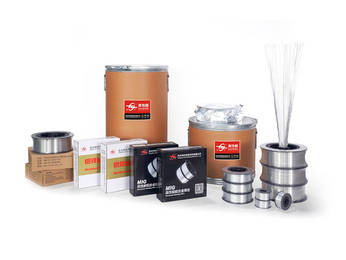
Certifications also signal which industries a supplier already serves. Accepted third-party marks for aluminum welding wire include DB, CE, ABS, DNV, and CCS. A manufacturer that holds maritime and rail certifications has passed audits that most general-purpose wire plants never attempt. Hangzhou Kunli Welding Materials Co., Ltd. is one such manufacturer: it positions itself as an import-replacement producer of high-performance aluminum welding wire, with more than 20 years of aluminum wire production experience, an annual capacity above 2,500 tonnes, and roughly half of its output exported to over 30 countries.
A Five-Step Selection Workflow
The five-step workflow below applies to every thin-aluminum job, whether you run MIG, TIG, or pulsed GMAW.
- Identify the base alloy and temper. Confirm whether it is a 6xxx series alloy like 6061-T6 or a 5xxx alloy like 5083, because that alone decides the filler family.
- Lock the alloy family. Use 4xxx for 6xxx thin stock and 5xxx for 5xxx thin stock; match the filler to the base metal before considering diameter.
- Pick the diameter from the thickness table. Start at 0.8 mm up to 1.5 mm sheet and 1.0 mm from 1.5 to 3 mm; only move up to 1.2 mm when the joint exceeds 3 mm.
- Check the feedability data. Confirm cast between 300 and 600 mm, helix below 12 mm, and a clean, bright wire surface with stable spool layer winding.
- Request traceable quality documents. Ask for the heat certificate, alloy composition report, and copies of certifications such as DB, CE, ABS, DNV, or CCS before the first trial order.
Working through these five points takes about ten minutes per material change and eliminates most thin-sheet failures before they reach the weld cell. For a condensed version of the same logic, the quick decision guide for wire selection on this site compresses all five checks into a single reference card.
Frequently Asked Questions
What is the best aluminum welding wire for thin aluminum?
For most thin aluminum work between 1.5 and 3 mm, ER4043 at 1.0 mm is the default starting point. ER4047 is a better choice when you need maximum fluidity and the fastest possible freeze, and ER5356 belongs on 5xxx base metals where strength or color match matters more than ease of control.
Can I use ER5356 for thin aluminum?
Yes, with two conditions: the base metal should be a 5xxx alloy, and the diameter should be 1.0 mm or smaller. Keep amperage low and travel speed high, because the hotter 5xxx arc will push burn-through otherwise.
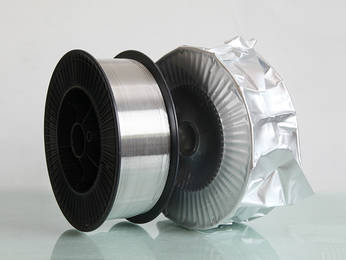
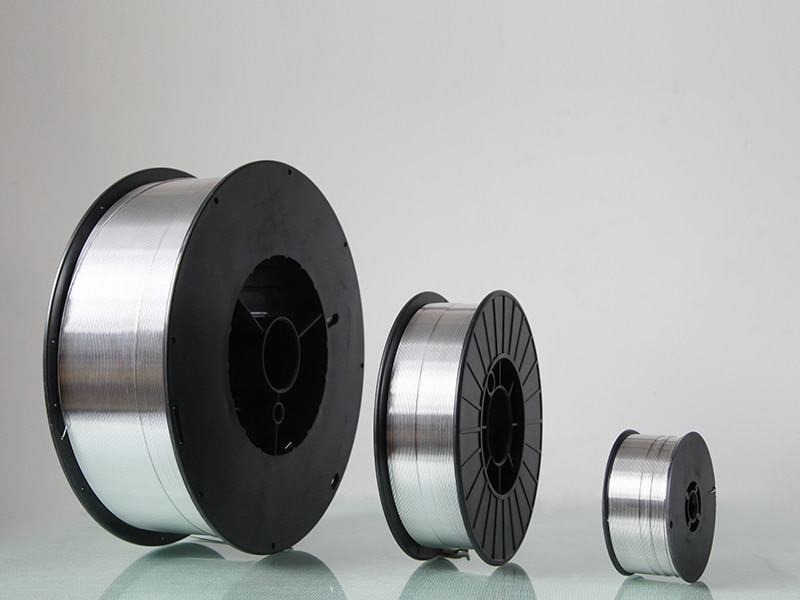 ER5356 Aluminum Welding Wire for 5xxx Alloys and Thin SheetsThis 5% magnesium filler metal suits 5xxx base metals in thin gauges when using 1.0 mm or smaller diameters. Keep amperage low and travel speed high to avoid burn-through.View Product →
What wire diameter is best for 1.5 to 2 mm aluminum?
Use 0.8 mm for the 1.5 mm range and 1.0 mm for the jump to 2 mm. Both keep current below 110 A, which gives the weld pool enough time to solidify before the heat penetrates the full section.
Why does my thin aluminum weld keep cracking?
Cracking on thin 6xxx sheet is almost always hot cracking from a magnesium-rich filler or an undersized weld pool. Switch to ER4043 or ER4047, keep the joint clean, and increase travel speed so the pool does not dwell.
NEXT:No next article