English
  Deutsch


Basic principles of aluminum alloy wire
Article Directory
- 1 Understanding the State Code Framework
- 2 The F State: Free Machining Condition
- 3 The O State: Annealed Condition
- 4 The H State: Work-Hardened Condition
- 5 The W State: Solution Heat Treatment
- 6 The T State: Heat Treatment Conditions
- 7 Material Selection Based on State Codes
- 8 Processing Aluminum Alloy Wire Products
- 9 Quality Control and Property Verification
- 10 Standards and Specifications
- 11 Advanced State Designation Concepts
- 12 Practical Implementation for Manufacturers
- 13 Future Developments in State Classification
- 14 Integration with Modern Manufacturing
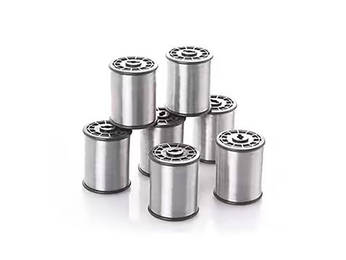
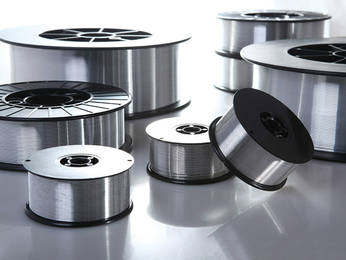
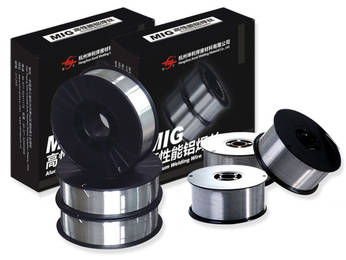
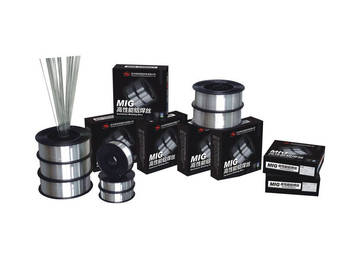
Aluminum Alloy Welding Wire plays an essential role in contemporary fabrication and manufacturing operations, where a clear grasp of alloy conditions and performance traits directly influences weld quality and component reliability. Industry-standard temper designations provide concise indicators of an alloy's work history, heat treatment, and resulting properties. These established codes enable designers, welders, and quality personnel to choose compatible base materials and fillers confidently, while promoting uniform outcomes across suppliers and production facilities.
Understanding the State Code Framework
Aluminum alloys get classified through temper designations, which rely on a structured mix of letters and numbers to spell out exactly how the material has been treated mechanically or thermally during production. Every part of the code has a clear purpose, helping everyone from material providers to builders and final customers understand the alloy's traits and how it should hold up in use. This organized method keeps things clear and consistent across the industry.
The main temper codes kick off with a single uppercase letter that covers the broad category of processing, and then numbers tag on for finer points about things like hardening levels or cooling methods. By building it this way, the system packs in all the necessary details without turning into a mess that's hard to apply in everyday manufacturing or specification work.
The F State: Free Machining Condition
Aluminum alloys marked with the F temper are delivered in their as-fabricated condition, straight from the primary shaping process—such as rolling, extrusion, forging, or drawing—without any deliberate follow-up heat treatment or controlled cold working to adjust properties. This temper gets used when the immediate need is to keep the material highly workable for additional forming, machining, or welding, rather than to meet specific strength or ductility targets right away.
Typical traits of F-temper material include:
- No additional planned thermal treatments or strain hardening after the initial fabrication
- Retention only of the incidental work hardening that occurred during the shaping operation
- No specified or guaranteed values for tensile strength, yield strength, or elongation
- Mechanical properties that can differ from batch to batch or even vary within a single length of stock
- Often employed as a stepping-stone condition in multi-stage production
The F designation essentially embraces the uneven hardening that naturally happens during forming, giving downstream users freedom to alter the alloy as needed. It suits scenarios where later operations—whether solution heat treating, artificial aging, or further deformation—will set the final characteristics, or when the part's role tolerates broader variation in performance.
Common situations where F-temper aluminum makes sense:
- Stock intended for full heat treatment cycles before final use
- Blanks that will receive extra mechanical reduction to reach required hardness
- Intermediate shapes in complex manufacturing workflows
- Finished components where tight control of mechanical properties isn't critical
Supplying the alloy in this untreated, as-formed state allows fabricators to customize it downstream without having to first undo any premature hardening steps.
The O State: Annealed Condition
Annealing is a heat treatment designed to soften aluminum alloys that have become hardened from cold working and to relieve built-up internal stresses, achieved through precise heating to a target temperature followed by controlled cooling. The O temper means the material has received a complete anneal, resulting in the lowest possible strength but the greatest ductility the alloy can offer.
Key metallurgical effects during the annealing process:
- High temperatures give atoms enough mobility to rearrange and wipe out the lattice distortions caused by earlier deformation
- The crystal structure settles into a more stable, lower-energy state
- The high density of dislocations from work hardening largely dissipates
- Grain shapes become more regular and consistent throughout the piece
- Residual stresses left over from rolling, drawing, or other prior operations vanish
Practical advantages of O-temper aluminum:
- Outstanding ductility that makes further forming operations far easier
- Superior formability for demanding tasks such as deep drawing, sharp bending, or heavy stretching
- Softer material that cuts cleanly and extends the life of machining tools
- Uniform and predictable behavior that simplifies setup and planning for stamping or pressing
- Capacity to endure extensive plastic deformation before cracking or tearing
Because annealed alloys deform in a reliable, controlled way under pressure, they are especially useful whenever parts must go through significant shaping or drawing steps. The trade-off is reduced strength and a tendency to shift more easily under cutting forces, but for applications where the primary goal is extensive forming rather than high load-bearing capacity in the finished part, the O temper delivers exactly the softness and workability required.
The H State: Work-Hardened Condition
Cold working toughens aluminum by imposing plastic deformation that packs more dislocations into the crystal lattice; these defects tangle up and block easy slip, boosting the metal's overall strength and resistance to further bending or stretching. The H temper covers alloys hardened chiefly through such room-temperature processes, potentially followed by targeted heat steps to refine the final properties.
Breaking down H-temper codes:
The digit right after the H spells out the hardening sequence:
- H1X: Straight cold working—no annealing or other thermal tweaks afterward
- H2X: Cold worked first, then lightly annealed to dial back the hardness a notch while keeping decent strength
- H3X: Cold worked and then baked at mild temperatures to stabilize ductility and prevent unwanted changes over time
The second digit indicates the degree of hardness:
- 2: Quarter-hard
- 4: Half-hard
- 6: Three-quarters-hard
- 8: Full-hard
- 9: Extra-hard, exceeding the usual maximum
This coding lets engineers pick exactly the right mix of toughness and formability for tasks like stamping sheets or drawing wire.
| H State Category | Processing Description | Typical Applications |
|---|---|---|
| H1X | Strain hardened only | Products requiring specific strength without thermal treatment |
| H2X | Strain hardened and partially annealed | Materials needing balanced strength and formability |
| H3X | Strain hardened and stabilized | Applications demanding dimensional stability at elevated temperatures |
Cold-worked aluminum alloys in the H temper can deliver strength comparable to what heat-treatable series achieve through precipitation hardening, but without needing high-temperature processing steps. These properties stay consistent at room temperature and during modest warmth, so H-temper materials work well for load-bearing parts that won't see significant heat in service. Since many H-temper routes skip costly solution treatments and aging cycles, they often prove cheaper to produce than equivalent T-temper heat-treatable alloys while still offering impressive mechanical performance.
The W State: Solution Heat Treatment
Solution heat treatment requires elevating an aluminum alloy to a temperature sufficient for complete dissolution of the alloying elements into the base metal lattice, then quenching it quickly to retain those elements in a metastable, supersaturated state. The -W temper is used to identify material in the window right after quenching, during which it naturally ages at room temperature. This designation marks an unstable, intermediate condition before the alloy achieves the full strength of artificial age hardening. As time passes in the -W temper, the excess solute atoms start to diffuse, form clusters, and eventually nucleate fine precipitates, leading to a steady increase in hardness and tensile strength at the expense of elongation and formability. The speed and magnitude of these changes are governed by the particular alloy chemistry and the temperature at which the material is stored—some alloys reach relative stability in a matter of days, while others keep evolving noticeably for weeks or longer.
In manufacturing practice:
- Many process routes deliberately exploit the favorable balance of strength and workability available in the -W condition
- Major forming, drawing, or bending steps are scheduled and performed shortly after quenching to take advantage of peak ductility before substantial hardening sets in
- Production planning centers on using the short post-quench period to achieve specific mechanical property targets
- End-use designs and quality specifications need to consider possible further property drift after components are fabricated
By applying the -W temper label, suppliers and users are explicitly warned that the material is still undergoing active natural aging and that its mechanical behavior will continue to change with time.
The T State: Heat Treatment Conditions
Strength in precipitation-hardenable aluminum alloys comes from the carefully managed formation of tiny second-phase particles that disperse throughout the matrix after starting from a supersaturated solid solution. The T temper family includes a variety of defined heat-treatment procedures that use elevated-temperature artificial aging to establish dependable, long-term mechanical properties. Unlike material in the -W temper, which is still changing, alloys designated with a T temper have completed the precipitation sequence and show virtually no further property variation under normal service conditions.
The numeric code following the T provides specific information about the exact processing route applied. The digit immediately after the T defines the primary treatment category and reveals whether cold working is part of the overall sequence in addition to thermal steps. Any further digits indicate particular deviations or additional controls, such as specific aging temperatures, holding durations, or the amount and placement of deformation introduced between solution treatment and final aging.
T Temper Categories and Processing Details
Every individual T temper corresponds to a unique combination of solution heat treating, rapid quenching, optional cold working, and precisely controlled artificial aging. These different processing paths yield characteristic balances of tensile strength, yield strength, ductility, fracture toughness, and resistance to corrosion or stress corrosion cracking, allowing engineers to select the temper best matched to the performance needs of a given component or structure.
| T State | Treatment Sequence | Property Characteristics |
|---|---|---|
| T1 | Cooled from elevated temperature shaping process and naturally aged | Moderate strength, good formability |
| T2 | Cooled from elevated temperature shaping process, cold worked, and naturally aged | Enhanced strength from combined strengthening mechanisms |
| T3 | Solution heat treated, cold worked, and naturally aged | High strength with reasonable ductility |
| T4 | Solution heat treated and naturally aged | Balanced properties for general applications |
| T5 | Cooled from elevated temperature shaping process and artificially aged | Good strength from thermal treatment alone |
| T6 | Solution heat treated and artificially aged | High strength for demanding structural applications |
| T7 | Solution heat treated and overaged | Enhanced stress-corrosion resistance |
| T8 | Solution heat treated, cold worked, and artificially aged | Maximum strength through combined treatments |
| T9 | Solution heat treated, artificially aged, and cold worked | Specialized property combinations |
| T10 | Cooled from elevated temperature shaping process, cold worked, and artificially aged | Complex processing for specific requirements |
Further numerals attached to the primary T temper identifiers signal specific deviations in the heat-treatment protocol. These variations are crafted to tackle targeted concerns, such as minimizing internal stresses, securing long-term dimensional steadiness, or delivering tighter consistency in mechanical properties across production runs. The sophisticated designation structure enables engineers to call out highly specific microstructural conditions that satisfy rigorous design and performance standards.
Material Selection Based on State Codes
Choosing appropriate aluminum alloy states requires understanding the relationship between processing history and material performance. Different states offer distinct advantages depending on application requirements, manufacturing constraints, and service conditions. The state code system facilitates informed material selection by communicating essential information about mechanical properties and processing capabilities.
Applications involving substantial forming operations benefit from annealed or lightly work-hardened states that accommodate plastic deformation without fracturing. Structural components requiring high strength-to-weight ratios typically utilize artificially aged T states that provide strength levels comparable to low-alloy steels at significantly reduced density. Service environments involving elevated temperatures may require stabilized H states or overaged T states that resist property degradation during thermal exposure.
Cost considerations also influence state selection, as different processing sequences involve varying levels of equipment investment and processing time. Annealed and work-hardened states generally cost less than heat-treated conditions, reflecting the simpler thermal processing requirements. However, the ability to achieve higher properties through heat treatment may offset initial cost differences by enabling lighter, more efficient designs that reduce material consumption and lifecycle expenses.
Processing Aluminum Alloy Wire Products
Wire demands careful temper selection because of its unique shape and the way it is typically produced. The slender cross-section gives wire a very high surface-to-volume ratio, which causes rapid heat gain and loss during any heat treatment. Producers must therefore tightly regulate heating rates, soak times, and especially quench severity to prevent property gradients along the coil or between the surface and center of the wire.
The multi-stage drawing process required to reduce rod to final wire diameters imparts intense cold work, dramatically increasing strength and hardness while reducing ductility. This accumulated strain becomes a major factor in determining the final temper and mechanical behavior of the product.
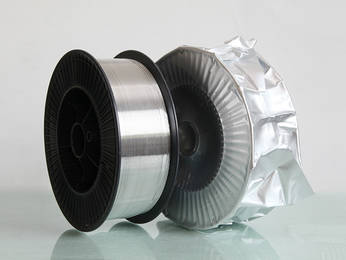
Welding filler wire presents especially stringent temper requirements. The wire must glide smoothly through drive rolls and contact tips without kinking or fracturing, yet it also needs enough stiffness to avoid buckling during feeding. Too hard a temper leads to frequent breakage and poor feed reliability; too soft a condition causes erratic arc performance and handling issues. Aluminum welding wire producers therefore select tempers that provide an optimal compromise between mechanical strength and feeding characteristics.
The standard temper designation rules apply to wire in the same manner as to other mill products. In practice, however, the temper codes most often specified for wire differ noticeably from those common in sheet, plate, or extrusions, because wire undergoes different reduction schedules, intermediate recovery anneals, and final property targets suited to drawing and spooling.
Quality Control and Property Verification
Suppliers confirm that wire meets the ordered temper through a combination of mechanical testing and metallographic inspection. Tensile testing determines yield strength, ultimate strength, and elongation, verifying that values lie within the ranges established for the specified temper. Hardness checks serve as a fast, routine monitor of cold-work level or precipitation state.
Polished and etched cross-sections examined under the microscope reveal grain morphology, precipitate size and spacing, and any evidence of incomplete dissolution or unintended overaging. These observations prove that the heat treatments achieved the targeted microstructure and flag any process excursions that could compromise service performance. Comprehensive quality systems maintain lot-to-lot repeatability and full conformance to governing specifications.
Shipments are accompanied by certification documents that list the temper designation and attest to compliance with relevant standards. These mill test reports or certificates of conformance establish traceability and document correct processing. Customers are advised to keep records associating particular temper codes with specific parts or assemblies, which simplifies troubleshooting should any unexpected field behavior occur.
Standards and Specifications
Major international standards bodies publish detailed guidelines covering aluminum alloy temper designations and the corresponding property requirements. These documents standardize test methods, minimum or typical property limits, and product identification practices to promote uniformity across the worldwide industry. Following these common frameworks supports reliable global sourcing and allows engineers to specify materials knowing their characteristics will be consistent regardless of supplier location.
Although the fundamental metallurgical conditions are equivalent, different standards groups sometimes use slightly different terminology or numeric suffixes for the same temper. Professionals dealing with multiple national or regional requirements must be familiar with these nuances and write purchase specifications that unambiguously define the desired material condition. Continuing international coordination efforts aim to further align aluminum alloy designation systems around the world.
Advanced State Designation Concepts
Certain exacting applications demand temper designations that extend beyond the fundamental F, O, H, W, and T groups. Manufacturers sometimes formulate dedicated processing schemes for specific items and introduce exclusive codes that capture these custom sequences. These advanced tempers generally rest on conventional categories but layer in further stipulations to fulfill the precise expectations of particular sectors or operational roles.
Materials processed through multifaceted routes may carry composite temper codes that fuse components from various standard designations. These merged codes signify that the alloy has undergone several discrete operations, each leaving its mark on the ultimate property set. Mastery of the rationale behind ordinary temper codes is vital for correctly reading these elaborate or combined notations.
Practical Implementation for Manufacturers
Operations supplying aluminum in designated tempers must feature appropriate heat-treatment capabilities, dependable testing methods, and structured quality frameworks. Furnaces with managed atmospheres, dependable quenching setups, and calibrated aging installations are critical for delivering stable characteristics in age-hardened materials. Automated monitoring and archival of thermal data create the documentation required to substantiate adherence to defined processing windows.
Training sessions equip staff with a clear comprehension of temper code implications and the detailed protocols essential for realizing them. Workers are prepared to observe how minor fluctuations in process settings can modify material attributes and to determine when remedial steps are necessary. Ongoing upkeep and accuracy checks on heat-treatment systems sustain uniform outcomes and avert unintended shifts in product performance.
Future Developments in State Classification
Persistent investigations into aluminum processing frequently reveal novel treatment paths that generate superior blends of mechanical and physical traits. As these innovations transition to commercial scales, the present temper designation structure may call for supplementary codes or deeper hierarchies to adequately portray the emerging material conditions. Enhancements in real-time process monitoring could support the feasible manufacture of finely customized tempers aligned with unique part designs or exposure conditions.
Sophisticated investigative tools are steadily unveiling stronger correlations between treatment parameters, microstructural evolution, and service behavior. This accumulating expertise facilitates the design of more granular temper divisions that highlight fine distinctions influencing practical outcomes. The time-tested letter-and-number designation scheme should endure as the primary system while flexibly absorbing these increasingly detailed refinements.
Integration with Modern Manufacturing
Today's production facilities are steadily merging temper details into unified digital ecosystems that oversee material properties across entire workflows. Computer-assisted planning applications harness temper codes to instantly configure suitable deformation parameters, tooling selections, and verification routines. This embedded coordination boosts operational speed and markedly diminishes inaccuracies tied to conventional manual oversight.
Comprehensive traceability structures that tie temper designations to distinct batches or finished goods permit rapid location of any material linked to a processing anomaly. This targeted visibility allows prompt, contained resolutions that address concerns without broader production interruptions. Digital oversight of temper data accordingly refreshes the enduring designation framework to align with the demands of current manufacturing landscapes.
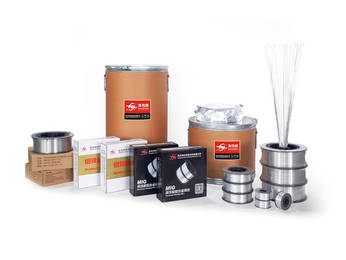
Kunliwelding deeply values the pivotal role that precise temper determination and stringent process discipline play in crafting high-reliability welding products. Leveraging thorough command of aluminum alloy metallurgy and enforcing exacting supervision of all heat-treatment conditions, the company reliably produces welding wire that satisfies stringent specifications. This sustained dedication to rigorous quality measures and specialized knowledge assures clients of receiving material bearing confirmed properties ideally tailored to their welding tasks.
NEXT:Stainless steel wire product classification