English
  Deutsch


5183 Aluminium Mig Wire Guide for MIG Welding Buyers
Article Directory
Choosing the wrong aluminum wire for a MIG setup is one of those mistakes that shows up late, usually after a batch of parts is already welded and someone notices porosity or cracking along the joint. Buyers sourcing 5183 Aluminium Mig Wire often reach out only after a supplier mismatch has cost them a production run. The frustration is real, and it usually comes down to a simple gap: not knowing which wire alloy actually fits the base metal and the working conditions in front of them. MIG welding aluminum is not the same animal as MIG welding steel. Wire feeding behaves differently, heat spreads faster through aluminum, and alloy selection changes how a joint performs once it cools. Someone coming from a steel background might assume the transition is a matter of swapping spools and adjusting a dial or two, but the reality involves rethinking gun setup, drive roll tension, and even how the operator holds the torch. There is also the question of what the finished part actually needs to survive. A bracket sitting in a dry warehouse faces a different set of demands than a tank holding pressurized fluid on a boat deck, and wire selection has to account for that gap.
What Is MIG Aluminum Welding?
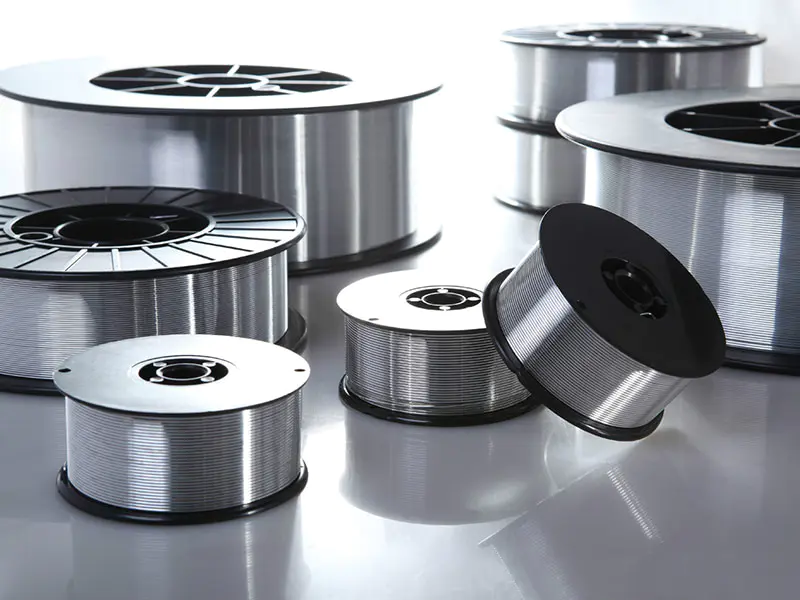
At its core, MIG aluminum welding uses a continuously fed wire electrode along with a shielding gas to join aluminum base materials. The equipment resembles standard MIG setups, but the wire itself is softer and more prone to feeding issues, so the gun, liner, and drive rolls usually need adjustment before a job even starts.
Argon is the shielding gas of choice in nearly every case, sometimes blended with helium depending on plate thickness and travel speed. Because aluminum conducts heat so quickly, the weld pool forms and cools faster than a welder might expect coming from steel work, which changes how travel speed and wire feed rate get dialed in.
Basic Process Explanation
The wire melts into the joint as the arc travels, filling the gap between two aluminum pieces while the shielding gas keeps oxygen away from the molten pool. Oxidation is the real enemy here; aluminum forms an oxide layer almost instantly on exposure to air, and that layer has a much higher melting point than the base metal underneath it.
A few things tend to matter more than people expect going in:
- Wire alloy needs to match or complement the base metal's chemistry
- Drive roll pressure has to stay gentle enough to avoid deforming the soft wire
- Push technique generally works better than pull for aluminum feeding
- Preheating thicker sections can reduce distortion, though it is not always required
Skipping any one of these does not always ruin a weld immediately, but it tends to catch up with a fabricator over repeated runs.
Wire diameter plays a bigger role than a lot of buyers initially assume. A thinner wire feeds more smoothly through longer gun leads but burns through faster at higher currents, while a thicker wire holds up better on heavier sections yet can be harder to push through a standard liner without kinking. Matching diameter to gun setup and joint thickness before ordering a spool saves a fair amount of frustration once the job actually starts.
Storage conditions matter too, and this gets overlooked more often than it should. Aluminum wire absorbs moisture from the air, and a spool left open in a humid shop environment can develop enough surface contamination to cause porosity down the line. Keeping wire sealed until use, and controlling humidity around the welding station, protects the investment a buyer already made in choosing the correct alloy.
Which Aluminum Welding Wire Works For MIG Use?
Buyers researching aluminum welding wire for sale usually land on a short list of alloy families, and each one behaves a little differently once it hits the arc. There is no single wire that fits every base metal or every joint design, so the comparison below is meant to narrow the field rather than crown a winner.
Choosing between these wires often comes down to answering a handful of practical questions before placing an order. What is the base metal alloy? Will the finished part face vibration, saltwater exposure, or sustained pressure? Does the joint need to blend visually with surrounding metal after finishing? Working through those questions ahead of time tends to prevent the kind of mismatched order that shows up as a warranty claim months later.
| Wire Type | Typical Base Metal Fit | Weld Appearance Tendency | Common Application Area |
|---|---|---|---|
| 5356 Alloy Aluminum Wire | 5xxx series aluminum, marine grades | Bright, smooth bead with good ductility | Structural framing, boat hulls, trailers |
| 5183 Aluminium Mig Wire | Higher magnesium 5xxx alloys | Slightly duller finish, strong crack resistance | Pressure vessels, marine fabrication, tanks |
| 4943 Aluminum Welding Wire | Heat-treatable 6xxx series aluminum | Cleaner flow at lower heat input | Automotive components, thin-gauge assemblies |
5356 Alloy Aluminum Wire Handles Certain Structural Needs
5356 wire tends to show up wherever a fabricator needs a general-purpose match for magnesium-bearing aluminum. It flows reasonably well through standard feed systems and holds up under vibration, which is part of why trailer and marine builders reach for it so often. Color match after anodizing is another reason it stays popular, since the finished weld doesn't stand out against the surrounding metal the way some other alloys can.
That said, it is not always the right pick for base metals with heavier magnesium content, where a different filler chemistry avoids the risk of cracking along the fusion line. Shops that run mixed production lines, switching between light brackets and heavier structural frames, often keep 5356 as their default spool simply because it covers a wide enough range of general fabrication work without constant reordering.
One thing worth noting: 5356 does not always perform as well in environments with sustained saltwater exposure compared to alloys carrying more magnesium. A trailer frame sitting in a coastal yard for years faces different demands than one stored indoors, and buyers specifying wire for marine-adjacent applications sometimes need to look past 5356 toward a chemistry built for that kind of exposure.
What Makes 5183 Aluminium Mig Wire Different?
This is where things get specific. 5183 Aluminium Mig Wire carries a higher magnesium content than 5356, which gives it an edge in situations involving sustained load, vibration, or exposure to marine environments. Tanks, pressure vessels, and structural components that see repeated stress cycles are common territory for this wire.
Buyers sourcing 5183 Aluminium Mig Wire for pressure-related fabrication usually care about crack resistance more than surface finish. The bead can look a shade duller than what 5356 produces, but the trade-off often makes sense once the application involves sustained mechanical stress or contact with seawater.
Is that difference always worth the switch? Not for every job. A fabricator running light-duty brackets or trim pieces may not see any practical benefit from the added magnesium, and the wire can be pickier about feed tension than some alternatives.
There is also a handling consideration that shows up on the shop floor rather than in a spec sheet. Because 5183 Aluminium Mig Wire carries a slightly different feeding behavior than 5356, operators moving between the two alloys sometimes need to retune wire feed speed and drive roll pressure rather than assuming settings carry over directly. A supplier who flags that difference upfront saves a crew from chasing inconsistent bead quality on the early passes of a new spool.
4943 Aluminum Welding Wire Fits Specific Applications
4943 wire takes a different route entirely. It was developed with heat-treatable 6xxx series base metals in mind, and it tends to run cleaner at lower heat input than the 5xxx family wires. Automotive fabricators and shops working with thin-gauge sheet often gravitate toward it because it reduces the risk of burn-through on lighter material.
The trade-off shows up in mechanical properties. 4943 generally does not match the strength profile of 5183 or 5356 in structural applications, so it tends to stay in its lane rather than replace either wire across the board.
Fabricators working with automotive body panels or thin sheet enclosures tend to appreciate how forgiving 4943 is on distortion. Because it runs at a lower heat input for a comparable bead, warping across a thin panel stays more manageable, which matters when the finished part still needs to fit within tight assembly tolerances further down the production line.
Common Mistakes In MIG Aluminum Welding
Even experienced crews run into avoidable problems with aluminum MIG work, and a large share of them trace back to two areas: picking the wrong wire, or setting the machine as if it were still running steel.
Wire Selection Errors Cost Time And Money
Mismatching wire alloy to base metal is probably the single largest sourcing mistake buyers make, and it rarely announces itself right away. A joint might look fine coming off the line and only reveal cracking weeks later under load or vibration. Buyers who order 4943 Aluminum Welding Wire for a job that actually calls for 5183 or 5356 often find this out the hard way.
A short list of what tends to go wrong:
- Ordering wire based on price alone without checking base metal compatibility
- Assuming one alloy works across an entire product line regardless of application
- Overlooking magnesium content differences between similar-looking 5xxx wires
- Ignoring supplier documentation on recommended base metal pairings
None of these mistakes are dramatic on their own, but stacked together, they explain a large share of the warranty claims and rework requests that come back to fabrication shops.
Documentation gaps make this worse. A purchasing department reordering wire based on a part number from a previous job, without checking whether the base metal specification changed in the meantime, can end up running the wrong alloy for weeks before anyone notices. Building a simple cross-reference between base metal and wire alloy, and keeping it updated as product lines shift, closes that gap without adding much administrative burden.
Are Parameter Settings Being Overlooked?
Wire selection only solves half the problem. Machine settings tuned for steel, or even carried over from a previous aluminum job with different wire diameter, tend to produce inconsistent beads and excessive spatter. Voltage, wire feed speed, and shielding gas flow all need adjustment specific to the alloy and thickness in front of the operator.
A few patterns show up again and again on shop floors:
- Wire feed speed set too low, causing the arc to stub out against the base metal
- Travel speed too slow, which overheats thin material and causes warping
- Gas flow rate mismatched to the welding environment, letting in drafts that create porosity
- Contact tip size not matched to the softer aluminum wire diameter
Fixing these issues usually does not require new equipment, just a willingness to treat aluminum as its own process rather than a variation on steel settings.
Some shops keep a running log of settings that worked for a given wire diameter and material thickness combination, and pull from that record instead of relearning the setup from scratch on every new job. It sounds like a small habit, but it shortens the trial period a new operator usually needs before beads start coming out consistent, and it cuts down on scrap material spent dialing in parameters that someone already worked out weeks earlier.
Sourcing the right wire matters just as much as dialing in the machine, and that is where working with a supplier who understands the difference between 5356 Alloy Aluminum Wire, 5183 Aluminium Mig Wire, and 4943 Aluminum Welding Wire tends to save buyers from repeat mistakes. Getting consistent results across a production run depends on pairing wire chemistry to base metal from the start, not adjusting after the fact once cracking or porosity turns up. For buyers weighing aluminum welding wire for sale against specific project requirements, Yongkang Ruian Lock Industry Co, Ltd. works directly with fabricators to match wire alloy to application before an order ships, which tends to cut down on the guesswork that leads to costly rework later on.
NEXT:Is 5183 Aluminium Mig Wire Corrosion Resistant?