English
  Deutsch


Which Shielding Gas for ER5754? Impact on Weld Quality
Article Directory
- 1 Understanding the Metallurgical Foundation of ER5754
- 2 Selecting Between GTAW and GMAW Processes
- 3 Shielding Gas Selection Drives Weld Quality Outcomes
- 4 How Joint Design Influences Welding Success
- 5 Why Surface Preparation Cannot Be Compromised
- 6 Does ER5754 Require Post-Weld Heat Treatment?
- 7 Establishing Welding Procedure Specifications
- 8 Proper Storage Extends Wire Usability
- 9 Balancing Cost Factors Against Quality Requirements
- 10 Testing Validates Parameter Development
- 11 Gas Flow Rates Require Careful Calibration
- 12 Handling Techniques Influence Consistency
- 13 Which Applications Benefit Most from ER5754?
- 14 Training Considerations for Welding Personnel
- 15 Environmental Factors Affecting Weld Quality
- 16 Comparing ER5754 with Alternative Fillers
- 17 Documentation Practices for Quality Assurance
- 18 Emerging Technologies in Aluminum Welding
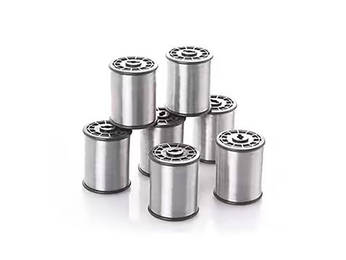
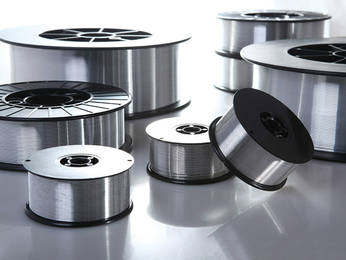
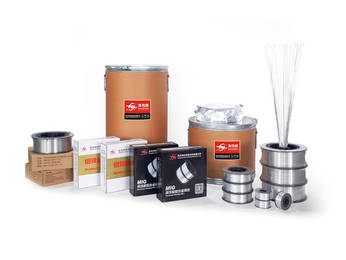
When fabricators work with marine-grade aluminum structures, selecting the right filler material becomes crucial for ensuring long-term durability and structural integrity. Among the various options available, Aluminum Welding Wire ER5754 stands out as a reliable choice for applications requiring corrosion resistance and moderate strength characteristics.
Understanding the Metallurgical Foundation of ER5754
ER5754 filler wire relies on a thoughtfully engineered composition that places primary emphasis on corrosion resistance while still delivering usable mechanical performance in the weld deposit. Magnesium acts as the chief alloying element supplying solid-solution strengthening without sacrificing ductility. Manganese serves as a supporting addition that encourages finer grain formation during solidification improving overall toughness and crack resistance. Chromium stays present in small controlled quantities to bolster corrosion behavior whereas iron and silicon are deliberately restricted as residual elements to prevent the creation of undesirable brittle phases.
Mechanical Properties Worth Noting
Weld metal deposited by ER5754 offers sufficient tensile strength for moderately stressed non-primary structural roles. Yield strength provides reasonable resistance to permanent deformation under typical operating loads. Elongation figures reflect solid ductility allowing the weld to handle some deformation without brittle failure. These characteristics make the filler suitable for applications where a measure of flexibility, impact resistance, or energy absorption provides practical benefit over a focus on static load capacity.
Why Fabricators Choose This Filler
Marine fabricators turn to ER5754 extensively for hulls decks and above-water structures because the magnesium promotes a stable self-healing oxide film that stands up well to prolonged saltwater exposure. Chemical processing facilities select it for tanks piping and vessels dealing with acids and alkaline media owing to its broad resistance to corrosive solutions. Automotive suppliers apply the filler to secondary brackets supports and enclosures where weight reduction and long-term corrosion protection take precedence over peak strength. HVAC manufacturers use it for ducting heat exchanger shells and moisture-prone assemblies thanks to its compatibility with prevalent 5xxx-series sheet and extrusions plus dependable performance in condensing or humid conditions.
Selecting Between GTAW and GMAW Processes
Gas tungsten arc welding gives manual welders precise command over heat input and filler placement making it especially effective for thin material where too much heat risks burn-through or excessive distortion. Root passes in critical joints benefit from the clean controlled deposition GTAW delivers. Work that places high value on smooth bead appearance and minimal post-weld cleanup often favors GTAW because it produces uniform low-spatter welds that need little finishing.
| Process | Thickness Range | Deposition Rate | Skill Requirement | Primary Advantage |
|---|---|---|---|---|
| GTAW (TIG) | 0.8–6 mm | Low | High | Precision control |
| GMAW (MIG) | 2–25 mm | High | Moderate | Production speed |
| Pulsed GMAW | 1.5–20 mm | Medium–High | Moderate–High | Heat control and speed |
When MIG Becomes the Practical Choice
Gas metal arc welding offers clear advantages when deposition speed and labor efficiency outweigh surface perfection. Thicker sections join more quickly with GMAW reducing overall time per connection. Automated or robotic systems exploit the continuous wire feed allowing extended weld lengths without stopping to change consumables. Positional welding in flat or horizontal orientations becomes straightforward thanks to the semi-automatic operation.
Pulsed GMAW introduces additional versatility by cycling between high and low current phases for controlled droplet transfer while keeping total heat input lower. This thermal control proves valuable when welding heat-sensitive components or holding tighter distortion limits. Spray transfer modes are often applied to thicker material where a higher filler deposition rate supports productivity.
Shielding Gas Selection Drives Weld Quality Outcomes
Argon forms the basis for the majority of ER5754 welding operations because it generates a stable arc across a wide current range making it forgiving for operators of different skill levels. Some welders appreciate the slightly stiffer arc that argon provides aiding consistent bead control. Nitrogen additions occasionally appear in experimental or specialized applications but carry substantial risks of porosity if moisture enters the delivery system or contaminates the surface.
Critical applications generally steer clear of nitrogen-containing shielding gases due to the potential for forming brittle aluminum nitride inclusions under certain cooling conditions. Unless thorough testing confirms advantages for a particular joint pure argon or argon-helium blends remain the safer more reliable options for consistent high-quality results.
Argon-Helium Blends for Specific Situations
Heavier sections often require the extra heat that helium brings to the table. Mixing helium with argon raises arc voltage and concentrates energy in the weld zone without pushing amperage higher. This combination improves penetration in groove joints that need deeper fusion through the thickness. Because helium is lighter than argon flow rates must increase to maintain effective shielding coverage over the molten pool compared with pure argon setups.
Some shops test various argon-helium ratios when dealing with substantial material thickness. The added heat counters aluminum's fast thermal conduction helping ensure complete fusion across the full joint depth. Travel speed can sometimes rise slightly with these hotter mixtures which may offset the higher gas expense through faster overall welding productivity.
Nitrogen Additions Remain Controversial
Small amounts of nitrogen blended into argon base gas can stiffen the arc during spray transfer GMAW making bead control easier for some welders. The increased arc stiffness helps maintain steady placement in certain positions. However nitrogen carries a real risk of porosity if any moisture finds its way into the gas line or sits on the base surface.
Most critical work stays away from nitrogen-containing shielding gases due to possible metallurgical problems. Nitrogen reacts with aluminum under some cooling conditions forming brittle nitride inclusions that weaken the weld. Unless thorough testing confirms a clear advantage for a specific joint pure argon or argon-helium blends remain the safer more dependable options.
How Joint Design Influences Welding Success
Butt joints pair well with ER5754 over a wide range of thicknesses. Square-edge preparations work fine on thin material avoiding machining expense while still achieving sound fusion. Medium-thickness joints benefit from single-bevel or double-bevel setups with suitable included angles. Root gaps need enough opening for full penetration without allowing excessive drop-through on the back side.
Fit-up Tolerances Matter More Than Many Realize
Aluminum's rapid heat conduction creates sharp temperature gradients during welding. Insufficient joint fit-up allows heat to dissipate through air gaps, reducing fusion quality and contributing to incomplete penetration. Maintaining consistent root gap dimensions supports uniform heat distribution and predictable weld penetration. Fixturing must hold the assembly securely without introducing stress risers that could drive distortion or cracking.
Fillet welds require uniform leg lengths. Uneven legs usually signal incorrect torch angle or inconsistent travel speed conditions that also link to poor root fusion. A slightly convex to concave bead face shows good shielding and balanced heat input. Overly convex beads suggest slow travel or high current while concave profiles point to insufficient filler or excessive speed.
Why Surface Preparation Cannot Be Compromised
Aluminum oxide develops within seconds on fresh metal forming a high-melting refractory barrier that blocks fusion unless removed right before welding. Mechanical removal through stainless steel wire brushing or grinding clears the oxide and creates surface texture that improves wetting.
Chemical Cleaning Protocols
Degreasing with solvents eliminates oils cutting fluids and organic residues that cause porosity. Acetone or aluminum-specific cleaners work well without leaving residues. For demanding applications alkaline cleaning followed by acid pickling provides thorough decontamination though it adds steps and cost.
After chemical cleaning weld within a few hours to limit oxide regrowth. Longer delays require fresh mechanical cleaning immediately before arc start. Storing material in controlled dry conditions slows oxide formation compared with humid or corrosive storage atmospheres.
Recognizing and Correcting Common Defects
Porosity shows as rounded voids scattered randomly or aligned in lines through the weld. Hydrogen pickup from moisture mostly causes porosity in aluminum welds. Hydrogen solubility drops sharply during solidification forcing gas bubbles to form and become trapped as the metal freezes. Preventing porosity involves:
- Thorough cleaning to eliminate hydrated oxides and surface moisture
- Proper shielding gas coverage without turbulence from excessive flow
- Clean filler wire kept in sealed containers
- Preheating base material when humidity is high to drive off absorbed moisture
Addressing Lack of Fusion Issues
Lack of fusion appears as unbonded areas between weld metal and base or between weld passes. Insufficient heat input usually causes it through excessive travel speed low current or poor torch angle. The bead looks narrow with tall reinforcement showing the molten metal failed to wet and spread sideways.
Corrections center on raising energy density at the fusion line. Slowing travel speed while holding other settings often fixes fusion problems. Moderately increasing amperage adds heat without drastically altering pool behavior. Adjusting torch angle to direct more heat toward unfused zones helps when joint geometry creates heat-sink effects.
Does ER5754 Require Post-Weld Heat Treatment?
Post-weld heat treatment is generally not required for welds made with ER5754 filler metal in standard uses. This filler is part of the non-heat-treatable 5xxx aluminum series, which gains its strength from solid-solution effects and work hardening instead of precipitation mechanisms. In cases involving thick sections or heavy restraint that produce high residual stresses, a low-temperature stress-relief treatment might be considered, though it often carries more drawbacks than advantages due to possible softening of the surrounding base material.
Inspection Methods That Ensure Quality
Visual checks identify obvious surface issues such as cracks, lack of fusion along the weld edges, excessive undercut, or overlap. Qualified personnel confirm consistent bead shape, even width, and overall appearance in line with quality benchmarks, while also measuring weld dimensions to verify throat size and leg lengths align with engineering drawings.
Liquid penetrant inspection effectively exposes surface flaws like fine cracks or small pores that escape normal sight, benefiting from the natural oxide layer on aluminum for clear indication visibility. Magnetic particle methods are unsuitable since aluminum lacks ferromagnetic characteristics.
Ultrasonic testing locates hidden internal imperfections in heavier plates where X-ray options may be less practical. Advanced phased-array approaches deliver better detail and scanning efficiency than traditional single-probe setups, with accurate calibration against blocks containing reference flaws guaranteeing dependable detection and measurement.
Establishing Welding Procedure Specifications
A detailed WPS records all critical factors influencing weld integrity and performance, covering:
Base Materials: Specific alloy types, temper designations, and applicable thickness limits.
Filler Metal: ER5754 classification, wire size, and supplier batch identification needs.
Welding Process: GTAW, GMAW, or hybrid approaches along with equipment details.
Joint Design: Diagrams illustrating bevel angles, root openings, and backing setups.
Positions: Supported orientations including flat, horizontal, vertical, and overhead.
Electrical Parameters: Allowed ranges for amperage, voltage, polarity, and feed rates.
Shielding Gas: Mixture type, delivery rates, purity levels, and nozzle dimensions.
Travel Speed: Welding parameters are established within suitable ranges according to material thickness and position.
Preheat and Interpass: Any temperature controls, including how measurements are taken.
Post-Weld Treatment: Necessary cleaning steps, any thermal processes if specified, and related acceptance standards.
Proper Storage Extends Wire Usability
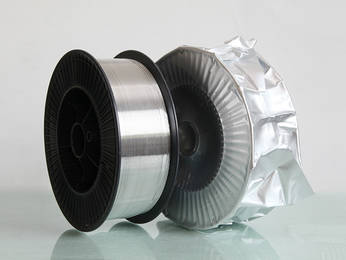
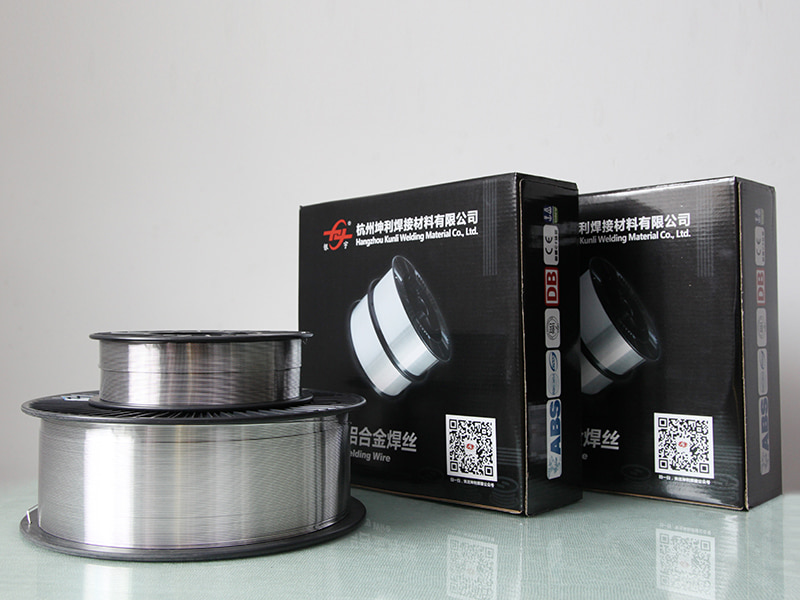
ER5754 filler wire ships with a thin protective lubricant layer to guard against oxidation while stored. Keep spools in their factory-sealed containers until needed for welding. After opening, contact with humid air starts surface oxidation and moisture pickup that degrades wire condition over time.
Creating Controlled Storage Conditions
Maintaining storage areas with regulated moderate humidity slows oxidation significantly. Steady temperatures avoid condensation that speeds up surface issues. For opened partial spools, resealing them inside bags containing desiccant helps preserve quality during breaks in use.
Wire showing a matte gray finish or clear oxide deposits requires cleaning or disposal before welding. Light contamination can sometimes be wiped off using rollers covered in clean fabric, but severely affected wire leads to erratic arcs and higher porosity risks, making rejection worthwhile regardless of expense.
Balancing Cost Factors Against Quality Requirements
Selecting spool sizes involves trade-offs between expense and workflow efficiency. Bigger spools cut down on changeover interruptions but demand stricter handling and storage to avoid contamination. Smaller spools fit better for occasional jobs where fresh wire matters more than fewer swaps. High-volume robotic setups often favor large quantities to match steady usage patterns.
| Spool Size | Typical Weight | Changeover Frequency | Storage Considerations | Application Fit |
|---|---|---|---|---|
| Small | 0.5–2 kg | High | Minimal space | Manual TIG, low volume |
| Medium | 5–7 kg | Moderate | Standard racks | General MIG applications |
| Large | 15–25 kg | Low | Humidity control critical | High-volume automated |
Certification Documentation Provides Traceability
Mill certificates confirm chemistry and strength values for individual production batches. Such records prove essential under codes mandating material tracking or when quality programs require verified compliance. Sourcing from trusted vendors minimizes chances of receiving incorrect or substandard supplies.
Testing Validates Parameter Development
Producing trial welds on sample pieces before full production helps refine settings for particular joints or material states. Adjust one factor at a time while documenting visuals or break tests to guide improvements. This methodical method boosts welder skill and supplies proof of careful preparation for audits.
Guided bend tests check fusion integrity and flexibility by bending coupons over specified radii. Face bends test the weld top surface, while root bends examine the underside. Passing without major openings confirms suitable properties for code acceptance.
Tensile tests determine if weld joint strength satisfies or surpasses required minimums. Transverse samples pulled across the weld compare overall joint performance to base metal, whereas longitudinal samples evaluate filler strength separately.
Gas Flow Rates Require Careful Calibration
Running the shielding gas too low invites air contamination that quickly turns into oxide inclusions and porous welds. Cranking it up too high generates turbulence that sucks air right back into the gas column and defeats the purpose. Flowmeters drift over time, so checking them against a reliable standard on a scheduled basis keeps the settings honest.
Cup Size and Standoff Distance Interactions
A larger gas cup throws a wider protective blanket over the puddle but can block your view or refuse to fit into corners. Picking the right cup for hand-held GTAW is always about trading coverage for accessibility. Most MIG guns come with cups already sized for the typical wire and amperage window they were designed for.
Torch standoff distance affects both shielding effectiveness and heat input. Backing the torch away enlarges the shielded area yet makes the arc wander and lose focus. The sweet spot keeps the gas blanket effective while the arc stays tight and responsive.
Handling Techniques Influence Consistency
Manual GTAW lives or dies by how smoothly the welder feeds filler with one hand while steering the torch and holding travel speed with the other. Steady, rhythmic dips produce clean, even beads. Hesitant or rushed additions leave lumpy ripples and cold laps where the puddle never quite swallowed the wire.
Travel Angle Considerations
A push technique directs the arc toward the forward area of the weld pool, typically yielding a wide, flat bead with adequate penetration. A pull technique tends to produce a narrower, deeper groove and a visible bead crown. For aluminum, welders usually favor a gentle push angle—around 10 to 15 degrees off perpendicular—to get good fusion without excessive buildup. Work angles relative to the joint affect heat distribution between members in fillet welds or T-joints. In equal-thickness fillets, split the angle and aim straight down the centerline so both legs get the same heat. When one side is noticeably thicker, point the torch more toward the heavy plate so the extra mass does not steal all the energy and leave the thin side underfused.
Multi-Pass Sequences for Thicker Sections
Heavy groove welds need a disciplined layer-by-layer plan to fill the joint completely without overheating the plate. The root pass is all about tying the two sides together with solid penetration using settings that fit the tight groove. Subsequent fill passes stack metal while watching interpass temperature to avoid coarsening the grain structure.
Interpass Temperature Management
Letting the part cool between passes keeps distortion down and strength up. Stay below the temperature where the alloy starts to lose its properties. When the schedule is tight, a shop fan or light water spray can drop the temperature quickly without shocking the weld.Cap passes provide the final external surface and require particular attention to appearance on visual inspection areas.Dropping the amperage a little for the cover pass gives better control over contour and helps avoid undercut or an overly rounded crown. A final wipe or light grind removes any lingering oxide or spatter before the inspector looks at it.
Which Applications Benefit Most from ER5754?
ER5754 is often selected in marine construction due to its resistance to seawater exposure. Hull skins, interior bulkheads, and framing members all gain from the tough oxide film and the fact that the welds match the corrosion behavior of common 5xxx and 6xxx marine plate.Chemical storage tanks utilize ER5754 for resistance to both acidic and alkaline solutions. Being non-heat-treatable, it never sensitizes or becomes prone to stress-corrosion cracking in aggressive environments. Tanks storing fertilizers, food-processing chemicals, or pharmaceutical liquids have used this filler successfully for decades.
Automotive and Transportation Uses
Aluminum's light weight makes it ideal for trailers, motorhome chassis, and specialty hauling equipment. ER5754 provides structural strength suitable for general components and offers corrosion protection, contributing to service life in vehicle applications.
Training Considerations for Welding Personnel
No procedure in the world can save a weld made by someone who lacks feel for the puddle. GTAW on aluminum is especially unforgiving—new welders need hours on scrap until the bead looks the same start to finish with full penetration and no sugaring on the back side.
Certification and Qualification Testing
Most serious jobs demand that welders prove they can lay down acceptable welds on test plates that later get inspected and broken. Passing the visual and bend or tensile requirements shows the welder can meet the code on real parts.Periodic requalification ensures welders maintain their skills and stay current with procedure changes.Many standards make welders re-test if they have not run a given process in six months or more. Keeping those qualification papers current satisfies auditors and customers alike.
Environmental Factors Affecting Weld Quality
Air movement across the weld area can displace the shielding gas, allowing atmospheric gases to enter the molten pool. This can result in oxide inclusions or porosity in the weld. When welding outdoors or close to fans and exhaust hoods, portable screens or temporary enclosures become essential, and sometimes bumping up the gas flow helps hold the envelope in place. In strong wind, it may be impossible to get sound welds without blocking the air movement entirely.
Temperature and Humidity Effects
Cold plate pulls heat out of the weld zone so fast that the puddle can freeze before proper fusion occurs, often leaving porosity or lack-of-fusion defects. Preheating the base metal evens out the temperature gradient and restores normal penetration, but going too hot risks softening the alloy or creating other issues. The correct preheat depends on thickness, joint design, and the specific temper of the aluminum being welded.
High moisture in the air adds hydrogen to the weld pool, which then forms tiny gas pores as the metal solidifies. Keeping filler wire, plate, and the work area at reasonable humidity levels cuts down on this problem, and preheating damp material drives off surface moisture before striking the arc. Watching the forecast and shop conditions lets you decide when extra drying steps or dehumidifiers are worth the effort.
Comparing ER5754 with Alternative Fillers
ER5356 carries more magnesium than ER5754, which boosts the weld's tensile strength noticeably while trading off some ductility and bend performance. Applications where joint strength is emphasized often select ER5356, while noting its sensitivity to stress-corrosion cracking in chloride-containing or chemically active environments.
ER4043, with its silicon addition, flows more easily and resists hot cracking better when welding certain 6xxx series or dissimilar combinations. The lower melting point and eutectic behavior make it forgiving on castings, repairs, or thick sections that need good fill without excessive heat. On the downside, welds made with ER4043 show lower strength and noticeably poorer corrosion resistance, so it stays limited to applications where those weaknesses do not matter.
Making the Right Filler Choice
The service conditions for a welded joint often carry greater weight in filler selection than mechanical properties alone. Saltwater, chemical fumes, or constant moisture point straight to ER5754 for its outstanding resistance to pitting and general corrosion. Applications involving significant structural loads or those emphasizing tensile properties may warrant consideration of an alternative filler alloy following an assessment of the relevant performance trade-offs. Talking with a welding engineer and checking the governing code or specification removes guesswork and helps lock in the correct choice.
Documentation Practices for Quality Assurance
Good weld records list every key setting—amperage, voltage, travel speed, gas flow—along with who ran the torch and what the inspections showed. These logs create a clear trail back to the exact conditions if a failure shows up months later, and they prove the shop maintained control during customer or third-party audits. Many fabricators now rely on digital logging that pulls data straight from the power source and ties it to the joint or part number automatically.
Nonconformance Tracking
Whenever a weld fails inspection, writing down the defect description, its exact spot on the part, the suspected root cause, and the fix applied turns one-off problems into lessons for the whole crew. Collecting those reports over time reveals patterns—recurring porosity from moisture, repeated undercut from travel speed issues—that signal the need for procedure tweaks, better training, or equipment upgrades.
Emerging Technologies in Aluminum Welding
Newer inverter power supplies with real-time arc sensing tweak voltage, current, or pulse settings on the fly to hold a steady arc even when hand movement varies or joint gaps change slightly. The automatic compensation delivers more uniform beads with fewer defects, especially helpful for operators still building experience or when tackling awkward positions.
Hybrid laser-GMAW setups marry a high-energy laser beam for deep, narrow penetration with a conventional MIG arc that adds filler and rounds out the bead profile. The combination can fill heavy sections in a single pass where multiple conventional layers would be needed, cutting time and heat input dramatically. High equipment price tags keep the process mainly in large-scale production shops, but the speed and quality improvements continue to drive wider interest.
Working with Aluminum Welding Wire ER5754 demands attention to multiple interconnected factors that collectively determine weld quality. Material cleanliness, proper shielding, appropriate heat input, and systematic quality verification all contribute to achieving reliable joints. Developing comprehensive welding procedures through coupon testing establishes parameter baselines while building operator proficiency. Documentation practices ensure repeatability across production runs and provide evidence of process control for quality audits.
NEXT:ER5356 aluminum welding wire is known for its excellent color matching properties