English
  Deutsch


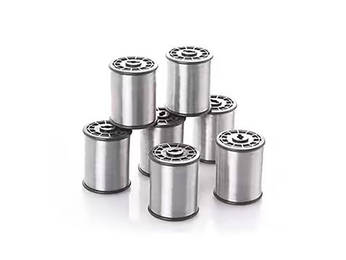
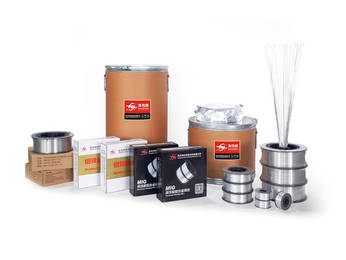
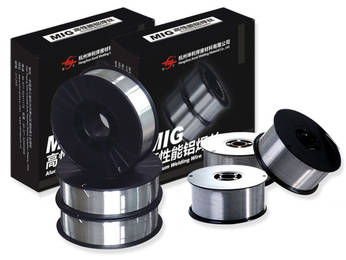
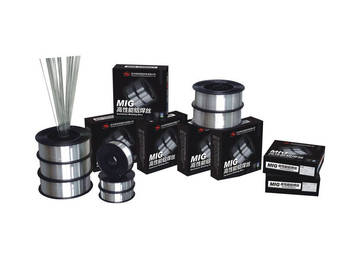
Special Al Alloy Welding Wire: Properties & Uses
Article Directory
Standard aluminum filler wires like ER4043 and ER5356 work fine for everyday fabrication, but they start to fail once welds face aerospace loads, marine salt spray, or thick-section cracking risk. Special Al Alloy Welding Wire closes that gap by adjusting alloy composition specifically for the stress, environment, and joint geometry of the application.
What Special Al Alloy Welding Wire Actually Is
Special al alloy welding wire is an aluminum-based filler metal formulated with controlled additions of magnesium, copper, silicon, zinc, manganese, zirconium, or titanium to hit a performance target that off-the-shelf wire cannot reach. Each element changes the weld differently: magnesium raises corrosion resistance for marine hulls, copper unlocks strength in heat-treatable aerospace alloys, and zirconium refines grain structure to reduce hot cracking in thick sections.
Definition: a specialty aluminum welding wire is any filler alloy engineered outside standard AWS classifications to solve a specific mechanical, environmental, or metallurgical welding problem.
Why Standard Wire Falls Short on Demanding Joints
General-purpose wire is optimized for cost and broad compatibility, not peak performance. Three failure modes push fabricators toward a custom formulation: hot cracking in thick or high-restraint joints, strength loss in the heat-affected zone, and corrosion once the structure meets moisture or salt exposure.
Typical Tensile Strength by Wire Type (MPa)
Illustrative comparison; actual values vary by base metal, joint design, and process parameters.
Key Properties That Justify a Custom Formulation
Four properties consistently drive the decision to move away from standard filler wire.
Mechanical Strength
Higher tensile strength and fatigue resistance for load-bearing and structural joints.
Crack Resistance
Refined weld pool chemistry reduces hot cracking in thick or high-restraint sections.
Corrosion Resistance
Tuned magnesium content resists moisture, salt spray, and chemical exposure.
Feed Stability
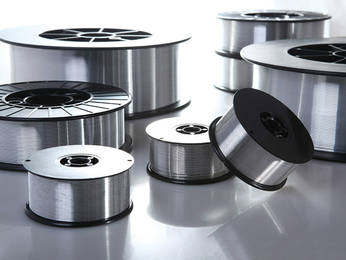
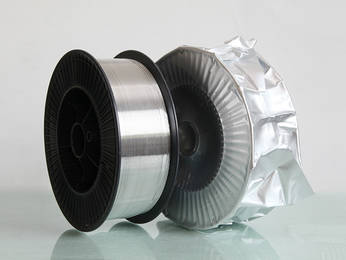
Consistent diameter and surface finish give smooth feeding on MIG and robotic lines.
Salt Spray Corrosion Resistance (Hours to First Pitting)
Illustrative salt-spray comparison; results depend on base alloy and post-weld treatment.
Matching Wire Composition to Application
Selecting a wire starts with the base metal, then layers on environmental and load requirements.
Al-Mg Wire
- Best for shipbuilding and offshore structures
- High resistance to salt and moisture
- Good general weld strength
Al-Cu Wire
- Best for aerospace and defense components
- Compatible with heat-treated base alloys
- Higher achievable tensile strength
Aluminum-Zinc and Aluminum-Silicon Options
Al-Zn wire targets high-load aerospace structures where strength-to-weight ratio matters most. Al-Si wire favors fluidity and reduced cracking, making it the standard choice for aluminum casting repair and general fabrication where appearance and ease of use outweigh peak strength.
Special vs Standard Aluminum Welding Wire
| Composition | Customized alloy design | General alloy composition |
| Strength | Higher performance options | Moderate performance |
| Corrosion Resistance | Can be optimized per environment | Depends on alloy type |
| Typical Use | Aerospace, marine, automotive structures | General fabrication |
Choosing the wrong filler wire is one of the most common causes of premature weld failure in aluminum structures — matching composition to base metal and service environment is not optional for critical joints.
Fabricators evaluating a special al alloy welding wire supplier should confirm melting and composition control, continuous casting precision, and documented weld performance testing before committing to a production run.
Frequently Asked Questions
What welding processes support special al alloy welding wire?
MIG, TIG, and robotic welding all support special aluminum alloy wire, with TIG favored for thin materials and precision work, and MIG or robotic systems favored for high-volume production.
Is special aluminum welding wire more expensive than standard wire?
Yes, custom formulations typically cost more than ER4043 or ER5356 due to tighter composition control, but the added strength and corrosion resistance reduce long-term failure and rework costs.
How do I know if my project needs a special alloy wire?
If the joint is load-bearing, faces marine or chemical exposure, is a thick-section high-restraint weld, or uses a heat-treatable base alloy, a special alloy wire generally outperforms standard filler.
Can special alloy wire be used with automated welding systems?
Yes, quality-controlled diameter and surface finish make these wires well suited to robotic and other automated welding lines that require consistent feeding.
NEXT:What Causes Feeding Problems With 4943 Aluminum Welding Wire