English
  Deutsch


How to optimize wire feed speed and gas flow for alloy er4043 in robotic GMAW applications?
Article Directory
- 1 The Precision Requirements of Robotic ER4043 Welding
- 2 Optimizing Wire Feed Speed (WFS) for Thermal Control
- 3 Calibrating Gas Flow for Porosity Prevention
- 4 Technical Specification: Robotic GMAW Parameters for ER4043
- 5 Why Partner with Hangzhou Kunli Welding Materials?
- 6 Hardcore Technical FAQ
- 7 Technical References
The Precision Requirements of Robotic ER4043 Welding
- Material Characteristics: Alloy er4043 is a 5% silicon aluminum filler metal characterized by high fluidity and excellent resistance to weld cracking. In robotic Gas Metal Arc Welding (GMAW), these properties require precise synchronization between the robot's travel speed and the wire feed system to prevent burn-through or lack of fusion.
- Robotic Consistency: Unlike manual welding, robotic systems demand a highly stable arc. Any fluctuation in the quality of the wire—such as surface cleanliness or diameter consistency—can disrupt the automated process.
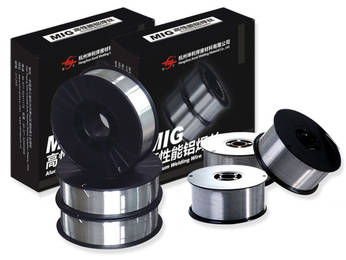
- Manufacturing Expertise: Hangzhou Kunli Welding Materials Co., Ltd. brings over 20 years of experience to the production of high-performance aluminum alloy wire. Our international advanced manufacturing equipment and strict quality control systems ensure that our ER4043 wire provides the "stable production process" essential for high-speed robotic integration.
Optimizing Wire Feed Speed (WFS) for Thermal Control
- The WFS-to-Current Relationship: In robotic GMAW, wire feed speed is the primary variable controlling welding current. For alloy er4043, WFS must be high enough to maintain a stable spray transfer mode but balanced against the robot's travel speed to manage the heat input. Excessive WFS without corresponding travel speed leads to "convex" beads and excessive weld reinforcement.
- Feedability and Wire Surface: Aluminum wire is soft and prone to "bird-nesting" in robotic feeders. Kunli's ER4043 wire is engineered with superior surface finish and precise diameter tolerances to minimize friction in the liner, allowing for consistent WFS even at high acceleration rates.
- Technical Certification: Our high-performance ER4043 silicon aluminum welding wire has passed authoritative international certifications including DB, CE, ABS, DNV, and CCS, guaranteeing that the mechanical and chemical properties meet the standards of industry leaders like China CRRC and Maersk.
Calibrating Gas Flow for Porosity Prevention
- Shielding Gas Dynamics: Pure Argon or an Argon/Helium mix is typical for ER4043. For robotic applications, the gas flow rate must be high enough to protect the molten pool at increased travel speeds but not so high that it creates turbulence. Turbulence draws in atmospheric air, leading to hydrogen-induced porosity—the primary enemy of aluminum welds.
- Flow Rate Standards: Typical flow rates for robotic GMAW of alloy er4043 range from 15 to 25 L/min (30-50 CFH). In heavy-duty industrial environments, using a gas lens or a larger nozzle size can help stabilize the shielding envelope over the fast-moving arc.
- Global Supply and Innovation: With a production capacity of 200MT per month and a strong export presence in over 30 countries (including the USA and Japan), Kunli has successfully broken the status quo of relying on imported high-performance aluminum welding materials.
Technical Specification: Robotic GMAW Parameters for ER4043
| Material Thickness | Wire Diameter | Wire Feed Speed (IPM) | Gas Flow Rate (L/min) | Voltage (V) |
| 3.0 mm | 1.2 mm | 350 - 450 | 18 - 20 | 21 - 23 |
| 5.0 mm | 1.2 mm | 500 - 650 | 20 - 22 | 24 - 26 |
| 8.0 mm+ | 1.6 mm | 300 - 400 | 22 - 25 | 26 - 28 |
Why Partner with Hangzhou Kunli Welding Materials?
- Research-Driven Development: We maintain close cooperation with institutes like the Beijing Nonferrous Metals Research Institute and Central South University to continuously innovate and optimize the chemical purity of our alloy er4043.
- Proven Replacement for Imports: As a qualified supplier to global giants like China CRRC, our products have successfully replaced high-cost imported materials while maintaining identical or superior performance in automated production lines.
- One-Stop Aluminum Specialist: We specialize specifically in aluminum alloy welding wire, ensuring that our entire manufacturing chain—from casting to final winding—is optimized for the unique challenges of aluminum metallurgy.
Hardcore Technical FAQ
- Why does ER4043 require higher WFS than steel?: Aluminum has a much lower melting point and higher thermal conductivity than steel. To maintain a stable arc and penetrate the base metal, you must feed more wire and use higher current densities.
- How does "Silicon" in ER4043 affect robotic welding?: The 5% silicon reduces the melting point and increases fluidity. In robotic paths with tight corners, this fluidity helps the weld pool wet out properly without causing "undercut."
- What is the best way to monitor gas flow on a robot?: Use a digital flow meter at the torch end (the "nozzle flow") rather than just at the regulator. This accounts for losses through the long robotic cable carrier.
- Can I use ER4043 for 5000-series aluminum?: It is not recommended for alloys with more than 3% Magnesium (like 5083), as it can form excessive Magnesium-Silicide ($Mg_2Si$), which makes the weld brittle.
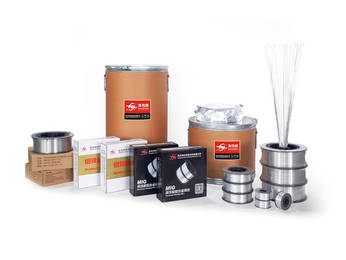
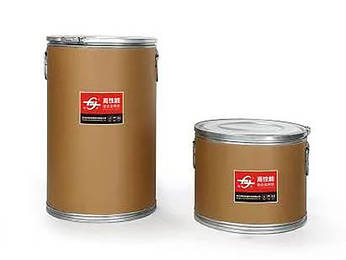
- Does Kunli provide custom spool sizes for robots?: Yes, we provide various packaging options including large drums (100kg+) to minimize downtime for wire changes in high-volume robotic cells.
Technical References
- AWS A5.10: Specification for Bare Aluminum and Aluminum-Alloy Welding Electrodes and Rods.
- ISO 18273: Welding consumables — Wire electrodes, wires and rods for welding of aluminum and aluminum alloys.
- EN 573-3: Aluminum and aluminum alloys — Chemical composition and form of wrought products.
PREV:Engineering Rationale for Selecting ER4043 Welding Wire for 6061 Aluminum Alloys
NEXT:How Does Aluminum MIG Wire Diameter Tolerance Matter
NEXT:How Does Aluminum MIG Wire Diameter Tolerance Matter
How does ER4043 Silicon Aluminum Welding Wire's composition and characteristics influence its suitability and performance in specific welding applications, and what are the key considerations for its successful utilization?
Aluminum alloy wire has become a popular choice for many industries due to its unique properties and versatility
What are the key metallurgical and mechanical properties of ER5154 Al-Mg Alloy Wire, and how does it compare to other aluminum-magnesium welding wires in terms of weldability and performance in marine and high-corrosion applications?
What are the key advantages and challenges associated with ER4047 Aluminum MIG Welding Wire, and how does it compare to other aluminum welding wires in terms of weld quality and performance in critical applications?
What are the key considerations for selecting the right aluminum alloy welding wire for specific applications, and how does it impact the quality and efficiency of the welding process?