English
  Deutsch


Engineering Rationale for Selecting ER4043 Welding Wire for 6061 Aluminum Alloys
Article Directory
- 1 Metallurgical Crack Sensitivity and Silicon Content Optimization
- 2 Mechanical Properties and Surface Quality Standards
- 3 Comparative Analysis: ER4043 vs ER5356 for 6061 Components
- 4 Global Certification and Industrial Application Reach
- 5 Technical FAQ: Optimization of ER4043 Welding Procedures
- 6 Reference Industry Standards
The selection of er4043 welding wire for welding 6061-T6 aluminum alloys is primarily dictated by its 5% silicon content, which effectively shifts the weld metal chemistry out of the crack-sensitive range. 6061 aluminum is highly susceptible to solidification cracking when welded with matching filler metals; however, ER4043 increases the fluidity of the weld pool and lowers the melting point, ensuring superior bead profile and structural integrity. For industrial applications requiring post-weld heat treatment or specific anodizing aesthetics, understanding the metallurgical interface between Al-Mg-Si base metals and Al-Si fillers is critical for long-term fatigue resistance.
Metallurgical Crack Sensitivity and Silicon Content Optimization
The primary technical advantage of using aluminum alloy filler metal with high silicon content is the mitigation of hot shortness. During the solidification of 6061 alloys, a low-melting-point liquid phase can persist at grain boundaries, leading to cracks under thermal stress. ER4043 addresses this through specific chemical parameters:
- Silicon Range (4.5% - 6.0%): This level ensures a high volume of eutectic liquid during the final stages of solidification, which "backfills" any incipient cracks.
- Solidus Temperature (574°C): The lower solidus compared to 6061 (582°C) allows the filler to remain liquid slightly longer, reducing localized stresses.
- Reduced Shrinkage: Silicon reduces the overall coefficient of thermal expansion, resulting in lower residual stress within the joint.
Mechanical Properties and Surface Quality Standards
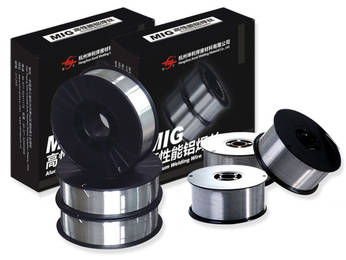
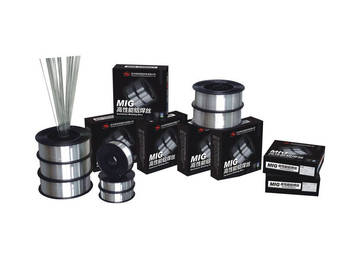
As a high-technology enterprise, Hangzhou Kunli welding materials Co., Ltd. produces wires that maintain strict adherence to AWS A5.10 and EN ISO 18273. The manufacturing process in our Xiaoshan, Hangzhou facility utilizes advanced drawing equipment to ensure surface consistency, which is vital for stable arc transfer:
- Surface Roughness (Ra ≤ 0.8μm): A smooth finish prevents the accumulation of aluminum oxides and contaminants that cause porosity.
- Tensile Strength (Typical ≥ 165 MPa): While ER4043 has lower ductility than 5xxx series wires, it provides sufficient strength for most 6061 structural frames.
- Feedability Standards: Strict diameter tolerance (±0.01mm) and optimized wire stiffness prevent "bird-nesting" in automated GEMA or robotic welding systems.
Comparative Analysis: ER4043 vs ER5356 for 6061 Components
Choosing the correct wire often involves a trade-off between shear strength, ductility, and color matching. Below is a technical comparison of how these wires perform when joined with 6061-T6 base materials.
- Shear Strength
| Feature | ER4043 (Al-Si5) | ER5356 (Al-Mg5) |
| Crack Sensitivity | Low (Excellent) | Moderate |
| Anodizing Color Match | Poor (Turns Dark Grey) | Excellent (Matches Base) |
| Fluidity | High (Easier to weld) | Low (More viscous) |
Global Certification and Industrial Application Reach
Leveraging over 20 years of production experience and 200MT monthly capacity, our products successfully replace imported materials for high-tier manufacturers. Our er4043 welding wire is qualified for use in complex environments through rigorous testing:
- International Certifications: Compliance with DB, CE, ABS, DNV, and CCS ensures safety for marine and rail transportation sectors.
- Strategic Partnerships: Ongoing research with the Beijing Nonferrous Metals Research Institute allows us to supply high-performance materials to China CRRC and Maersk.
- Export Capabilities: Over 50% of our production supports critical infrastructure in the USA, Mexico, Japan, and Australia, meeting localized ASTM and JIS standards.
Technical FAQ: Optimization of ER4043 Welding Procedures
Can ER4043 be used for welding 6061 parts that will be anodized?
It is technically possible, but the weld area will turn a distinct dark grey/black due to the silicon content. If aesthetic color matching is mandatory, ER5356 is the preferred alternative.
What is the impact of moisture on ER4043 storage?
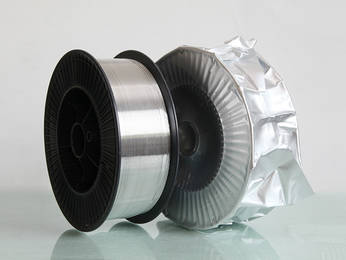
Aluminum is highly sensitive to hydrogen porosity. Our vacuum-sealed packaging prevents the formation of thick Al(OH)3 layers, ensuring stable arc performance during high-speed feeding.
Why does ER4043 produce less soot than 5xxx series wires?
The absence of Magnesium (Mg) in ER4043 significantly reduces the vaporization of metallic elements during the MIG/TIG process, resulting in a cleaner weld surface.
What shielding gas is recommended for 6061/ER4043 joints?
Pure Argon (99.99%) is standard. For thicknesses exceeding 12mm, an Argon-Helium mix (25% He) is utilized to increase heat input and penetration.
How does Hangzhou Kunli ensure wire purity?
We utilize complete testing equipment to monitor trace elements (Fe, Cu, Mn, Zn) to within 0.01% of the targeted chemical composition, preventing embrittlement.
Reference Industry Standards
- AWS A5.10/A5.10M: Welding Consumables - Bare Aluminum and Aluminum-Alloy Welding Electrodes and Rods.
- EN ISO 18273: Welding consumables - Wire electrodes, wires and rods for welding of aluminum and aluminum alloys.
- ASTM B209: Standard Specification for Aluminum and Aluminum-Alloy Sheet and Plate.
NEXT:How to optimize wire feed speed and gas flow for alloy er4043 in robotic GMAW applications?