English
  Deutsch


How to Weld Aluminum Using Aluminum MIG Wire
Article Directory
- 1 Understanding How Aluminum MIG Wire Behaves in the Welding Process
- 2 Preparation Requirements and Safety Protocols
- 3 Equipment Configuration and Consumable Selection
- 4 Step-by-Step Welding Technique
- 5 Diagnosing and Correcting Common Problems
- 5.1 Addressing Insufficient Fusion and Cold Lap Defects
- 5.2 Solving Wire Feeding Difficulties and Bird-Nesting
- 5.3 Eliminating Porosity Through Contamination Control
- 5.4 Balancing Penetration and Burnthrough Risk
- 5.5 Correcting Bead Profile and Appearance Issues
- 5.6 Wire Storage and On-Site Handling Practices
- 6 Specialized Applications and Advanced Practices
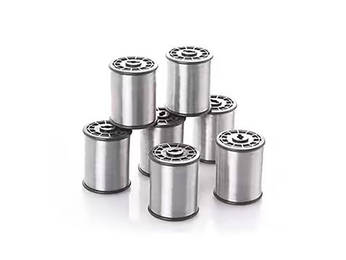
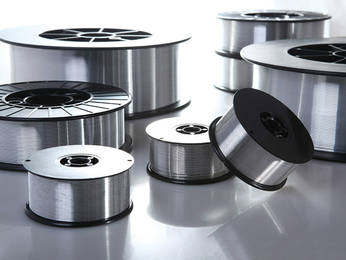
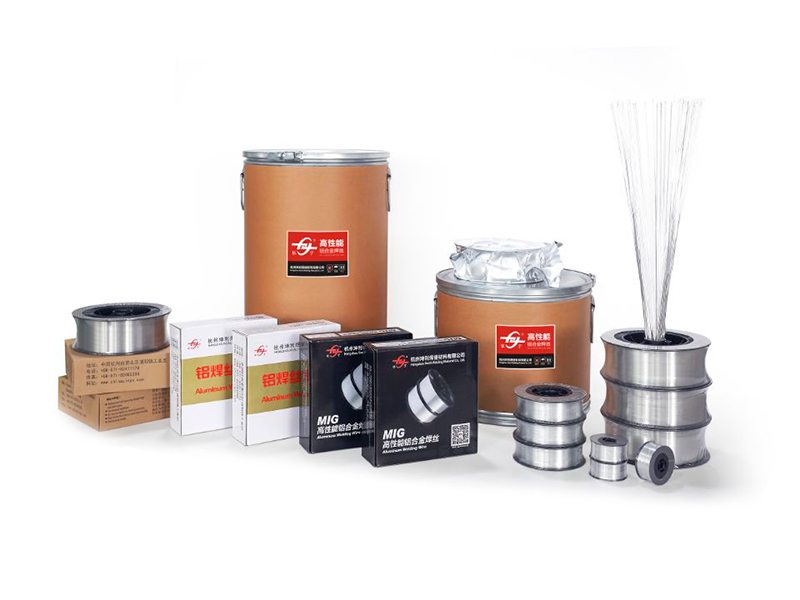
Working with aluminum presents distinct challenges that catch many welders off guard, particularly when they transition from steel. The material's exceptional thermal conductivity means that heat dissipates rapidly from the weld zone, creating difficulties with puddle control and fusion. When you pick up a spool of Aluminum MIG Wire for structural fabrication, marine repair, trailer assembly, or automotive components, you're dealing with a consumable specifically engineered for spray transfer gas metal arc welding on aluminum substrates. This guide provides the setup parameters, handling protocols, and technique adjustments you need to produce sound welds consistently, whether you're joining thick extrusions on a railcar frame or reinforcing thin panels on a boat hull.
Understanding How Aluminum MIG Wire Behaves in the Welding Process
Material Characteristics That Affect Welding Performance
Aluminum pulls heat away from the weld zone roughly four times faster than carbon steel, so the puddle forms and freezes much quicker once the arc strikes. That rapid heat sink demands noticeably higher amperage to get decent penetration compared with steel at similar thickness. The fast thermal drain also makes aluminum welds look more sensitive to small changes—tiny shifts in travel speed, torch angle, or even hand movement cause the puddle temperature to swing sharply, which shows up right away as uneven bead shape, inconsistent fusion, or sudden changes in penetration depth.
The stubborn oxide film on aluminum melts at a much higher temperature than the metal below it. While the base aluminum starts to puddle, the oxide stays solid and acts like a barrier that can trap dirt, moisture, or gas and block clean fusion. Brushing or grinding right before welding breaks through that layer, but fresh oxide grows back fast in open air, so you have to weld soon after cleaning for the best results, especially on parts where porosity or lack of fusion could cause rejection.
Common Filler Alloys and Their Intended Uses
Aluminum MIG wires split into two main families depending on the key alloying element.
Silicon-added wires flow easily because the silicon lowers the melting point and makes the puddle more fluid, which helps fill gaps and reduces the chance of hot cracking. They pair well with castings and most 6000-series extrusions or sheet. The smooth, shiny beads and forgiving nature make silicon fillers the favorite for automotive panels, enclosures, or any fabrication where appearance counts and strength isn't pushed to the limit.
Magnesium-alloyed wires match closely with 5000-series base metals—the work-hardened structural and marine grades. The magnesium keeps weld strength in line with the parent metal and preserves good corrosion resistance in wet, salty, or chemical environments. When you're welding boat hulls, bulkheads, railings, or offshore frames, magnesium-bearing filler is usually the right call to avoid weakening the joint or inviting pitting over time.
The ER numbering system spells out the exact chemistry so you can match filler to base alloy. Getting that match right avoids problems like galvanic corrosion between weld and plate, cracking from mismatched expansion, or a soft heat-affected zone that fails under load. For anything structural or code-stamped, double-check the base alloy designation before picking wire.
Wire Diameter Selection and Material Thickness Compatibility
| Wire Diameter | Suitable Material Thickness | Typical Applications | Amperage Range |
|---|---|---|---|
| Smaller diameters | Thin sheet metal | Automotive panels, decorative work | Lower current range |
| Medium diameters | Moderate material thickness | General fabrication and repair tasks | Moderate current range |
| Larger diameters | Thicker sections | Structural welding and heavy fabrication | Higher current range |
| Largest diameters | Heavy plate and multi-pass joints | Thick sections requiring multiple passes | Highest typical current range |
Smaller wire diameters give finer control on thin sheet or delicate work because they run cooler and let you keep heat input low to prevent burn-through. The trade-off is slower deposition and more frequent spool swaps. Larger diameters like inch push more metal per pass and handle higher current for thicker plate or deeper penetration, but they get hard to manage on light material where the puddle can blow through quickly. Most shops doing varied aluminum work keep both inch on hand so they can switch easily depending on the job thickness and joint type.
Shielding Gas Selection and Transfer Mode Considerations
Straight argon is the workhorse gas for aluminum MIG because it keeps the arc steady, delivers reliable spray transfer, and gives strong cleaning action that helps break up surface oxide in the puddle. Some welders add helium to the mix for thicker sections since helium boosts heat input and improves penetration on heavy plate. The downside is a hotter, less stable arc that can throw more spatter and make the puddle harder to control, especially for operators still building skill.
Spray transfer is the goal for most aluminum MIG work—it lays down a smooth, consistent bead with almost no spatter and even fusion. In spray mode, the filler metal crosses the arc as a fine, continuous stream of tiny droplets instead of big globs. Hitting spray requires enough voltage and wire feed speed to push past the transition point; drop below that and you fall into short-circuit or globular transfer, which brings rough beads, excess spatter, and a much higher risk of porosity from poor gas coverage. Power source manuals usually include charts showing the minimum settings needed for stable spray with each wire size—use those as the starting point and fine-tune from there based on your specific joint and material.
Preparation Requirements and Safety Protocols
Surface Cleaning and Joint Preparation Steps
Getting clean aluminum ready for welding means dealing with three main contaminants that can ruin the weld if left behind.
- First, wipe off any oil or grease films from cutting lubricants, fingerprints, or shop dirt using acetone or a dedicated aluminum cleaner and fresh lint-free rags. Change the rags often—once they pick up oil they just spread it around instead of removing it, which leads to porosity scattered through the bead.
- Second, the oxide layer has to come off mechanically right before you start welding. Use a stainless steel wire brush kept only for aluminum (never one that touched steel) or aluminum-specific abrasive pads. Brush in straight lines along the joint direction rather than scrubbing in circles; that gives a uniform scratch pattern that helps the puddle wet evenly. Oxide grows back fast in air, so plan to weld within about 8 hours of brushing for normal structural work, or cut that to 2 hours or less if the welds will face X-ray or ultrasonic inspection.
- Third, watch for condensation when cold aluminum comes into a warmer shop. Moisture turns into hydrogen in the arc and causes porosity. Let cold material sit until it reaches room temperature before cleaning or welding, or warm it gently with low-heat lamps or space heaters to speed things up without overheating.
Respiratory Protection and Ventilation Requirements
Aluminum MIG welding kicks off aluminum oxide fumes plus ozone from the arc's UV light. While the fumes aren't as toxic as those from stainless or high-manganese steels, they still irritate lungs and eyes, so you need good capture and breathing protection. Set up local exhaust right at the weld—position the hood 12 to 18 inches away, angled to pull fumes without sucking away your shielding gas.
Inside tanks, under vehicles, or in any tight space where air doesn't move freely, natural ventilation won't cut it. Use supplied-air respirators or airline systems, check oxygen levels, and follow confined-space entry rules even for quick jobs. Keep the exhaust strong enough to clear the air but gentle enough not to disturb the argon blanket around the puddle.
Environmental Factors Affecting Weld Quality
Temperature swings hit aluminum hard. Base metal colder than about 50°F pulls heat away so fast that you can get cracking or incomplete fusion unless you preheat to even things out. On the hot side—above 95°F or so—the wire can soften in the liner and feed erratically, especially on long runs. Direct sun on outdoor work heats one side of the joint more than the other, making the puddle run differently across the seam and forcing constant tweaks to voltage or travel speed.
Wind over about 5 mph blows shielding gas away and lets air sneak into the puddle, causing oxide inclusions or porosity. Set up portable screens or curtains to block breezes, or wait for calmer conditions. Even a light draft you barely notice can create turbulence that pulls oxygen into the argon shield and ruins the weld.
Equipment Configuration and Consumable Selection
Choosing Between Standard Torches, Spool Guns, and Push-Pull Systems
Aluminum wire is soft and bends easily, so feeding it without kinking or shaving takes the right setup.
Standard MIG torches work fine for most shops when the cable run stays short—under 10 feet—and the liner is clean and in good shape. Keep drive rolls adjusted just snug enough, use knurled rolls for aluminum, and clean or replace the liner often. It's the cheapest option and handles 0.035- and 0.045-inch wire well once dialed in.
Spool guns put a small 1-pound spool right on the torch handle so the wire only travels a few inches from spool to tip. That nearly eliminates feeding issues, but the gun feels heavier in your hand and tires you out faster on long shifts. Small spools also mean stopping to change wire more often, which slows production. Use spool guns when standard feeding keeps failing despite proper setup.
Push-pull systems add drive rolls in the torch handle to pull the wire along with the feeder push. They handle long cables—20 feet or more—without buckling or shaving the soft aluminum. The torch costs more upfront, but it feeds reliably with less fiddling, making it worth the investment for shops that do a lot of aluminum or need long reach.
Wire Path Components and Friction Reduction
The path from wire spool to contact tip must minimize resistance to prevent wire deformation and feeding interruption:
- Cable liners for aluminum should be Teflon-lined or use specialized low-friction coatings rather than standard steel liner. The smoother surface reduces drag on the soft wire. Replace liners at the first sign of wear or contamination—attempting to extend liner life by cleaning rarely succeeds and leads to feeding problems.
- Contact tips wear rapidly when welding aluminum because the higher amperage and softer wire create more abrasion. Stock multiple spare tips and replace them at the first indication of erosion around the bore. Undersized contact tip bores cause excessive friction and wire shaving, while oversized bores allow the wire to wander, creating arc instability.
- Nozzle selection affects shielding gas coverage and spatter accumulation. Use nozzles sized appropriately for the contact tip—generally allowing 1/4 inch clearance around the tip. Larger nozzles provide better gas coverage but make joint access difficult in tight spaces. Clean spatter from nozzles every few minutes during welding to maintain consistent gas flow.
| Drive Roll Type | Surface Configuration | Recommended Wire Diameter | Pressure Setting Method |
|---|---|---|---|
| U-groove | Smooth, rounded groove | Smaller diameter wires | Apply light pressure; wire should feed with slight resistance |
| V-groove | Angled groove walls | Larger diameter wires | Apply moderate pressure for steady feeding without distortion |
| Knurled | Serrated grip surface | Not suitable for aluminum | Avoid use, as it may damage the wire surface |
Drive roll pressure is one of those settings welders sometimes ignore, but getting it wrong causes more feeding headaches than almost anything else. Too little tension lets the wire slip between the rolls, leading to inconsistent speed, arc stuttering, and eventually bird-nesting where the wire bunches up in the liner. Too much pressure flattens or grooves the soft aluminum wire, creating raised edges that catch in the liner or jam at the contact tip. The sweet spot gives smooth, steady feeding with no visible marks or deformation on the wire surface when you examine it closely.
To dial it in, start by backing the tension all the way off so the wire slides freely by hand through the entire path. Then feed wire in short bursts while slowly tightening the rolls a quarter-turn at a time. Stop when the wire advances consistently during repeated trigger pulls and releases without slipping or showing any squashed spots. If problems continue, pull the wire out and inspect it under good light or a magnifier—any shiny flat areas or scoring lines mean the rolls are gripping too hard and need to be eased off slightly.
Stick-Out Distance and Torch Positioning
Aluminum MIG needs a longer electrical stick-out than steel—usually 3/4 inch to a full inch from the contact tip to the workpiece, compared with the shorter 3/8 to 1/2 inch typical for carbon steel. That extra length does two important jobs: it lets electrical resistance preheat the wire before it reaches the arc, which improves arc starts and reduces the chance of stubbing, and it keeps the contact tip farther back from the hot puddle so spatter and weld metal don't weld the tip shut or cause burnback.
Travel angle—the forward or backward tilt of the torch—shapes penetration and bead profile. A push technique with the torch angled 5 to 15 degrees ahead of vertical gives the best gas coverage for most aluminum work and lays down a nicely rounded, slightly convex bead. Dragging the torch (pulling it backward) tends to flatten the bead and widen it but pulls the shielding gas away from the trailing edge of the puddle, increasing the risk of oxide inclusions or porosity.
Work angle—the side-to-side position relative to the joint—changes depending on the weld type. For fillet welds, hold the torch at roughly 45 degrees to split heat evenly between the two pieces and get balanced leg sizes. On butt joints, keep the torch perpendicular—90 degrees to the surface—so heat goes straight down the groove without favoring one side. Straying too far from the right work angle leads to lopsided heating, incomplete fusion on the colder side, and a bead that looks uneven or undercut.
Step-by-Step Welding Technique
Initiating the Weld and Avoiding Cold Starts
Aluminum resists starting cleanly because the oxide layer and fast heat conduction make initial fusion tough to achieve. A cold start often leaves porosity, incomplete fusion at the root, or tiny cracks that grow as the bead cools and shrinks. Follow this sequence to get solid starts every time:
- PSet the torch at the starting point with the right stick-out and work angle already in place.
- Pull the trigger to strike the arc while keeping the torch still for about a second.
- Watch the puddle closely—the base metal should begin to wet and shine within 1–2 seconds.
- Hold position until the puddle grows to roughly twice the wire diameter in size.
- Ease into forward travel, gradually ramping up to full speed over the first inch or so.
Many welders prefer a small backstep start: strike the arc about 1/4 inch ahead of the planned weld beginning, pause long enough for a good puddle to form, then reverse direction to tie in the start point before continuing forward. This method ensures full fusion right from the edge without piling up extra metal or leaving a weak zone.
Reading Puddle Behavior and Making Real-Time Adjustments
The puddle tells you everything if you learn to watch it closely—its size, shine, edges, and movement show whether your settings and technique are on target. A healthy puddle looks bright, fluid, and well-defined, with clean wetting into the base metal and a width about 2–3 times the wire diameter. When the puddle stays small, looks dull, or hesitates to spread, heat input is too low—bump voltage slightly or slow travel a touch. If it grows too big, sags on verticals, or starts to run away, cut amperage or speed up to regain control.
Puddle flow also flags contamination or temperature issues. A smooth, responsive puddle that holds shape and lays a uniform bead means clean material and balanced parameters. A sluggish, choppy puddle that refuses to wet properly or produces lumpy beads usually points to leftover oxide or poor gas coverage—stop, reclean the area, check gas flow, and verify shielding before restarting.
Arc sound gives extra clues when visibility is tough. Spray transfer delivers a steady, soft hiss; any sudden crackling or popping means you've dropped into short-circuit territory with unstable transfer and higher porosity risk. Listen for changes during the run—they warn of drift in voltage, feed speed, or gas issues that need instant correction.
Travel Speed and Weave Pattern Selection
Aluminum demands quicker travel than steel to keep heat from piling up and distorting the part or making the bead too wide and convex. As a rough guide, plan to move 50–100% faster than you would on similar-thickness steel, then fine-tune based on thickness, joint type, and how much heat the surrounding metal soaks away.
Stringer beads—straight travel without side-to-side motion—work best for most aluminum welding. The fast speed and fluid puddle make weaving unnecessary for good fusion, and extra torch movement only increases heat soak time and distortion risk.
Weaving becomes useful only for wide gaps, buildup on worn surfaces, or filling large grooves. When you do weave, keep the motion tight and quick with almost no pause at the sides—lingering causes heavy buildup on the edges and undercut in the center. Move steadily so the puddle flows naturally into the low spots left by the weave.
Adjusting Technique for Material Thickness Variations
Thin material—under 1/8 inch—needs gentle heat control to avoid melting through:
- Drop voltage and wire feed speed to reduce total energy.
- Speed up travel to spread heat over more length.
- Switch to smaller wire diameter for finer control.
- Use skip welding on long seams to limit heat buildup.
- Let multi-pass welds cool between layers to keep the piece from warping or burning.
Thick sections—over 1/4 inch—require the opposite approach to get full penetration:
- Preheat to 200–300°F with a rosebud torch or induction to slow heat loss.
- Use larger wire to handle higher amperage safely.
- Slow travel speed to put more heat into each inch.
- Plan multiple passes while watching interpass temperature.
- Bevel edges to open the joint for better root access and less filler volume.
When joining thin to thick—like a light bracket to heavy plate—aim the arc mostly at the thicker piece so conduction carries heat to the thin side without burning it through while still melting deep enough into the heavy section.
Preventing Contact Tip Deterioration and Contamination
Burnback happens fast on aluminum because high current heats the tip more and the soft wire sticks easily if the puddle touches it. Once the tip welds shut, feeding stops and the arc becomes unstable. Head it off by:
- Keeping stick-out long enough to hold the tip well back from the puddle.
- Running strong, steady shielding gas to keep the arc centered and stable.
- Swapping tips as soon as the bore shows wear or erosion.
- Clearing spatter from the nozzle often so gas flows evenly and the arc doesn't wander.
- Avoiding big weaves that swing the torch too close to the puddle edges.
If burnback occurs, stop immediately—don't try to poke or file the tip clean. That rarely works well and wastes time; just replace the tip and get back to welding.
Diagnosing and Correcting Common Problems
Addressing Insufficient Fusion and Cold Lap Defects
Incomplete fusion shows up as a sharp line where the weld metal never truly bonded to the base or to a previous pass, while cold lap leaves the bead perched on top without blending in. Both point to not enough heat to get proper wetting or some contamination blocking clean fusion.
Immediate corrective actions include:
- Raising voltage to put more energy into the arc.
- Slowing travel speed so heat soaks in longer per inch.
- Recleaning the joint surfaces if you suspect leftover oxide, oil, or dirt.
- Double-checking gas flow and making sure the nozzle is clear and undamaged.
- Letting cold-stored material warm up to shop temperature before starting.
- Shortening stick-out a bit to concentrate the arc (but never drop below 5/8 inch).
If the problem lingers after those tweaks, look closer at the base metal—mill scale, old paint, anodizing, or factory protective films can act like a barrier and stop wetting completely. Strip those coatings fully before attempting to weld.
Solving Wire Feeding Difficulties and Bird-Nesting
Erratic wire speed, sudden stops, or wire coiling up inside the liner (bird-nesting) usually trace back to one or two root causes. Run through this checklist to pinpoint the issue:
- Start with drive roll tension—too loose causes slipping and inconsistent feed; too tight flattens or scores the soft aluminum wire.
- Pull the liner and check for kinks, dirt buildup, or wear that adds drag.
- Confirm drive rolls are clean and the right style (U-groove for aluminum, never knurled).
- Make sure the spool spins freely on the holder without wobbling or catching.
- Inspect the contact tip bore for grooves, spatter, or blockage.
- Verify stick-out stays in the normal range for aluminum.
When bird-nesting hits, cut the tangled mess away and gently pull the wire back through the liner by hand. If it drags hard or feels gritty, the liner is likely shot—replace it completely rather than trying to clean or salvage it, because debris almost always stays trapped and causes repeat jams.
Eliminating Porosity Through Contamination Control
Porosity shows as tiny round holes or clusters of voids in the bead where gas got trapped as the metal froze. Aluminum soaks up hydrogen easily when molten but rejects it almost completely when solid, so any hydrogen source turns into bubbles that stay locked in the weld.
Sources of hydrogen contamination include:
- Moisture on plate or wire from condensation or damp storage.
- Oils, grease, or cutting fluids left on surfaces.
- Poor gas coverage letting air sneak in.
- Cold material brought into a warm shop without warming time.
Eliminate porosity through rigorous contamination control:
- Keep wire sealed in its original packaging with desiccant until ready to load.
- Solvent-clean every joint right before welding and use fresh rags.
- Set gas flow to the recommended level—usually 20–30 CFH for aluminum—and adjust for nozzle size and joint access.
- Clean spatter and buildup out of the nozzle regularly so gas streams evenly.
- Block wind and drafts with screens or move indoors if possible.
- Give cold aluminum time to reach room temperature before striking an arc.
Random, scattered porosity almost always means general surface contamination. Porosity bunched at starts/stops or along one side usually signals a shielding gas problem or localized dirt at those spots.
Balancing Penetration and Burnthrough Risk
Getting enough penetration without melting through the joint is a tightrope on aluminum, especially thinner stuff. Too much heat or too slow a travel speed lets the puddle drop through; too little leaves a weak bead sitting on the surface with no root fusion.
| Symptom | Probable Cause | Correction |
|---|---|---|
| Consistent burnthrough along entire joint | Excessive heat input | Reduce voltage, increase travel speed, use smaller wire diameter |
| Occasional burnthrough at specific spots | Uneven joint gap or fit-up issues | Improve fit-up, reduce heat slightly, use backing material |
| Lack of penetration throughout | Insufficient heat input | Increase voltage, decrease travel speed, verify base metal cleanliness |
| Good penetration at start, weakens later | Heat accumulation reducing effective input | Increase wire feed speed, check for drive roll slippage |
Copper backing bars or heavy fixtures act as heat sinks on thin material—they pull excess heat away from the weld zone and help control penetration depth. Keep backing scrupulously clean so no contamination transfers to the root side. For thicker joints, preheat and slower travel give you the penetration you need without risking burnthrough.
Correcting Bead Profile and Appearance Issues
Undercut leaves a groove or notch along the weld toe where base metal melted away but filler didn't fill it back in. It often comes from too much voltage, overly fast travel, or dragging the torch. Drop voltage a step at a time while holding travel steady, or switch to a slight push angle if you've been pulling.
Humped or overly convex beads happen when heat is too low for the puddle to spread and wet properly—the metal piles up instead of flowing in. Raise voltage and make sure travel isn't racing ahead of the heat input.
Concave or sunken beads signal too much heat making the puddle overly fluid, or sometimes contamination that lowers surface tension so the metal won't hold shape. Cut amperage or speed up travel to tighten control over the puddle. Deeply dished beads can also warn of oxide or moisture issues messing with how the weld wets and solidifies.
Wire Storage and On-Site Handling Practices
Aluminum wire soaks up moisture quickly from humid air, and temperature swings make condensation form on the surface, adding hydrogen that turns into porosity during welding and weakens the joint. Proper storage keeps wire dry and oxide-free so it feeds smoothly and welds cleanly.
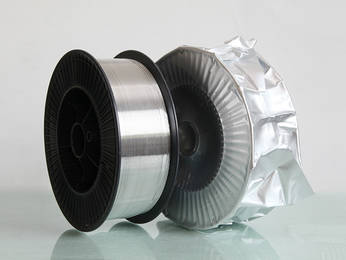
For long-term storage, leave unopened spools in their factory-sealed bags or boxes and put them in a climate-controlled room—aim for 60–80°F and relative humidity under 50%. Keep spools off concrete floors on shelves or pallets so ground moisture can't wick up into the packaging. Avoid unheated garages, areas near loading doors, or spots where heat and cold cycle daily.
Once a spool is opened, protect the exposed wire from the atmosphere. Wrap it tightly in plastic sheeting or return it to a sealed container between uses. Larger shops often use heated cabinets that hold wire at 90–100°F to stop condensation even in humid conditions. Smaller operations get similar protection by storing opened spools in airtight buckets or bins with fresh desiccant packs.
On job sites—especially outdoor or unheated locations—transport wire in sealed cases and only take out what you need for the current shift. When moving wire from a cold truck into a warm shop, let the sealed container sit and equalize to room temperature before opening it; otherwise moisture condenses on the wire almost instantly.
Check wire condition before loading it into the feeder. A dull gray coating means surface oxidation from moisture exposure—light oxidation can sometimes be cleaned by running several feet of wire through a clean rag moistened with alcohol, but heavy oxidation, pitting, or visible corrosion means discard the affected portion. Never use contaminated wire for code or critical welds.
When changing spools, clean the feeder path first—wipe drive rolls, blow out the liner, and remove any old wire shavings or debris. Thread the new wire carefully through the liner without sharp bends or kinks, as even a small kink causes feeding trouble later.
Specialized Applications and Advanced Practices
Corrosion Resistance in Marine and Outdoor Environments
Saltwater, coastal fog, or industrial fumes attack aluminum welds differently than the base plate if the filler chemistry doesn't match well. A mismatched weld can set up a galvanic cell that speeds corrosion right along the fusion line.
In marine work, choose filler with magnesium content close to the base alloy so the weld zone sits slightly anodic—any corrosion hits the weld metal first instead of undercutting the surrounding structure and creating stress risers that lead to cracks.
After welding, clean the joint thoroughly to remove oxide residue, spatter, or flux that could trap corrosives. Use stainless steel brushes reserved for aluminum, followed by solvent wiping. For high-exposure parts, chemical cleaners formulated for aluminum may be needed.
Protective finishes add another layer of defense. Anodizing turns the weld a different shade than the base because of slight composition differences, so plan for that visual variation. Paint systems need aluminum-compatible primers—standard steel primers often peel or allow under-film corrosion to spread.
Preheat and Post-Weld Heat Treatment Considerations
Thick pieces or heavily restrained joints cool too fast and risk cracking unless preheated. For 5000-series alloys, preheat becomes important above 3/8 inch thickness or when shop temperature drops below 50°F. Heat a wide band—at least 3 inches on each side of the joint—uniformly and check with temp sticks or crayons to make sure the whole zone reaches the target.
Post-weld heat treatment is uncommon for most aluminum work because the temperatures needed for stress relief or precipitation hardening come close to melting many alloys. Certain aerospace or pressure-vessel jobs call for controlled aging cycles in ovens, but those are specialized and not part of routine structural fabrication.
Combining Processes and Specialized Filler Materials
Some jobs mix MIG with other methods for the best results. TIG often handles root passes or tight areas where heat control is critical, then MIG fills and caps for speed. Clean between processes to avoid carrying contamination from one to the other.
Brazing suits very thin sheet when welding would warp the part too much. It uses different filler and lower heat, so knowing both techniques helps pick the right one for the job.
Specialty wires tackle specific headaches. Some have adjusted silicon levels to cut hot-cracking risk in tightly restrained joints. Others boost fluidity for better gap bridging or fill on uneven surfaces. These cost more than standard wire but save money when rework or scrap would be expensive.
Mastering aluminum welding with MIG wire comes down to respecting the material's unique properties while building confidence through hands-on practice. The thermal conductivity that makes aluminum challenging also makes it remarkably responsive—small adjustments in technique or parameters produce immediate, visible results that guide you toward consistent quality. Whether you're repairing a boat transom in a marine shop, fabricating trailer frames in a production environment, or tackling structural work on railcars, the principles remain constant: maintain scrupulous cleanliness, configure your equipment to handle soft wire without damage, adjust your speed and heat input to match aluminum's rapid thermal response, and protect consumables from moisture contamination. As you build experience across different thicknesses and joint configurations, you'll develop an intuitive sense for reading puddle behavior and making real-time corrections that transform uncertain attempts into reliable, repeatable welds that meet structural and appearance requirements across the full range of applications where Aluminum MIG Wire delivers value.
NEXT:What are the key advancements and challenges in Aluminum Alloy Welding Wire technology that impact its application across diverse industries?