English
  Deutsch


How Aluminum Welding Wire Is Made: Full Manufacturing Process Explained
Article Directory
- 1 Why the Manufacturing Process Is What You Are Buying
- 2 Alloy Selection and Rod Production
- 3 Wire Drawing and Heat Treatment
- 4 Surface Cleanliness: Sound Welds vs. Defective Welds
- 5 Final Geometry: Diameter Tolerance, Cast, and Helix
- 6 Quality Control, Traceability, and Certification
- 7 What Buyers Should Verify Before Approving a Supplier
Two spools of welding wire can carry the same alloy designation, the same diameter on the label, and the same AWS classification, yet one runs smoothly through the gun while the other produces porosity and an unstable arc. The difference is rarely the chemistry on the certificate; it is the manufacturing process behind the wire.
The conclusion that matters is simple: aluminum welding wire is defined not only by the alloy it is made from, but by the precision of the rolling, drawing, heat treatment, cleaning, and inspection that turn a cast rod into a finished spool. Understanding that process is the fastest way to evaluate a supplier, predict weld quality, and avoid rework in the shop.
Why the Manufacturing Process Is What You Are Buying
Aluminum is a demanding material to process into welding wire. It is soft, so it marks easily. Its surface oxide layer is tenacious, so it carries contamination risks that steel wire does not. Its thermal expansion makes feeding behavior sensitive to the mechanical condition of the wire. Every step in the manufacturing line either builds reliability or introduces a defect that shows up later as a bad weld.
The most important concept for a buyer is consistency. Wire performance depends on the balance between strength and ductility set by cold work and annealing, the cleanliness of the surface, and the geometry produced by the final drawing pass. A spool that meets the diameter specification on average but varies spool to spool will still fail in production. That is why the process, not the certificate, is the real product.
Alloy Selection and Rod Production
Chemistry determines what the wire can do
Aluminum welding wire starts with a controlled melt. In 4xxx alloys such as ER4043, silicon is added at roughly five percent to improve fluidity and reduce hot cracking. In 5xxx alloys such as ER5356 and ER5183, magnesium raises strength and corrosion resistance. Alloying elements are introduced as master alloys, and the melt is homogenized, degassed, and filtered before casting. Trace elements matter just as much as the main additions: iron, copper, and zinc are held to tight limits, while titanium and zirconium may be added as grain refiners.
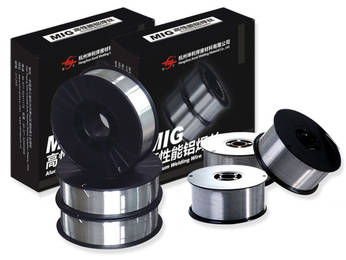
For silicon-based fillers, this stage determines how the wire behaves on cracking-prone joints and anodized finishes. Our ER4043 silicon aluminum welding wire is a typical example: the silicon content is balanced against impurity limits so the wire delivers the fluidity welders expect without sacrificing as-welded quality.
 ER4043 Aluminum Welding Wire Manufacturers,SuppliersAs China ER4043 Aluminum Welding Wire Manufacturers and OEM/ODM Suppliers, Hangzhou Kunli welding materials Co., Ltd. provide wholesale A...View Product →
Rolling the rod
The manufacturing route for aluminum welding wire usually begins with continuous casting and rolling, which produces a rod of roughly 9.5 mm in diameter. Many production lines add cold continuous rolling before drawing. This is not an optional step. Cold rolling breaks up the as-cast structure, refines the grain, and closes internal porosity that would otherwise be stretched into long defects when the wire is drawn down to a fraction of a millimeter.
The surface quality of the rod is equally important. Rolled-in oxide, scratches, or seams on the rod do not disappear during drawing; they are elongated into weak points or hydrogen sources in the final wire. A serious manufacturer therefore inspects or shaves the rod before it enters the drawing line.
Wire Drawing and Heat Treatment
The drawing line
Wire drawing reduces the rod to the finished diameter through a series of dies, each with a slightly smaller bore. A typical line passes the rod through many consecutive dies, keeping the reduction per pass low enough to avoid tearing the wire or generating excessive heat. Aluminum drawing uses oil-based or emulsion lubricants to control friction and carry heat away.
Every die has a defined approach angle, bearing length, and polished finish. As dies wear, the wire diameter drifts and the surface finish degrades. Diameter is therefore not checked only at the end of the line; it is measured continuously with in-process gauges that feed back to the machine. Consistent diameter is the first condition for stable feeding, which is why diameter tolerance matters more than most buyers realize.
Heat treatment and the final temper
Aluminum work-hardens quickly. After a certain amount of reduction, the wire becomes too hard and brittle to draw further without cracking, so the line includes intermediate annealing steps. The annealing temperature and time set the microstructure that later determines tensile strength and elongation.
The final temper is a balance. Wire that is too soft birds-nests and tangles in the feeder; wire that is too hard resists straightening, wears the contact tip faster, and can produce an erratic arc. Reputable manufacturers specify a narrow tensile range and verify it on every production lot, because the temper is what actually reaches the welding gun.
Surface Cleanliness: Sound Welds vs. Defective Welds
Aluminum's affinity for oxygen creates two practical problems. First, the oxide layer on the wire surface melts at a much higher temperature than the aluminum itself, so it can be trapped in the weld pool. Second, aluminum oxide is hygroscopic; it absorbs moisture, and moisture is hydrogen. In aluminum welds, hydrogen is the primary cause of porosity.
The wire is the most consistent input to the welding process, so its surface condition carries a disproportionate share of the blame for weld defects. The manufacturing line must remove drawing lubricant and oxide residues after the final passes. Cleaning methods include degreasing, wiping, and in some cases chemical treatment, followed by a final surface inspection. A bright, uniform surface is not a cosmetic preference; it is a predictor of low porosity and stable arc behavior.
Lubricant residue is a second contamination source that rarely gets enough attention. Leftover drawing oil on the wire can vaporize in the arc, add carbon, and disturb shielding gas coverage. It also collects inside the liner, turning a feeding problem into a weld quality problem over time.
Final Geometry: Diameter Tolerance, Cast, and Helix
Geometry is the part of the manufacturing process that a buyer can actually measure. Three parameters matter most: diameter tolerance, cast, and helix. Diameter tolerance controls the fit between the wire and the contact tip; an oversized wire binds, and an undersized wire loses electrical contact. Cast is the diameter of the circle the wire forms when a length is laid flat. Helix is the vertical rise of the wire from that circle.
Cast and helix are set by the final straightening and spooling operation. They determine whether the wire feeds through the liner with low friction and whether the end of the wire whips at the contact tip. Excessive helix produces an unstable arc and inconsistent weld bead placement, so wire cast and helix effects on MIG welding performance deserve a direct question to every supplier.
| Parameter | Typical target | Failure consequence |
|---|---|---|
| Diameter tolerance | Within ±0.025 mm for common MIG sizes | Erratic contact tip fit, feeding jams |
| Cast | Stable circle within supplier specification | Poor liner contact, bird-nesting |
| Helix | Minimal vertical lift | Wire whip, arc instability |
| Surface finish | Bright, free of lubricant and oxide | Porosity, spatter, liner contamination |
The same logic explains why the most widely used 5xxx filler, ER5356 aluminum welding wire, is trusted in automotive and structural fabrication: when geometry is held tightly, it feeds dependably even at high travel speeds.
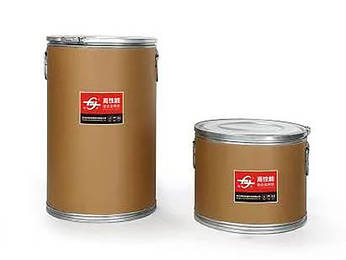
 Aluminum Welding Wire ER5356 - Kunliwelding ManufacturerKunli is your go-to wholesaler for Aluminum Welding Wire ER5356, offering ideal corrosion resistance and strength. Suitable for marine, a...View Product →
Quality Control, Traceability, and Certification
Quality control in aluminum welding wire manufacturing is not a single final inspection; it runs in parallel with production. Chemistry is verified by optical emission spectrometry on every melt. Tensile strength and elongation are measured before packaging. Cast and helix are checked on finished spools. The most meaningful test, a weld-out under production-like conditions, confirms feedability and porosity levels before the batch is released.
Third-party certification adds another layer. Classification societies such as ABS, DNV, and CCS are used primarily for marine and offshore fabrication, while CE and DB certifications support European and industrial applications. These approvals require type testing of the product and regular audits of the manufacturing system, not just a paperwork review.
For demanding buyers, traceability is as important as certification. Every spool should be traceable to the rod lot, the drawing line, the anneal batch, and the inspection records. When a weld fails in the field, that traceability is the only way to determine whether the wire contributed. These are among the factors beyond price that affect welding wire procurement decisions that separate serious suppliers from traders.
For high-strength marine structures, fabricators often select ER5183 aluminum welding wire because its manufacturing process has been verified by class approvals; the alloy's magnesium content and tight process control give the weld metal the saltwater corrosion resistance and toughness that shipyards require.
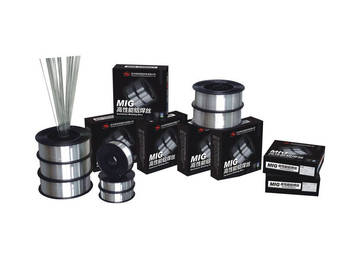
 Aluminum Welding Wire ER5183 Manufacturers - Kunli SuppliersAluminum Welding Wire ER5183 supplied by Kunli manufacturer, suitable for automotive, and industrial welding with great strength and corr...View Product →
What Buyers Should Verify Before Approving a Supplier
A practical checklist keeps the evaluation focused on the manufacturing process rather than the datasheet.
- Confirm that the supplier can provide lot traceability from melt to finished spool.
- Ask for cast and helix specifications, not just diameter, and verify how they are measured.
- Inspect the surface condition of a random spool; look for uniform brightness and freedom from oil.
- Request the tensile range for the final temper and compare it across multiple lots.
- Check that third-party certificates are current and cover the alloy and diameter you plan to buy.
- Run a short weld-out test with your own equipment before committing to volume.
These checks take less time than troubleshooting a month of porosity. The entire manufacturing process outlined here, raw material control, cold rolling, drawing, annealing, cleaning, final geometry, and verified inspection, is the discipline that makes a wire trustworthy in production.
That discipline is also why manufacturers with long process experience, such as Hangzhou Kunli Welding Materials with over two decades in aluminum wire production, are able to pass the qualification audits of industrial groups like CRRC and Maersk and supply customers in more than 30 countries. When your shop runs continuous production, you are not buying an alloy; you are buying the process control behind every spool.
NEXT:Aluminum Welding Wire Quality Control Process Explained: From Alloy to Spool Inspection