English
 Deutsch



ER5154 vs ER5754 Aluminum Welding Wire: Key Material and Application Differences
Article Directory
When a fabricator needs a 5xxx-series aluminum filler metal, the choice between ER5154 and ER5754 can determine whether a welded assembly passes salt-spray testing, holds fatigue life targets, or meets anodized color requirements. Although the two wires appear similar on a data sheet, their magnesium content and mechanical response put them in different roles on the shop floor.
ER5154 and ER5754 are aluminum-magnesium welding wires designed for MIG and TIG welding of corrosion-resistant aluminum structures. The practical difference is not which one is "better" in general, but which one fits the base material, service load, and finishing specification of a specific job. This comparison is written for welding engineers and purchasing teams who need to specify the right filler without over-engineering the joint.
Core definition: ER5154 and ER5754 are Al-Mg filler metals whose ER number reflects the approximate alloy family they were designed to match. ER5154 targets higher magnesium content for increased weld strength, while ER5754 targets the more formable 5754 base alloy with lower magnesium and improved color match after anodizing.
ER5154 vs ER5754: Composition and Mechanical Properties
Nominal magnesium content is the main factor that separates the two wires. Both grades are part of the 5xxx family, so neither contains copper and both keep silicon and iron below 0.4% to limit cracking and galvanic corrosion. The real variable is magnesium.
| Property | ER5154 | ER5754 |
| Magnesium (Mg) | 3.1-3.9% | 2.6-3.2% |
| Manganese (Mn) | 0.10-0.50% | 0.30-0.60% |
| Chromium (Cr) | 0.15-0.35% | 0.15% max |
| Tensile strength (as-welded) | 270-290 MPa | 240-260 MPa |
| Yield strength | 140-150 MPa | 120-130 MPa |
| Elongation | 17-20% | 21-24% |
These numbers come from all-weld-metal test samples and can shift by 10-20 MPa depending on joint restraint, dilution, and heat input. Buyers should ask the supplier for a material certificate that lists actual composition and strength values for each heat. Hangzhou Kunli Welding Materials Co., Ltd., a manufacturer with more than 20 years of aluminum wire production experience, publishes accepted composition ranges for both grades in its quality certificates.
Welding Behavior and Process Compatibility
Both wires run on the same MIG or TIG equipment and require the same cleaning discipline. Use 100% argon or an argon-helium mix, clean the base material to bare metal, and keep the travel speed high enough to avoid heat buildup.
ER5754 is more forgiving in fillet welds and thin sheet, where its lower magnesium content reduces the risk of oxide entrapment. ER5154 produces a slightly stronger deposit but needs a smaller nozzle angle and lower wire feed speed at the same ampere setting.
- Shielding gas: argon or argon-helium mixtures for both wires.
- Polarity: DCEP (direct current electrode positive) for MIG; AC for TIG.
- Pre-cleaning: required on all 5xxx alloys before welding.
- Interpass temperature: keep below 150 C to avoid distortion and loss of mechanical properties.
Spooled ER5154 and ER5754 are usually wound with a cast of 100-130 mm and a helix below 3 mm to ensure stable feeding. A bird's-nest in the liner is almost always a contact-tip or conduit issue, not an alloy issue.
ER5154 behavior
Higher melt-in rate, narrower weld bead, best for thicker sections above 6 mm and multi-pass joints.
ER5754 behavior
Smoother bead profile, lower crack sensitivity on restrained joints, preferred for 2-6 mm sheet and automotive panels.
Practical rule: If a joint cracks with ER5754 in a restrained test coupon, switching to ER5154 is rarely the fix. Correct the fit-up, preheat, and gas coverage first; then evaluate the filler metal.
Application Differences and Typical Use Cases
The application split follows the strength and formability balance. ER5154 is the better choice when the welded structure carries high static or cyclic loads; ER5754 is the better choice when the base metal is 5754 or when the finished part must keep a uniform appearance after anodizing.
Where ER5154 aluminum welding wire fits
ER5154 is used for ship deck structures, transport vehicle frames, pressure vessels, and welded components that are pickled or painted after welding. Its higher magnesium content gives the weld deposit better mechanical strength against impact loading.
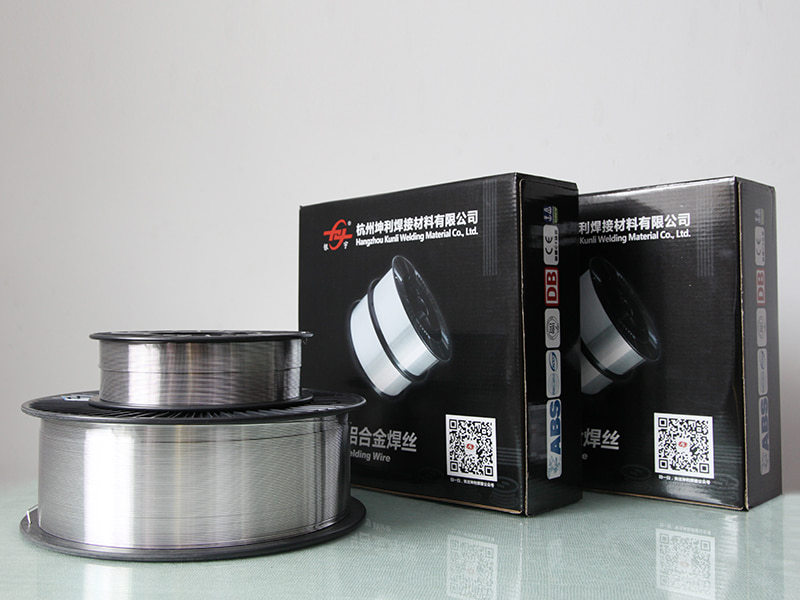 ER5154 Al-Mg Alloy Welding Wire for 5xxx SeriesThis filler metal with 3.1-3.9% magnesium and controlled manganese offers higher as-welded strength for ship decks, transport frames, and pressure vessels. It matches 5154 base alloy and excels in cryogenic and marine service.View Product →
For buyers already using 5154 base alloy, this filler metal is the direct match. You can also read a specific guide on ER5154 applications and selection before ordering.
Where ER5754 aluminum welding wire fits
ER5754 appears in food-processing equipment, chemical tanks, marine sheet structures, and automotive interior panels where welding loads are moderate and surface finish matters. The lower magnesium level improves the anodized color match on visible assemblies.
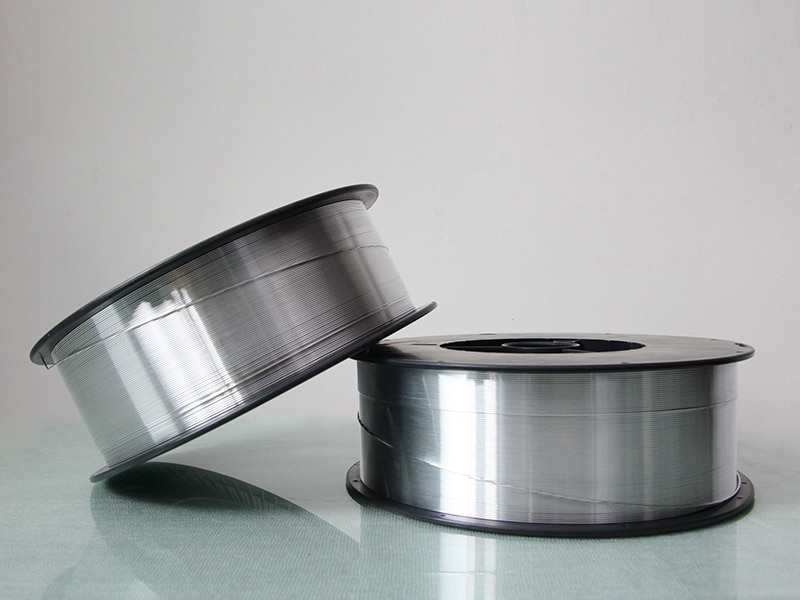 ER5754 Aluminum Welding Wire for Moderate-Strength FabricationA roughly 3% magnesium filler metal suited for food-processing equipment, chemical tanks, and marine sheets. It provides medium strength and improved anodized color match, ideal when specifications call for Al-Mg filler without higher-strength requirements.View Product →
This grade is also a sensible default for general workshop fabrication. If your drawing simply specifies "Al-Mg filler", start with ER5754 and only move to ER5154 when the calculation or cracking test requires the higher strength.
- ER5154: vessel internals, offshore access platforms, armored vehicle bodies
- ER5754: brewery tanks, HVAC housings, architectural panels, trailer floors
Design intent: Use ER5754 when the welded joint is thinner than 6 mm, the base metal is already 5754, or the part will be anodized. Use ER5154 when the joint must match the strength of a 5154 or 5083 parent metal in load-bearing service.
How to Choose Between ER5154 and ER5754
Start from the base metal specification and the service requirement, not from the filler metal name. Check the drawing for the parent alloy, the expected load, and the corrosion or anodizing class.
- If the base metal is 5754 and the weld is mostly for watertightness or appearance, choose ER5754.
- If the base metal is in the 5154/5083 family or the joint is subject to fatigue loading, choose ER5154.
- If saltwater exposure is critical, both grades pass common marine tests; select the one that matches the parent metal's magnesium range.
- For anodized parts, choose ER5754 unless the strength calculation explicitly excludes it.
Decision shortcut: When in doubt, order the grade that matches the minimum specified strength of the parent alloy. Do not choose a filler metal by price alone; a mis-matched weld deposit is the most expensive part to replace.
Request a certificate of conformity, check the chemical analysis against the drawing, and run a procedure qualification record with the same wire heat you plan to use in production. A cheap online offer without traceable documentation is not a comparable product. For a broader overview of all aluminum filler metal options and selection criteria, see our aluminum welding wire hub.
Frequently Asked Questions
Quick answer: Use ER5754 for appearance-critical and general fabrication; use ER5154 for higher-strength joints on 5xxx parent alloys.
Can ER5154 be used to weld 5754 aluminum?
ER5154 can weld 5754 base metal and will deliver higher strength than the base alloy, but the weld deposit may show a slightly different anodized color. If appearance or anodizing is not a concern, it is technically acceptable.
Is ER5754 stronger than ER5154?
No. ER5154 typically provides 30-40 MPa higher as-welded tensile strength because of its higher magnesium content. ER5754 offers better ductility and a more uniform anodized finish.
Which wire is better for marine environments?
Both ER5154 and ER5754 have good corrosion resistance in saltwater service. Choose the wire that matches the parent alloy strength and meets the classification society approval required by the project.
Are ER5154 and ER5754 available for both MIG and TIG?
Yes. Both are supplied in spooled forms for MIG welding and in straight rods for TIG welding, with the same composition requirement in either form.
NEXT:No next article