English
 Deutsch



ER1100 vs Aluminum Alloy Welding Wire: Key Material and Welding Differences
Article Directory
- 1 What Is ER1100 Aluminum Welding Wire?
- 2 ER1100 vs Alloy Aluminum Filler Wires: Core Material Differences
- 3 Welding Behavior: How ER1100 Flows, Feeds and Cracks
- 4 When to Choose ER1100 Over an Alloy Wire
- 5 Sourcing ER1100 from a Certified Aluminum Welding Wire Manufacturer
- 6 Frequently Asked Questions about ER1100 vs Aluminum Alloy Welding Wire
When a fabricator welds a 1100-series pure aluminum busbar, chemical storage tank or food-processing vessel, the filler metal decision comes down to one question: does the weld need to duplicate the base metal's properties, or does it need to make the joint stronger than the base metal? ER1100 aluminum welding wire answers that question in a specific, and often misunderstood, way.
ER1100 sits at one end of the AWS A5.10 aluminum filler metal range as a commercially pure aluminum wire. Alloy wires such as ER4043, ER5356 and ER5183 occupy the rest of that range with deliberate additions of silicon or magnesium. The real gap between them shows up in tensile strength, corrosion behavior, electrical conductivity and post-weld finishing, not in any cosmetic difference on the spool.
What Is ER1100 Aluminum Welding Wire?
ER1100 is a nearly pure aluminum filler metal containing a minimum of 99.0 percent aluminum, with copper held between 0.05 and 0.20 percent as the only intentional alloying addition, and it is used to weld 1100 and 3003 series base metals where conductivity, corrosion resistance and ductility outweigh joint strength.
99.0%
minimum aluminum content
~110 MPa
as-welded tensile strength
643-657 C
melting range
222 W/mK
thermal conductivity
Key definition
ER1100 aluminum welding wire is a 1xxx series filler metal that deposits weld metal matching the chemistry of commercially pure aluminum (99.0 percent minimum Al). Because it contains no silicon or magnesium, it cannot raise joint strength through alloying; its welds are soft, ductile and highly conductive.
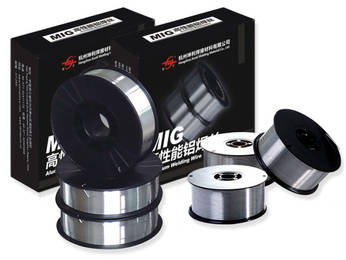
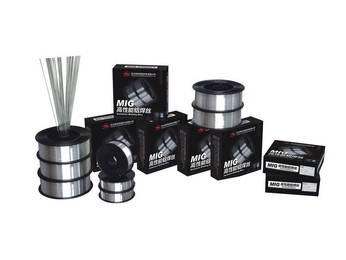
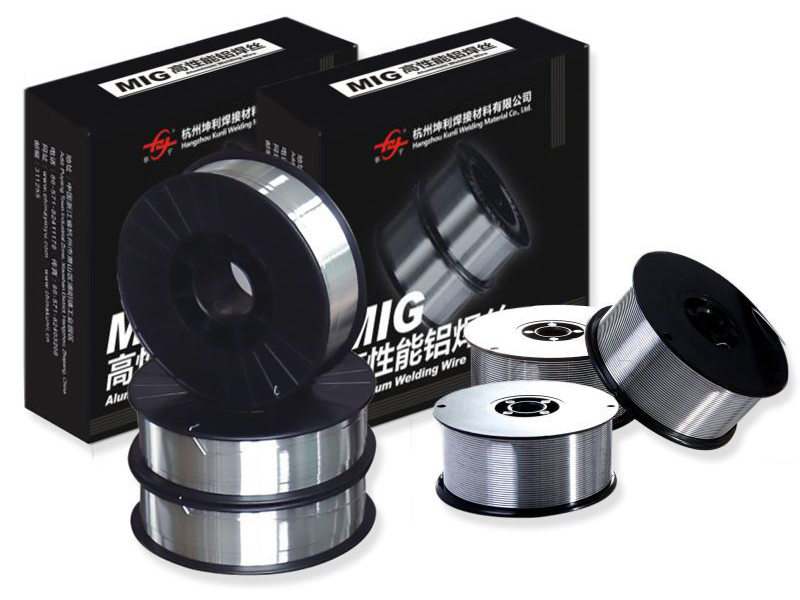 ER1100 Aluminum Welding Wire for Pure Aluminum JointsThis 99% minimum pure aluminum filler metal delivers soft, ductile, conductive welds ideal for heat exchangers, electrical components, and chemical service, while preserving neutral anodized color for architectural and food equipment.View Product →
That chemistry makes ER1100 the correct choice for joining 1100 aluminum sheet, 3003 aluminum plate and other lightly alloyed bases that serve in heat exchanger, electrical and chemical duty. It is also specified when anodized color must stay neutral and close to the parent metal, a property that matters more in architectural and food equipment work than in structural frames.
ER1100 vs Alloy Aluminum Filler Wires: Core Material Differences
The decisive material difference is that ER1100 deposits nearly pure aluminum, while alloy wires add silicon (ER4043) or magnesium (ER5356, ER5183) to lift as-welded strength, shift the freezing range and change corrosion and anodizing responses.
Silicon narrows the melting range and improves fluidity, which is why ER4043 performs well on castings and 6061 alloy. Magnesium produces stronger weld deposits through solid-solution and precipitation effects, which is why ER5356 and ER5183 dominate marine, structural and transportation work. Pure aluminum gets neither strengthening mechanism.
| Property | ER1100 | ER4043 (Al-Si5) | ER5356 (Al-Mg5) |
| Primary alloying addition | Cu 0.05-0.20%, balance Al | Si 4.5-6.0% | Mg 4.5-5.5% |
| As-welded tensile strength | ~110 MPa | ~186 MPa | ~276 MPa |
| Melting range | 643-657 C | 574-632 C | 574-638 C |
| Corrosion resistance | Excellent in chemical and atmospheric exposure | Good, weaker in saline service | Excellent, preferred for marine |
| Anodized color match | Matches 1xxx and 3xxx base metals | Darker gray-black tone | White-gray tone, matches 5xxx |
| Typical applications | Electrical busbars, chemical tanks, food equipment | 6061 frames, castings, crack-prone joints | Ship hulls, pressure vessels, structural frames |
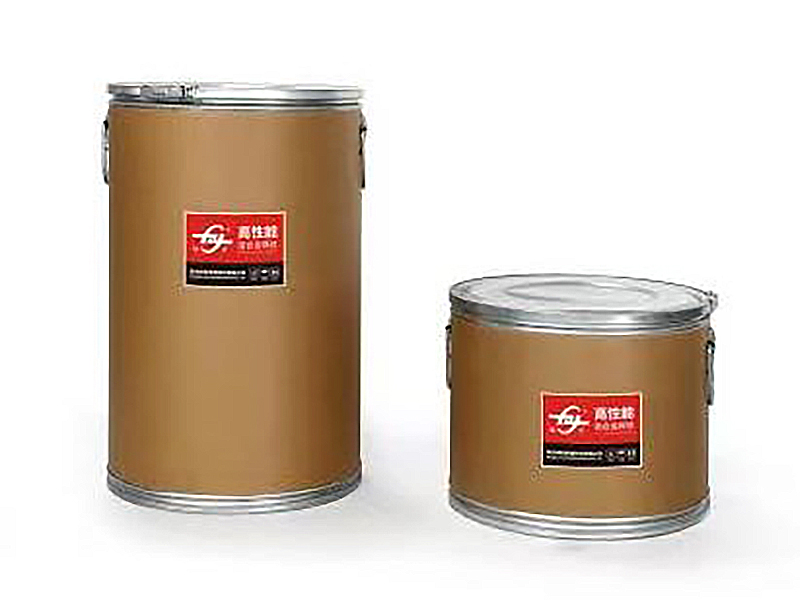 ER4043 Silicon Aluminum Welding Wire with 5% SiWith 5% silicon for excellent flowability and penetration, this filler suits alloys up to 7% silicon and common grades like 6061, 6063, and 3003, making it a versatile choice for chemical, mold, and container fabrication.View Product →
As-Welded Tensile Strength Comparison
As-welded tensile values are typical filler-metal deposit ranges; actual joints vary with base alloy, joint design and welding procedure.
The strength gap is a design consequence, not a quality sign. An ER1100 weld degrades gracefully under overload and keeps corrosion performance, while a 5xxx weld carries far more load but brings anodizing trade-offs. For structural joints on 6xxx frames, review our detailed notes on ER1100 specifications and automotive applications before committing to a filler.
Welding Behavior: How ER1100 Flows, Feeds and Cracks
ER1100 welds with excellent crack resistance and good oxide control, but its high thermal conductivity demands higher heat input and faster travel speeds than alloy fillers, and the resulting deposit is too soft for heavy structural load.
ER1100 strengths in practice
- Excellent resistance to hot cracking during cooling
- High electrical and thermal conductivity preserved in the joint
- Clean, neutral anodized finish on 1xxx base metals
- Predictable MIG feeding with proper cast and helix
ER1100 limitations
- Low as-welded strength, roughly 40 percent of ER5356
- Heat concentration due to rapid conduction in thick plate
- Poor wear and abrasion resistance in sliding service
- Not matched to 5xxx or 6xxx base metal chemistry
For load-bearing marine racks, transport frames and pressure boundaries, the 5356 family is the normal alternative; fabricators specifying 5356 should confirm magnesium content, wire surface quality and package integrity before production.
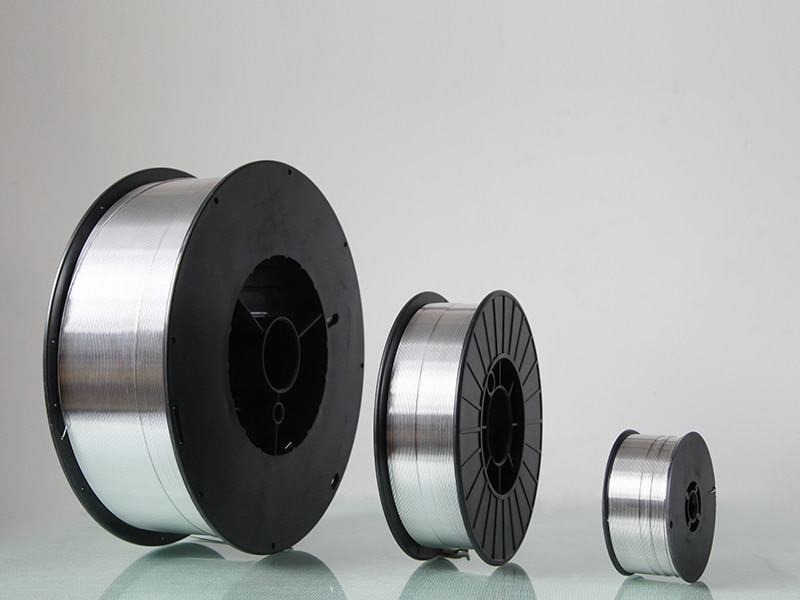 ER5356 Magnesium Aluminum Welding Wire for StrengthContaining about 5% magnesium, this filler provides high strength, corrosion resistance, and anodized color match for 5000, 6000, and 7000 series alloys, recommended for marine, structural, and transportation applications.View Product →
When to Choose ER1100 Over an Alloy Wire
Choose ER1100 when the welded assembly must carry electrical current, resist chemical attack or match pure-aluminum appearance after finishing; choose an alloy wire when the joint must transfer mechanical loads in a frame or vessel.
Work through these four checks in order:
- Identify the base alloy. ER1100 suits 1xxx and 3xxx bases; for 5xxx or 6xxx bases, use a 4xxx or 5xxx filler instead.
- Define the load path. If the weld sees sustained service stress above roughly 40-60 MPa, ER1100 is not a structural filler.
- Check the finish requirement. Anodized or bright-dip finishes on pure aluminum demand ER1100 to avoid the dark cast of silicon-bearing welds.
- Review the exposure environment. For saline, alkaline or abrasive media, confirm that pure aluminum meets the corrosion specification before accepting lower strength.
Typical ER1100 applications include:
- Electrical busbars, grounding strips and cable lugs requiring high conductivity
- Chemical storage vessels and piping for food, pharmaceutical and mild chemical media
- Heat exchanger bundles and transfer lines in 1100 or 3003 aluminum
- Architectural trim and decorative welded assemblies needing neutral anodized color
Selection rule of thumb: when the part is pure aluminum and the weld is not the load-bearing feature, ER1100 is the safest filler; when the part is an alloy and the weld must carry load, an alloy filler is mandatory.
Sourcing ER1100 from a Certified Aluminum Welding Wire Manufacturer
Buying ER1100 in production volume requires verified alloy certification, stable wire cast and helix for MIG feeding, documented lot traceability and quality systems that prevent porosity-inducing surface contamination.
Hangzhou Kunli Welding Material Co., Ltd. is a Chinese high-tech manufacturer with more than 20 years of aluminum wire production experience and 35 years of R&D work, supplying ER1100 and other aluminum fillers to rail, marine and industrial fabricators. The company is a qualified supplier to China Railway Rolling Stock Corporation and Maersk, with certifications including DB, CE, ABS, DNV and CCS.
Production capacity exceeds 2,500 tonnes per year, or more than 200 tonnes per month, and more than 90 percent of line operators hold technical education backgrounds. About half of output exports to 30+ countries including the United States, Mexico, Japan, South Korea and Australia; R&D partners include Beijing General Research Institute for Nonferrous Metals, Central South University and Shanghai Electric Cable Research Institute.
For a full view of the ER1100 and aluminum welding wire range, compare composition certificates, package options and application notes before ordering. A mature factory with stable process control will outperform a cheap spool with inconsistent chemistry.
Frequently Asked Questions about ER1100 vs Aluminum Alloy Welding Wire
Can ER1100 weld 6061-T6 aluminum?
Technically yes, but the deposit delivers roughly 110 MPa tensile strength against a 6061-T6 base metal at about 290 MPa, so the weld zone fails first under load. For non-structural 6061 work, ER4043 or ER5356 is the normal choice.
Does ER1100 anodize with the same color as 1100 base metal?
Yes. Because the deposit is 99.0 percent minimum aluminum with no silicon or magnesium, it produces a clear, neutral anodic film close to the parent material. ER4043 welds turn dark gray, while ER5356 welds finish lighter with a slight haze.
What shielding gas is recommended for ER1100 MIG welding?
Use 100 percent argon for most thicknesses, or argon with up to 75 percent helium for heavy sections above 12 mm. Because pure aluminum has no alloying elements to burn off, gas selection mainly affects penetration and oxide removal.
Why does an ER1100 weld feel softer than an alloy weld?
The 1100 deposit is nearly pure aluminum with no magnesium or silicon strengthening; hardness is low and elongation is high. That combination is ideal for forming, cladding and corrosion service but unsuitable for load-bearing frames.