English
  Deutsch


Is 5183 Aluminium Mig Wire the Right Marine Choice?
Article Directory
- 1 What Is 5183 Aluminium Mig Wire?
- 2 Key Properties That Define 5183 Performance
- 3 5183 vs 5356 Aluminum Welding Wire
- 4 5183 vs 4943 Aluminum Welding Wire
- 5 Marine Applications of 5183 Aluminium Mig Wire
- 6 High-Strength Welding Applications Beyond Marine Use
- 7 How to Choose Between 5183, 5356, and 4943
- 8 What to Look for When Sourcing Aluminum Welding Wire
- 9 Bringing the Selection Decision Together
Aluminum welding wire selection looks straightforward until the application involves salt water, structural loading, or both at the same time. Engineers working on shipbuilding, offshore structures, and heavy aluminum fabrication regularly find that the wire their team has always used is not quite right for the job in front of them — the weld may be sound, but the corrosion performance is marginal, or the strength falls short of what the joint calculation demands. The 5183 Aluminium Mig Wire sits in the middle of this decision for a reason: it was developed specifically for the conditions where standard filler metals begin to show their limits, and understanding where it fits relative to 5356 and 4943 is the practical starting point for any aluminum welding wire selection guide in marine and structural work.
What Is 5183 Aluminium Mig Wire?
Alloy Classification and Basic Composition
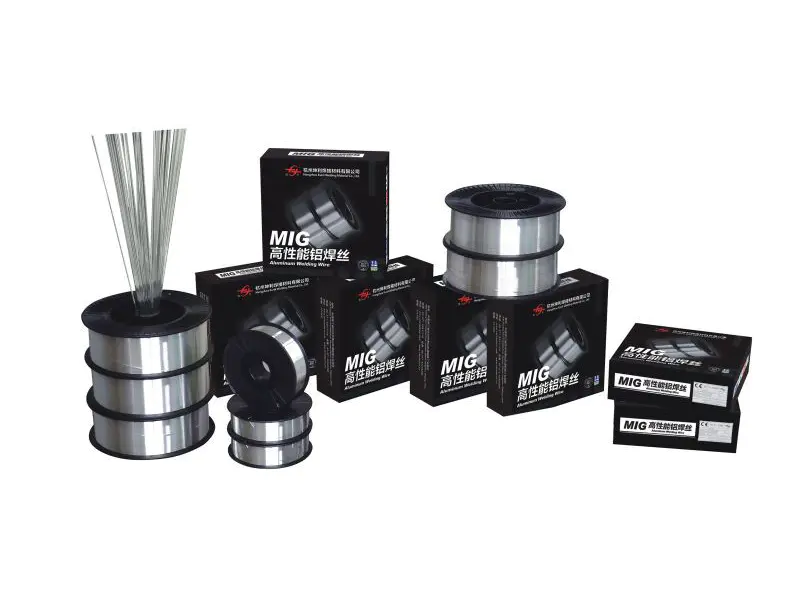
5183 belongs to the Al-Mg alloy family — the same series as 5356, which is the widely used aluminum MIG filler wire in general fabrication. The distinguishing feature of 5183 within this family is its elevated magnesium content, which pushes its strength and corrosion resistance above what 5356 delivers under equivalent conditions.
The alloy also contains small additions of manganese and chromium, which contribute to microstructural stability in the weld metal and reduce susceptibility to stress corrosion cracking in service. These additions are not incidental — they reflect the wire's development for environments where the weld joint is exposed to sustained mechanical load and corrosive conditions simultaneously.
Where 5183 Sits in the Filler Metal Landscape
In the hierarchy of Al-Mg filler wires, 5183 is positioned above 5356 in both strength and corrosion resistance, and it serves a different function than 4943, which belongs to the Al-Si system. The three wires address different welding scenarios: 5356 covers general-purpose aluminum MIG welding across a wide range of base metals and applications; 5183 addresses the subset of those applications where marine environment performance or higher joint strength is a design requirement; 4943 addresses applications where crack sensitivity, anodizing response, or base metal compatibility with certain alloys matters more than raw corrosion performance.
Key Properties That Define 5183 Performance
Strength in the Weld Metal
The tensile strength of weld metal deposited with 5183 exceeds what 5356 produces under comparable conditions. This difference is meaningful in structural applications where the fillet or groove weld is a load-bearing element and the joint efficiency factors into the structural calculation. For marine aluminum hull construction, topside structures, and pressure-bearing components, this strength advantage over standard 5356 is one of the reasons 5183 is specified.
Corrosion Resistance in Saltwater Environments
The higher magnesium content that gives 5183 its strength also contributes to its corrosion resistance in chloride environments. Weld metal deposited with this wire performs reliably under continuous exposure to seawater and salt spray without the surface degradation that can compromise lower-magnesium filler wires over time. For vessels and offshore structures that cannot be easily withdrawn from service for weld repair, this durability reduces the long-term maintenance cost of the welded structure.
Crack Resistance Under Structural Loading
Solidification cracking in aluminum weld metal is a function of the filler wire chemistry and the dilution between the wire and the base metal. 5183 has a chemistry that is relatively tolerant of dilution from a range of aluminum base alloys, and its magnesium content helps maintain the weld metal above the crack-sensitive composition range. In thick-section structural welding and multi-pass welds on restrained joints, this characteristic reduces the risk of weld cracking during fabrication.
5183 vs 5356 Aluminum Welding Wire
This is the comparison that drives material selection decisions in marine and structural aluminum fabrication. Both wires belong to the same alloy family, both suit MIG welding on aluminum, and both are approved for a similar range of base metals. The differences are in the performance envelope at the demanding end of the application range.
| Property | 5183 | 5356 |
|---|---|---|
| Magnesium content | Higher | Moderate |
| Tensile strength of weld metal | Higher | Moderate |
| Corrosion resistance in saltwater | Strong | Adequate for many applications |
| Crack resistance (solidification) | Better in restrained joints | Adequate in standard conditions |
| Anodizing response | Limited | Good |
| Application fit | Marine, structural, high-strength | General fabrication, automotive, general marine |
| Cost | Slightly higher | Standard |
The practical takeaway is this: 5356 is a capable wire for a broad range of aluminum welding work, including many marine applications where the corrosion exposure is moderate and the structural demands are within its strength range. Where the combination of high corrosion exposure and higher strength requirements pushes past what 5356 reliably delivers, 5183 is the appropriate specification.
One important limitation of 5183 that engineers should account for: it does not anodize well. If the completed weldment will be anodized for appearance or corrosion protection, the weld zones will show a color mismatch. For structural work where anodizing is not required, this is not a concern. For architectural or decorative aluminum fabrication where appearance after anodizing matters, 5356 or a compatible filler is typically the better choice.
5183 vs 4943 Aluminum Welding Wire
The 4943 vs 5356 aluminum welding wire comparison is frequently encountered in discussions about newer filler metal options, and 5183 sits adjacent to that conversation in a specific way.
| Property | 5183 | 4943 |
|---|---|---|
| Alloy system | Al-Mg | Al-Si-Cu |
| Corrosion resistance in chloride environments | Strong | Moderate |
| Strength | High | High |
| Crack resistance | Good | Very good |
| Anodizing response | Limited | Good |
| Compatibility with 5xxx base alloys | Strong | Moderate |
| Marine suitability | High | Limited for prolonged saltwater exposure |
4943 was developed as an improvement over 4043 — stronger, with better mechanical properties after post-weld heat treatment, and with improved compatibility with certain base alloys. It performs well in structural applications where crack sensitivity is a concern and where the service environment does not involve continuous chloride exposure.
For marine structures, however, 4943's silicon content and its behavior in long-term saltwater service make it less suitable than 5183. The Al-Si weld deposit does not match the corrosion performance of Al-Mg weld metal in marine environments. Engineers evaluating 4943 for a marine application should verify the corrosion resistance requirements against the specific service conditions before substituting it for 5183 or 5356 in that context.
Marine Applications of 5183 Aluminium Mig Wire
Shipbuilding and Hull Construction
Marine aluminum welding wire for hull construction needs to produce weld metal that holds its integrity over the service life of the vessel without corrosion-related degradation at the weld zones. 5183 suits this application because the weld metal chemistry is compatible with the 5xxx series aluminum alloys commonly used in hull plate — 5083, 5086, and 5383 — and the weld metal corrosion performance matches the base metal in saltwater service.
Multi-pass welding on thick hull plate, keel sections, and structural frames are all applications where 5183's combination of strength and crack resistance over standard 5356 becomes relevant. In these joints, the accumulated residual stress from multiple passes in a restrained configuration creates conditions where a more crack-tolerant filler wire reduces the risk of delayed cracking.
Offshore Structures and Marine Infrastructure
Offshore platform components, pier structures, marine gangways, and dock fittings operate in continuous saltwater spray or immersion conditions across service lives measured in decades. The weld joints in these structures cannot be treated as negligible corrosion risks — they are often the locations where corrosion initiates, because weld heat-affected zones and weld metal zones can have different electrochemical characteristics than the parent plate.
Specifying 5183 for these joints reduces the corrosion differential at the weld zone and produces a more uniform corrosion response across the fabricated structure, which simplifies the corrosion protection strategy and extends the interval before maintenance is required.
High-Strength Welding Applications Beyond Marine Use
Rail Transportation and Structural Aluminum Fabrication
The high strength aluminum welding wire requirement is not exclusive to marine work. Rail car body fabrication, aluminum bridge structures, pressure vessels, and heavy-duty equipment frames all require weld metal strength that meets or approaches the strength of the base material. 5183 is specified in these applications for the same reason it suits marine work — its weld metal strength and crack resistance suit demanding structural welding conditions.
In rail car manufacturing, where the welded aluminum body structure must withstand impact loads and fatigue cycling over a long service life, the higher weld metal strength of 5183 contributes to joint efficiency in a way that general-purpose filler wires may not.
Pressure Vessel and Container Applications
Aluminum pressure vessels and cryogenic containers welded with 5183 benefit from the wire's low-temperature toughness — a characteristic of high-magnesium Al-Mg alloys that makes them suitable for applications at very low operating temperatures. This property, combined with the alloy's strength and crack resistance, makes 5183 a candidate for LNG-related fabrication and other cryogenic aluminum construction.
How to Choose Between 5183, 5356, and 4943
The selection logic is cleaner than the number of options suggests:
Choose 5183 when:
- The base metal is a 5xxx series alloy (5083, 5086, 5383, 5456) used in marine or structural service.
- The weld joint will be exposed to continuous or severe chloride environments.
- The structural calculation requires weld metal strength above what 5356 reliably delivers.
- The joint configuration is restrained or involves thick-section multi-pass welding where crack risk is elevated.
- Anodizing of the completed weldment is not required.
5356 is adequate when:
- The application is general aluminum MIG fabrication without demanding corrosion or strength requirements.
- The service environment is moderate — occasional marine exposure rather than continuous immersion or spray.
- Anodizing will be applied and color consistency at weld zones matters.
- The base metal is a 5xxx or 6xxx alloy and the structural demands are within 5356's range.
4943 is the better choice when:
- The base metal is a 6xxx series alloy where Si-containing fillers are compatible and the joining application requires good crack resistance.
- Post-weld heat treatment will be applied and the improved mechanical properties of 4943 after treatment are relevant.
- The service environment does not involve prolonged chloride exposure where the Al-Si weld metal's corrosion behavior is a concern.
- Anodizing response and appearance consistency are priorities.
What to Look for When Sourcing Aluminum Welding Wire
Certification and Traceability
For structural and marine applications, the filler wire needs to meet the applicable AWS or ISO classification standards, and the material documentation needs to support the quality system requirements of the fabrication project. Mill certificates, heat traceability, and compliance with the specified alloy classification are baseline requirements for any structural welding application — not optional additions.
Suppliers who routinely serve shipbuilding and structural fabrication markets will have this documentation as part of their standard delivery package. Those who do not should be qualified carefully before their material is used in a structural application.
Wire Condition and Packaging
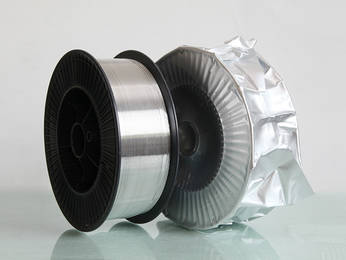
Aluminum welding wire absorbs moisture from the atmosphere, and moisture contamination in the wire is a direct cause of porosity in the weld metal. Wire that has been stored improperly or has been exposed to high-humidity conditions before use should not be used in structural or marine welding without verification. Vacuum-sealed or hermetically sealed packaging, stored in controlled conditions, is the standard for wire intended for quality-critical welding.
For Aluminum Welding Wire for Sale through distributors and direct factory channels, buyers should verify storage conditions and confirm that the packaging integrity has been maintained before accepting material for structural use.
Bringing the Selection Decision Together
The choice between 5183, 5356, and 4943 in marine and high-strength aluminum welding is fundamentally a matching exercise: base metal chemistry, service environment, structural demands, and post-weld processing requirements each point toward one of these wires being the appropriate specification. 5183 occupies a well-defined position in this field — it is the wire for demanding marine and structural work on 5xxx series aluminum where the combination of corrosion resistance and weld metal strength needs to exceed what the general-purpose alternatives provide. Understanding this position, and the conditions under which the alternatives become appropriate, allows engineers and procurement teams to make specification decisions that hold up in service rather than ones that look adequate on paper. If you are evaluating aluminum welding wire for a marine, offshore, or structural fabrication project and want to discuss material specifications, certifications, and supply options, Hangzhou Kunli Welding Materials Co., Ltd. provides 5183, 5356, and 4943 aluminum MIG wire with full material documentation and technical support for application-specific selection.
NEXT:ER5183 Aluminum Welding Wire: Strength, Marine Use & Weldability